The Story
Plant Bio
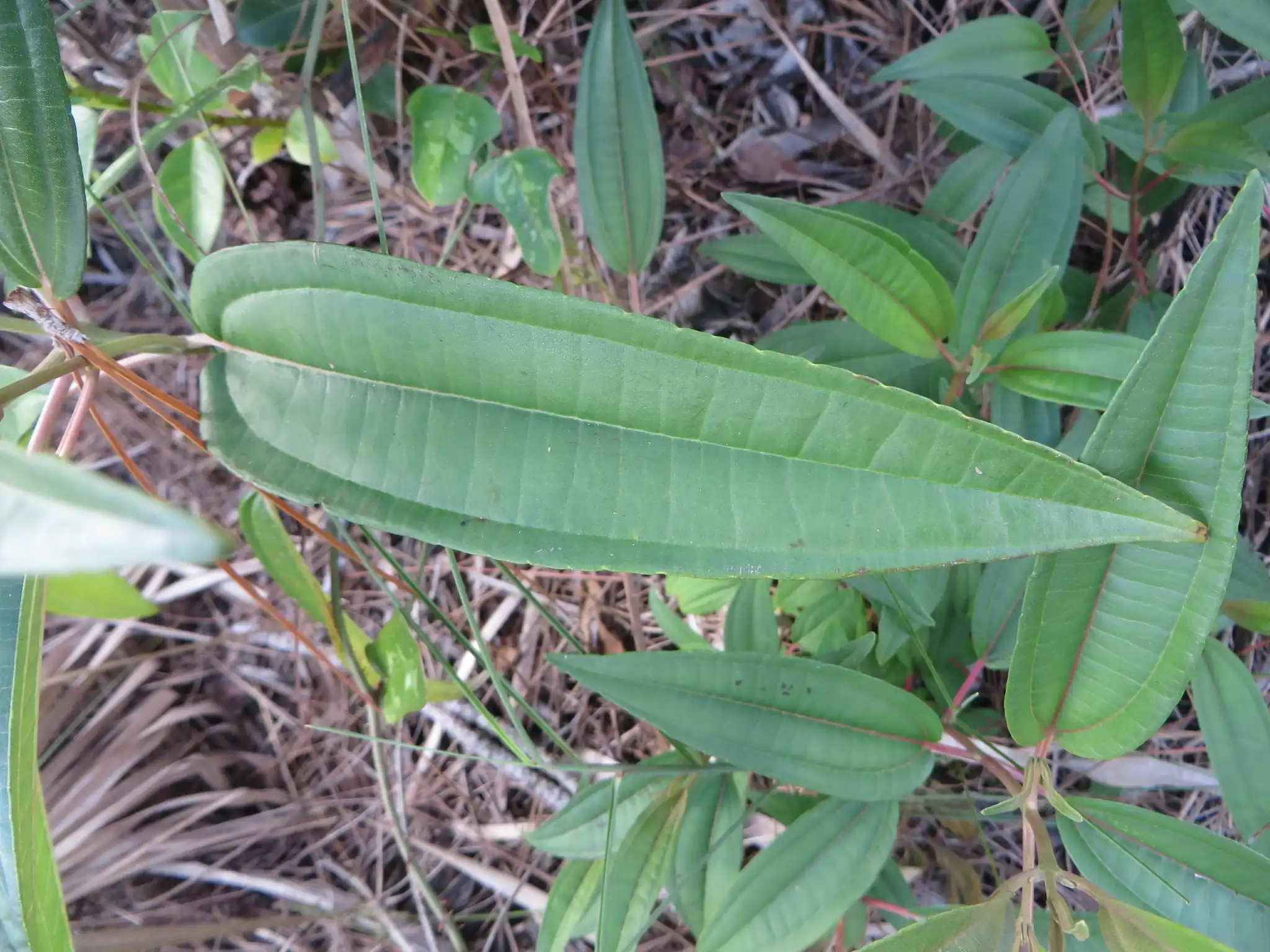
Miconia bicolor is an evergreen shrub to small tree reaching 10 to 15 feet in gardens, with opposite lance-shaped leaves strongly three-veined from the base. The foliage is bright green above and golden-yellow beneath, and the shoot tips carry many-flowered panicles to 8 inches long.
Flowers open white to pinkish-white with five petals around yellow anthers, followed by black-blue berries that birds strip quickly. It is a limestone rockland plant from near sea level, separated from other Florida shrubs by that two-tone leaf and its Threatened status in the wild in Florida.
Uses & Benefits:
Essentials
At a Glance
Plant Type
Shrub
Height
180"
Width
60"
Light
Full Sun, Partial Sun
Zones
10
Water
Low to moderate
Humidity
High
Lifespan
Long-lived shrub
Native To
South Florida, Bahamas, Caribbean
Toxicity
Non-toxic, edible fruit
Bloom period
Spring – Summer
In flower about 6 months of the year
Planting
How to Grow
- Plant in spring after danger of cold has passed, in partial shade with room for 36 to 60 inches spacing.
- Dig into sand, loam, or clay amended with limestone rubble so water drains fast and never ponds.
- Water deeply at planting, then water to establish through the first summer before backing off.
- Mulch 2 to 3 inches with leaf mulch, kept back from the stems.
- Tip-prune after summer bloom to keep the crown dense; protect from frost below 40F.
Pro Tip
Set it in well-drained calcareous soil in partial shade and keep salt wind and standing water off it; it rides out short dry spells but sheds foliage in prolonged drought and is killed back below zone 10B.
Keep It Thriving
Care Guide
Do
- Do plant in partial shade on well-drained sandy or calcareous soil.
- Do water deeply during establishment, then allow the top soil to dry between waterings.
- Do leave ripe berries for birds.
Don't
- Do not plant in salt spray, coastal flood zones, or soggy soil.
- Do not plant in full coastal sun and expect clean foliage.
- Do not try it outdoors below zone 10B without winter protection.
Seasonal Care Calendar
| Task | Jan | Feb | Mar | Apr | May | Jun | Jul | Aug | Sep | Oct | Nov | Dec |
|---|---|---|---|---|---|---|---|---|---|---|---|---|
| Mulch | ||||||||||||
| Pest Check | ||||||||||||
| Plant | ||||||||||||
| Prune |
Watch Out For
Pests & Diseases
Common Pests
Common Diseases
In the Garden
Landscape Uses & Companions
Landscape Uses
Multiply
Propagation Methods
Good to Know
Common Questions
West Indian Lilac questions
What zones can West Indian Lilac grow in?
West Indian Lilac is hardy in USDA Zone 10: in that range it survives winter in the ground. Colder than Zone 10, grow it in a container you can move to shelter for the winter.
When does West Indian Lilac bloom?
West Indian Lilac typically blooms from spring to summer. Exact timing shifts a week or two with your zone — Sow's bloom calendar maps it to your garden.
Does West Indian Lilac need full sun?
West Indian Lilac does best in full sun to part shade. In hot climates, afternoon shade keeps blooms fresher longer.
Is West Indian Lilac drought tolerant?
Yes — once established (usually after the first full season), West Indian Lilac handles dry spells with minimal watering. Water deeply its first year to build the root system that makes that possible.
Keep exploring
Explore the genus
Hardy in your zone?
Grow West Indian Lilac with confidence
See it in a design of your actual yard, get zone-matched care reminders, and track it season by season in your garden journal.