The Story
Plant Bio
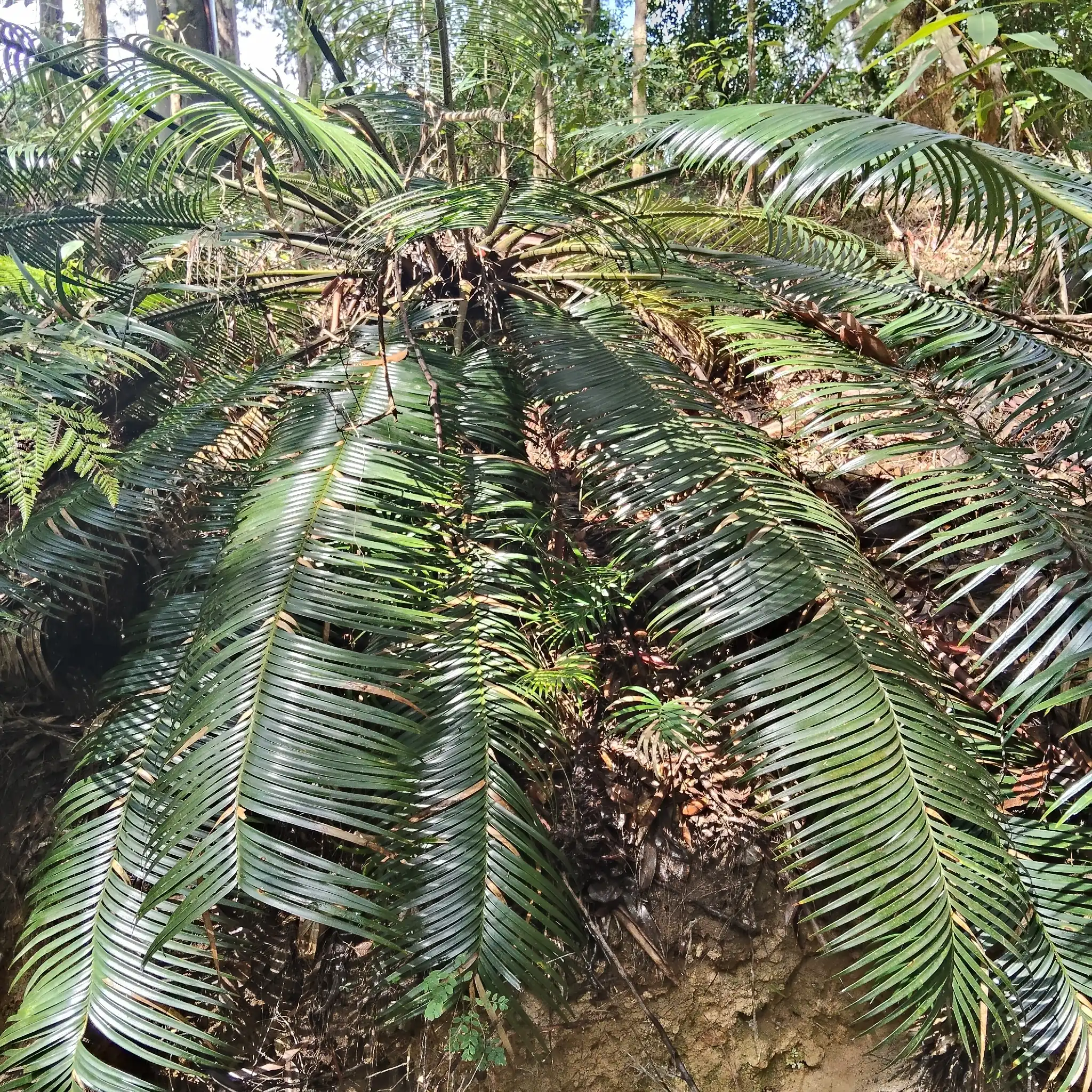
Lepidozamia peroffskyana, commonly known as the pineapple zamia, is a long-lived Australian cycad featuring a single woody trunk crowned with arching, glossy green fronds up to ten feet long. As a gymnosperm, it produces no true flowers, instead forming massive woody cones among the upper foliage.
Female specimens bear immense, egg-shaped cones weighing up to ninety pounds that yield bright red to orange-fleshed seeds. Unfolding fronds emerge covered in a fine, velvety brown down before expanding into dark, leathery foliage.
Uses & Benefits:
Essentials
At a Glance
Plant Type
Tropical
Height
118"
Width
118"
Light
Partial Sun, Shade
Zones
9, 10
Water
Moderate
Humidity
High
Lifespan
Perennial
Native To
Australia
Toxicity
Toxic if ingested
Bloom period
Summer – Fall
In flower about 6 months of the year
Planting
How to Grow
- Select a planting location in partial shade or dappled light protected from direct afternoon sun.
- Amend the planting site with organic matter and coarse sand to guarantee rapid water movement.
- Plant the specimen with the base of the trunk seated at the same level as its container soil.
- Water deeply at planting and maintain moderate moisture while roots establish during warm months.
Pro Tip
Do not cut away green or arching fronds to tidy the plant, as removing functional foliage starves the stem and severely stunts growth.
Keep It Thriving
Care Guide
Do
- Plant in rich, sharply draining soil mixes that prevent water from pooling around roots.
- Position in filtered sunlight or dappled shade to avoid bleaching mature fronds.
- Prune off only fully dead, brown lower fronds near the trunk base.
Don't
- Do not cut into green fronds or hack at the woody trunk tissue.
- Do not plant in heavy clay soils prone to waterlogging and root decay.
- Do not handle raw seeds or plant sap without protective gloves.
Seasonal Care Calendar
| Task | Jan | Feb | Mar | Apr | May | Jun | Jul | Aug | Sep | Oct | Nov | Dec |
|---|---|---|---|---|---|---|---|---|---|---|---|---|
| Fertilize | ||||||||||||
| Mulch | ||||||||||||
| Pest Check | ||||||||||||
| Prune |
Watch Out For
Pests & Diseases
Common Pests
Common Diseases
In the Garden
Landscape Uses & Companions
Landscape Uses
Multiply
Propagation Methods
Good to Know
Common Questions
Pineapple Zamia questions
What zones can Pineapple Zamia grow in?
Pineapple Zamia is hardy in USDA Zones 9–10: in that range it survives winter in the ground. Colder than Zone 9, grow it in a container you can move to shelter for the winter, or as an annual.
Is Pineapple Zamia deer resistant?
Not reliably. Deer may browse Pineapple Zamia, especially tender spring growth — plan on repellents or fencing where pressure is high.
When does Pineapple Zamia bloom?
Pineapple Zamia typically blooms from summer to fall. Exact timing shifts a week or two with your zone — Sow's bloom calendar maps it to your garden.
Does Pineapple Zamia need full sun?
Pineapple Zamia does best in part shade.
Is Pineapple Zamia drought tolerant?
Yes — once established (usually after the first full season), Pineapple Zamia handles dry spells with minimal watering. Water deeply its first year to build the root system that makes that possible.
Keep exploring
Explore the genus
Hardy in your zone?
Grow Pineapple Zamia with confidence
See it in a design of your actual yard, get zone-matched care reminders, and track it season by season in your garden journal.