The Story
Plant Bio
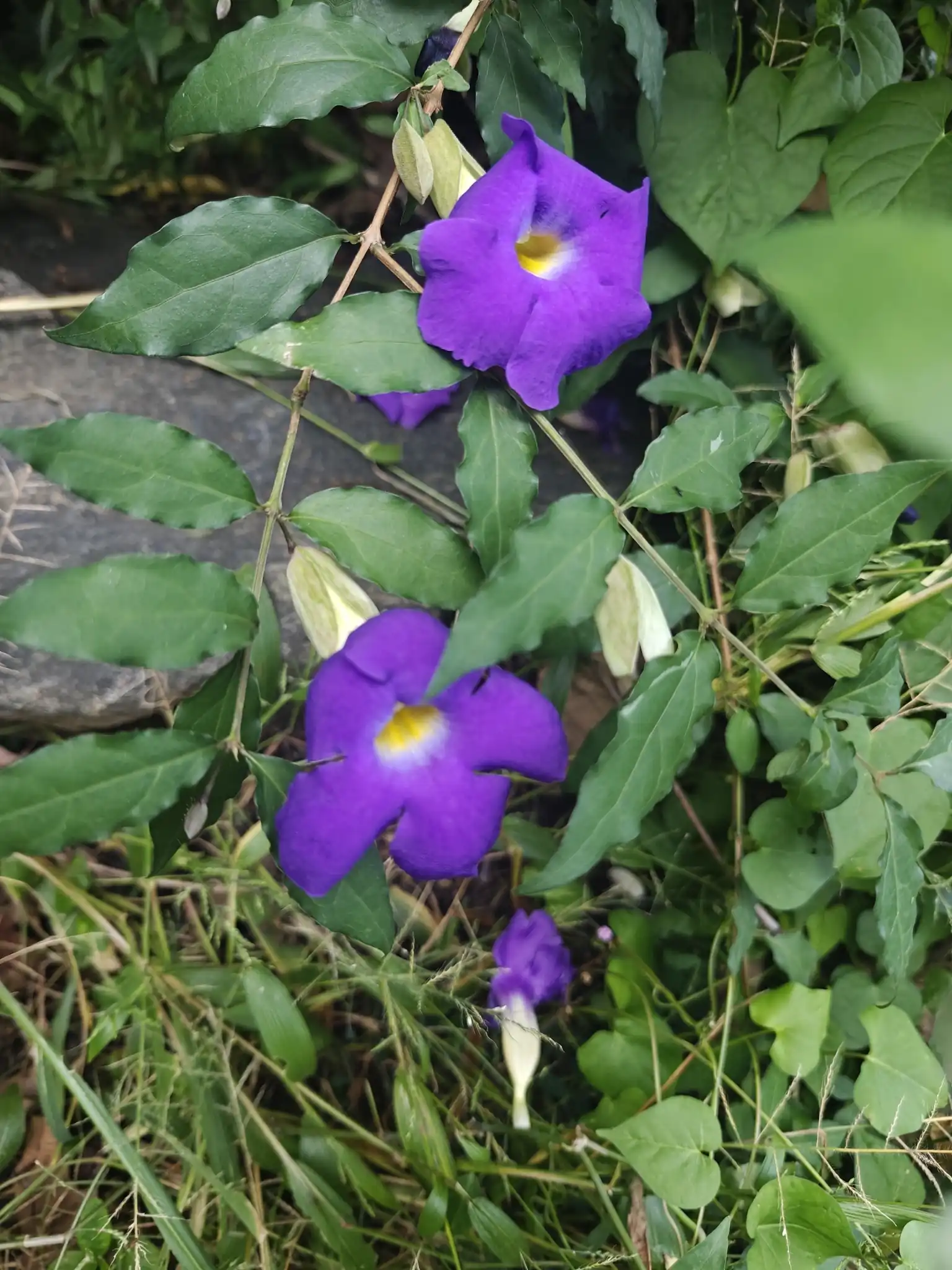
Thunbergia erecta is an evergreen woody shrub from tropical Africa, forming a densely branched upright mound four to six feet tall with small dark green elliptic leaves to two inches long. The flowers are short curved trumpet tubes about one inch long, opening to velvety dark blue to deep purple lobes around a yellow throat.
Unlike its climbing relatives, this species holds an erect shrubby form, though stems may twine weakly if left unpruned. It blooms through the year in frost-free climates, with white and magenta forms occurring alongside the usual blue-purple flower with a yellow throat.
Uses & Benefits:
Essentials
At a Glance
Plant Type
Shrub
Height
72"
Width
72"
Light
Full Sun, Partial Sun
Zones
9, 10
Water
Moderate
Humidity
Average
Lifespan
Perennial shrub
Native To
Tropical Africa
Toxicity
Non-toxic
Bloom period
Year round
In flower about 12 months of the year
Planting
How to Grow
- Plant in spring after frost in full sun to partial shade, with best flowering in full sun.
- Set in well-drained fertile loam or sandy soil enriched with organic matter, pH 6 to 7.
- Water regularly to establish, then water deeply during dry spells; established plants tolerate moderate drought.
- Prune after each flowering flush to shape and control size, removing seed pods.
- Protect from frost; grow in containers to move indoors where winters fall below zone 9.
Pro Tip
Give full sun and sharp drainage and prune lightly after each flush; repeated hard shearing removes buds and stops bloom while wet soil invites root rot.
Keep It Thriving
Care Guide
Do
- Do plant in sharp drainage to prevent root rot.
- Do prune after flowering to keep a bushy habit.
- Do mulch to conserve moisture while keeping the crown dry.
Don't
- Don't shear repeatedly during bud set or flowering will stop.
- Don't keep soil waterlogged or leave foliage wet overnight.
- Don't plant outdoors where hard frost is expected without winter protection.
Seasonal Care Calendar
| Task | Jan | Feb | Mar | Apr | May | Jun | Jul | Aug | Sep | Oct | Nov | Dec |
|---|---|---|---|---|---|---|---|---|---|---|---|---|
| Fertilize | ||||||||||||
| Pest Check | ||||||||||||
| Plant | ||||||||||||
| Prune | ||||||||||||
| Winter Prep |
Watch Out For
Pests & Diseases
Common Pests
Common Diseases
In the Garden
Landscape Uses & Companions
Landscape Uses
Multiply
Propagation Methods
Good to Know
Common Questions
King's Mantle questions
What zones can King's Mantle grow in?
King's Mantle is hardy in USDA Zones 9–10: in that range it survives winter in the ground. Colder than Zone 9, grow it in a container you can move to shelter for the winter.
When does King's Mantle bloom?
King's Mantle typically blooms year-round. Exact timing shifts a week or two with your zone — Sow's bloom calendar maps it to your garden.
Does King's Mantle need full sun?
King's Mantle does best in full sun to part shade. In hot climates, afternoon shade keeps blooms fresher longer.
Is King's Mantle drought tolerant?
Yes — once established (usually after the first full season), King's Mantle handles dry spells with minimal watering. Water deeply its first year to build the root system that makes that possible.
More Thunbergia to compare
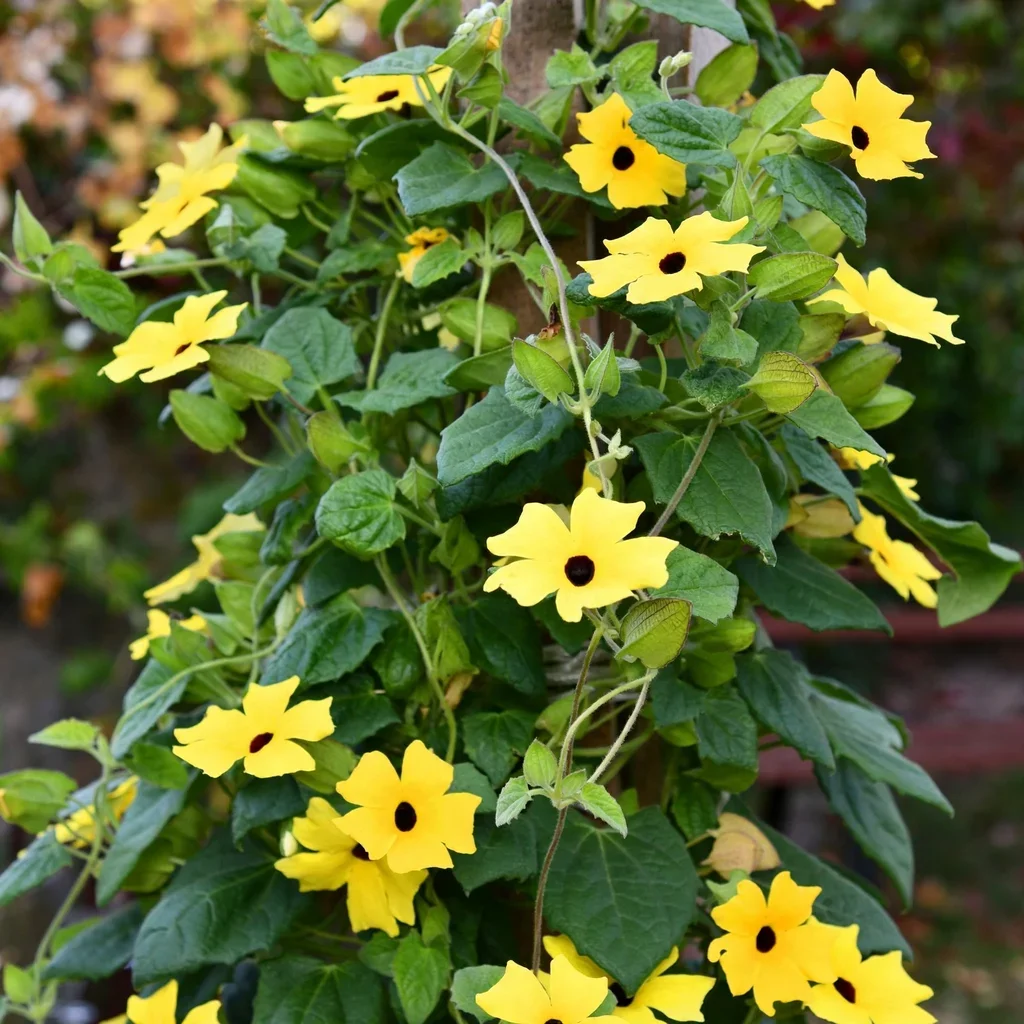
Black-eyed Susan Vine
Thunbergia alata
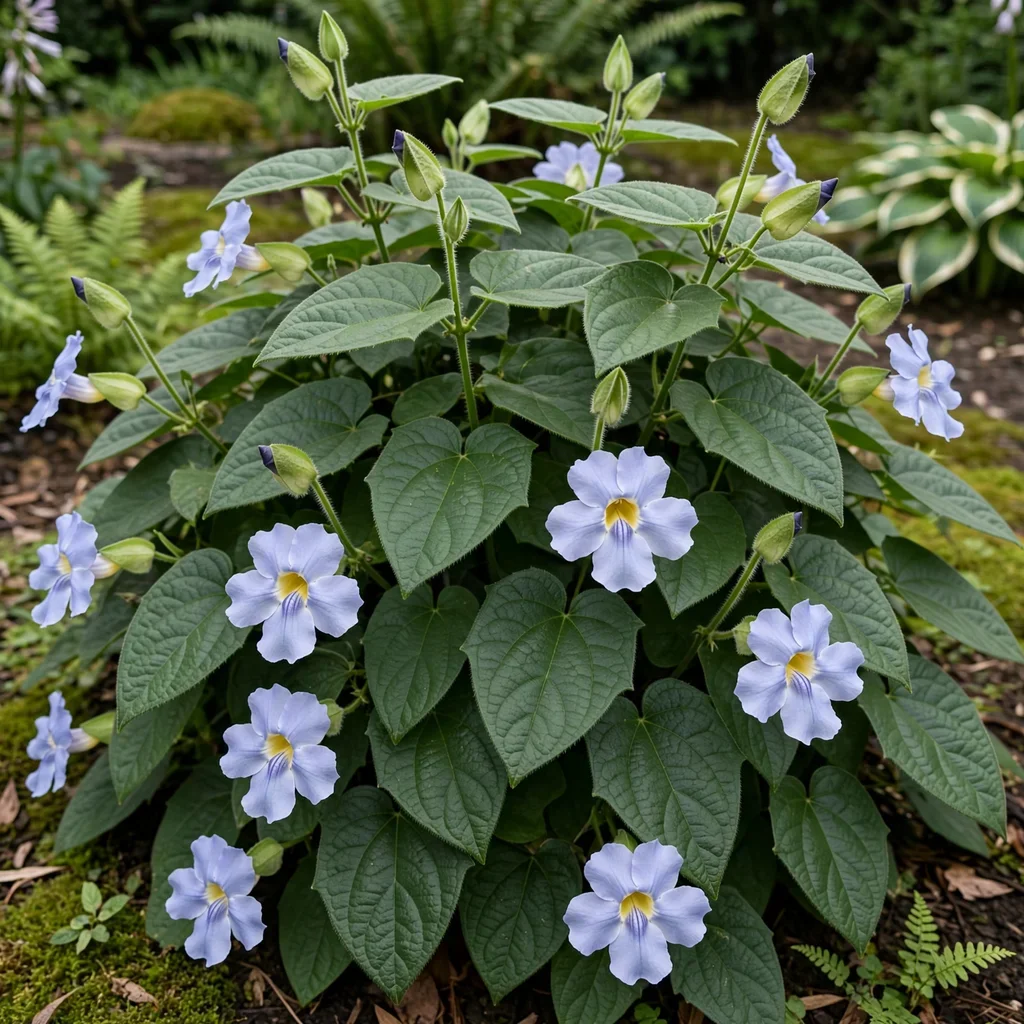
Natal Bluebell
Thunbergia natalensis
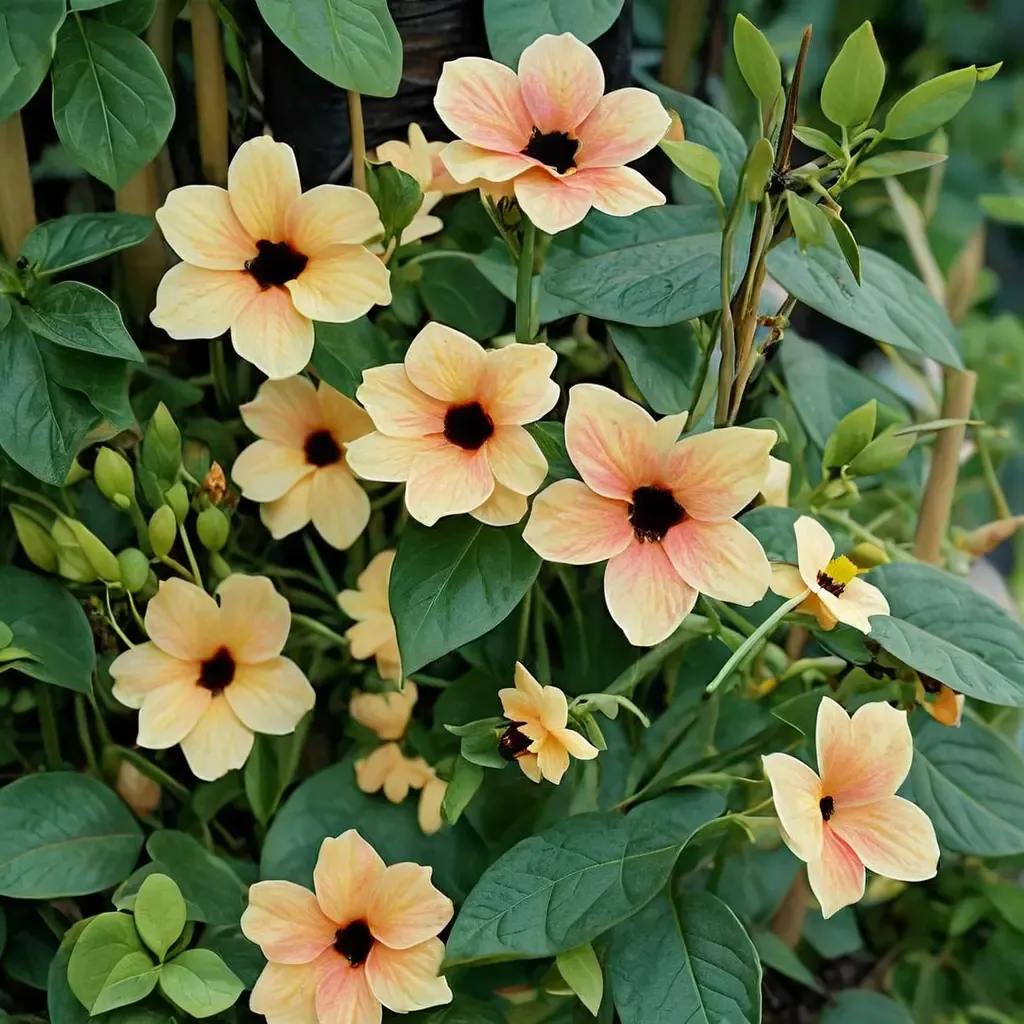
African Sunset Black-Eyed Susan Vine
Thunbergia alata 'African Sunset'
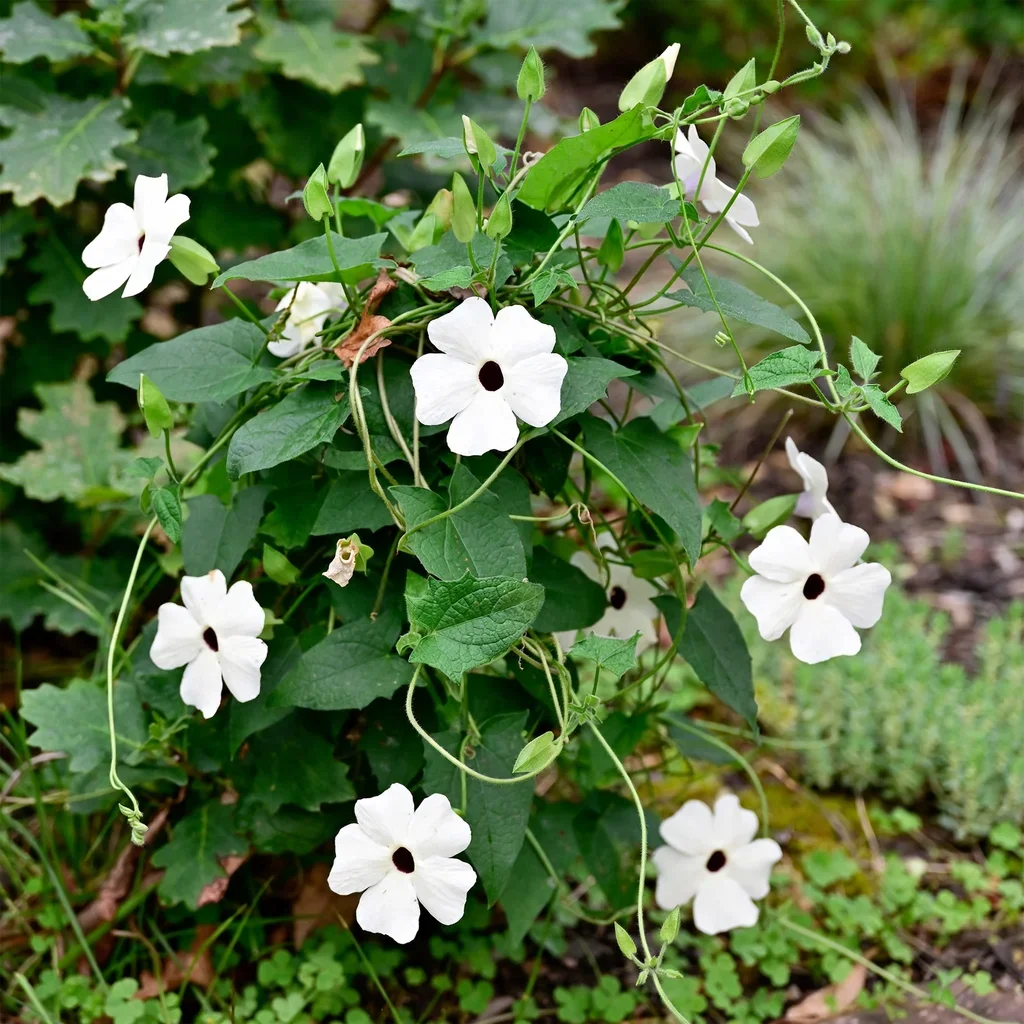
White Halo Black-eyed Susan Vine
Thunbergia alata 'White Halo'
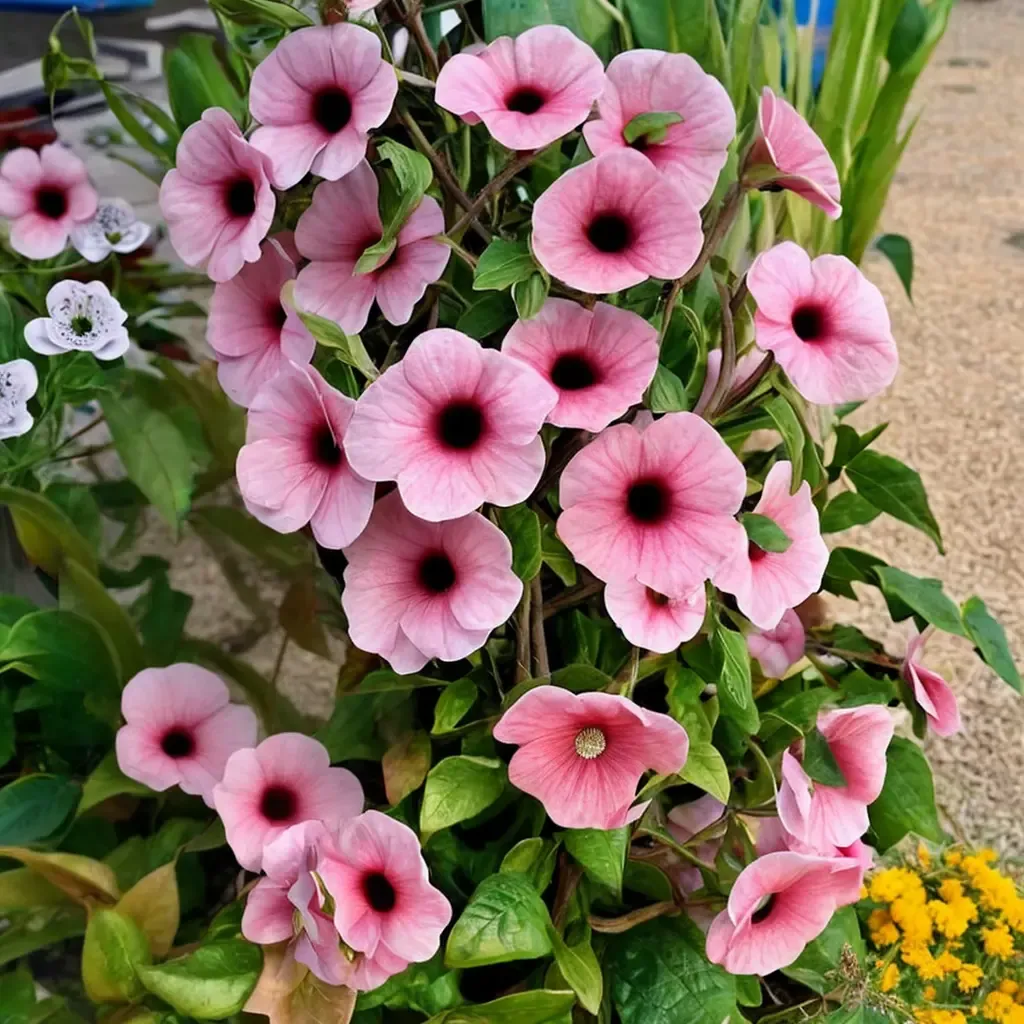
Rose Sensation Black-eyed Susan Vine
Thunbergia alata 'Rose Sensation'
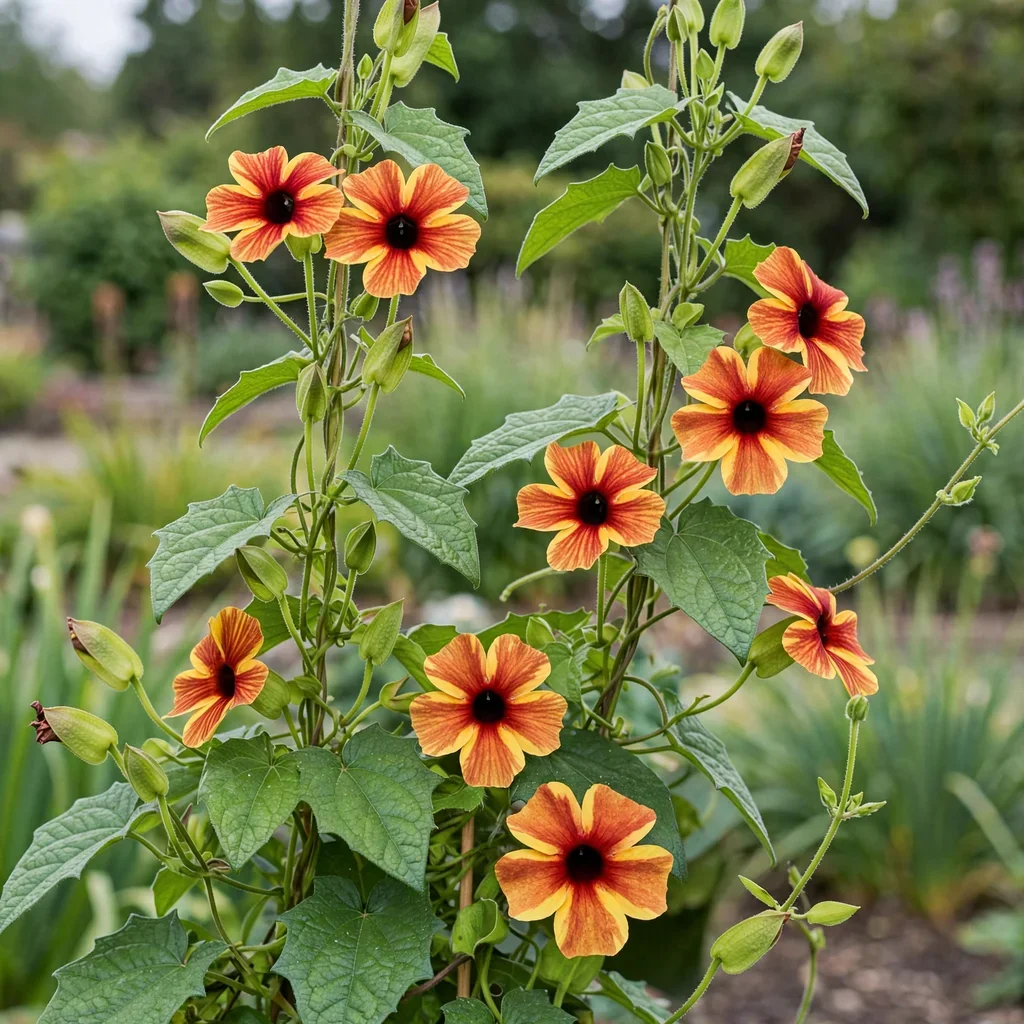
Black-eyed Susan Vine Thunbergia Amber Stripes
Thunbergia alata 'Amber Stripes'
Keep exploring
Explore the genus
Hardy in your zone?
Grow King's Mantle with confidence
See it in a design of your actual yard, get zone-matched care reminders, and track it season by season in your garden journal.