The Story
Plant Bio
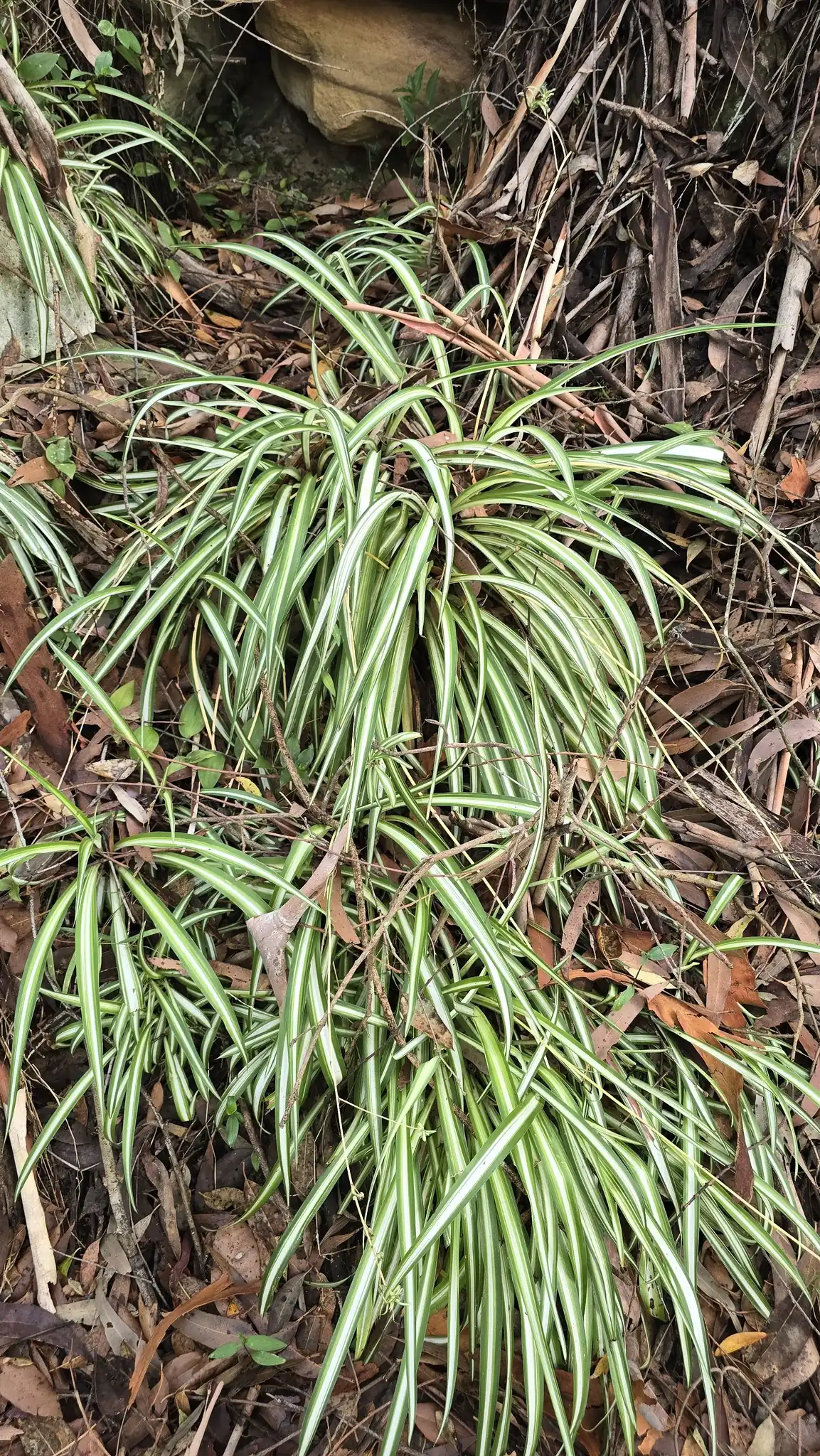
Chlorophytum comosum is a tufted herbaceous perennial from tropical and southern Africa, characterized by its fleshy, tuberous root system and arching, linear leaves. It produces long, cascading stolons that bear small, star-shaped white flowers, which are frequently replaced by vegetative plantlets.
The wild species features plain green foliage, though variegated cultivars with white margins or central stripes are far more common in cultivation. Its cascading habit and dangling offsets make it exceptionally suited for elevated displays where the runners can hang freely.
Uses & Benefits:
Essentials
At a Glance
Plant Type
Perennial
Height
24"
Width
24"
Light
Partial Sun, Shade
Zones
9, 10
Water
Moderate
Humidity
Moderate to high
Lifespan
Perennial
Native To
Africa
Toxicity
Non-toxic
Bloom period
Spring – Summer
In flower about 6 months of the year
Marketplace
Where to Buy
Shipping costs Year-round shipping Free shipping
Planting
How to Grow
- Select a container only slightly larger than the root ball to prevent excess soil from holding stagnant moisture.
- Position in bright, indirect light, avoiding harsh direct afternoon sun which scorches the foliage.
- Water thoroughly when the top inch of soil dries out, ensuring water drains freely from the bottom of the pot.
- Flush the soil periodically with rainwater or distilled water to prevent fluoride and salt accumulation.
Pro Tip
Keep the root system slightly crowded in its container; tight potting restricts aggressive tuber expansion, which directly triggers heavier runner development and plantlet production.
Keep It Thriving
Care Guide
Do
- Allow the soil to dry slightly between waterings to protect the fleshy, water-storing tubers.
- Use distilled water or rainwater if leaf tips begin to turn brown from tap water chemicals.
- Trim off brown leaf tips with sharp shears, following the natural shape of the leaf.
Don't
- Do not overpot into a massive container, as stagnant moisture in excess soil causes root rot.
- Avoid placing the plant in direct, intense afternoon sunlight to prevent leaf scorch.
- Do not fertilize during the fall and winter when growth naturally slows.
Seasonal Care Calendar
| Task | Jan | Feb | Mar | Apr | May | Jun | Jul | Aug | Sep | Oct | Nov | Dec |
|---|---|---|---|---|---|---|---|---|---|---|---|---|
| Divide | ||||||||||||
| Fertilize | ||||||||||||
| Propagate | ||||||||||||
| Prune |
Watch Out For
Pests & Diseases
Common Pests
Common Diseases
In the Garden
Landscape Uses & Companions
Landscape Uses
Companion Plants
Multiply
Propagation Methods
Good to Know
Common Questions
Spider Plant questions
What zones can Spider Plant grow in?
Spider Plant is hardy in USDA Zones 9–10. Inside that range it survives winter in the ground; outside it, grow it as an annual or a container plant you protect.
When does Spider Plant bloom?
Spider Plant typically blooms in spring through summer. Exact timing shifts a week or two with your zone — Sow's bloom calendar maps it to your garden.
Does Spider Plant need full sun?
Spider Plant does best in part shade.
Is Spider Plant drought tolerant?
Yes — once established (usually after the first full season), Spider Plant handles dry spells with minimal watering. Water deeply its first year to build the root system that makes that possible.
Keep exploring
Explore the genus
Hardy in your zone?
Grow Spider Plant with confidence
See it in a design of your actual yard, get zone-matched care reminders, and track it season by season in your garden journal.