The Story
Plant Bio
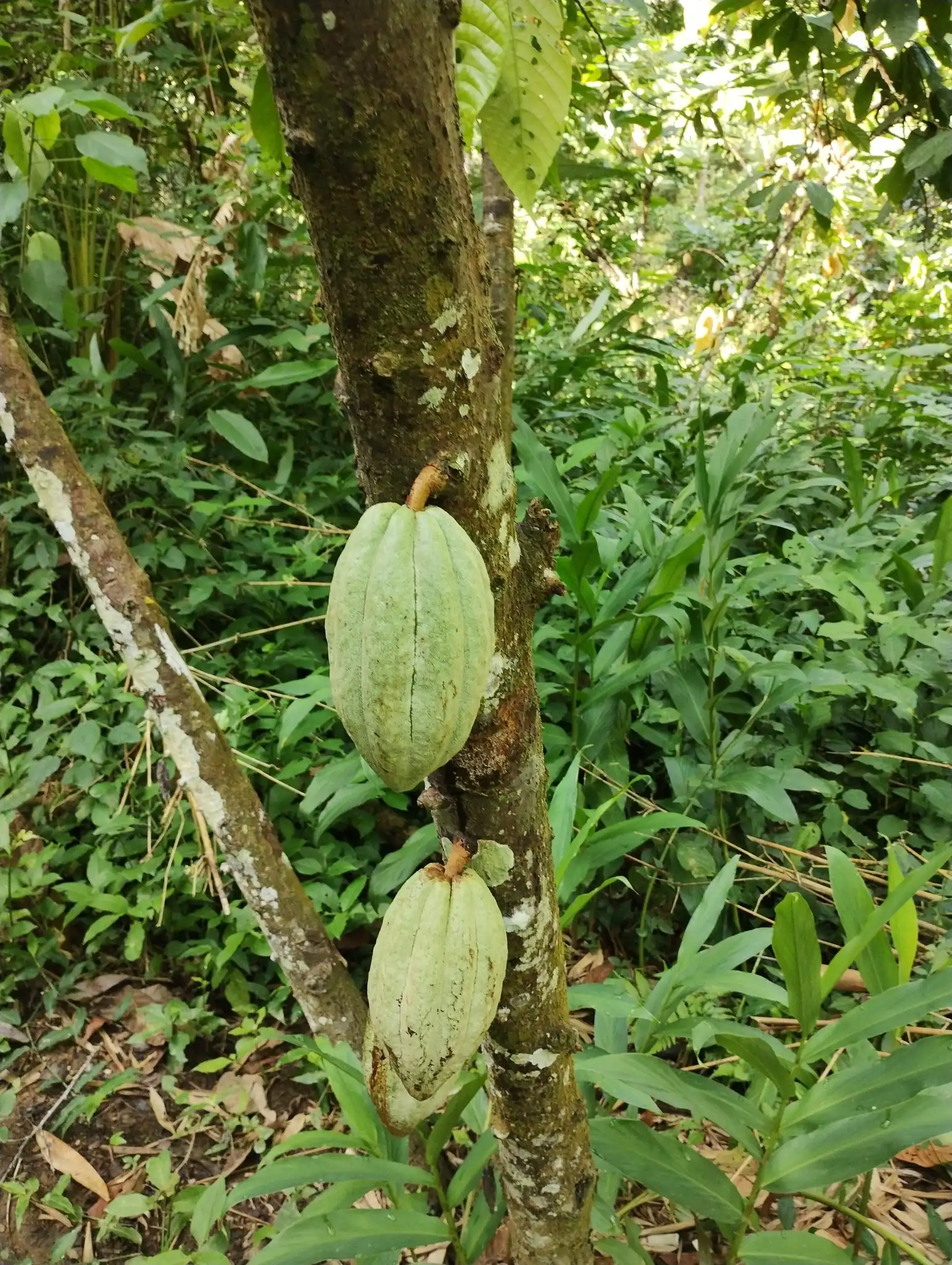
Theobroma cacao, the cocoa tree, is a small evergreen understory tree reaching twenty to thirty feet in cultivation, with alternate entire leaves ten to fifty centimeters long on a slender sparingly branched trunk. It carries small fragrant pink to white flowers about one to two centimeters across directly on the trunk and older branches, followed by large ridged pods where temperatures stay above twenty degrees.
This species is cauliflorous, flowering and fruiting from old wood rather than new shoots, so pods hang from the trunk where tiny midges can reach the flowers. It requires constant warmth above fifteen degrees, humidity above seventy percent and consistently moist humus-rich soil, and it fails quickly with frost, waterlogging or dry indoor winter air.
Uses & Benefits:
Essentials
At a Glance
Plant Type
Tropical
Height
300"
Width
180"
Light
Full Sun, Partial Sun, Shade
Water
High
Humidity
High
Lifespan
Long-lived evergreen tree
Native To
Upper Amazon and Orinoco basins
Toxicity
Toxic to dogs and cats
Bloom period
Year round
In flower about 12 months of the year
Planting
How to Grow
- Grow outdoors only in frost-free Zone 11-12 in Hawaii, South Florida, South California or Puerto Rico; elsewhere grow as a heated greenhouse or conservatory plant.
- Plant in a large container or rich ground bed in fertile humus-rich mix that stays consistently moist but drains freely.
- Give full sun to light shade with best growth in dappled partial shade and shelter from wind.
- Hold temperatures at 68 to 86F with humidity above 70 percent and never below 60F.
- Prune to keep under thirteen feet and remove diseased pods and branches promptly to keep picking height and airflow.
Pro Tip
Keep it under fifteen feet for picking in dappled shade with wind protection, constantly warm, humid and moist; it will not survive a temperate winter outdoors and fresh beans need fermenting and roasting for chocolate.
Keep It Thriving
Care Guide
Do
- Keep soil evenly moist with abundant regular water and mulch with organic matter.
- Feed with rich organic fertilizer frequently through the growing season.
- Provide shade, wind protection and high humidity.
- Remove infected pods and prune for light and air.
Don't
- Do not expose to frost or temperatures below 60F.
- Do not let soil dry out or stay waterlogged.
- Do not let the tree exceed picking height.
- Do not eat fresh beans expecting chocolate flavor.
Seasonal Care Calendar
| Task | Jan | Feb | Mar | Apr | May | Jun | Jul | Aug | Sep | Oct | Nov | Dec |
|---|---|---|---|---|---|---|---|---|---|---|---|---|
| Fertilize | ||||||||||||
| Mulch | ||||||||||||
| Pest Check | ||||||||||||
| Prune | ||||||||||||
| Winter Prep |
Watch Out For
Pests & Diseases
Common Pests
Common Diseases
In the Garden
Landscape Uses & Companions
Landscape Uses
Companion Plants
Multiply
Propagation Methods
Good to Know
Common Questions
Cocoa Tree questions
When does Cocoa Tree bloom?
Cocoa Tree typically blooms year-round. Exact timing shifts a week or two with your zone — Sow's bloom calendar maps it to your garden.
Does Cocoa Tree need full sun?
Cocoa Tree does best in full sun to part shade. In hot climates, afternoon shade keeps blooms fresher longer.
Keep exploring
Explore the genus
Grow Cocoa Tree with confidence
See it in a design of your actual yard, get zone-matched care reminders, and track it season by season in your garden journal.