The Story
Plant Bio
Solandra maxima is a fast-growing evergreen woody vine from seasonally dry tropical forest in Mexico to Central America, climbing by thick scrambling stems that harden into liana-like wood. The leaves are large, elliptic and glossy deep green, held on stout stems that root where they contact soil or support.
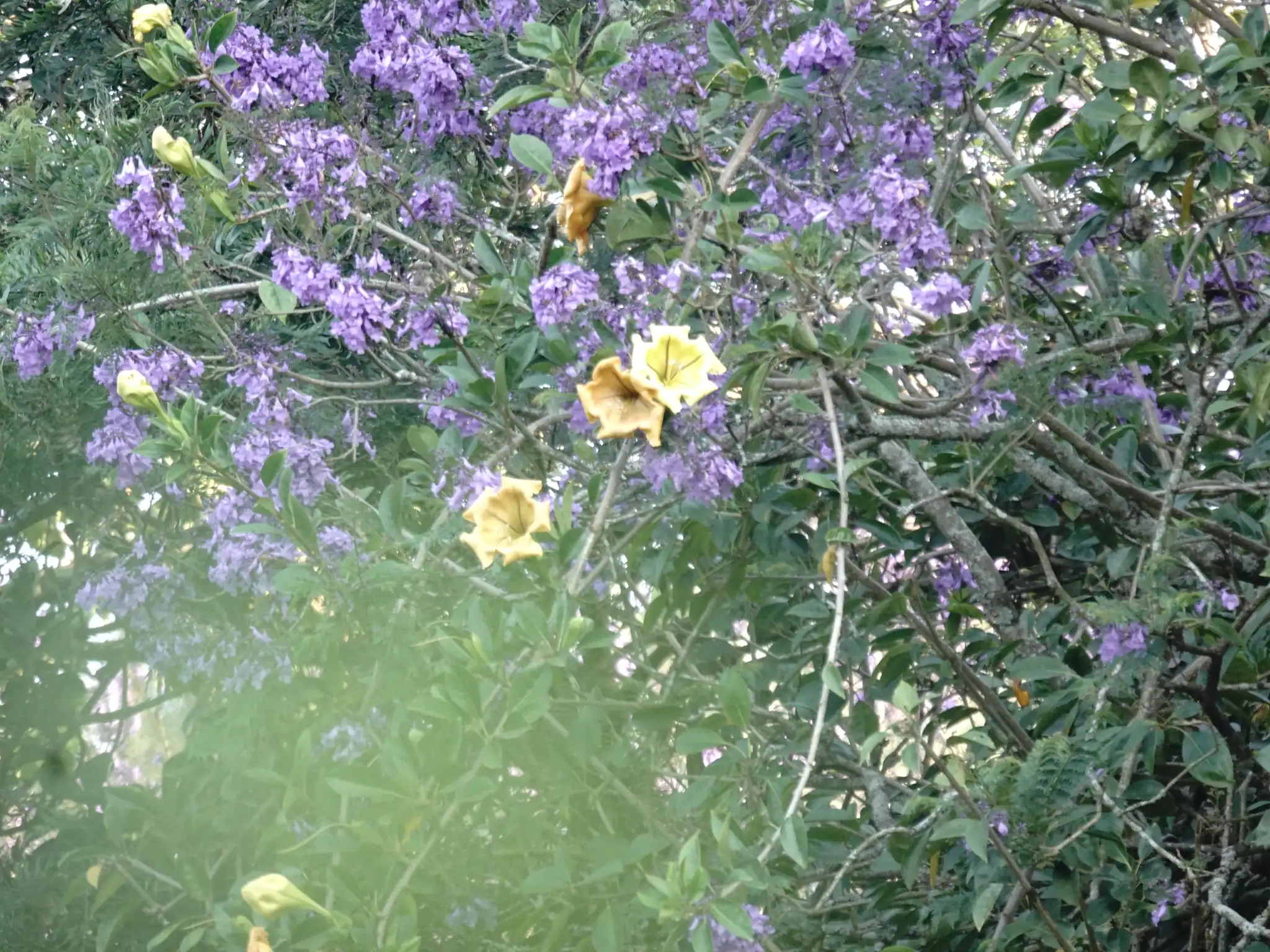
The flowers are chalice-shaped trumpets 15 to 25 cm long that open creamy yellow and deepen to gold, each throat marked with five purple-brown ridges. They release a strong coconut scent at night and are borne in flushes from spring to summer on new growth.
Uses & Benefits:
Essentials
At a Glance
Plant Type
Vine
Height
472"
Width
177"
Light
Full Sun, Partial Sun
Zones
8, 9, 10
Water
Moderate
Humidity
High
Lifespan
Long-lived evergreen vine
Native To
Mexico to Central America to northern South America
Toxicity
Extremely toxic if ingested
Bloom period
Spring – Summer
In flower about 6 months of the year
Planting
How to Grow
- Plant after frost risk has passed in full sun, with light afternoon shade in the hottest zones.
- Set into fertile, moist but well-drained soil where water never stands.
- Place beside a load-bearing pergola or wall frame and tie the scrambling stems to the support.
- Water deeply to establish and mulch the root zone to hold moisture.
- Prune to shape after flowering and wear gloves and eye protection when handling stems and sap.
Pro Tip
Build the pergola first; a mature vine runs 30 to 50 feet in a few seasons and the weight of wood plus water-filled flowers collapses a light trellis.
Keep It Thriving
Care Guide
Do
- Give full sun on top growth with roots shaded and mulched.
- Provide a strong pergola and tie new stems before they harden.
- Prune after flowering to keep size within bounds.
- Wear gloves and glasses and wash hands after pruning.
Don't
- Do not plant where soil stays waterlogged.
- Do not train to a light trellis or gutter that cannot carry wood weight.
- Do not ingest any part and keep away from children and pets.
- Do not burn prunings.
Seasonal Care Calendar
| Task | Jan | Feb | Mar | Apr | May | Jun | Jul | Aug | Sep | Oct | Nov | Dec |
|---|---|---|---|---|---|---|---|---|---|---|---|---|
| Mulch | ||||||||||||
| Pest Check | ||||||||||||
| Plant | ||||||||||||
| Prune | ||||||||||||
| Winter Prep |
Watch Out For
Pests & Diseases
Common Pests
Common Diseases
In the Garden
Landscape Uses & Companions
Landscape Uses
Multiply
Propagation Methods
Good to Know
Common Questions
Cup of Gold Vine questions
What zones can Cup of Gold Vine grow in?
Cup of Gold Vine is hardy in USDA Zones 8–10: in that range it survives winter in the ground. Colder than Zone 8, grow it in a container you can move to shelter for the winter, or as an annual.
When does Cup of Gold Vine bloom?
Cup of Gold Vine typically blooms from spring to summer. Exact timing shifts a week or two with your zone — Sow's bloom calendar maps it to your garden.
Does Cup of Gold Vine need full sun?
Cup of Gold Vine does best in full sun to part shade. In hot climates, afternoon shade keeps blooms fresher longer.
Keep exploring
Explore the genus
Hardy in your zone?
Grow Cup of Gold Vine with confidence
See it in a design of your actual yard, get zone-matched care reminders, and track it season by season in your garden journal.