The Story
Plant Bio
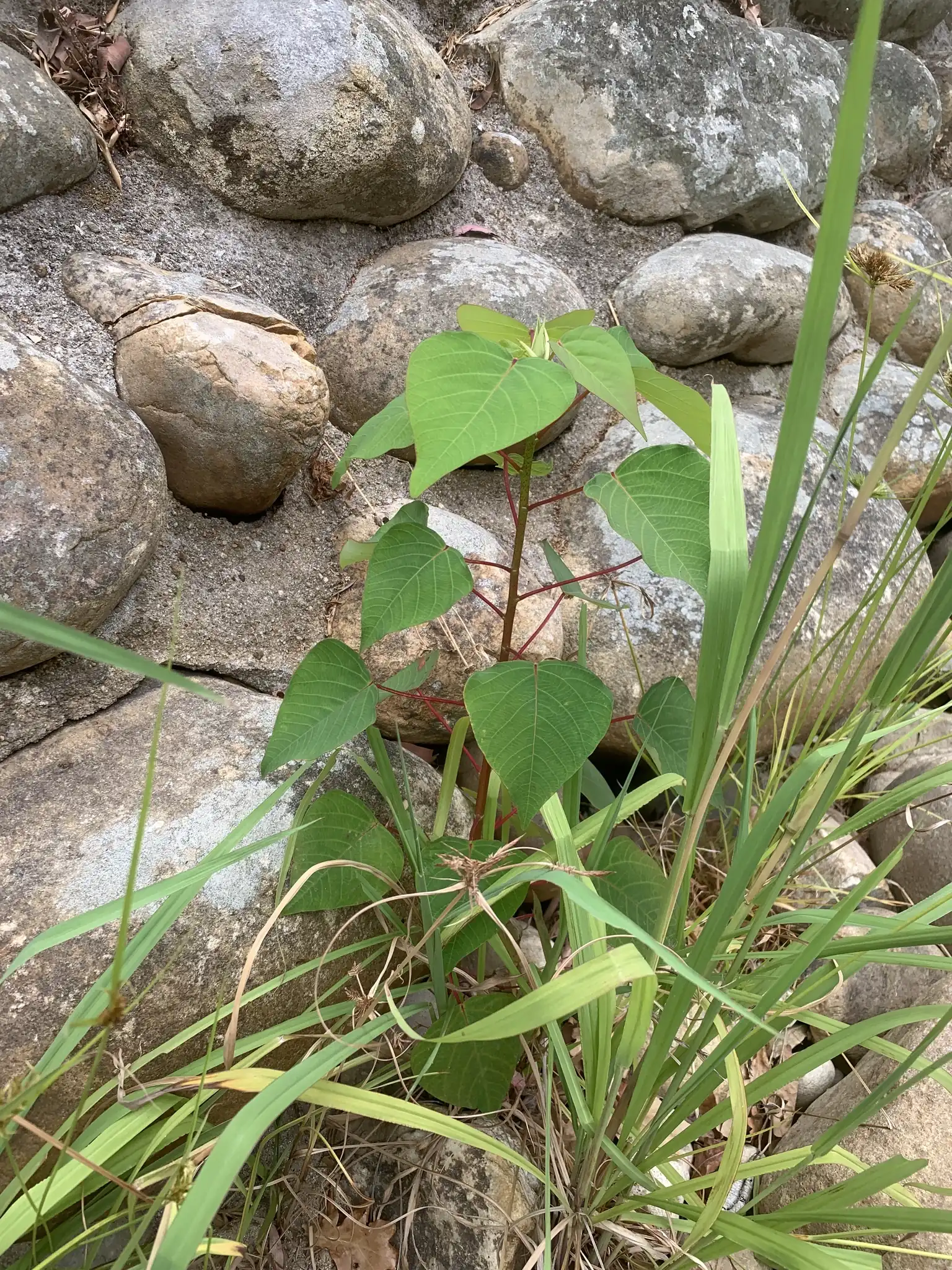
Homalanthus populifolius is an open, fast-growing pioneer shrub or small tree with broad, triangular leaves that resemble poplars. Before old foliage drops, individual leaves turn brilliant pink to deep blood-red, creating color throughout the canopy year-round.
Small, apetalous yellow-green flowers appear in slender terminal racemes during spring and summer. Cut stems and petioles exude a milky white latex sap typical of the spurge family.
Uses & Benefits:
Essentials
At a Glance
Plant Type
Shrub
Height
315"
Width
196"
Light
Full Sun, Partial Sun, Shade
Zones
9, 10
Water
Moderate
Humidity
Moderate
Lifespan
Short-lived pioneer (~10 years)
Native To
Australasia and Papuasia
Toxicity
Toxic if ingested; milky latex causes skin irritation
Bloom period
Spring – Summer
In flower about 6 months of the year
Planting
How to Grow
- Select a planting location in full sun to partial shade with rich, well-draining soil.
- Dig a hole twice as wide as the root ball and set the plant at the same depth as its container.
- Backfill with native soil enriched with organic matter and water thoroughly to settle.
- Maintain regular moisture during establishment, especially through dry spells.
Pro Tip
Prune lightly and avoid cutting back into old, leafless wood, which causes dieback and weak regrowth.
Keep It Thriving
Care Guide
Do
- Provide regular watering while the plant is establishing its root system.
- Wear gloves when pruning to avoid contact with the irritating milky sap.
- Allow self-sown seedlings to grow if you wish to maintain the plant long-term.
Don't
- Do not cut heavily into old bare wood, as branches will fail to resprout.
- Do not plant in poorly drained, waterlogged heavy clays.
- Do not allow soil to dry out completely during extended warm periods.
Seasonal Care Calendar
| Task | Jan | Feb | Mar | Apr | May | Jun | Jul | Aug | Sep | Oct | Nov | Dec |
|---|---|---|---|---|---|---|---|---|---|---|---|---|
| Fertilize | ||||||||||||
| Pest Check | ||||||||||||
| Prune | ||||||||||||
| Winter Prep |
Watch Out For
Pests & Diseases
Common Pests
Common Diseases
In the Garden
Landscape Uses & Companions
Landscape Uses
Multiply
Propagation Methods
Good to Know
Common Questions
Bleeding Heart questions
What zones can Bleeding Heart grow in?
Bleeding Heart is hardy in USDA Zones 9–10: in that range it survives winter in the ground. Colder than Zone 9, grow it in a container you can move to shelter for the winter.
Is Bleeding Heart deer resistant?
Not reliably. Deer may browse Bleeding Heart, especially tender spring growth — plan on repellents or fencing where pressure is high.
When does Bleeding Heart bloom?
Bleeding Heart typically blooms from spring to summer. Exact timing shifts a week or two with your zone — Sow's bloom calendar maps it to your garden.
Does Bleeding Heart need full sun?
Bleeding Heart does best in full sun to part shade. In hot climates, afternoon shade keeps blooms fresher longer.
Keep exploring
Explore the genus
Hardy in your zone?
Grow Bleeding Heart with confidence
See it in a design of your actual yard, get zone-matched care reminders, and track it season by season in your garden journal.