The Story
Plant Bio
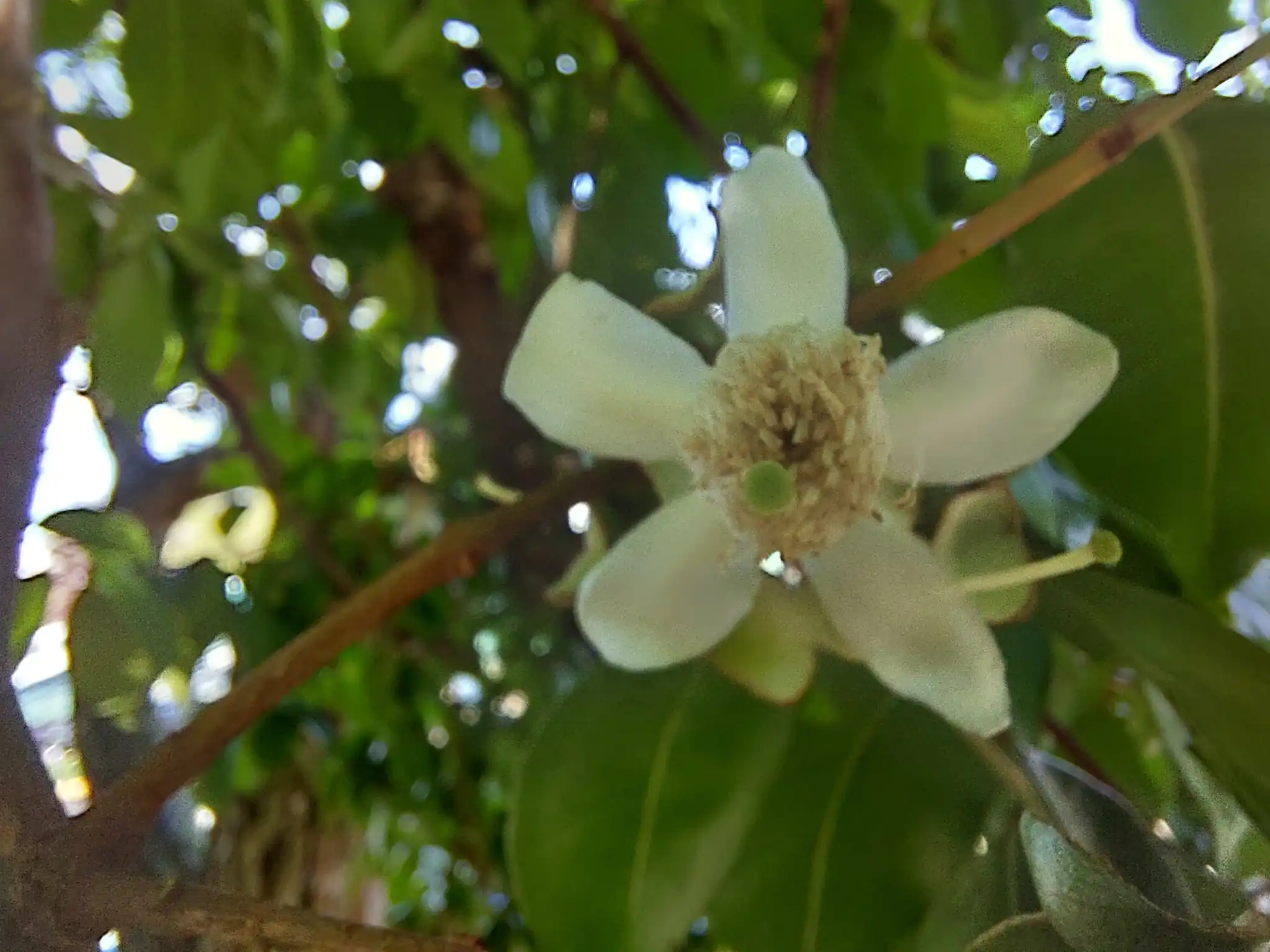
Psidium friedrichsthalianum, the Costa Rican guava, is an evergreen small tree reaching 10 to 20 feet in warm gardens, with a slender trunk, red-brown bark and wiry four-winged reddish branchlets. The leaves are thin, papery and gland-dotted, elliptic to oval and dark green above, with solitary fragrant white waxy flowers about one inch wide on slender axillary stalks.
It is distinguished from common guava by thin papery leaves and round yellow fruit one to two inches across that is intensely sour, high in pectin and free of musky odor. Seedlings are used as root-knot-nematode and wilt-resistant rootstocks for common guava, and the sharp acidity of the pulp suppresses fruit-fly larvae.
Uses & Benefits:
Essentials
At a Glance
Plant Type
Fruit Vegetable
Height
240"
Width
120"
Light
Full Sun
Zones
9, 10
Water
Moderate to high
Humidity
High
Lifespan
Long-lived
Native To
Southern Mexico to Colombia, Venezuela and Ecuador
Toxicity
Non-toxic; edible fruit
Bloom period
Summer
In flower about 3 months of the year
Planting
How to Grow
- Plant in full sun after last frost in rich, organic, well-drained soil with pH 5 to 7.
- Water deeply and regularly to maintain even moisture and mulch to hold humidity.
- Feed lightly through the warm season to support growth and fruiting.
- Prune to keep a low bushy crown and keep container plants root-pruned and repotted.
- Protect below 30F by moving pots indoors or covering in-ground trees.
Pro Tip
Keep it hot, prune to keep the crown low and bushy, and move potted plants indoors before temperatures drop below 30F.
Keep It Thriving
Care Guide
Do
- Do give full sun, heat and steady moisture for flowering and fruit ripening.
- Do pick yellow ripe fruit promptly and destroy fallen infested fruit.
- Do inspect leaf undersides for whitefly, scale and mealybugs.
Don't
- Do not plant in frost pockets or leave unprotected below 30F.
- Do not let soil stay waterlogged or go completely dry for long periods.
- Do not confuse it with common guava; the leaves are thin and papery, not leathery.
Seasonal Care Calendar
| Task | Jan | Feb | Mar | Apr | May | Jun | Jul | Aug | Sep | Oct | Nov | Dec |
|---|---|---|---|---|---|---|---|---|---|---|---|---|
| Fertilize | ||||||||||||
| Harvest | ||||||||||||
| Pest Check | ||||||||||||
| Plant | ||||||||||||
| Prune |
Watch Out For
Pests & Diseases
Common Pests
Common Diseases
In the Garden
Landscape Uses & Companions
Landscape Uses
Multiply
Propagation Methods
Good to Know
Common Questions
Costa Rican Guava questions
What zones can Costa Rican Guava grow in?
Costa Rican Guava is hardy in USDA Zones 9–10: in that range it survives winter in the ground. Colder than Zone 9, grow it in a container you can move to shelter for the winter, or as an annual.
When does Costa Rican Guava bloom?
Costa Rican Guava typically blooms in summer. Exact timing shifts a week or two with your zone — Sow's bloom calendar maps it to your garden.
Does Costa Rican Guava need full sun?
Costa Rican Guava does best in full sun (6+ hours).
More Psidium to compare
Keep exploring
Explore the genus
Hardy in your zone?
Grow Costa Rican Guava with confidence
See it in a design of your actual yard, get zone-matched care reminders, and track it season by season in your garden journal.