The Story
Plant Bio
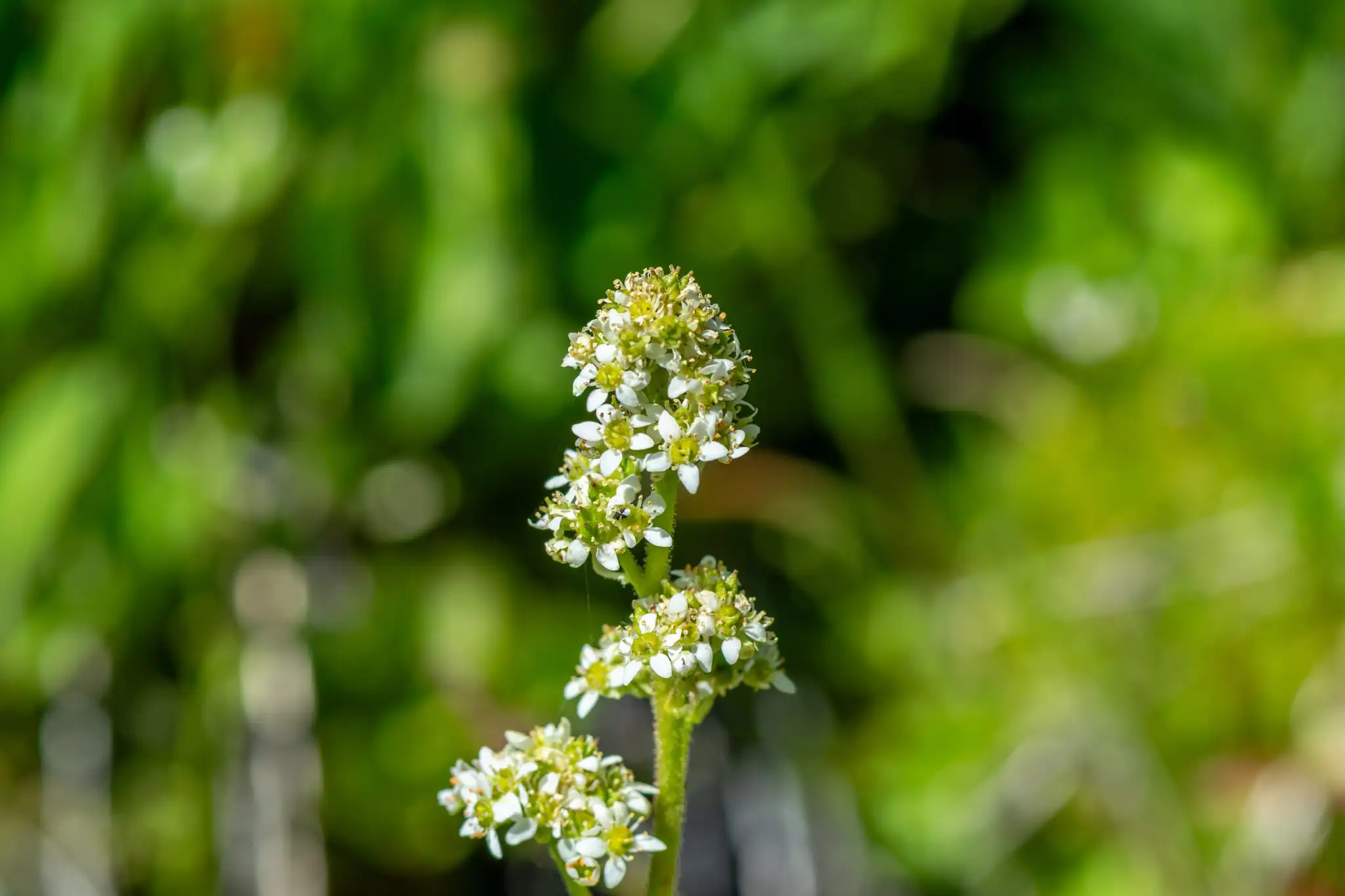
Micranthes oregana is a herbaceous perennial native to wet mountain habitats across western North America, forming a dense basal rosette of fleshy, strap-like leaves. From late spring into summer, a thick erect flowering stalk rises up to four feet high, topped with a dense cylindrical cluster of small, unspotted white flowers.
This wetland specialist relies on constant moisture, thriving in bogs, seepages, and saturated stream margins where standard garden perennials wilt. Its fleshy rhizomatous caudex survives severe montane winter freezes while sustaining tall, stout flower spires each season.
Uses & Benefits:
Essentials
At a Glance
Plant Type
Perennial
Height
49"
Width
18"
Light
Full Sun, Partial Sun
Zones
5, 6, 7, 8, 9
Water
High / Continuously wet
Humidity
Moderate to high
Lifespan
Perennial
Native To
Western North America
Toxicity
Non-toxic
Bloom period
Late spring – Summer
In flower about 4 months of the year
Marketplace
Where to Buy
Shipping costs Year-round shipping Free shipping
Planting
How to Grow
- Select a planting location in full sun or partial shade with continuously wet or boggy soil.
- Set the caudex just below the soil surface so the crown sits level with the surrounding damp soil.
- Maintain saturated ground conditions year-round by siting near pond margins, rain gardens, or gentle water seeps.
- Cut spent flower stalks back to the basal rosette after blooming finishes.
Pro Tip
Keep the soil saturated or continuously wet year-round; allowing the root zone to dry out during summer heat causes rapid decline and foliage death.
Keep It Thriving
Care Guide
Do
- Keep soil continuously moist to wet at all times.
- Plant in organic, neutral to slightly acidic wet soils.
- Ensure gentle water movement to prevent stagnant, anaerobic crown conditions.
Don't
- Do not allow the soil to dry out during summer.
- Do not prune into the fleshy woody caudex.
- Do not apply heavy doses of synthetic high-phosphorus fertilizers.
Seasonal Care Calendar
| Task | Jan | Feb | Mar | Apr | May | Jun | Jul | Aug | Sep | Oct | Nov | Dec |
|---|---|---|---|---|---|---|---|---|---|---|---|---|
| Deadhead | ||||||||||||
| Fertilize | ||||||||||||
| Propagate | ||||||||||||
| Spring Cleanup | ||||||||||||
| Winter Prep |
Watch Out For
Pests & Diseases
Common Pests
Common Diseases
In the Garden
Landscape Uses & Companions
Landscape Uses
Multiply
Propagation Methods
Good to Know
Common Questions
Oregon Saxifrage questions
What zones can Oregon Saxifrage grow in?
Oregon Saxifrage is hardy in USDA Zones 5–9: in that range it survives winter in the ground. Colder than Zone 5, grow it in a container you can move to shelter for the winter, or as an annual. Warmer than Zone 9, winter isn't the problem: it prefers colder winters, and summer heat can shorten its life.
When does Oregon Saxifrage bloom?
Oregon Saxifrage typically blooms from late spring to late summer. Exact timing shifts a week or two with your zone — Sow's bloom calendar maps it to your garden.
Does Oregon Saxifrage need full sun?
Oregon Saxifrage does best in full sun to part shade. In hot climates, afternoon shade keeps blooms fresher longer.
Keep exploring
Explore the genus
Hardy in your zone?
Grow Oregon Saxifrage with confidence
See it in a design of your actual yard, get zone-matched care reminders, and track it season by season in your garden journal.