The Story
Plant Bio
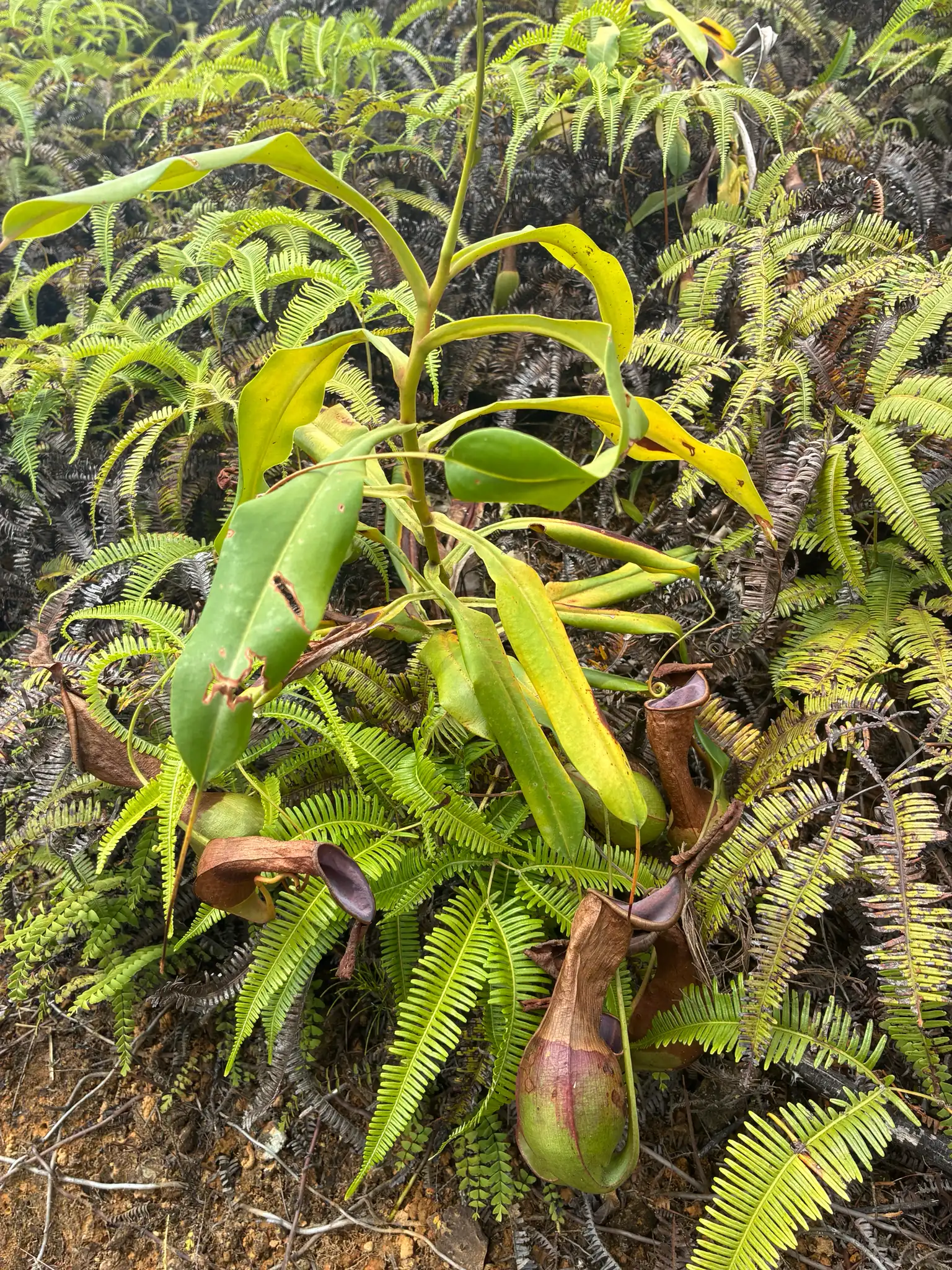
Nepenthes alata, the winged pitcher plant, is an evergreen tropical climbing vine reaching two to five feet in a pot, with shiny bright green leaves each extended by a slender tendril. The tendril tip swells into a hanging green to red-speckled orange-purple pitcher four to seven inches long, while petalless burgundy-green to brown flowers are borne on separate male and female spike-like racemes in summer.
True alata is endemic to mossy montane forest in north-central Luzon at 1800 to 5400 feet in the Cordillera, Zambales and Sierra Madre ranges, recognized by its hairy pitchers, while most nursery stock sold as alata is graciliflora or the vigorous ventrata hybrid. Care is identical for those trade plants, which all require mineral-free water and humidity above 60 percent to keep forming pitchers.
Uses & Benefits:
Essentials
At a Glance
Plant Type
Tropical
Height
59"
Width
35"
Light
Partial Sun, Shade
Zones
9, 10
Water
Moist, never dry
Humidity
High, 60-80%
Lifespan
Perennial evergreen vine
Native To
Philippines - Luzon
Toxicity
Non-toxic
Bloom period
Summer
In flower about 3 months of the year
Planting
How to Grow
- Set in bright indirect light with protection from hot afternoon sun, about 2500-3000 foot-candles.
- Pot in nutrient-poor sphagnum moss mixed with perlite and bark, never in potting soil or garden loam.
- Keep the mix moist at all times with distilled or rain water only, never letting it dry out or sit waterlogged.
- Hold humidity at 60-80 percent with a pebble tray, humidifier, or terrarium; dry air stops pitcher formation.
- Keep above 50F, bringing indoors well before frost; protect below 40F.
Pro Tip
Water only with distilled or rain water and hold humidity above 60 percent, or new tendrils will fail to inflate pitchers.
Keep It Thriving
Care Guide
Do
- Water only with distilled or rain water
- Keep humidity above 60 percent with tray, humidifier, or terrarium
- Check mix daily to keep it evenly moist
- Trim only spent brown pitchers and leaves
Don't
- Do not use tap water or fertilize the soil
- Do not let the mix dry out or sit waterlogged
- Do not cut back into old leafless vine unnecessarily
Seasonal Care Calendar
| Task | Jan | Feb | Mar | Apr | May | Jun | Jul | Aug | Sep | Oct | Nov | Dec |
|---|---|---|---|---|---|---|---|---|---|---|---|---|
| Pest Check | ||||||||||||
| Propagate | ||||||||||||
| Prune | ||||||||||||
| Winter Prep |
Watch Out For
Pests & Diseases
Common Pests
Common Diseases
In the Garden
Landscape Uses & Companions
Landscape Uses
Companion Plants
Multiply
Propagation Methods
Good to Know
Common Questions
Tropical Pitcher Plant questions
What zones can Tropical Pitcher Plant grow in?
Tropical Pitcher Plant is hardy in USDA Zones 9–10: in that range it survives winter in the ground. Colder than Zone 9, grow it in a container you can move to shelter for the winter, or as an annual.
When does Tropical Pitcher Plant bloom?
Tropical Pitcher Plant typically blooms in summer. Exact timing shifts a week or two with your zone — Sow's bloom calendar maps it to your garden.
Does Tropical Pitcher Plant need full sun?
Tropical Pitcher Plant does best in part shade.
More Nepenthes to compare
Keep exploring
Explore the genus
Hardy in your zone?
Grow Tropical Pitcher Plant with confidence
See it in a design of your actual yard, get zone-matched care reminders, and track it season by season in your garden journal.