The Story
Plant Bio
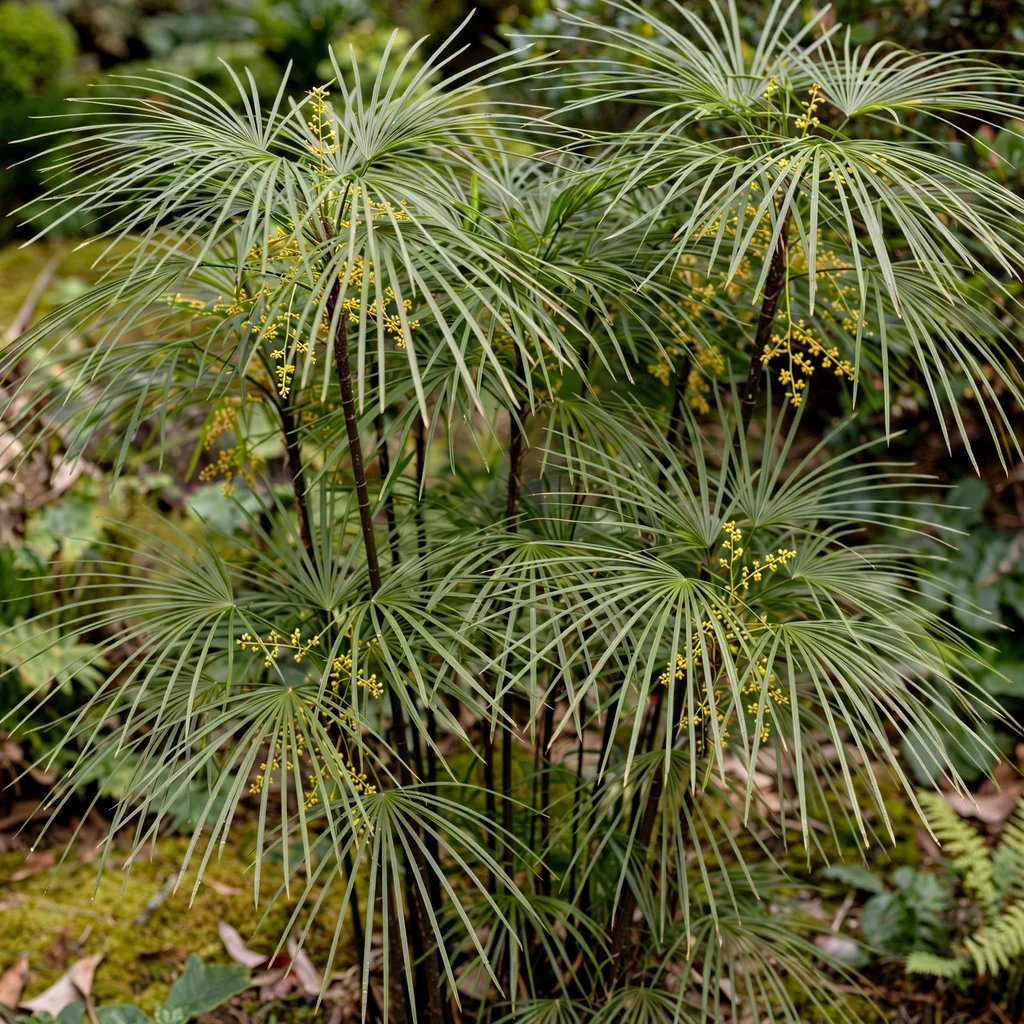
Rhapis multifida is a clumping fan palm that builds colonies of slender cane stems wrapped in brown fibrous sheaths, reaching six to eight feet tall and spreading by underground rhizomes. The evergreen fronds are round fans to two feet across, cut into many narrow finger-like segments in dark green.
It differs from Rhapis excelsa in the fineness of the leaf, with each fan divided into far more numerous and narrower segments for a feathery texture. The canes stay under an inch in diameter and hold their leaves in dense tufts, so a mature clump reads as delicate and upright rather than coarse.
Uses & Benefits:
Essentials
At a Glance
Plant Type
Tropical
Height
98"
Width
118"
Light
Partial Sun, Shade
Zones
9, 10
Water
Medium
Humidity
High
Lifespan
Long-lived
Native To
Guangxi and Yunnan, China
Toxicity
Unknown
Bloom period
Spring – Summer
In flower about 6 months of the year
Planting
How to Grow
- Plant in spring after frost in a sheltered spot with half-day shade, or in bright indirect light indoors.
- Set the root ball level in a loose well-drained but moisture-retentive mix and water in thoroughly.
- Mulch outdoor clumps with 2 inches of bark to hold moisture and keep roots cool.
- Water to keep soil evenly moist; do not let pots sit in water.
- Move containers indoors before first frost and hold above 40F in bright indirect light.
Pro Tip
Give it shade for at least half the day and never cut a cane back into bare wood — that stem will not resprout, so remove only fully dead fronds.
Keep It Thriving
Care Guide
Do
- Water to maintain even moisture in a well-drained mix
- Provide half-day shade and wind shelter outdoors
- Check leaf bases and undersides for scale and mites through summer
Don't
- Do not plant in full sun
- Do not cut canes back into leafless wood
- Do not overwater or leave pots standing in saucers
Seasonal Care Calendar
| Task | Jan | Feb | Mar | Apr | May | Jun | Jul | Aug | Sep | Oct | Nov | Dec |
|---|---|---|---|---|---|---|---|---|---|---|---|---|
| Mulch | ||||||||||||
| Pest Check | ||||||||||||
| Plant | ||||||||||||
| Prune | ||||||||||||
| Winter Prep |
Watch Out For
Pests & Diseases
Common Pests
Common Diseases
In the Garden
Landscape Uses & Companions
Landscape Uses
Companion Plants
Multiply
Propagation Methods
Good to Know
Common Questions
Finger Palm questions
What zones can Finger Palm grow in?
Finger Palm is hardy in USDA Zones 9–10: in that range it survives winter in the ground. Colder than Zone 9, grow it in a container you can move to shelter for the winter, or as an annual.
When does Finger Palm bloom?
Finger Palm typically blooms from spring to summer. Exact timing shifts a week or two with your zone — Sow's bloom calendar maps it to your garden.
Does Finger Palm need full sun?
Finger Palm does best in part shade.
More Rhapis to compare
Keep exploring
Explore the genus
Hardy in your zone?
Grow Finger Palm with confidence
See it in a design of your actual yard, get zone-matched care reminders, and track it season by season in your garden journal.