The Story
Plant Bio
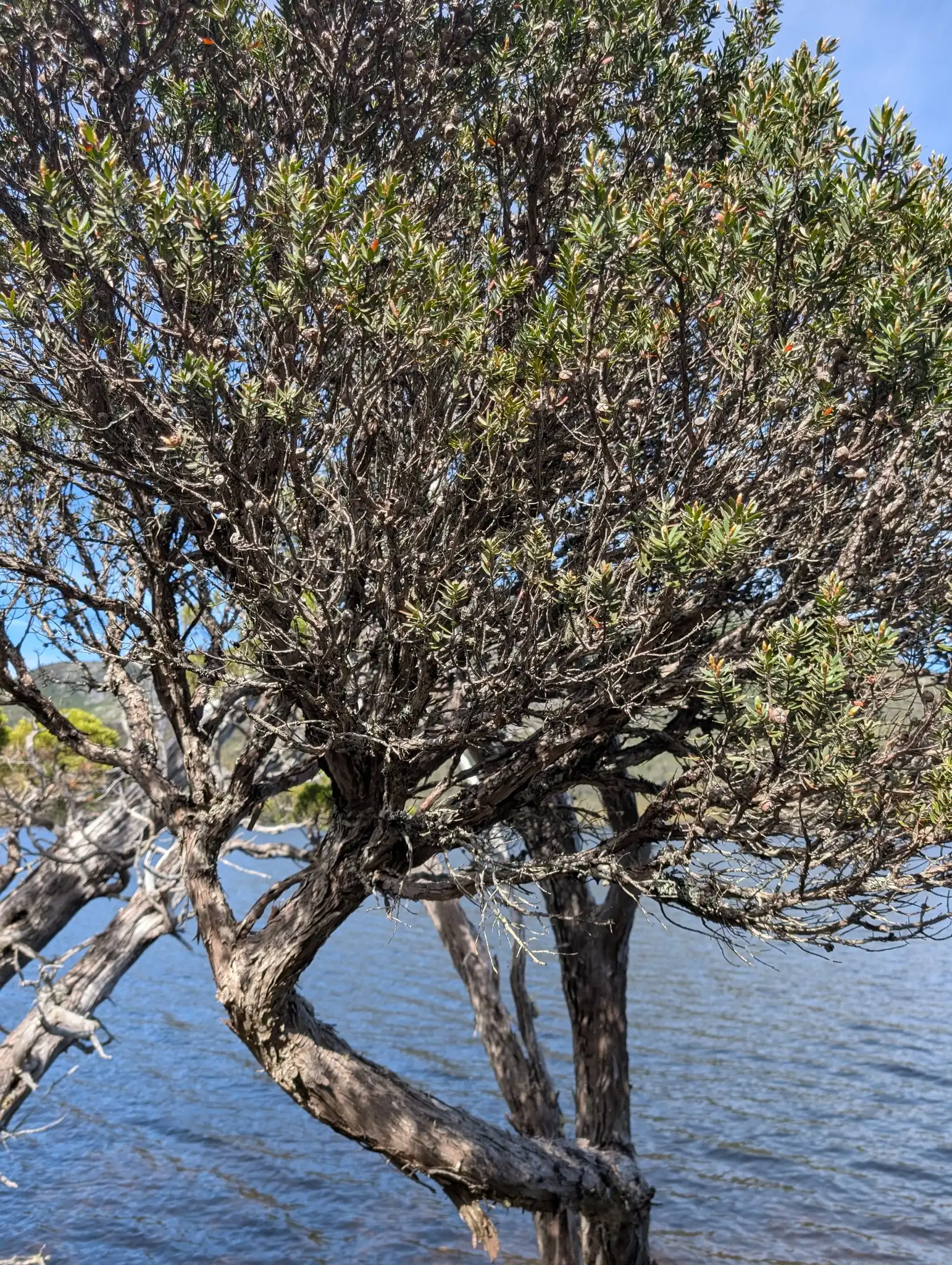
Leptospermum nitidum, the shiny tea-tree, is a compact evergreen shrub from Tasmania reaching about six feet tall with dense glossy foliage and scaly bark. The small aromatic elliptical leaves crowd the stems, and solitary white five-petalled flowers with green centres open at the tips of short branchlets in profuse spring to summer flushes.
It is distinguished by crowded glabrous leaves eight to twenty millimetres long with a sharp pungent tip and a high gloss, often flushed reddish on new growth. Flowers are about half an inch across, white with a green centre and nearly sessile, and true Tasmanian stock is hardy to Zone 8a while mainland plants once sold under this name are now separated.
Uses & Benefits:
Essentials
At a Glance
Plant Type
Shrub
Height
79"
Width
79"
Light
Full Sun, Partial Sun
Zones
8, 9, 10
Water
Low to moderate
Humidity
Moderate
Lifespan
Long-lived shrub
Native To
Tasmania, Australia
Toxicity
Non-toxic
Bloom period
Late spring – Summer
In flower about 4 months of the year
Planting
How to Grow
- Plant in spring in full sun in well-drained acidic soil, spacing to allow 5 to 6 feet of mature width.
- Water deeply at planting, then water regularly the first season and reduce once established; do not keep soggy.
- Spread a 2-inch mulch ring to hold moisture, keeping mulch clear of the stem.
- Tip-prune lightly after flowering to keep the crown dense and neat.
- Protect from hard frost below Zone 8a with a sheltered wall and winter mulch.
Pro Tip
Tip-prune lightly just behind spent flowers after bloom; cutting into old leafless wood regrows slowly and shearing ruins the shape.
Keep It Thriving
Care Guide
Do
- Grow in full sun with good air flow and sharp drainage.
- Water deeply then let the top inch dry; established plants take short dry spells.
- Tip-prune right after flowering to encourage branching.
Don't
- Do not overwater or leave the pot saucer full; wet roots rot quickly.
- Do not cut back into old leafless wood; it leafs out slowly and patchily.
- Do not shear the crown; it destroys the natural shape and leaves dead interiors.
Seasonal Care Calendar
| Task | Jan | Feb | Mar | Apr | May | Jun | Jul | Aug | Sep | Oct | Nov | Dec |
|---|---|---|---|---|---|---|---|---|---|---|---|---|
| Mulch | ||||||||||||
| Pest Check | ||||||||||||
| Plant | ||||||||||||
| Prune |
Watch Out For
Pests & Diseases
Common Pests
Common Diseases
In the Garden
Landscape Uses & Companions
Landscape Uses
Multiply
Propagation Methods
Good to Know
Common Questions
Shiny Tea Tree questions
What zones can Shiny Tea Tree grow in?
Shiny Tea Tree is hardy in USDA Zones 8–10: in that range it survives winter in the ground. Colder than Zone 8, grow it in a container you can move to shelter for the winter.
When does Shiny Tea Tree bloom?
Shiny Tea Tree typically blooms from late spring to late summer. Exact timing shifts a week or two with your zone — Sow's bloom calendar maps it to your garden.
Does Shiny Tea Tree need full sun?
Shiny Tea Tree does best in full sun to part shade. In hot climates, afternoon shade keeps blooms fresher longer.
Is Shiny Tea Tree drought tolerant?
Yes — once established (usually after the first full season), Shiny Tea Tree handles dry spells with minimal watering. Water deeply its first year to build the root system that makes that possible.
More Leptospermum to compare
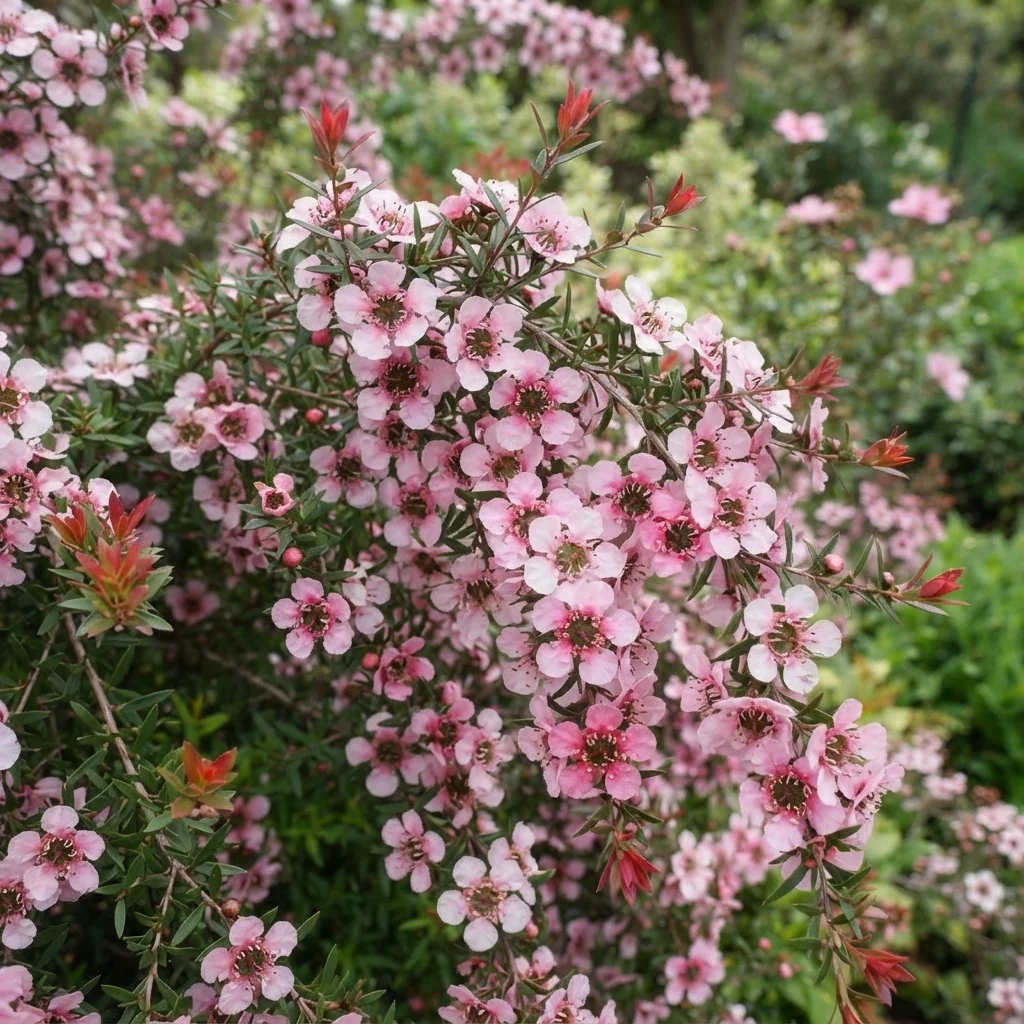
Pink Cascade Tea Tree
Leptospermum x hybrida 'Pink Cascade'
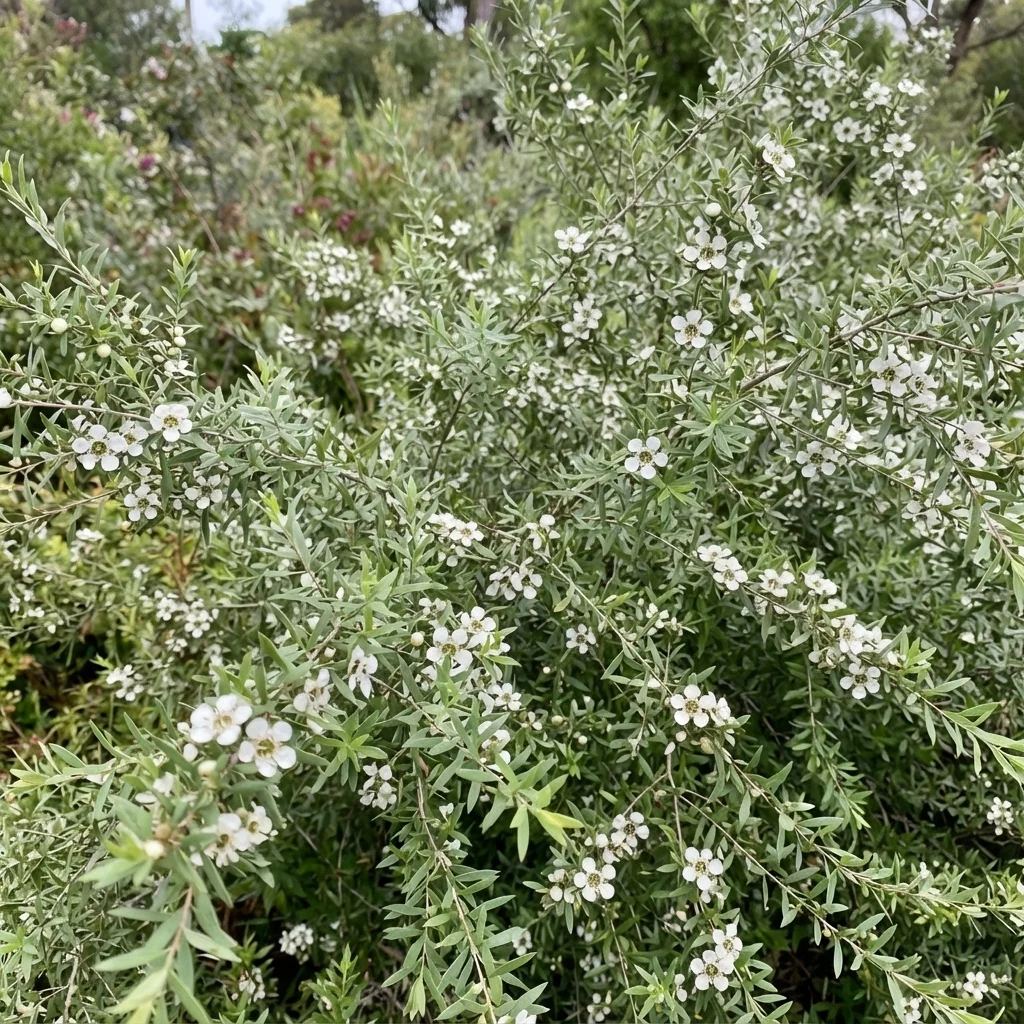
Tantoon
Leptospermum polygalifolium
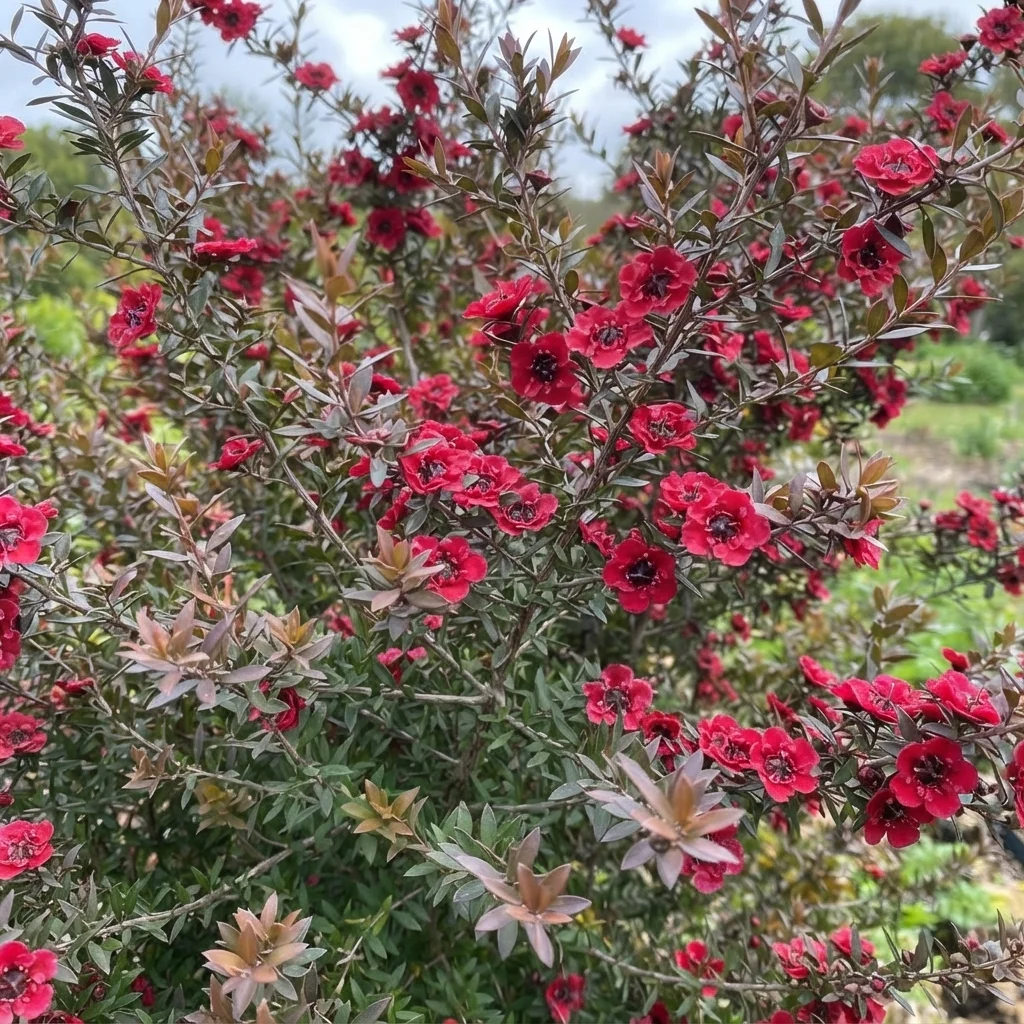
Ruby Glow New Zealand Tea Tree
Leptospermum scoparium 'Ruby Glow'
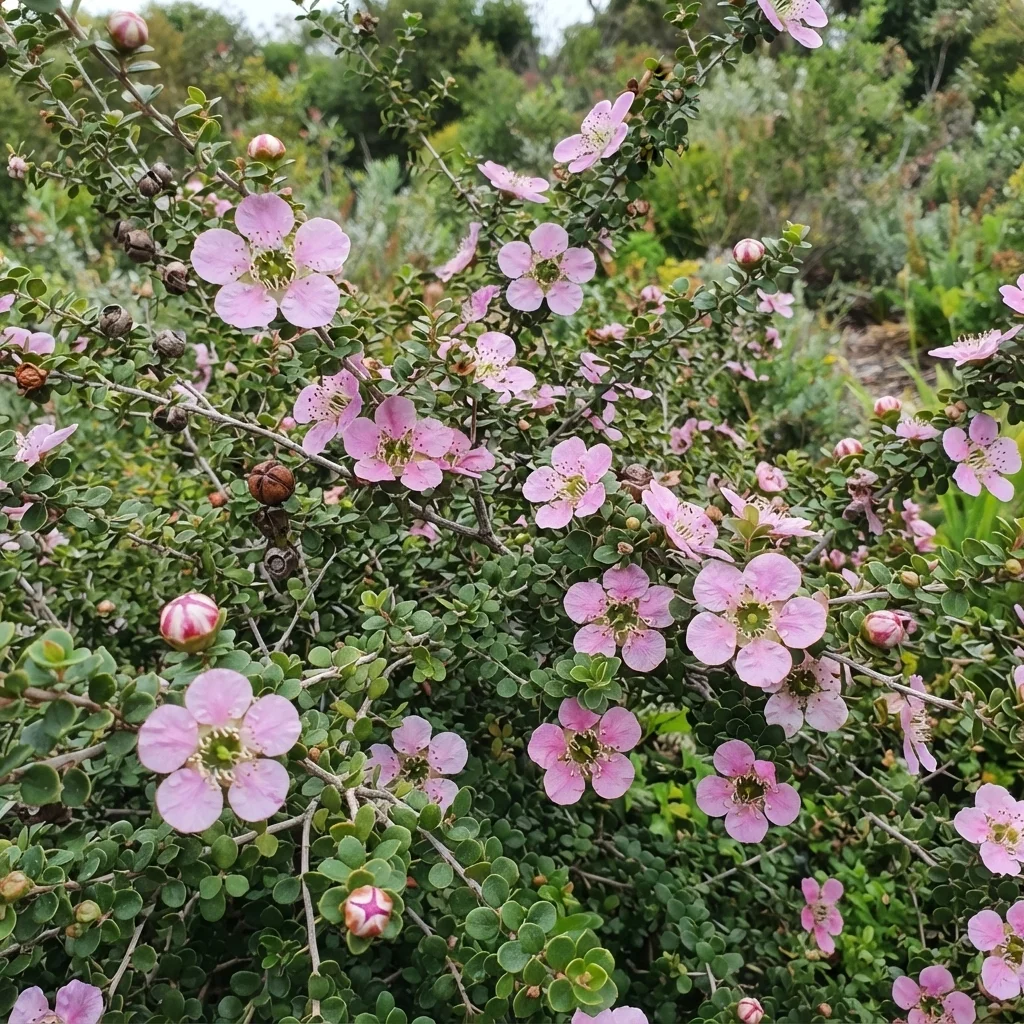
Round-leaved Tea Tree
Leptospermum rotundifolium
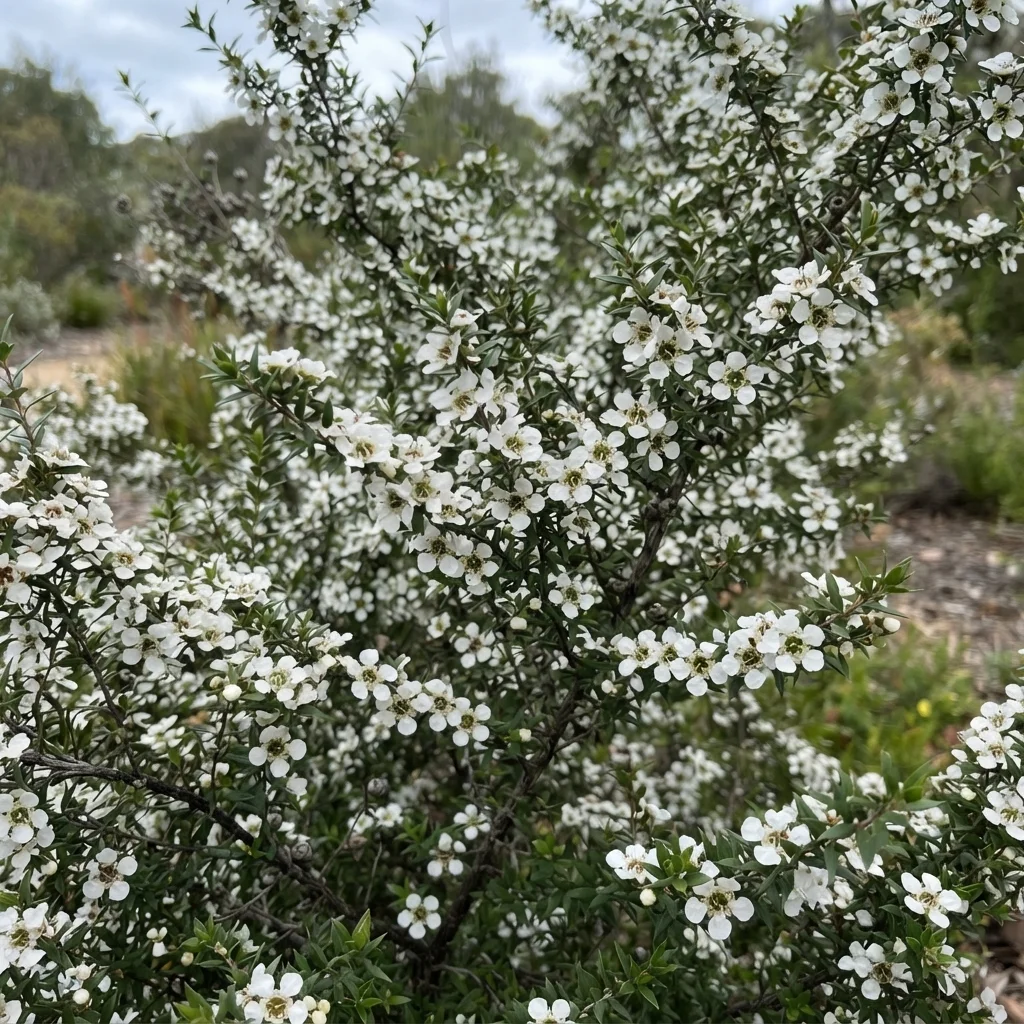
New Zealand Tea Tree
Leptospermum scoparium
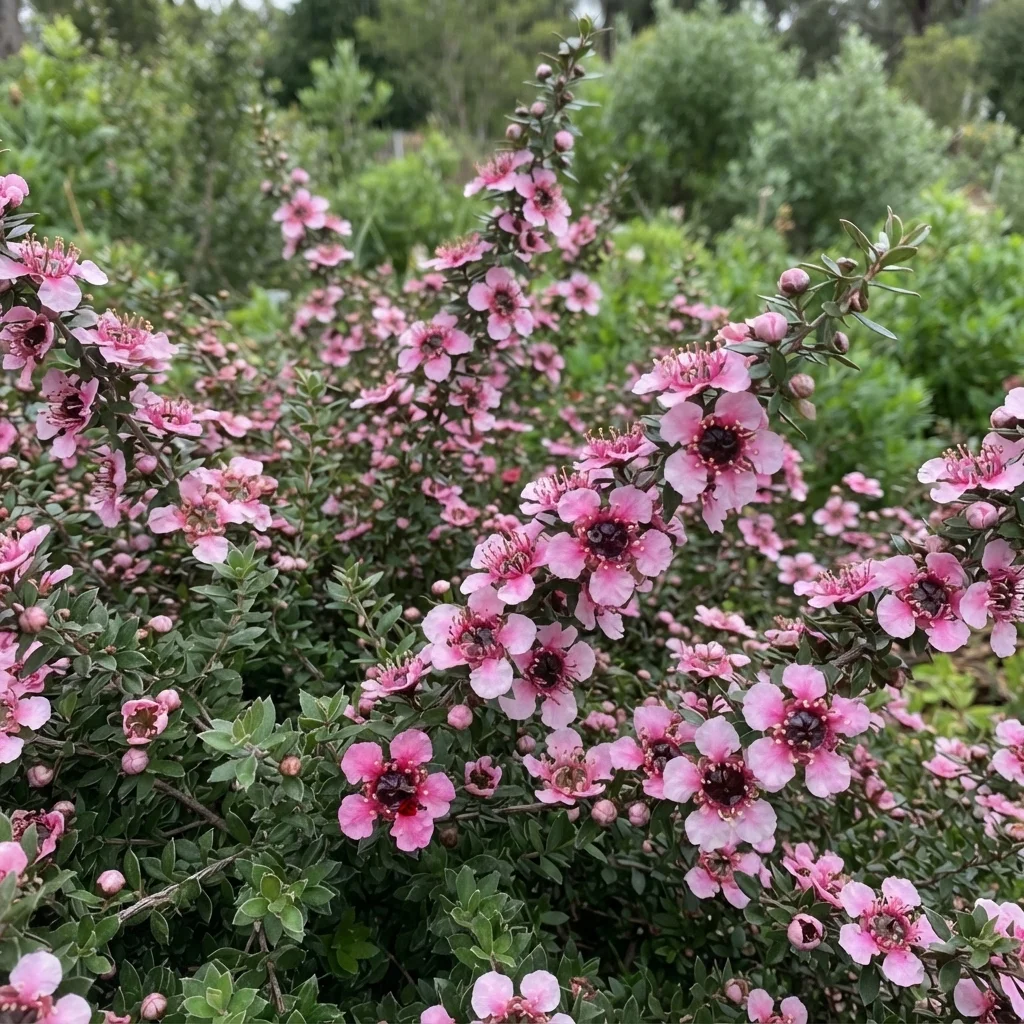
Mesmer Eyes Tea Tree
Leptospermum hybrid 'Mesmer Eyes'
Keep exploring
Explore the genus
Hardy in your zone?
Grow Shiny Tea Tree with confidence
See it in a design of your actual yard, get zone-matched care reminders, and track it season by season in your garden journal.