The Story
Plant Bio
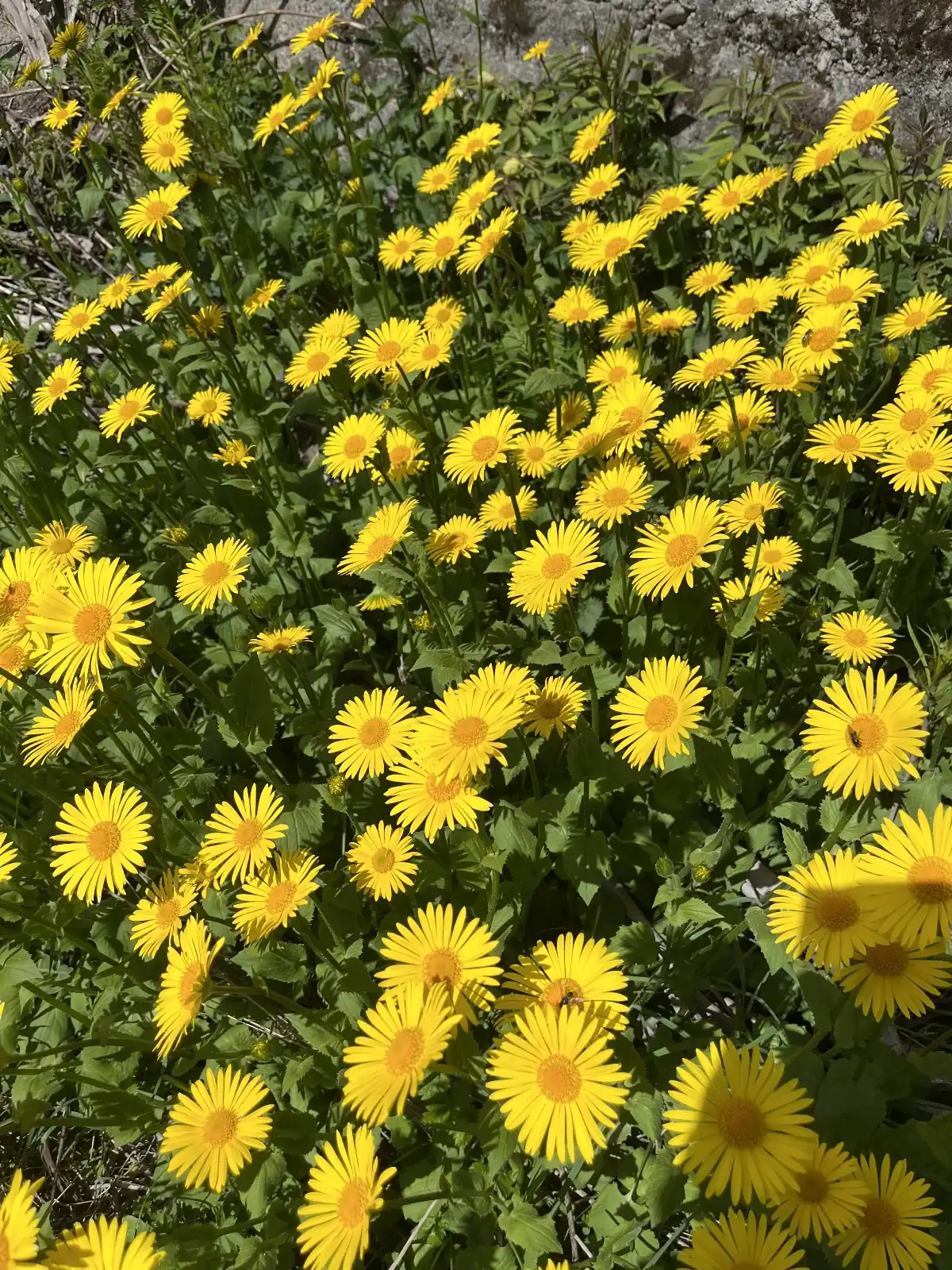
Doronicum orientale is a clump-forming herbaceous perennial from southeast Europe to southwest Asia that reaches 12 to 24 inches tall and wide from slowly spreading underground rhizomes. It forms a mound of bright green heart-shaped basal leaves and sends up stems topped by single daisy-like heads with lemon-yellow rays around a deeper yellow disk.
It flowers in mid to late spring, each stem carrying one 2- to 3-inch head with a single row of rays and one or two pairs of small clasping leaves below it. After bloom the foliage collapses in summer heat and the crown rests dormant until cool moist weather returns in fall.
Uses & Benefits:
Essentials
At a Glance
Plant Type
Perennial
Height
24"
Width
24"
Light
Full Sun, Partial Sun
Zones
4, 5, 6, 7, 8
Water
Medium to wet
Humidity
Low - needs cool summer nights
Lifespan
Perennial
Native To
SE Europe to SW Asia
Toxicity
All parts poisonous if ingested
Bloom period
Mid spring – Late spring
In flower about 2 months of the year
Planting
How to Grow
- Plant in part shade in consistently moist, fertile soil, setting crowns at soil level 12 to 18 inches apart.
- Water to keep soil evenly moist through spring growth and bloom; do not let the root zone dry out.
- Deadhead spent heads and cut back tattered foliage after flowering, leaving the crown in place.
- Apply a 2-inch layer of leaf mulch to conserve moisture and keep roots cool into summer.
- Divide congested clumps in early fall every 3 to 4 years, replanting divisions promptly and watering in.
Pro Tip
Mark the crown at planting and leave it undisturbed through summer dormancy; withholding water from the dormant crown prevents rot, and failure to return after hot humid summers above zone 7 is expected.
Keep It Thriving
Care Guide
Do
- Keep soil consistently moist during spring growth and bloom
- Provide afternoon shade where summers are hot
- Mark dormant crowns to avoid accidental digging in summer
Don't
- Do not overwater dormant crowns in summer
- Do not discard plants that disappear in summer heat
- Do not plant in hot dry soil that dries out in spring
Seasonal Care Calendar
| Task | Jan | Feb | Mar | Apr | May | Jun | Jul | Aug | Sep | Oct | Nov | Dec |
|---|---|---|---|---|---|---|---|---|---|---|---|---|
| Divide | ||||||||||||
| Mulch | ||||||||||||
| Pest Check | ||||||||||||
| Plant | ||||||||||||
| Prune |
Watch Out For
Pests & Diseases
Common Pests
Common Diseases
In the Garden
Landscape Uses & Companions
Landscape Uses
Companion Plants
Multiply
Propagation Methods
Good to Know
Common Questions
Leopard's Bane questions
What zones can Leopard's Bane grow in?
Leopard's Bane is hardy in USDA Zones 4–8: in that range it survives winter in the ground. Warmer than Zone 8, winter isn't the problem: it prefers colder winters, and summer heat can shorten its life.
Is Leopard's Bane deer resistant?
Yes — Leopard's Bane is rated deer-resistant. Deer typically pass it over, though extreme hunger can override any plant's defenses.
When does Leopard's Bane bloom?
Leopard's Bane typically blooms in mid- to late spring. Exact timing shifts a week or two with your zone — Sow's bloom calendar maps it to your garden.
Does Leopard's Bane need full sun?
Leopard's Bane does best in full sun to part shade. In hot climates, afternoon shade keeps blooms fresher longer.
Keep exploring
Explore the genus
Hardy in your zone?
Grow Leopard's Bane with confidence
See it in a design of your actual yard, get zone-matched care reminders, and track it season by season in your garden journal.