The Story
Plant Bio
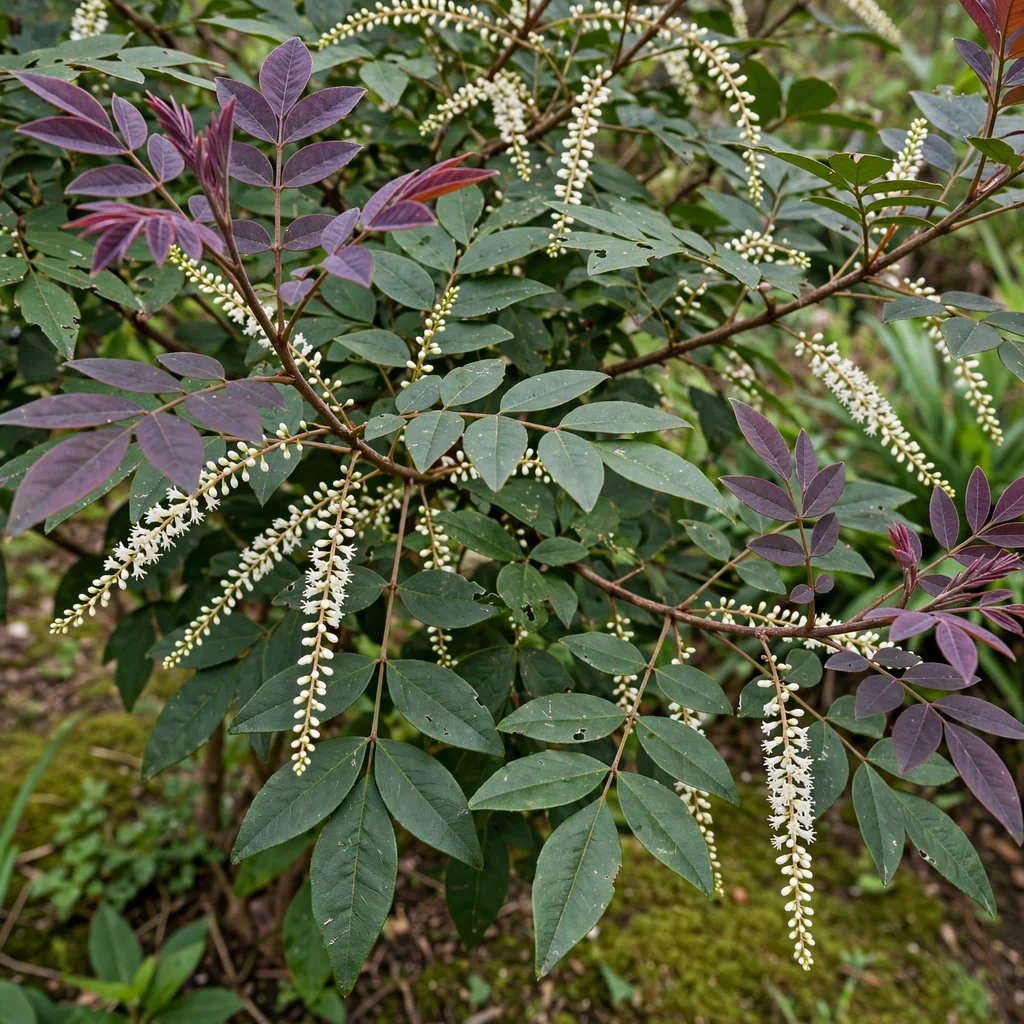
Lepisanthes fruticosa is an evergreen shrub or small tree in the soapberry family, reaching 10 to 20 feet in cultivation with a short bole and a dense crown. The leaves are paripinnate with one to fourteen pairs of leaflets, flushing purple before hardening to green.
New growth emerges purple and matures to green, which is the most reliable ornamental cue when flower color in trade listings is inconsistent. Ripe fruit turns dark red to black and is eaten fresh, with seeds eaten roasted or boiled, on a monoecious insect-pollinated tree that fruits through the year in the humid tropics.
Uses & Benefits:
Essentials
At a Glance
Plant Type
Tropical
Height
240"
Width
120"
Light
Full Sun, Partial Sun
Zones
9, 10
Water
Medium
Humidity
High
Lifespan
Decades
Native To
Southeast Asia
Toxicity
Ripe fruit edible; unripe fruit safety unknown
Bloom period
Year round
In flower about 12 months of the year
Planting
How to Grow
- Plant in full sun in frost-free zone 9-11 in moist, free-draining loam, with the root ball level with the soil surface.
- Water regularly to keep soil evenly moist, letting the top inch dry slightly between waterings.
- Grow in a large pot north of zone 9 and move it under cover before first frost, keeping roots warm.
- Harvest fruit only when dark red to black for fresh eating; roast or boil seeds before eating.
Pro Tip
Keep roots warm and moist but never waterlogged, and pick fruit only once dark red to black; in any frost-prone spot grow it in a pot in full sun and move it under cover before freezing weather.
Keep It Thriving
Care Guide
Do
- Give full sun or bright light with some semi-shade tolerance.
- Water regularly to maintain even moisture without waterlogging.
- Protect potted trees from any freeze and keep roots warm in winter.
Don't
- Do not let roots sit in waterlogged soil.
- Do not expose it to freezing temperatures.
- Do not eat pale unripe fruit; wait for dark red to black ripeness.
Seasonal Care Calendar
| Task | Jan | Feb | Mar | Apr | May | Jun | Jul | Aug | Sep | Oct | Nov | Dec |
|---|---|---|---|---|---|---|---|---|---|---|---|---|
| Harvest | ||||||||||||
| Mulch | ||||||||||||
| Pest Check | ||||||||||||
| Plant | ||||||||||||
| Winter Prep |
Watch Out For
Pests & Diseases
Common Pests
Common Diseases
In the Garden
Landscape Uses & Companions
Landscape Uses
Multiply
Propagation Methods
Good to Know
Common Questions
Chammaliang questions
What zones can Chammaliang grow in?
Chammaliang is hardy in USDA Zones 9–10: in that range it survives winter in the ground. Colder than Zone 9, grow it in a container you can move to shelter for the winter, or as an annual.
When does Chammaliang bloom?
Chammaliang typically blooms year-round. Exact timing shifts a week or two with your zone — Sow's bloom calendar maps it to your garden.
Does Chammaliang need full sun?
Chammaliang does best in full sun to part shade. In hot climates, afternoon shade keeps blooms fresher longer.
Keep exploring
Explore the genus
Hardy in your zone?
Grow Chammaliang with confidence
See it in a design of your actual yard, get zone-matched care reminders, and track it season by season in your garden journal.