The Story
Plant Bio
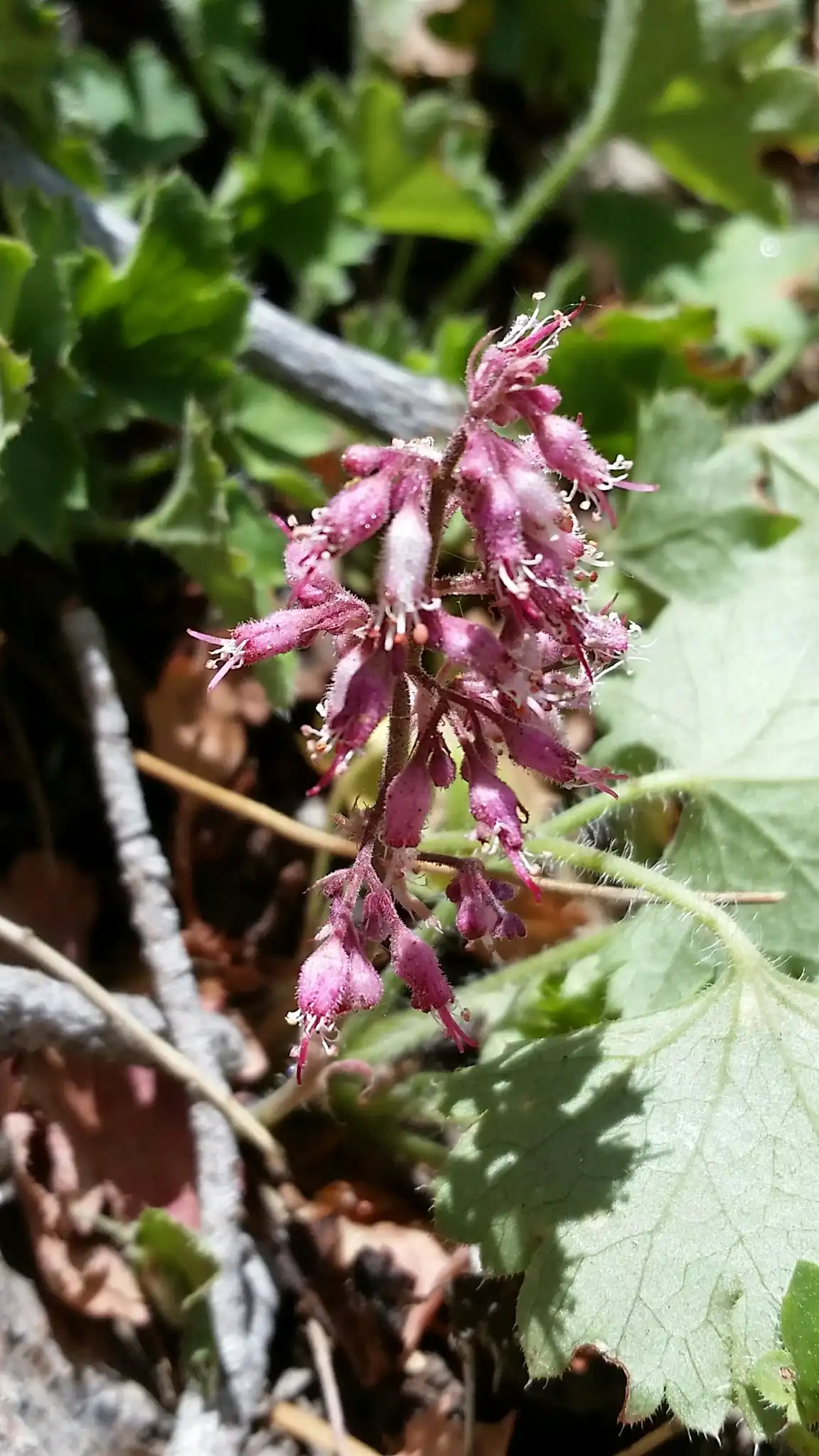
Heuchera pulchella, the Sandia Mountain alumroot, is a dwarf evergreen perennial forming a tight mound of ruffled green leaves from a branched woody caudex. The foliage stands 4 to 6 inches high, with slender burgundy stems to about 10 inches carrying tiny rose-pink bells in a one-sided cluster.
This species is distinct from garden hybrids by its miniature scale, with deeply 5-lobed leaves barely 2 cm across on a subcaulescent crown. It is endemic to limestone cliffs and rock crevices in the Sandia and Manzano Mountains of central New Mexico at 2700 to 3200 meters, where sharp drainage and cool roots shape its habit.
Uses & Benefits:
Essentials
At a Glance
Plant Type
Perennial
Height
10"
Width
10"
Light
Full Sun, Partial Sun
Zones
4, 5, 6, 7, 8, 9
Water
Moderate, well-drained
Humidity
Tolerates dry air
Lifespan
Long-lived perennial
Native To
Central New Mexico, USA
Toxicity
Non-toxic
Bloom period
Late spring – Summer
In flower about 4 months of the year
Planting
How to Grow
- Plant in spring in fertile but free-draining soil amended with grit for sharp drainage.
- Set the woody crown level with or slightly above the soil surface, never buried.
- Give full sun to part shade with dappled light and cool, moist root conditions.
- Water to establish, then water only when the top inch dries; never leave the crown waterlogged.
- Top-dress with gravel around the crown and lift and replant as the rootstock rises with age.
Pro Tip
Set the crown proud of the soil and mulch around, never over, it; buried crowns hold water and rot.
Keep It Thriving
Care Guide
Do
- Do keep the crown at the surface and mulch around it to keep roots cool.
- Do provide rockery drainage with neutral, free-draining soil.
- Do remove spent flower stems at the base after bloom.
Don't
- Don't bury the crown or mound mulch against it.
- Don't overwater or plant in heavy clay that stays wet.
- Don't cut back into the woody caudex to reshape the plant.
Seasonal Care Calendar
| Task | Jan | Feb | Mar | Apr | May | Jun | Jul | Aug | Sep | Oct | Nov | Dec |
|---|---|---|---|---|---|---|---|---|---|---|---|---|
| Deadhead | ||||||||||||
| Mulch | ||||||||||||
| Pest Check | ||||||||||||
| Plant | ||||||||||||
| Spring Cleanup |
Watch Out For
Pests & Diseases
Common Pests
Common Diseases
In the Garden
Landscape Uses & Companions
Landscape Uses
Multiply
Propagation Methods
Good to Know
Common Questions
Sandia Mountain Alumroot questions
What zones can Sandia Mountain Alumroot grow in?
Sandia Mountain Alumroot is hardy in USDA Zones 4–9: in that range it survives winter in the ground. Warmer than Zone 9, winter isn't the problem: it prefers colder winters, and summer heat can shorten its life.
Is Sandia Mountain Alumroot deer resistant?
Yes — Sandia Mountain Alumroot is rated deer-resistant. Deer typically pass it over, though extreme hunger can override any plant's defenses.
When does Sandia Mountain Alumroot bloom?
Sandia Mountain Alumroot typically blooms from late spring to late summer. Exact timing shifts a week or two with your zone — Sow's bloom calendar maps it to your garden.
Does Sandia Mountain Alumroot need full sun?
Sandia Mountain Alumroot does best in full sun to part shade. In hot climates, afternoon shade keeps blooms fresher longer.
Is Sandia Mountain Alumroot drought tolerant?
Yes — once established (usually after the first full season), Sandia Mountain Alumroot handles dry spells with minimal watering. Water deeply its first year to build the root system that makes that possible.
More Heuchera to compare
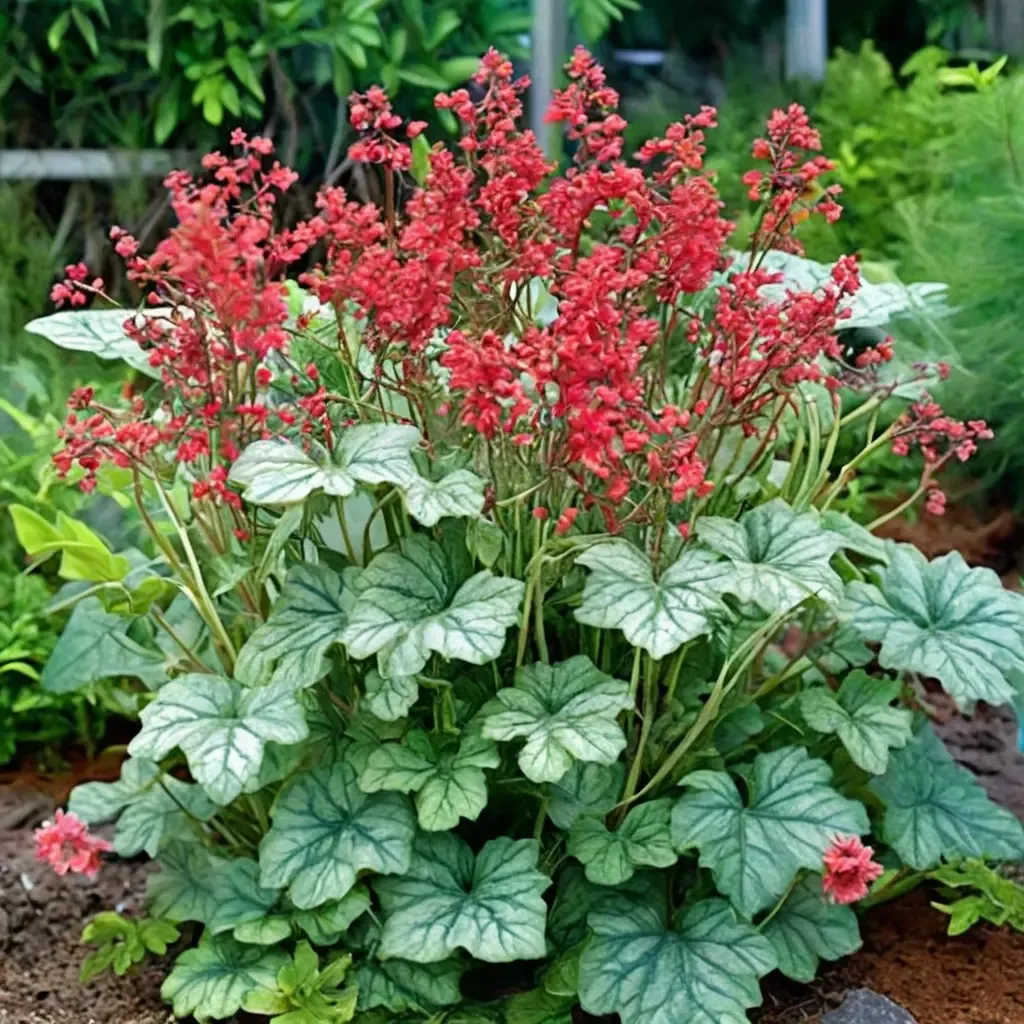
Mixed Coral Bells
Heuchera sanguinea 'Mixed Coral Bells'
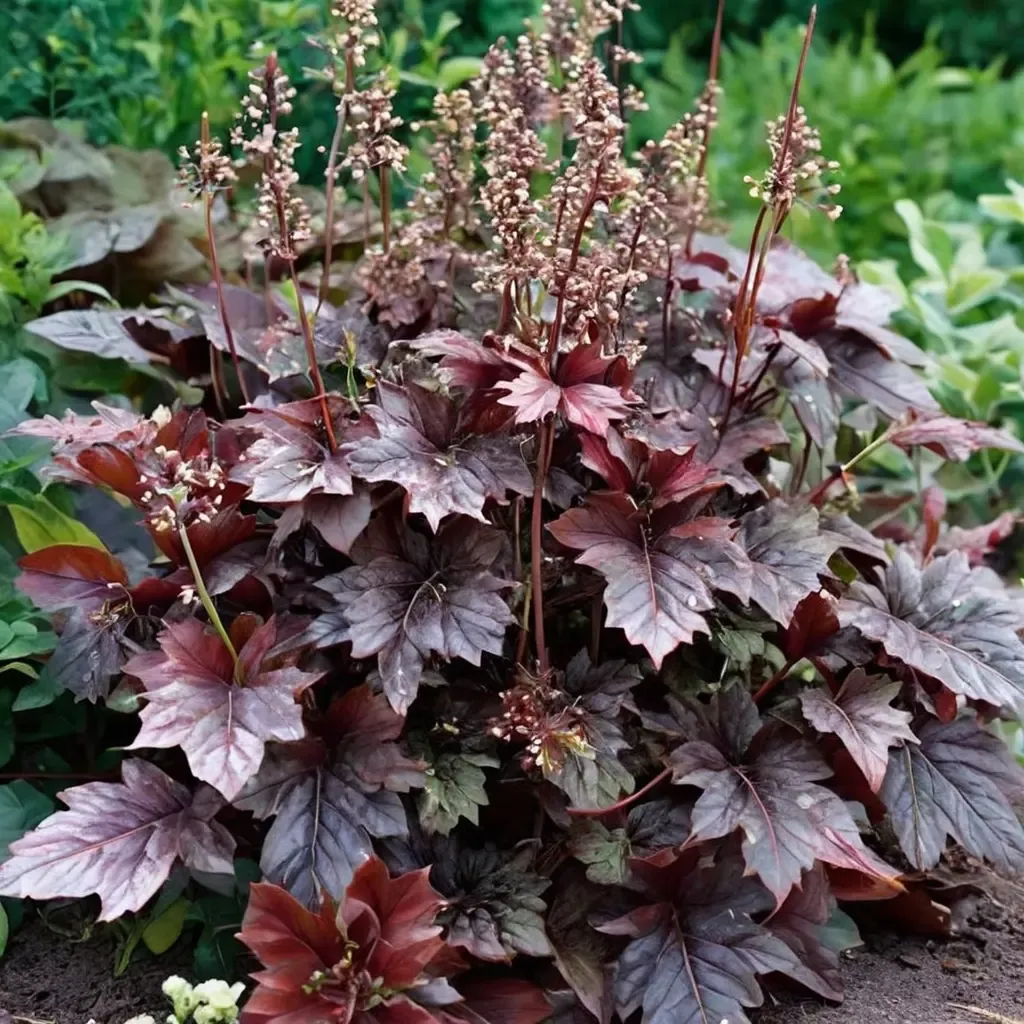
Palace Purple Coral Bells
Heuchera americana 'Palace Purple'
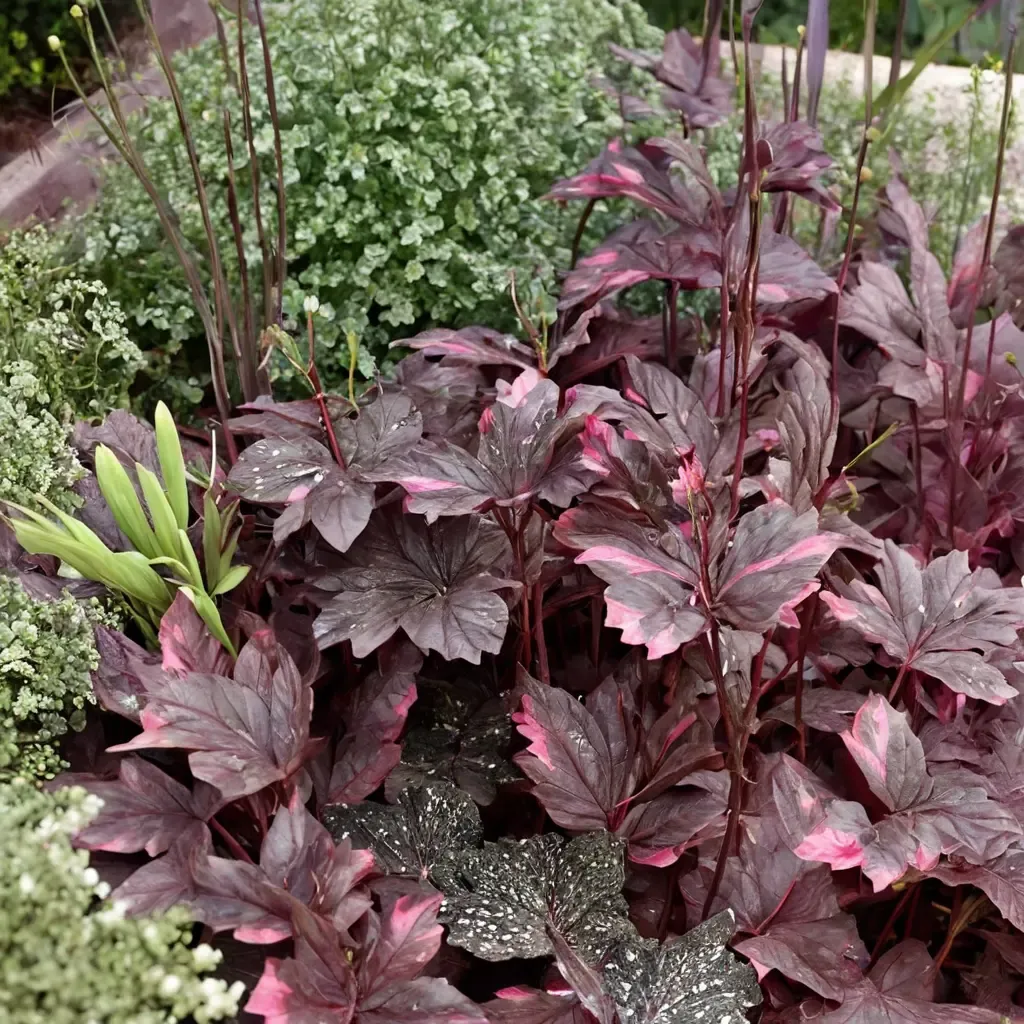
Midnight Rose Coral Bell
Heuchera x brizoides 'Midnight Rose'
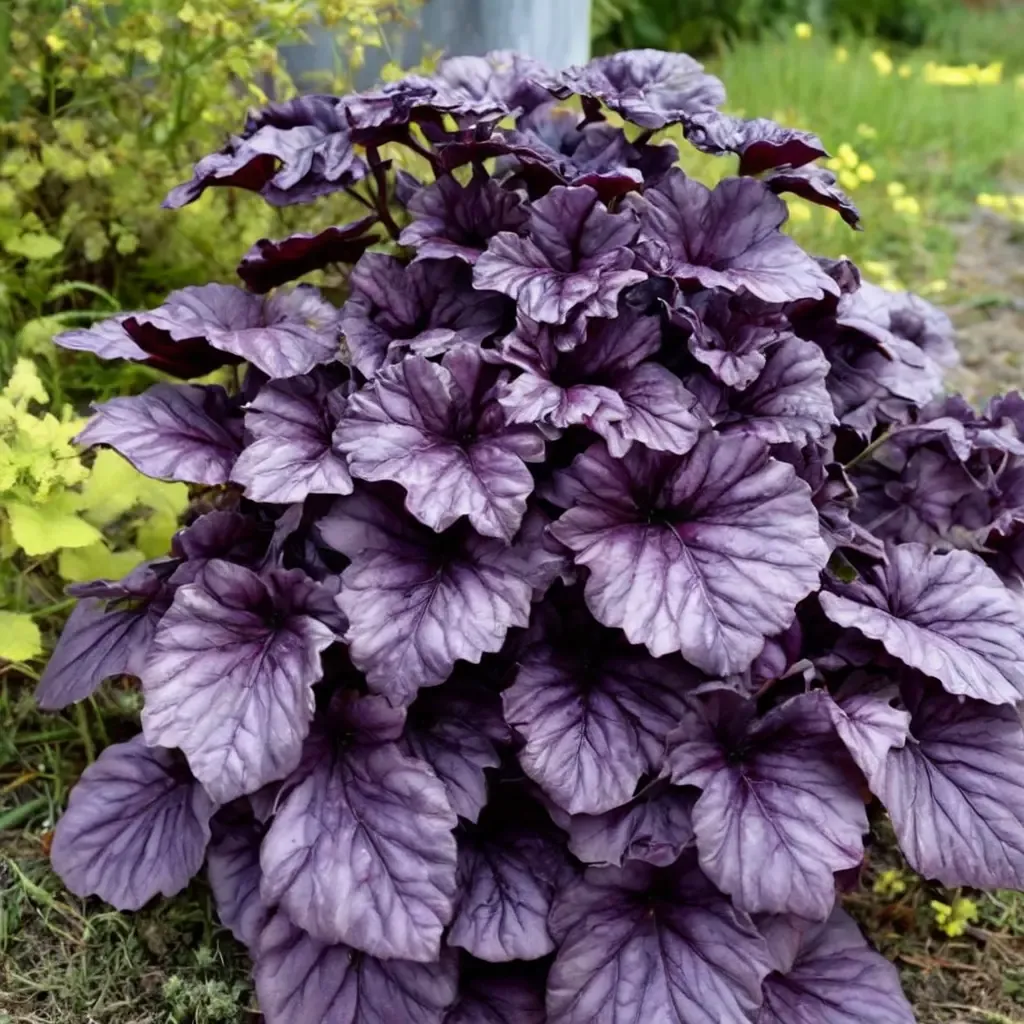
Wildberry Coral Bells
Heuchera x brizoides 'Wildberry'
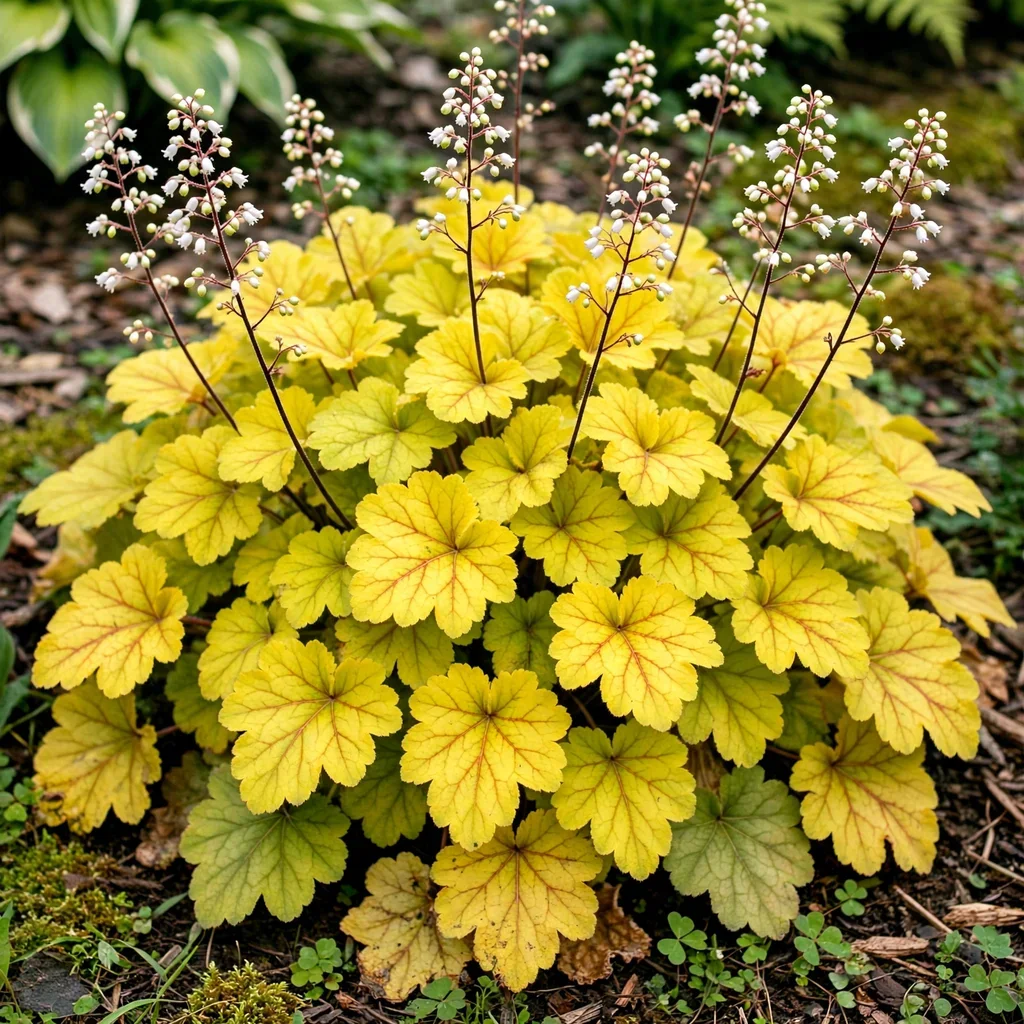
Electra Coral Bells
Heuchera sanguinea 'Electra'
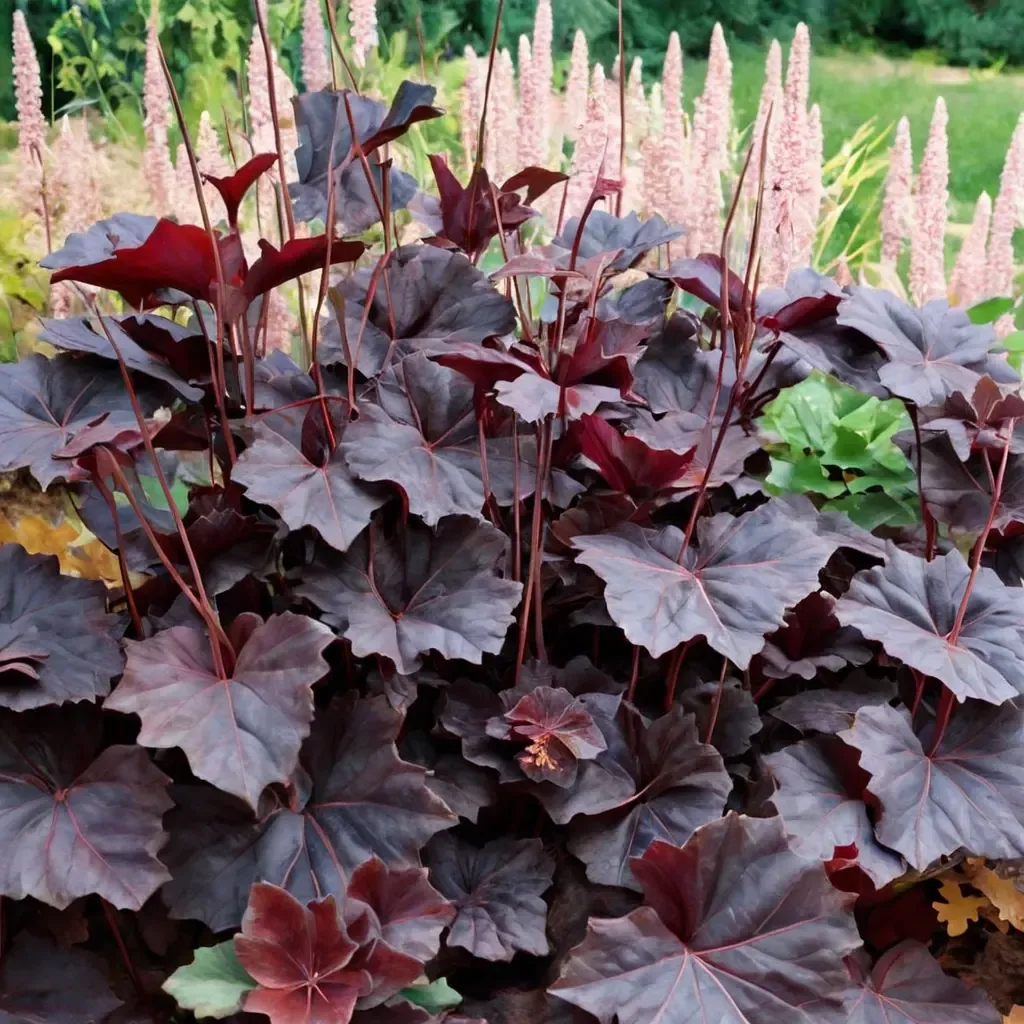
Obsidian Coral Bells
Heuchera villosa 'Obsidian'
Keep exploring
Explore the genus
Grow Sandia Mountain Alumroot with confidence
See it in a design of your actual yard, get zone-matched care reminders, and track it season by season in your garden journal.