The Story
Plant Bio
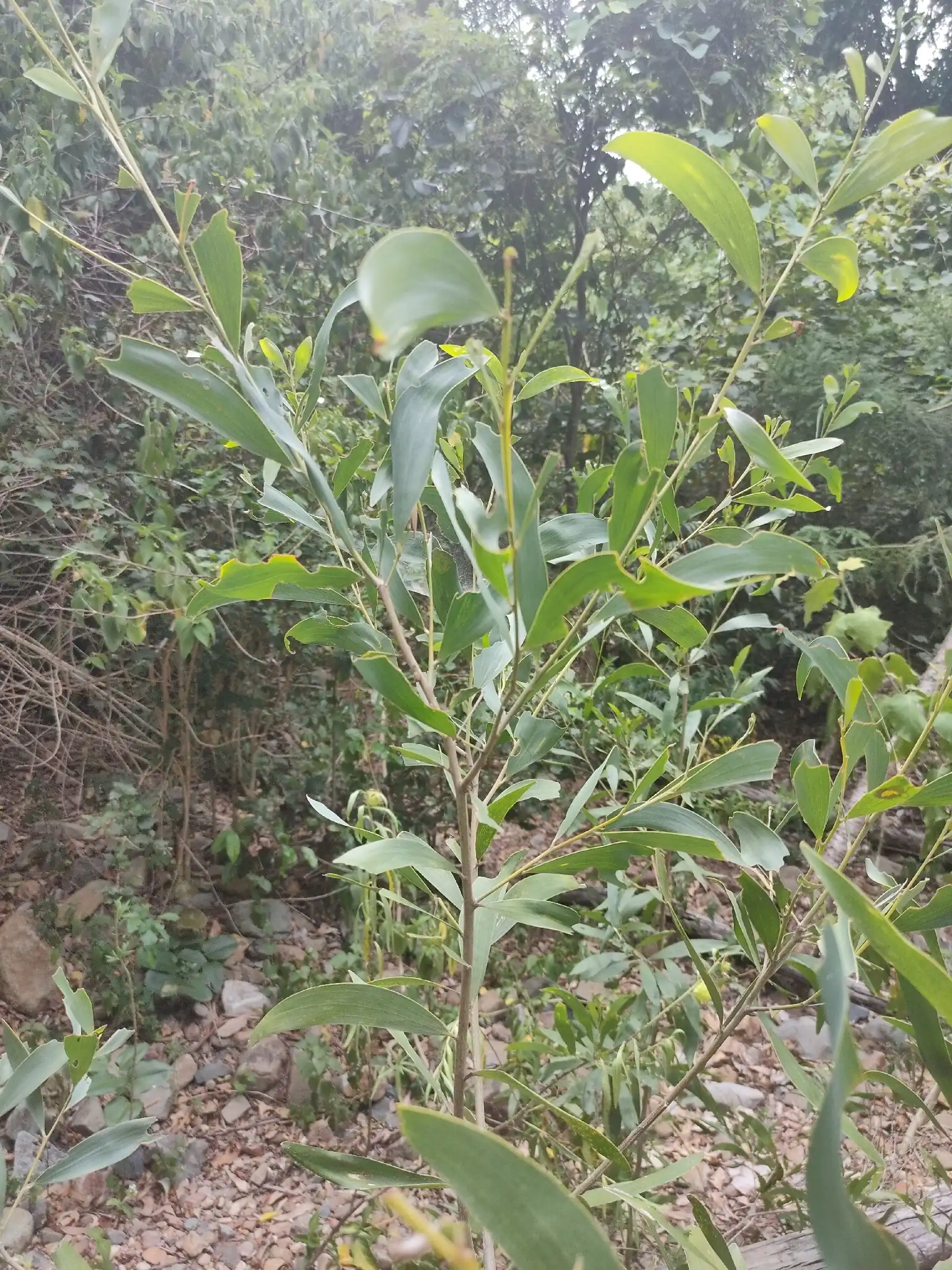
Acacia disparrima is an evergreen small tree native to eastern Australia, reaching up to 40 feet with a loose, spreading open habit. Its foliage consists of curved, sickle-shaped grey-green phyllodes with parallel veins, producing sweet-scented, pale yellow cylindrical flower spikes from summer into fall.
Distinguished by its non-interconnecting longitudinal phyllode veins, this species features slender, angled branchlets that arch as it matures. The pale lemon-yellow flower spikes measure up to nearly three inches long and emerge in clusters from the leaf axils.
Uses & Benefits:
Essentials
At a Glance
Plant Type
Tree
Height
472"
Width
236"
Light
Full Sun, Partial Sun
Zones
9, 10
Water
Low
Humidity
High
Lifespan
Perennial
Native To
Australia
Toxicity
Non-toxic
Bloom period
Summer – Fall
In flower about 6 months of the year
Planting
How to Grow
- Plant in a sunny to partially shaded site with sandy or light clay soil that drains freely.
- Water regularly during the first growing season to establish a deep root system.
- Apply a mild balanced fertilizer sparingly in spring if growing in poor soil.
- Prune lightly after flowering finishes to shape the canopy without cutting into old wood.
Pro Tip
Tip-prune lightly right after flowering to maintain a dense crown; cutting deep into old bare wood kills the branch.
Keep It Thriving
Care Guide
Do
- Plant in sharply draining soil to prevent root rot.
- Tip-prune immediately after flowering to maintain density.
- Provide full sun exposure for maximum bloom production.
Don't
- Do not cut back into old leafless wood.
- Do not allow soil to remain waterlogged or heavy.
- Do not over-fertilize, as excess foliage growth weakens stems.
Seasonal Care Calendar
| Task | Jan | Feb | Mar | Apr | May | Jun | Jul | Aug | Sep | Oct | Nov | Dec |
|---|---|---|---|---|---|---|---|---|---|---|---|---|
| Fertilize | ||||||||||||
| Mulch | ||||||||||||
| Pest Check | ||||||||||||
| Prune |
Watch Out For
Pests & Diseases
Common Pests
Common Diseases
In the Garden
Landscape Uses & Companions
Landscape Uses
Companion Plants
Multiply
Propagation Methods
Good to Know
Common Questions
Hickory Wattle questions
What zones can Hickory Wattle grow in?
Hickory Wattle is hardy in USDA Zones 9–10: in that range it survives winter in the ground. Colder than Zone 9, winters are too cold for it to survive outdoors.
When does Hickory Wattle bloom?
Hickory Wattle typically blooms from summer to fall. Exact timing shifts a week or two with your zone — Sow's bloom calendar maps it to your garden.
Does Hickory Wattle need full sun?
Hickory Wattle does best in full sun to part shade. In hot climates, afternoon shade keeps blooms fresher longer.
Is Hickory Wattle drought tolerant?
Yes — once established (usually after the first full season), Hickory Wattle handles dry spells with minimal watering. Water deeply its first year to build the root system that makes that possible.
More Acacia to compare
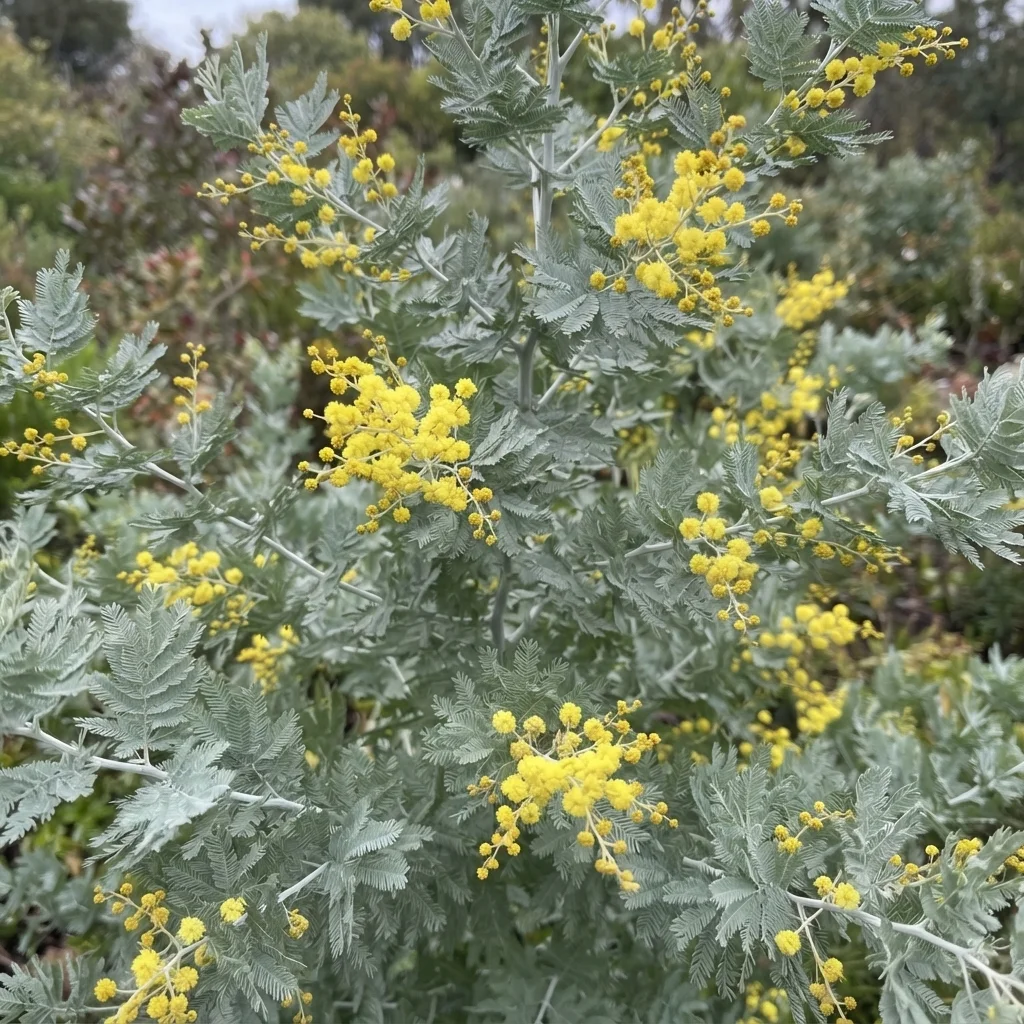
Silver wattle
Acacia dealbata
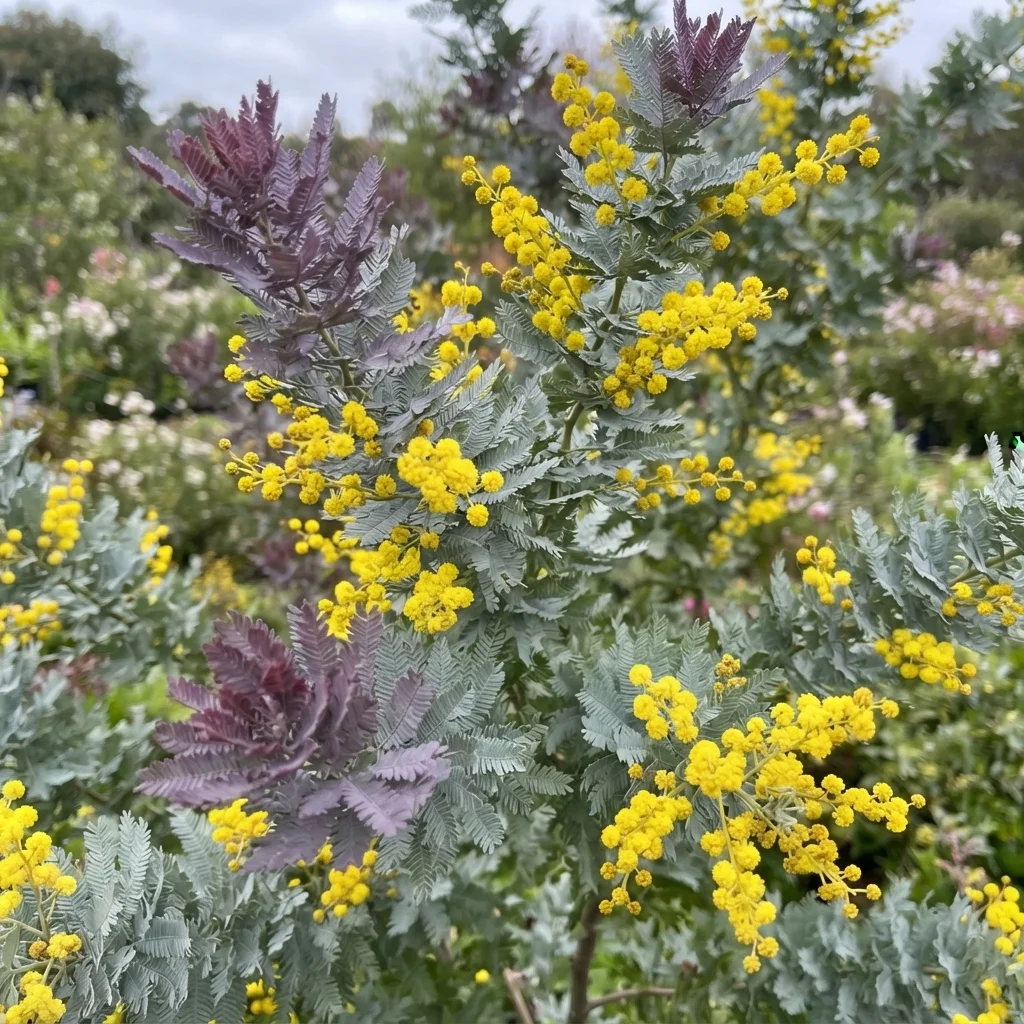
Cootamundra Wattle 'Purpurea'
Acacia baileyana 'Purpurea'
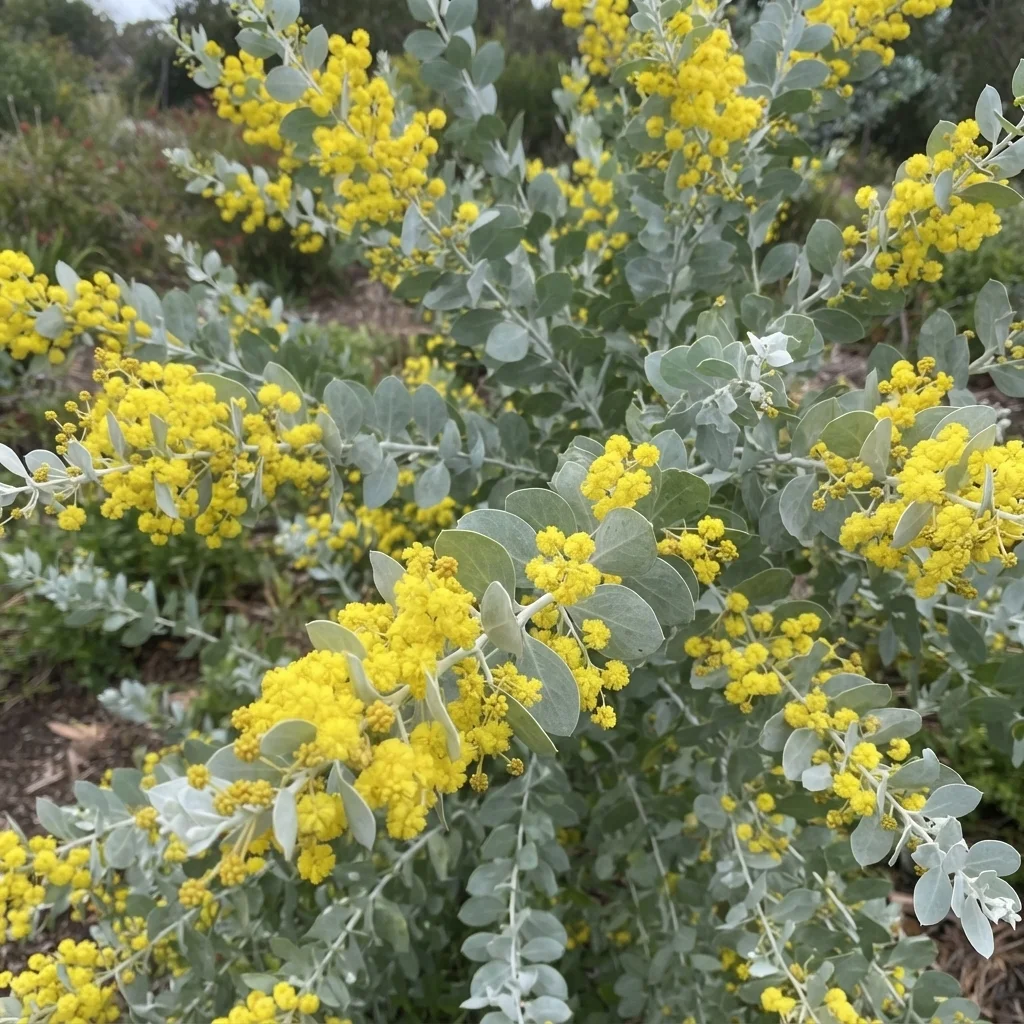
Pearl Acacia
Acacia podalyriifolia
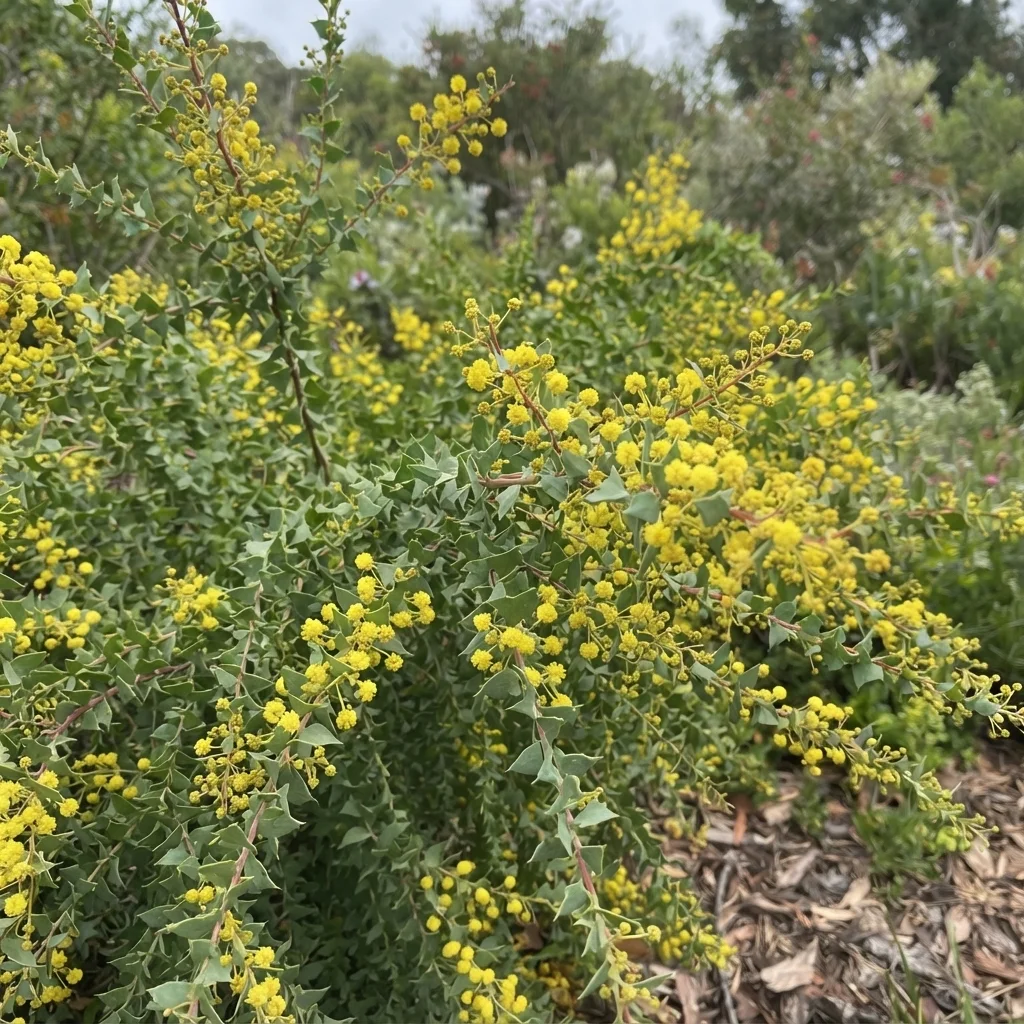
Ovens Wattle
Acacia pravissima
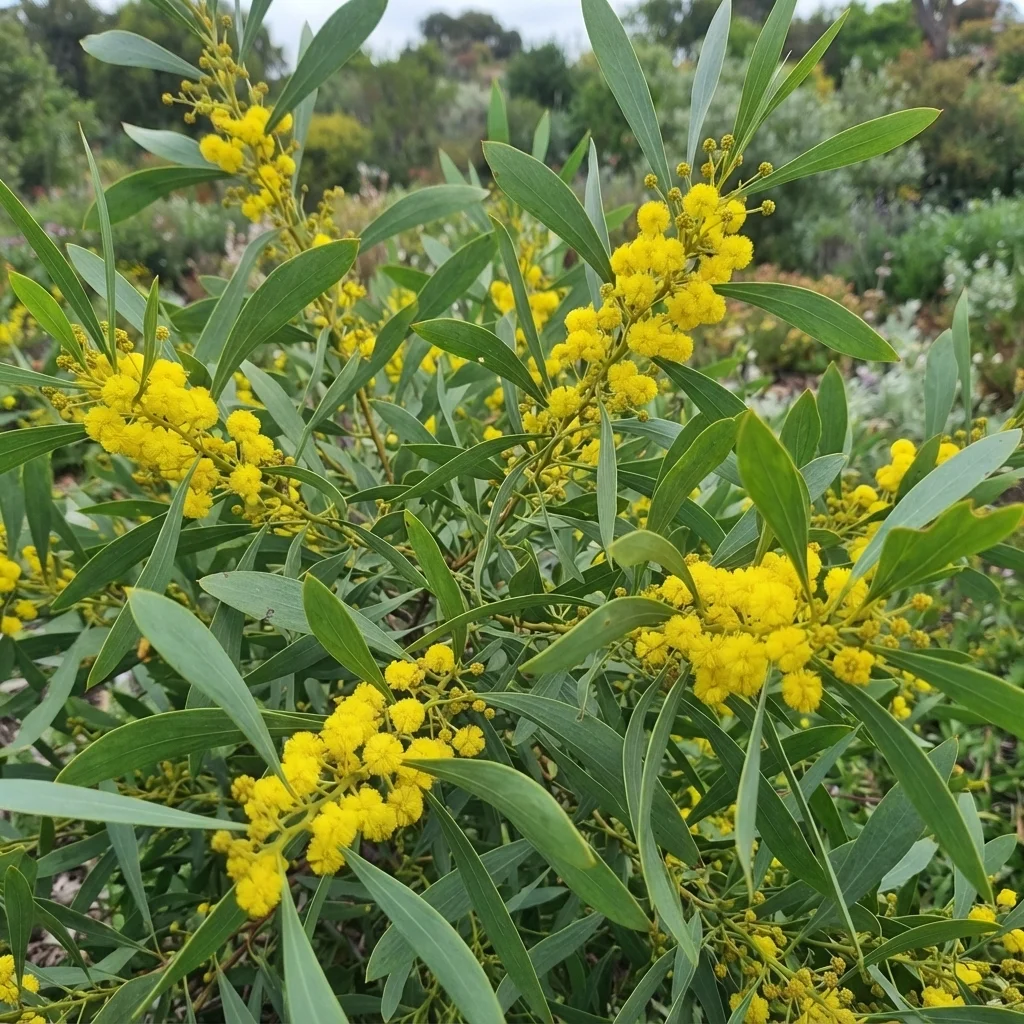
Golden Wreath Wattle
Acacia saligna
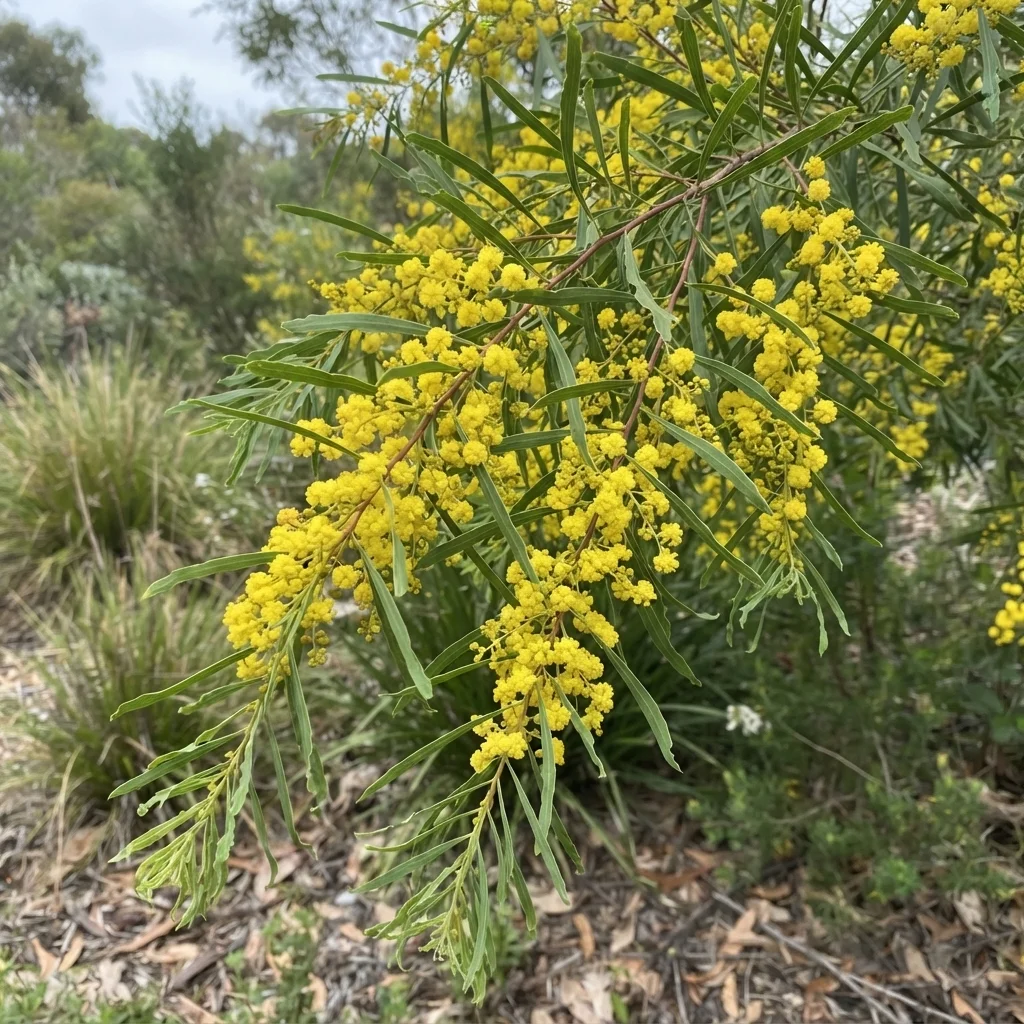
Fringed Wattle
Acacia fimbriata
Keep exploring
Explore the genus
Hardy in your zone?
Grow Hickory Wattle with confidence
See it in a design of your actual yard, get zone-matched care reminders, and track it season by season in your garden journal.