The Story
Plant Bio
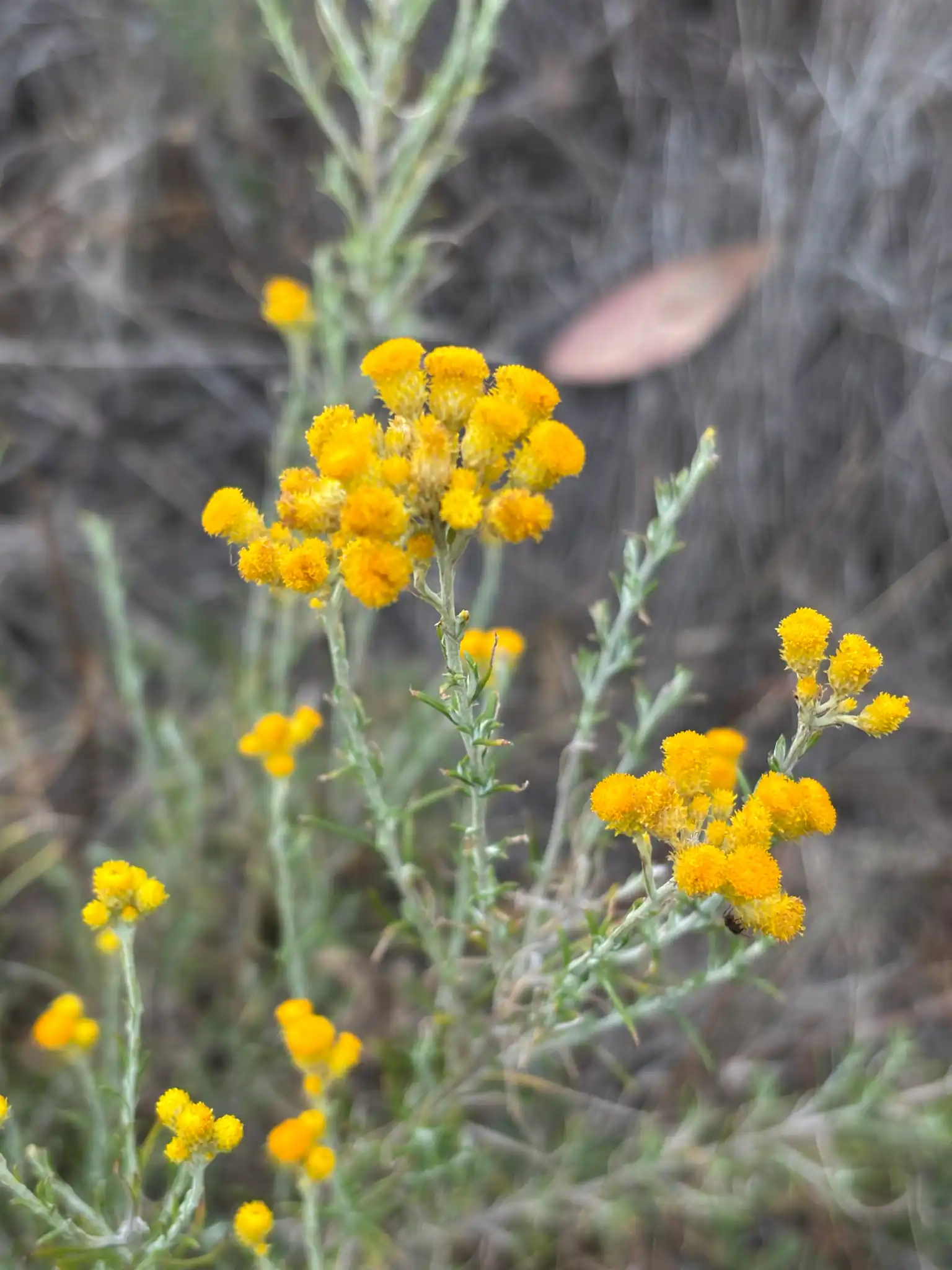
Chrysocephalum semipapposum is a multi-stemmed perennial herb with fine linear foliage coated in silver-grey downy hairs that release an aromatic scent when crushed. Terminal clusters of small, bright golden-yellow daisy heads open continuously on upright stems from spring through fall.
Spreading slowly by underground rhizomes, it forms dense colonies that excel at soil stabilization and drought survival. The everlasting flower heads retain their form and color when dried.
Uses & Benefits:
Essentials
At a Glance
Plant Type
Perennial
Height
39"
Width
39"
Light
Full Sun, Partial Sun
Zones
8, 9, 10
Water
Low
Humidity
Low to moderate
Lifespan
Perennial
Native To
Australia
Toxicity
Non-toxic
Bloom period
Spring – Fall
In flower about 9 months of the year
Planting
How to Grow
- Select a planting site in full sun or partial shade with sharply draining sand, loam, or gravelly soil.
- Dig a hole twice as wide as the root ball and set the crown level with the surrounding soil line.
- Water thoroughly at planting to settle the roots, then reduce irrigation to let the soil dry out between waterings.
- Cut all stems back to ground level annually after flowering to stimulate fresh growth from the rhizomes.
Pro Tip
Prune the entire plant hard back to ground level after the primary bloom flush finishes; cutting into old growth prompts rapid renewal from the underground rhizomes and prevents a sparse, woody base.
Keep It Thriving
Care Guide
Do
- Ensure high soil drainage to prevent fungal root decay.
- Cut back hard after the main flowering flush to promote dense basal shoots.
- Provide good air circulation to deter foliage diseases in humid weather.
Don't
- Do not overwater or plant in permanently soggy, waterlogged soils.
- Do not apply heavy fertilizers or high-phosphorus feeds, which induce weak, leggy growth.
- Do not trim leafy shoot tips mid-season; wait to cut the plant back hard to the crown after bloom finishes.
Seasonal Care Calendar
| Task | Jan | Feb | Mar | Apr | May | Jun | Jul | Aug | Sep | Oct | Nov | Dec |
|---|---|---|---|---|---|---|---|---|---|---|---|---|
| Divide | ||||||||||||
| Fertilize | ||||||||||||
| Pest Check | ||||||||||||
| Prune |
Watch Out For
Pests & Diseases
Common Pests
Common Diseases
In the Garden
Landscape Uses & Companions
Landscape Uses
Multiply
Propagation Methods
Good to Know
Common Questions
Clustered Everlasting questions
What zones can Clustered Everlasting grow in?
Clustered Everlasting is hardy in USDA Zones 8–10: in that range it survives winter in the ground. Colder than Zone 8, grow it in a container you can move to shelter for the winter, or as an annual.
Is Clustered Everlasting deer resistant?
Not reliably. Deer may browse Clustered Everlasting, especially tender spring growth — plan on repellents or fencing where pressure is high.
When does Clustered Everlasting bloom?
Clustered Everlasting typically blooms from spring to fall. Exact timing shifts a week or two with your zone — Sow's bloom calendar maps it to your garden.
Does Clustered Everlasting need full sun?
Clustered Everlasting does best in full sun to part shade. In hot climates, afternoon shade keeps blooms fresher longer.
Is Clustered Everlasting drought tolerant?
Yes — once established (usually after the first full season), Clustered Everlasting handles dry spells with minimal watering. Water deeply its first year to build the root system that makes that possible.
More Chrysocephalum to compare
Keep exploring
Explore the genus
Hardy in your zone?
Grow Clustered Everlasting with confidence
See it in a design of your actual yard, get zone-matched care reminders, and track it season by season in your garden journal.