The Story
Plant Bio
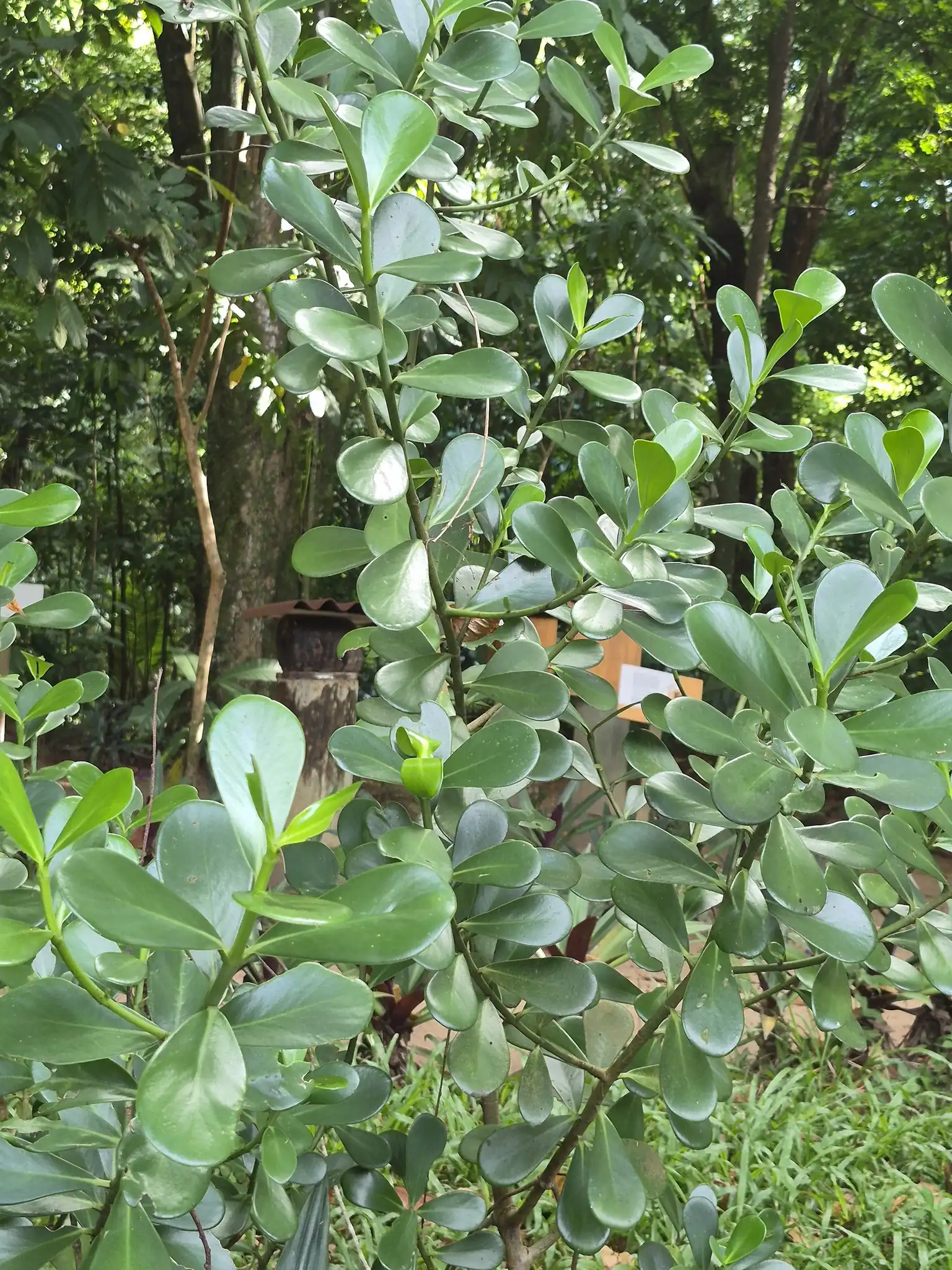
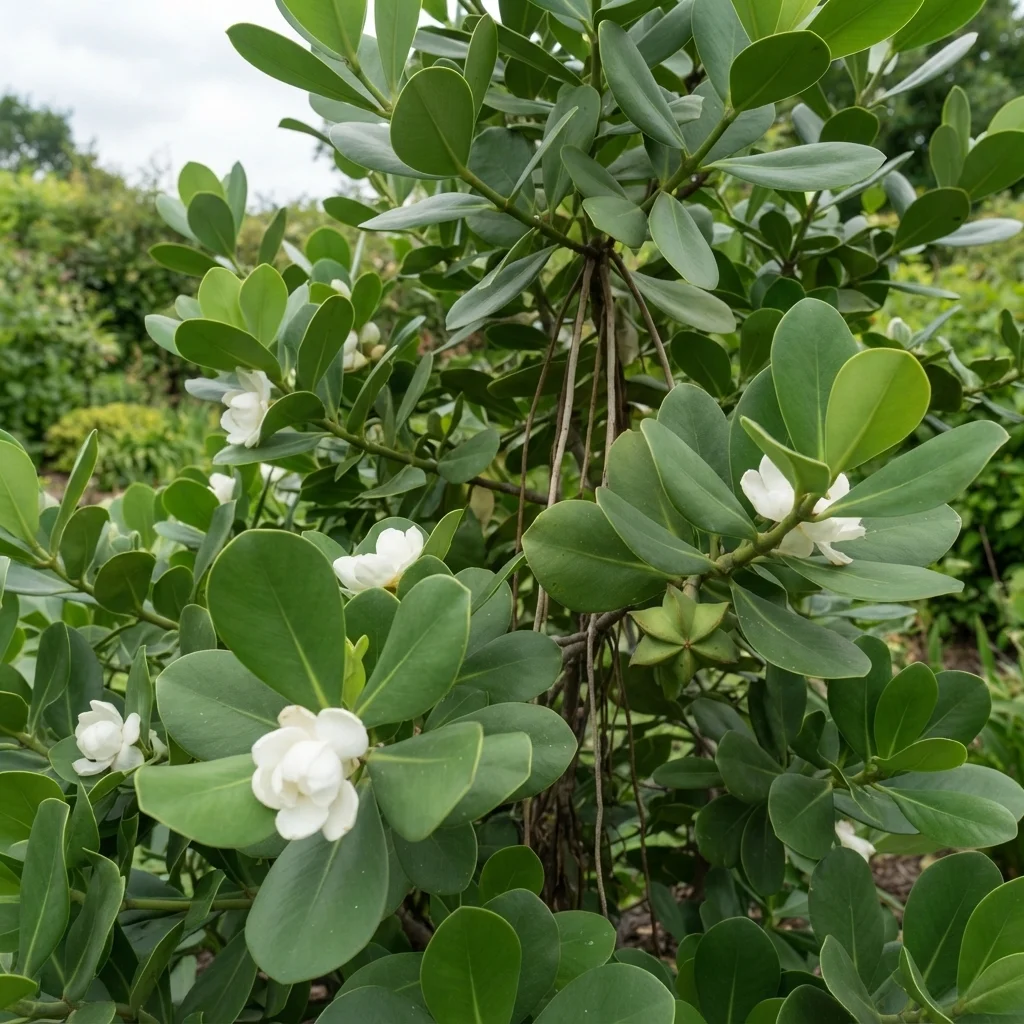
Clusia fluminensis is a dense evergreen shrub native to southeastern Brazil, characterized by thick, pear-shaped glossy leaves with thick cuticles. It produces small clusters of white to pale pink flowers at the leaf axils during summer, followed by small fleshy fruits.
The species features red-tinted margins on fresh growth under intense light and exhibits high salt and wind tolerance. Unlike its invasive relative Clusia rosea, it maintains a compact, non-strangling branching habit suitable for managed hedges.
Uses & Benefits:
Essentials
At a Glance
Plant Type
Shrub
Height
118"
Width
59"
Light
Full Sun, Partial Sun
Zones
10
Water
Low to Moderate
Humidity
Moderate to High
Lifespan
Perennial
Native To
Southeastern Brazil
Toxicity
Milky sap causes skin and mucosal irritation
Bloom period
Summer
In flower about 3 months of the year
Planting
How to Grow
- Select a location in full sun to bright indirect light with well-draining sandy or loamy soil.
- Dig a planting hole twice as wide as the container and match the depth of the nursery pot.
- Set the plant in place, backfill with gritty soil mix, and tamp down gently to remove air pockets.
- Water thoroughly at planting, then allow the top inch of soil to dry out between subsequent waterings.
Pro Tip
Plant in light, sandy soil with drainage; soggy substrates rapidly induce fatal root rot.
Keep It Thriving
Care Guide
Do
- Water only when the upper inch of soil feels dry
- Provide full sun or bright indirect light for dense growth
- Wear gloves when pruning to avoid contact with milky sap
Don't
- Do not let the root zone sit in standing water or heavy clay
- Avoid exposing the plant to temperatures below 30°F (-1°C)
- Do not prune heavily into bare, old wood
Seasonal Care Calendar
| Task | Jan | Feb | Mar | Apr | May | Jun | Jul | Aug | Sep | Oct | Nov | Dec |
|---|---|---|---|---|---|---|---|---|---|---|---|---|
| Fertilize | ||||||||||||
| Pest Check | ||||||||||||
| Propagate | ||||||||||||
| Prune | ||||||||||||
| Spring Cleanup |
Watch Out For
Pests & Diseases
Common Pests
Common Diseases
In the Garden
Landscape Uses & Companions
Landscape Uses
Multiply
Propagation Methods
Good to Know
Common Questions
Dwarf Clusia questions
What zones can Dwarf Clusia grow in?
Dwarf Clusia is hardy in USDA Zone 10: in that range it survives winter in the ground. Colder than Zone 10, grow it in a container you can move to shelter for the winter.
Is Dwarf Clusia deer resistant?
Yes — Dwarf Clusia is rated deer-resistant. Deer typically pass it over, though extreme hunger can override any plant's defenses.
When does Dwarf Clusia bloom?
Dwarf Clusia typically blooms in summer. Exact timing shifts a week or two with your zone — Sow's bloom calendar maps it to your garden.
Does Dwarf Clusia need full sun?
Dwarf Clusia does best in full sun to part shade. In hot climates, afternoon shade keeps blooms fresher longer.
Is Dwarf Clusia drought tolerant?
Yes — once established (usually after the first full season), Dwarf Clusia handles dry spells with minimal watering. Water deeply its first year to build the root system that makes that possible.
More Clusia to compare
Keep exploring
Explore the genus
Hardy in your zone?
Grow Dwarf Clusia with confidence
See it in a design of your actual yard, get zone-matched care reminders, and track it season by season in your garden journal.