The Story
Plant Bio
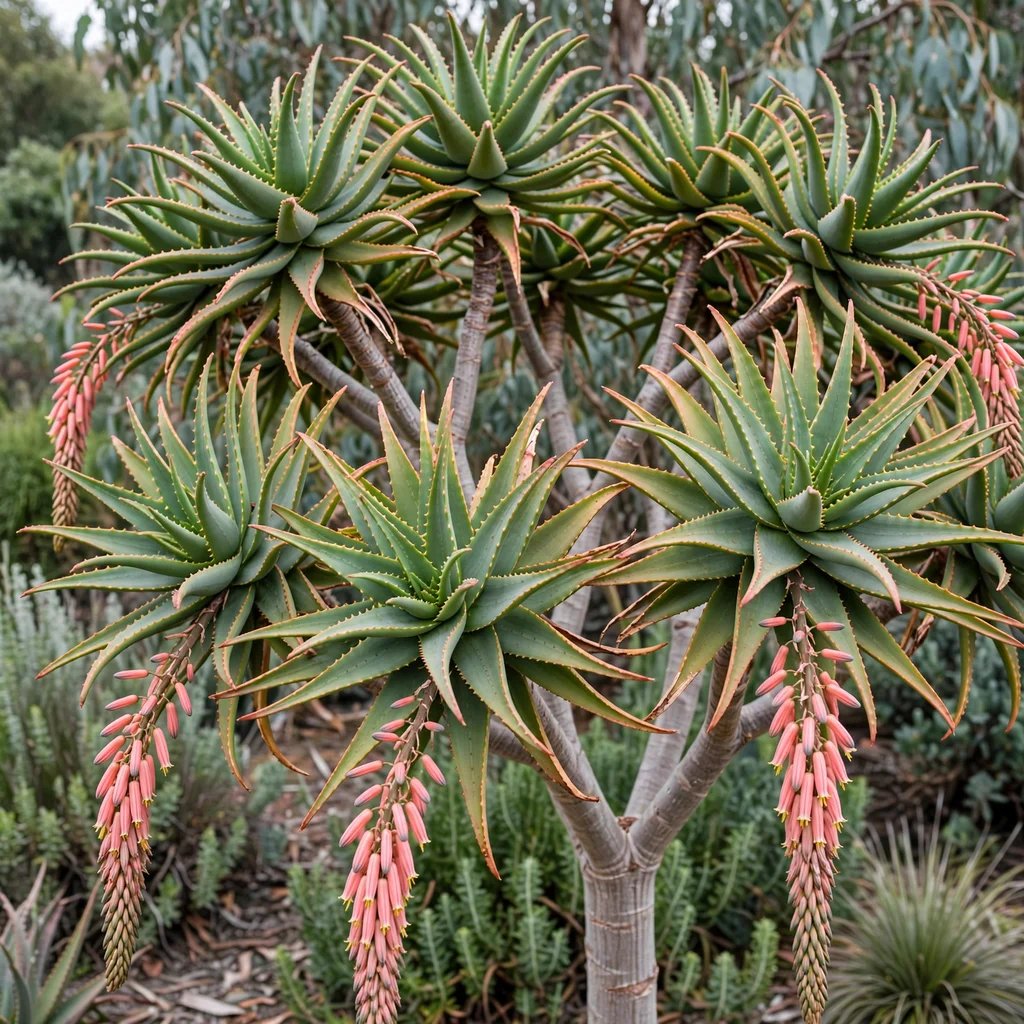
Aloidendron barberae is a branching succulent tree from eastern southern Africa, forming a stout trunk with a massive flared base and dichotomous limbs crowned by rosettes. The leaves are succulent and medium green, held in dense rosettes at the branch tips above spreading roots that anchor a broad canopy.
It is the largest of the tree aloes, reaching 30 to 35 feet tall and 20 feet wide in California gardens with a trunk girth approaching three feet. In fall to winter it carries erect branching racemes of rose-pink to salmon-pink tubular flowers tipped green, hardy to about 25 to 30F with damage below 25F.
Uses & Benefits:
Essentials
At a Glance
Plant Type
Tree
Height
420"
Width
240"
Light
Full Sun, Partial Sun
Zones
9, 10
Water
Low
Humidity
Low
Lifespan
Long-lived
Native To
Eastern southern Africa
Toxicity
Unknown
Bloom period
Fall – Winter
In flower about 6 months of the year
Planting
How to Grow
- Plant in spring after frost risk passes, in full sun with space for a 35-foot tree.
- Dig a wide hole no deeper than the root ball and set the trunk base above grade.
- Backfill with soil that drains very freely; do not enrich heavily or mound mulch against the trunk.
- Water once to settle, then irrigate only occasionally once established.
- Leave the trunk and spreading roots clear of walls, pipes, and paving.
Pro Tip
Give it full sun, very sharp drainage, and room for a 20-foot canopy; close planting and frequent water in shade cause black spot and rot.
Keep It Thriving
Care Guide
Do
- Plant in full sun in very well-drained soil
- Allow 20 feet of canopy and root room clear of structures
- Check leaf undersides for scale through summer
Don't
- Do not overwater or leave in standing water or heavy shade
- Do not plant close to buildings, walls, or paving
- Do not water frequently in winter when cold
Seasonal Care Calendar
| Task | Jan | Feb | Mar | Apr | May | Jun | Jul | Aug | Sep | Oct | Nov | Dec |
|---|---|---|---|---|---|---|---|---|---|---|---|---|
| Mulch | ||||||||||||
| Pest Check | ||||||||||||
| Plant | ||||||||||||
| Winter Prep |
Watch Out For
Pests & Diseases
Common Pests
Common Diseases
In the Garden
Landscape Uses & Companions
Landscape Uses
Multiply
Propagation Methods
Good to Know
Common Questions
Tree Aloe questions
What zones can Tree Aloe grow in?
Tree Aloe is hardy in USDA Zones 9–10: in that range it survives winter in the ground. Colder than Zone 9, winters are too cold for it to survive outdoors.
Is Tree Aloe deer resistant?
Yes — Tree Aloe is rated deer-resistant. Deer typically pass it over, though extreme hunger can override any plant's defenses.
When does Tree Aloe bloom?
Tree Aloe typically blooms from fall to winter. Exact timing shifts a week or two with your zone — Sow's bloom calendar maps it to your garden.
Does Tree Aloe need full sun?
Tree Aloe does best in full sun to part shade. In hot climates, afternoon shade keeps blooms fresher longer.
Is Tree Aloe drought tolerant?
Yes — once established (usually after the first full season), Tree Aloe handles dry spells with minimal watering. Water deeply its first year to build the root system that makes that possible.
More Aloe to compare
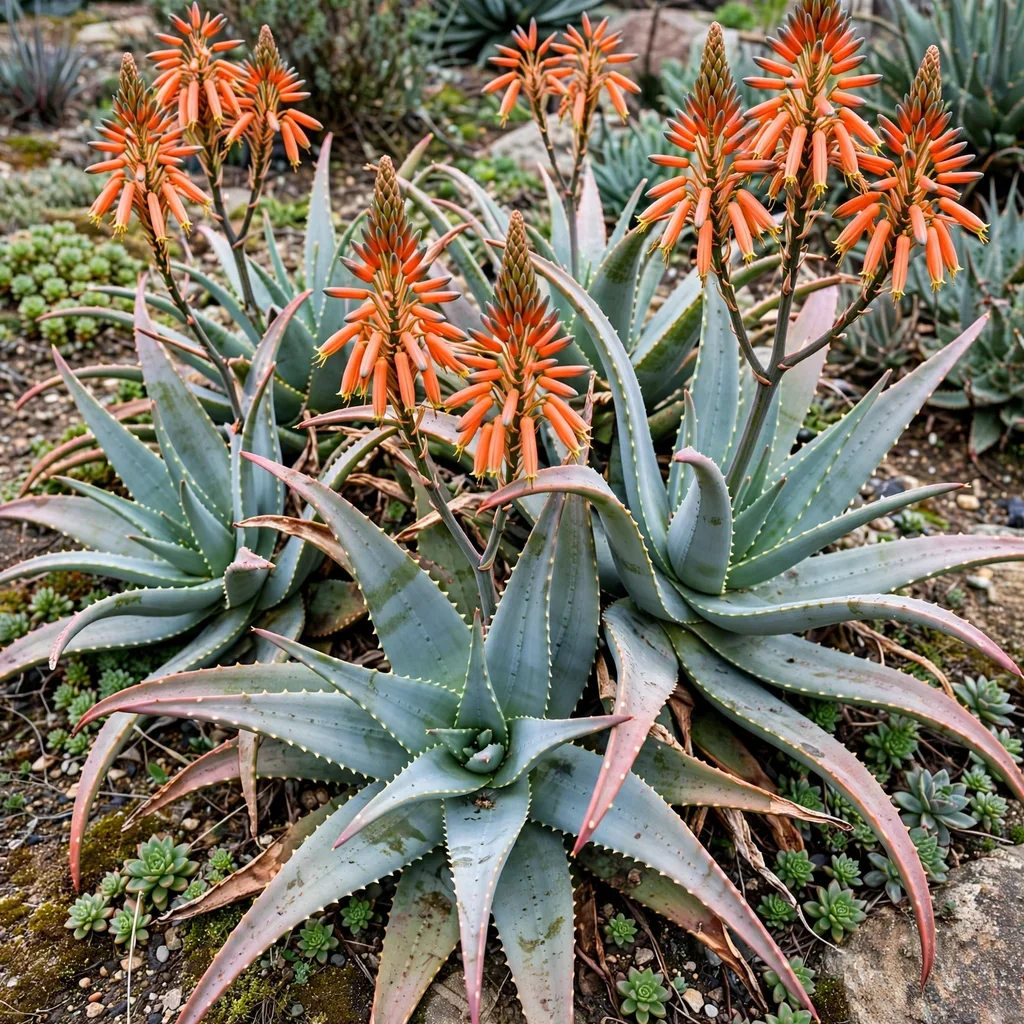
Compton's Aloe
Aloe comptonii
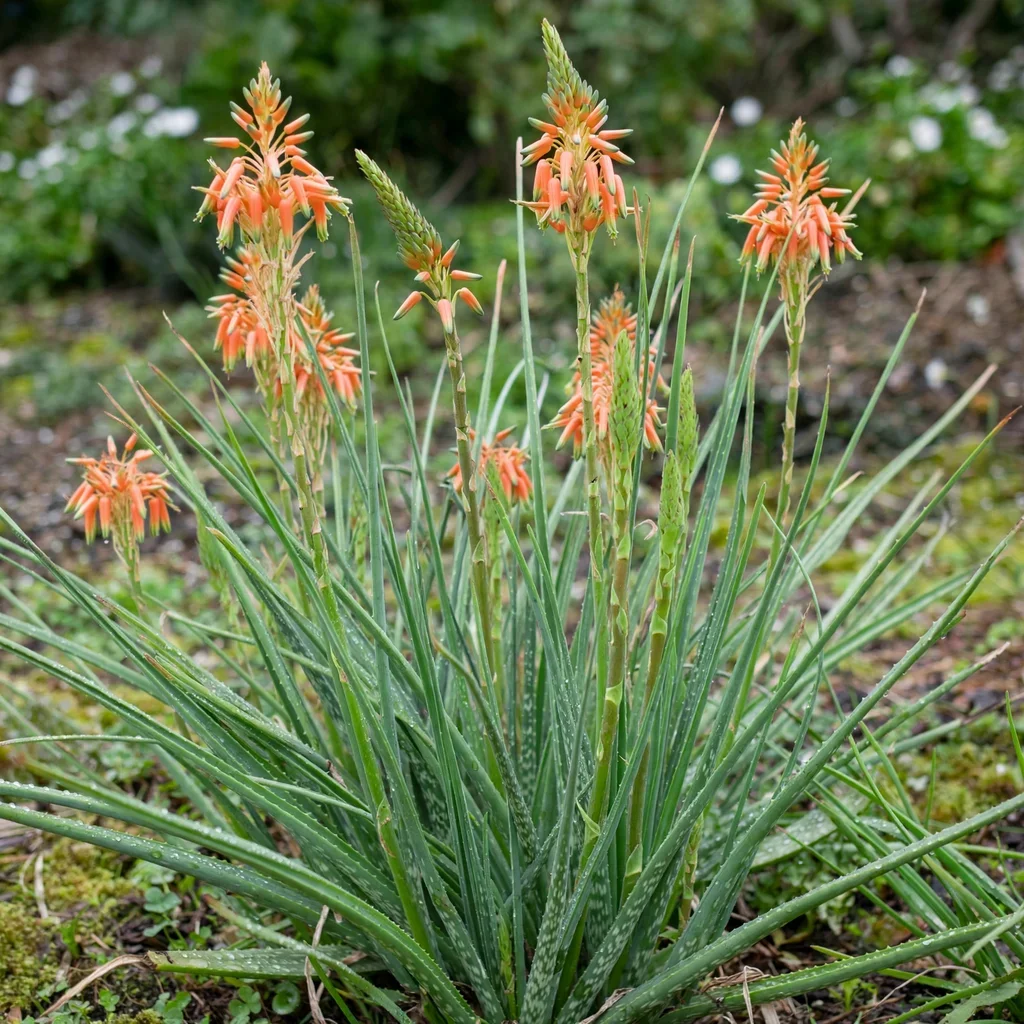
Cooper's Aloe
Aloe cooperi
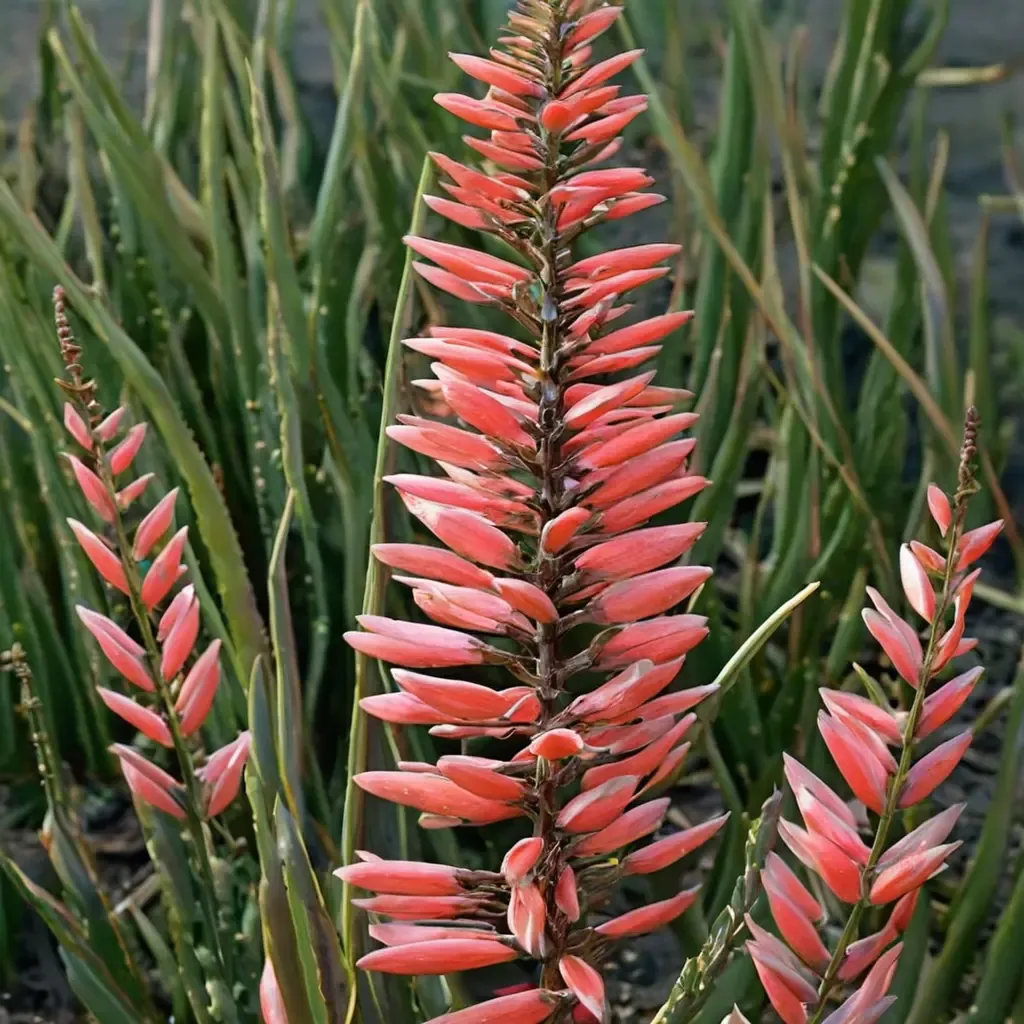
Safari Rose Aloe
Aloe vera 'Safari Rose'
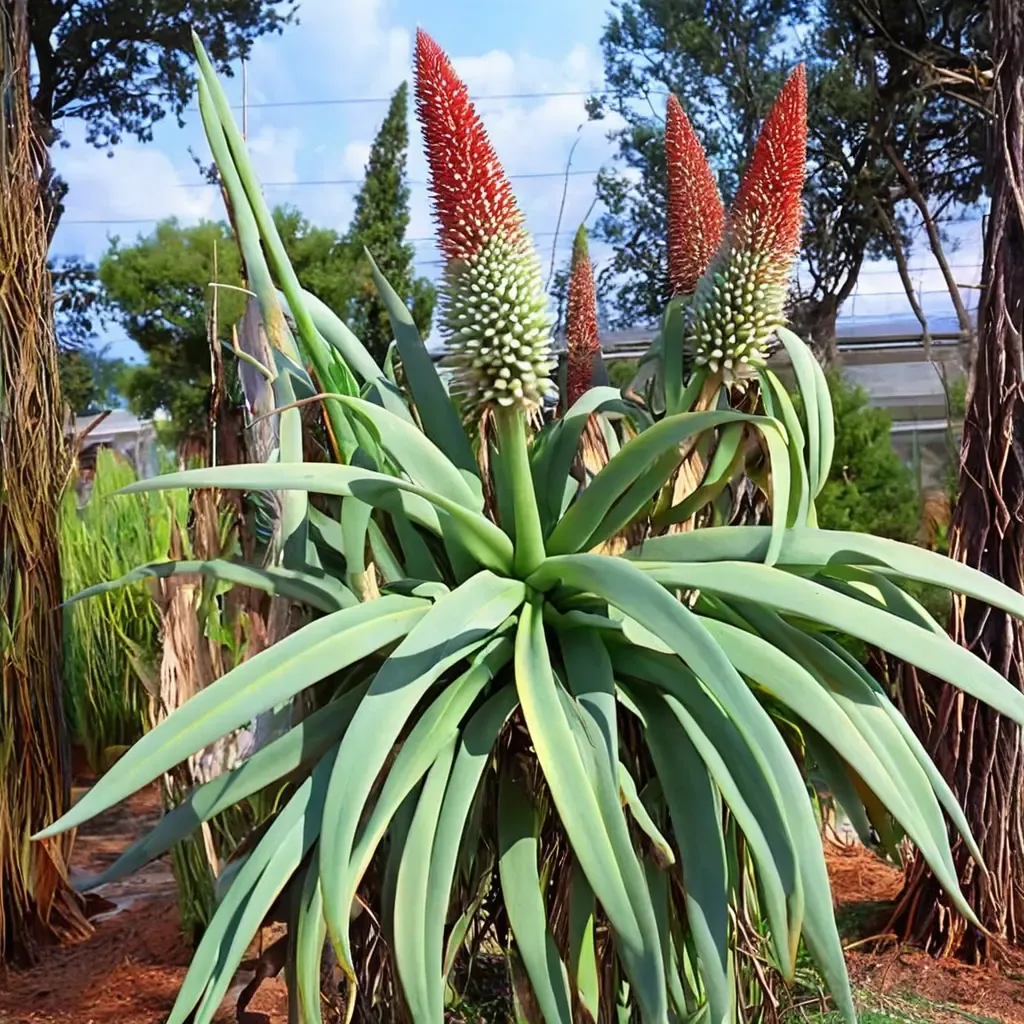
Tilt-Head Aloe
Aloe speciosa 'Tilt-Head Aloe'
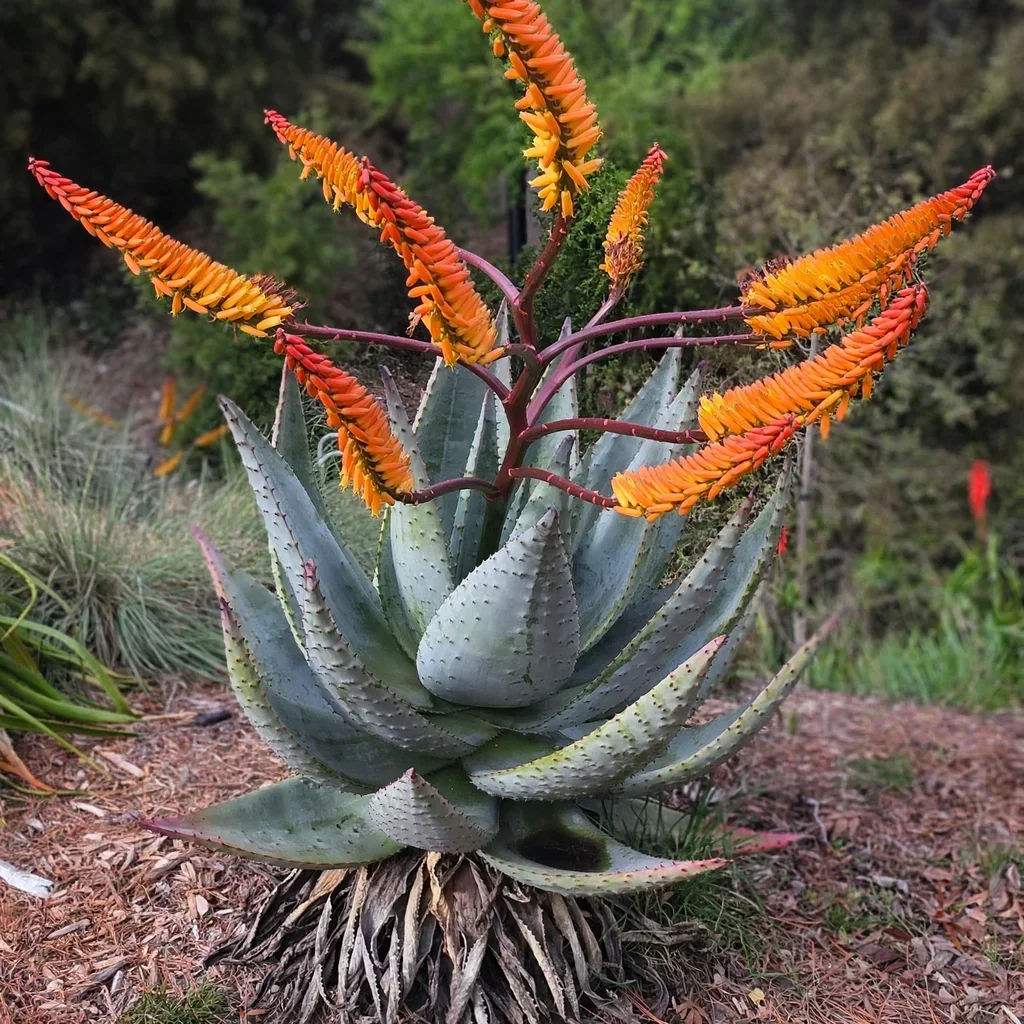
Mountain Aloe
Aloe marlothii 'Flat Flowered Aloe'
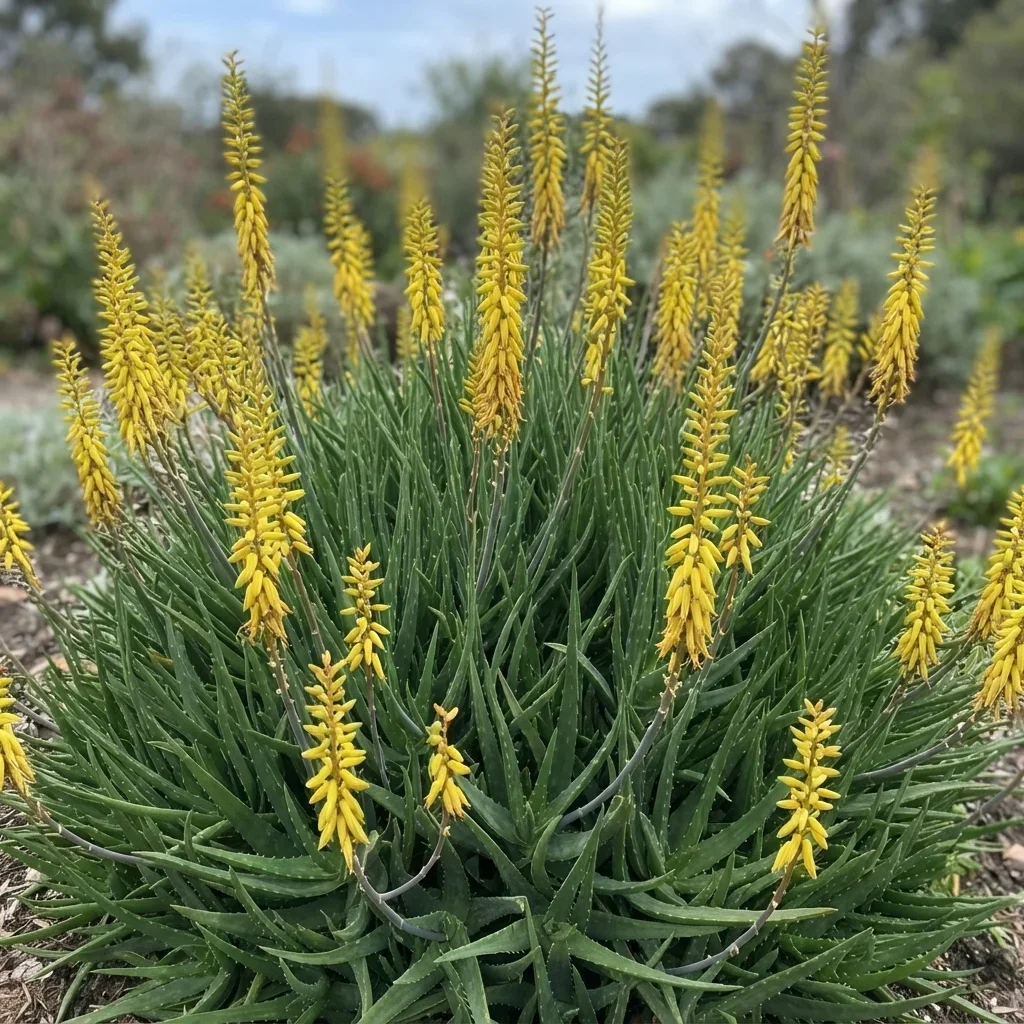
Fence Aloe
Aloe tenuior 'Fence Aloe'
Keep exploring
Explore the genus
Hardy in your zone?
Grow Tree Aloe with confidence
See it in a design of your actual yard, get zone-matched care reminders, and track it season by season in your garden journal.