The Story
Plant Bio
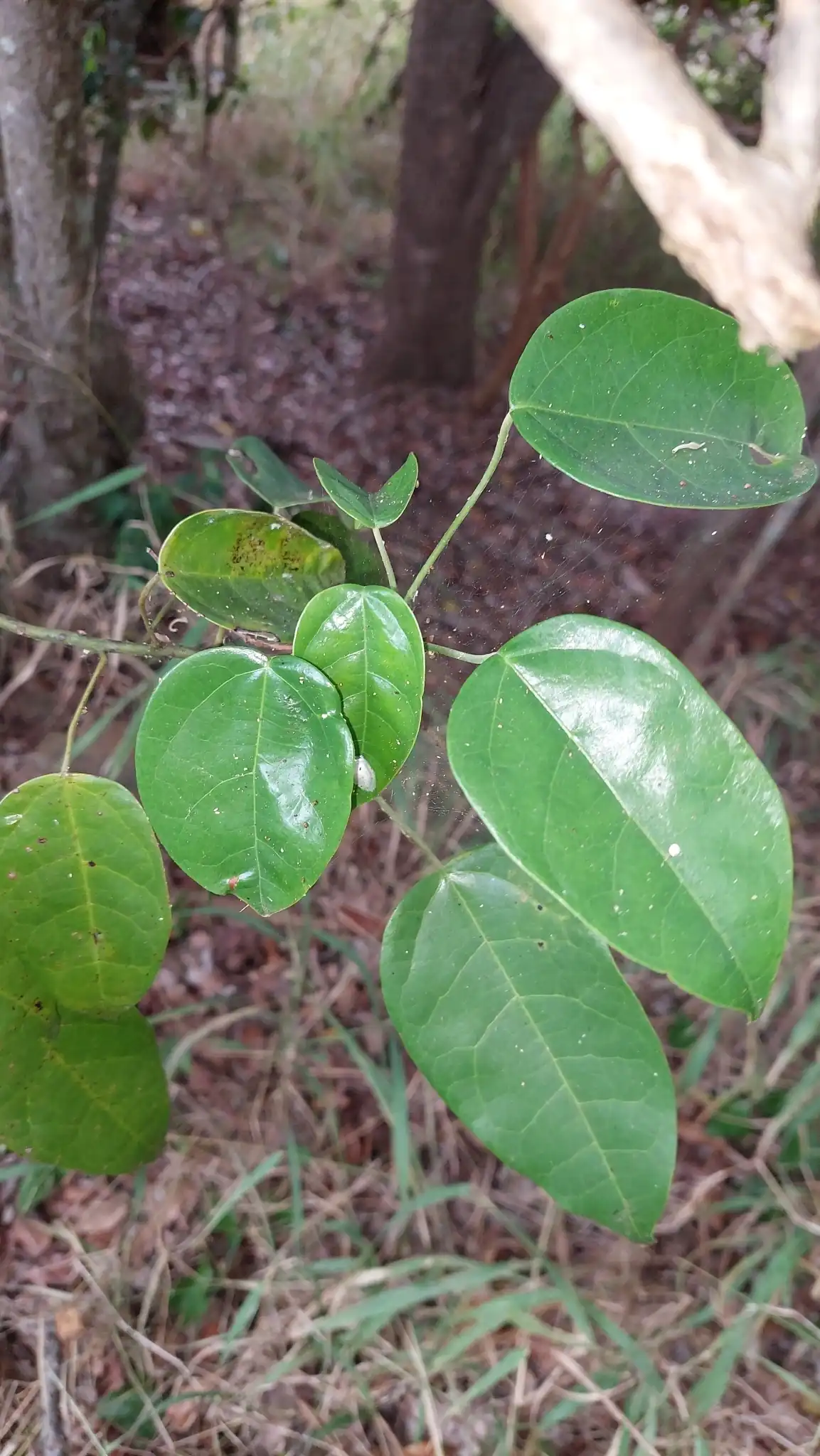
Hernandia bivalvis is an evergreen shrub to small tree featuring a neat canopy of glossy, ovate green leaves with paler undersides. It produces clusters of small cream-white flowers wrapped in broad petaloid bracts, followed by black ribbed fruits held inside fleshy, bright red-orange enlarged urns.
Native to dry rainforests and rocky outcrops of eastern Australia, it adapts to prolonged dry periods by shedding leaves rather than dying. Its oil-rich seeds are encased in showy, lantern-like fruiting bracts that attract fruit-eating birds.
Uses & Benefits:
Essentials
At a Glance
Plant Type
Tree
Height
787"
Width
315"
Light
Full Sun, Partial Sun
Zones
10
Water
Low to moderate
Humidity
High
Lifespan
Perennial
Native To
Eastern Australia
Toxicity
Non-toxic
Bloom period
Spring – Late spring
In flower about 3 months of the year
Planting
How to Grow
- Select a planting site in full sun or light shade with well-draining soil over gravel, loam, or rocky substrate.
- Dig a planting hole twice as wide as the root ball, ensuring the site drains freely before backfilling.
- Position the plant at the same depth it sat in its nursery container and fill with unamended native soil.
- Water thoroughly at planting to settle the soil, then allow the root zone to dry out between subsequent waterings.
Pro Tip
Avoid planting in heavy or poorly drained soil, as roots decay quickly without sharp drainage; if foliage drops during extended dry spells, hold back on overwatering and wait for rain to trigger fresh growth.
Keep It Thriving
Care Guide
Do
- Provide sharp drainage around the root zone
- Prune lightly to maintain structural shape while young
- Allow soil to dry slightly between irrigations
Don't
- Do not cut back aggressively into old leafless wood
- Do not plant in clay or waterlogged soils
- Do not overwater during natural dry leaf-drop periods
Seasonal Care Calendar
| Task | Jan | Feb | Mar | Apr | May | Jun | Jul | Aug | Sep | Oct | Nov | Dec |
|---|---|---|---|---|---|---|---|---|---|---|---|---|
| Fertilize | ||||||||||||
| Mulch | ||||||||||||
| Pest Check | ||||||||||||
| Prune |
Watch Out For
Pests & Diseases
Common Pests
Common Diseases
In the Garden
Landscape Uses & Companions
Landscape Uses
Multiply
Propagation Methods
Good to Know
Common Questions
Grease Nut questions
What zones can Grease Nut grow in?
Grease Nut is hardy in USDA Zone 10: in that range it survives winter in the ground. Colder than Zone 10, winters are too cold for it to survive outdoors.
When does Grease Nut bloom?
Grease Nut typically blooms in spring. Exact timing shifts a week or two with your zone — Sow's bloom calendar maps it to your garden.
Does Grease Nut need full sun?
Grease Nut does best in full sun to part shade. In hot climates, afternoon shade keeps blooms fresher longer.
Is Grease Nut drought tolerant?
Yes — once established (usually after the first full season), Grease Nut handles dry spells with minimal watering. Water deeply its first year to build the root system that makes that possible.
Keep exploring
Explore the genus
Hardy in your zone?
Grow Grease Nut with confidence
See it in a design of your actual yard, get zone-matched care reminders, and track it season by season in your garden journal.