The Story
Plant Bio
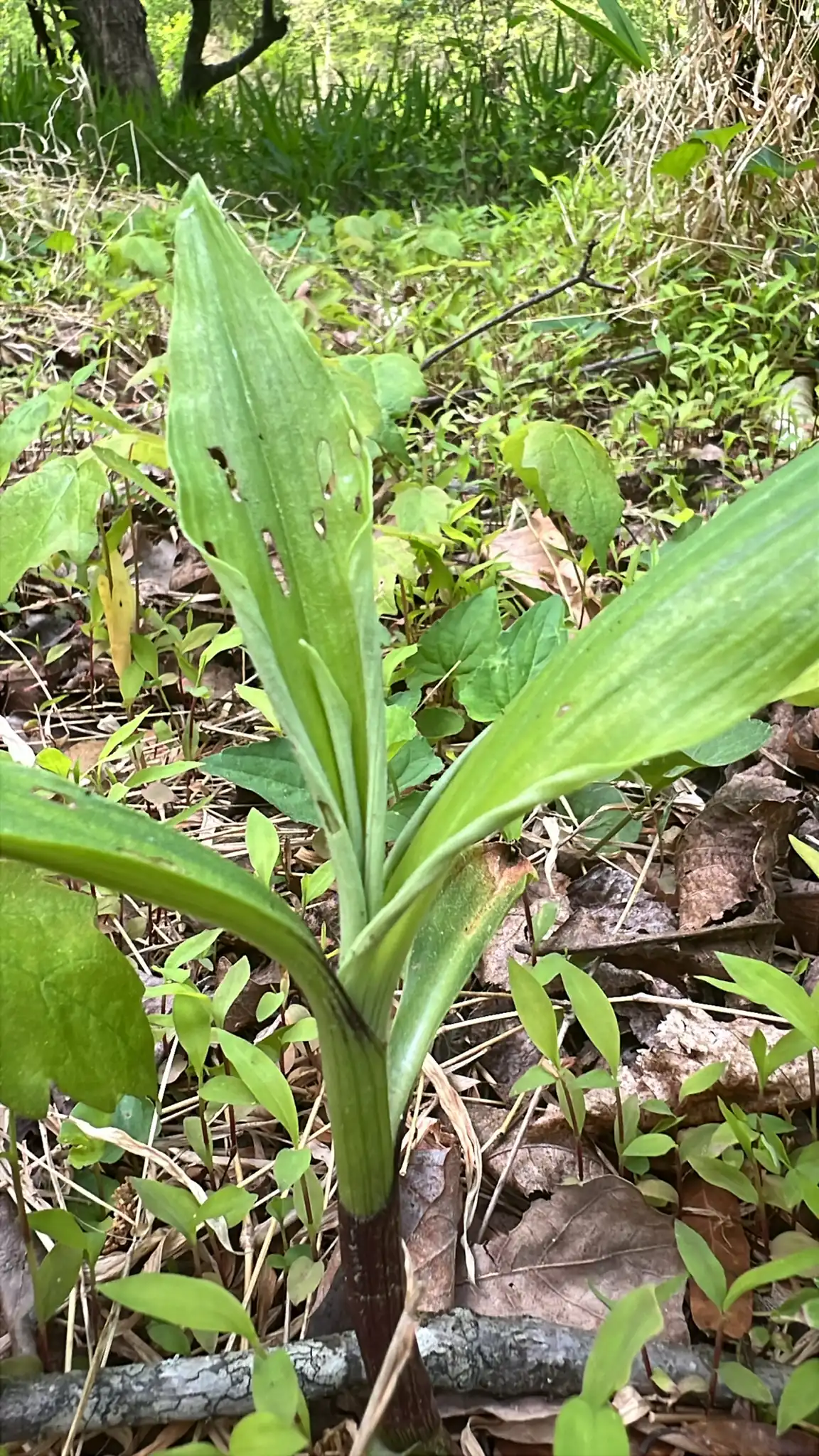
Commelina virginica, the Virginia dayflower, is an erect perennial of eastern bottomlands and swamp edges, reaching three to four feet on fleshy stems from white rhizomes. Its leaves are lance-shaped to elliptic, two to eight inches long, spirally arranged with clasping sheaths tipped with red hairs.
Unlike the introduced Asiatic dayflower, it grows upright and forms clonal patches from underground stems rather than sprawling and rooting at the nodes. Its blue flowers are borne in crowded terminal clusters inside a folded leafy spathe, each with two large upper petals and one smaller lower petal opening in the morning and withering by afternoon.
Uses & Benefits:
Essentials
At a Glance
Plant Type
Perennial
Height
47"
Width
24"
Light
Full Sun, Partial Sun, Shade
Zones
5, 6, 7, 8, 9
Water
Moist to wet
Humidity
Unknown
Lifespan
Perennial
Native To
Eastern USA
Toxicity
Unknown
Bloom period
Spring – Fall
In flower about 9 months of the year
Planting
How to Grow
- Choose a spot in sun to shade where soil stays moist to wet, such as a rain garden or stream edge.
- Dig into sandy or loamy soil enriched with humus and set the crown at the same depth it was growing.
- Space divisions to allow clonal spread and water thoroughly after planting.
- Mulch with leaf mold and keep evenly moist through the first season.
Pro Tip
Plant where soil stays moist and give it room to spread by rhizomes; plants in dry soil stall and fail to flower well.
Keep It Thriving
Care Guide
Do
- Keep soil consistently moist, especially during summer bloom.
- Mulch with humus or leaf mold to hold moisture.
- Allow the patch to expand by rhizomes where colonization is wanted.
Don't
- Do not plant in dry, lean soil where growth stalls.
- Do not confuse it with sprawling Asiatic dayflower rooting at the nodes.
- Do not let new divisions dry out before roots establish.
Seasonal Care Calendar
| Task | Jan | Feb | Mar | Apr | May | Jun | Jul | Aug | Sep | Oct | Nov | Dec |
|---|---|---|---|---|---|---|---|---|---|---|---|---|
| Deadhead | ||||||||||||
| Divide | ||||||||||||
| Mulch | ||||||||||||
| Plant |
Watch Out For
Pests & Diseases
Common Pests
Common Diseases
In the Garden
Landscape Uses & Companions
Landscape Uses
Companion Plants
Multiply
Propagation Methods
Good to Know
Common Questions
Virginia Dayflower questions
What zones can Virginia Dayflower grow in?
Virginia Dayflower is hardy in USDA Zones 5–9: in that range it survives winter in the ground. Colder than Zone 5, grow it in a container you can move to shelter for the winter, or as an annual. Warmer than Zone 9, winter isn't the problem: it prefers colder winters, and summer heat can shorten its life.
When does Virginia Dayflower bloom?
Virginia Dayflower typically blooms from spring to fall. Exact timing shifts a week or two with your zone — Sow's bloom calendar maps it to your garden.
Does Virginia Dayflower need full sun?
Virginia Dayflower does best in full sun to part shade. In hot climates, afternoon shade keeps blooms fresher longer.
Keep exploring
Explore the genus
Hardy in your zone?
Grow Virginia Dayflower with confidence
See it in a design of your actual yard, get zone-matched care reminders, and track it season by season in your garden journal.