The Story
Plant Bio
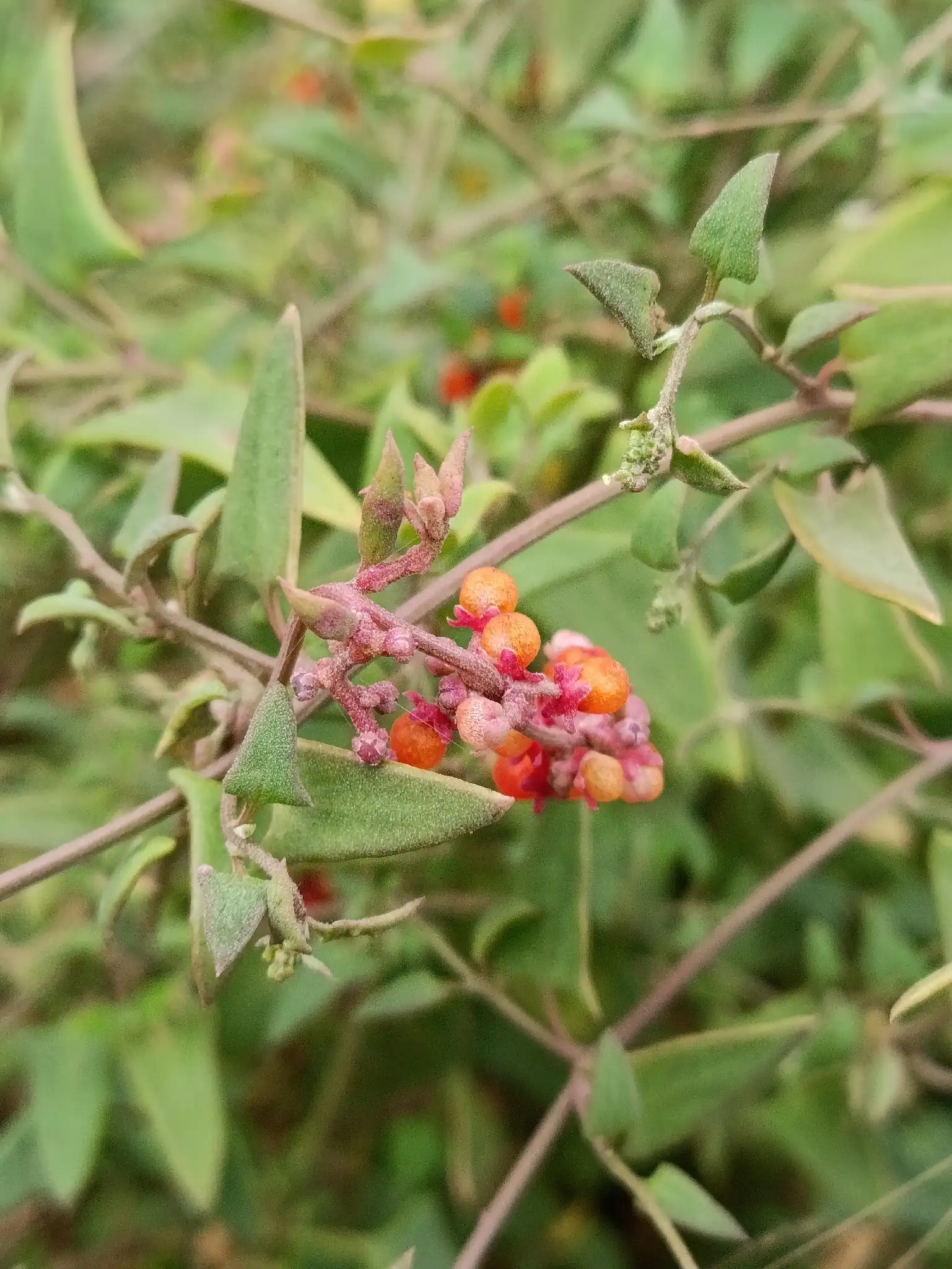
Chenopodium nutans is an evergreen perennial subshrub native to Australia, featuring twining stems that form a dense groundcover or scramble up adjacent vegetation. The variable arrow-shaped to oval foliage is green to grey-green, providing fine background texture before small flowers yield colorful berries.
This species produces tiny greenish flowers in spring and summer followed by small, fleshy berries in shades of red, orange, yellow, or pink. Its sprawling stems readily adapt to dry, rocky, or saline soils where traditional groundcovers fail to establish.
Uses & Benefits:
Essentials
At a Glance
Plant Type
Groundcover
Height
39"
Width
39"
Light
Full Sun, Partial Sun
Zones
9, 10
Water
Low
Humidity
Adapted to low to medium humidity
Lifespan
Perennial
Native To
Australia
Toxicity
Non-toxic
Bloom period
Spring – Summer
In flower about 6 months of the year
Planting
How to Grow
- Select a site in full sun or partial shade with sharply draining soil.
- Sow seed or set out young plants in spring after frost danger passes.
- Water sparingly during establishment to encourage deep root growth.
- Trim stems lightly if needed to maintain bounds, avoiding cuts into old wood.
Pro Tip
Plant in lean, highly drained soil with minimal water; rich soils and excessive moisture produce loose, rank growth and invite root rot.
Keep It Thriving
Care Guide
Do
- Provide full sun or light shade for dense stem growth.
- Ensure high soil drainage to keep roots dry between waterings.
- Trim trailing growth lightly to preserve a tidy habit.
Don't
- Do not overwater or allow roots to sit in perpetually damp soil.
- Do not apply heavy fertilizers, which induce weak and rank growth.
- Do not hard-prune into old, leafless woody stem bases.
Seasonal Care Calendar
| Task | Jan | Feb | Mar | Apr | May | Jun | Jul | Aug | Sep | Oct | Nov | Dec |
|---|---|---|---|---|---|---|---|---|---|---|---|---|
| Pest Check | ||||||||||||
| Plant | ||||||||||||
| Prune | ||||||||||||
| Winter Prep |
Watch Out For
Pests & Diseases
Common Pests
Common Diseases
In the Garden
Landscape Uses & Companions
Landscape Uses
Companion Plants
Multiply
Propagation Methods
Good to Know
Common Questions
Climbing Saltbush questions
What zones can Climbing Saltbush grow in?
Climbing Saltbush is hardy in USDA Zones 9–10: in that range it survives winter in the ground. Colder than Zone 9, grow it in a container you can move to shelter for the winter, or as an annual.
Is Climbing Saltbush deer resistant?
Not reliably. Deer may browse Climbing Saltbush, especially tender spring growth — plan on repellents or fencing where pressure is high.
When does Climbing Saltbush bloom?
Climbing Saltbush typically blooms from spring to summer. Exact timing shifts a week or two with your zone — Sow's bloom calendar maps it to your garden.
Does Climbing Saltbush need full sun?
Climbing Saltbush does best in full sun to part shade. In hot climates, afternoon shade keeps blooms fresher longer.
Is Climbing Saltbush drought tolerant?
Yes — once established (usually after the first full season), Climbing Saltbush handles dry spells with minimal watering. Water deeply its first year to build the root system that makes that possible.
More Chenopodium to compare
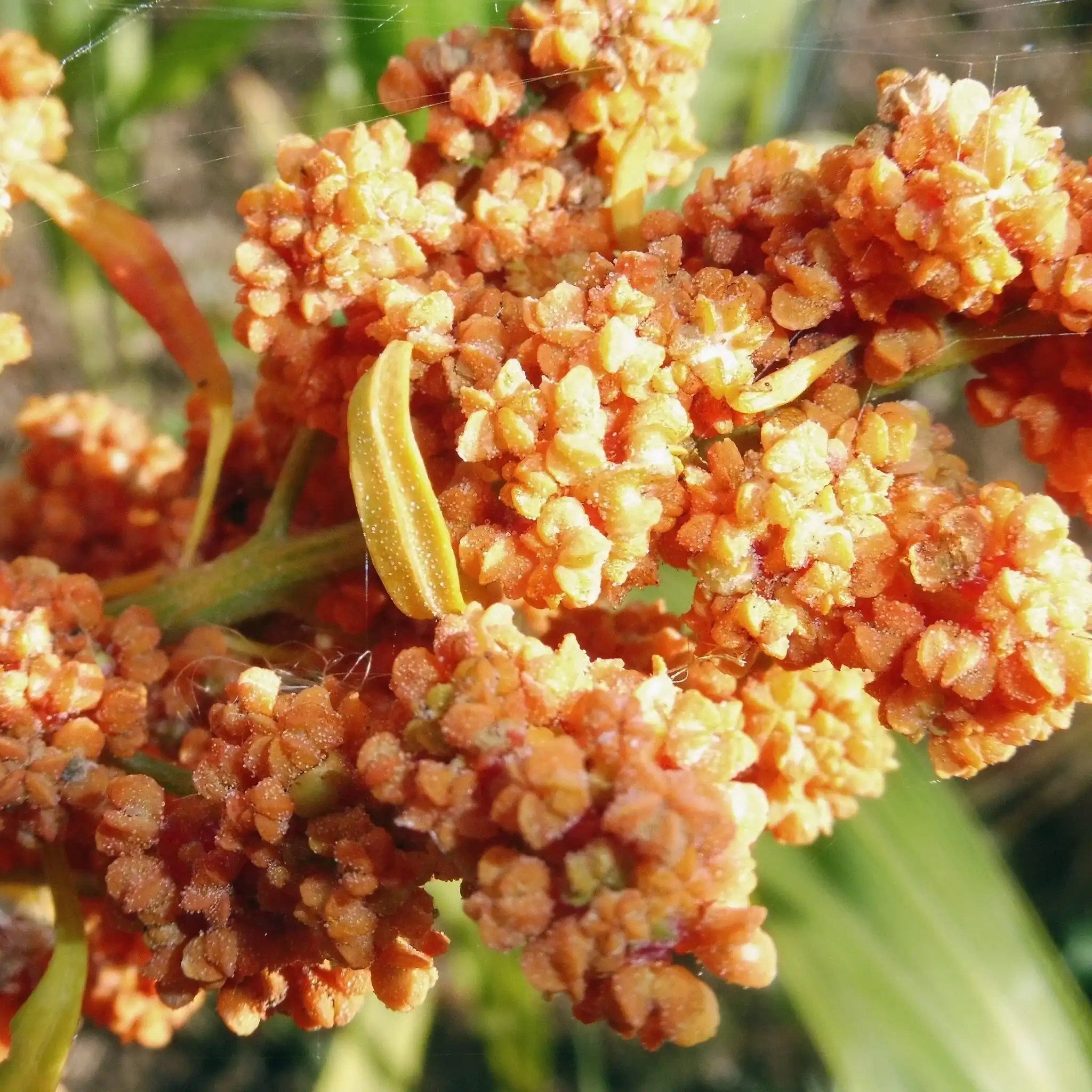
Quinoa
Chenopodium quinoa
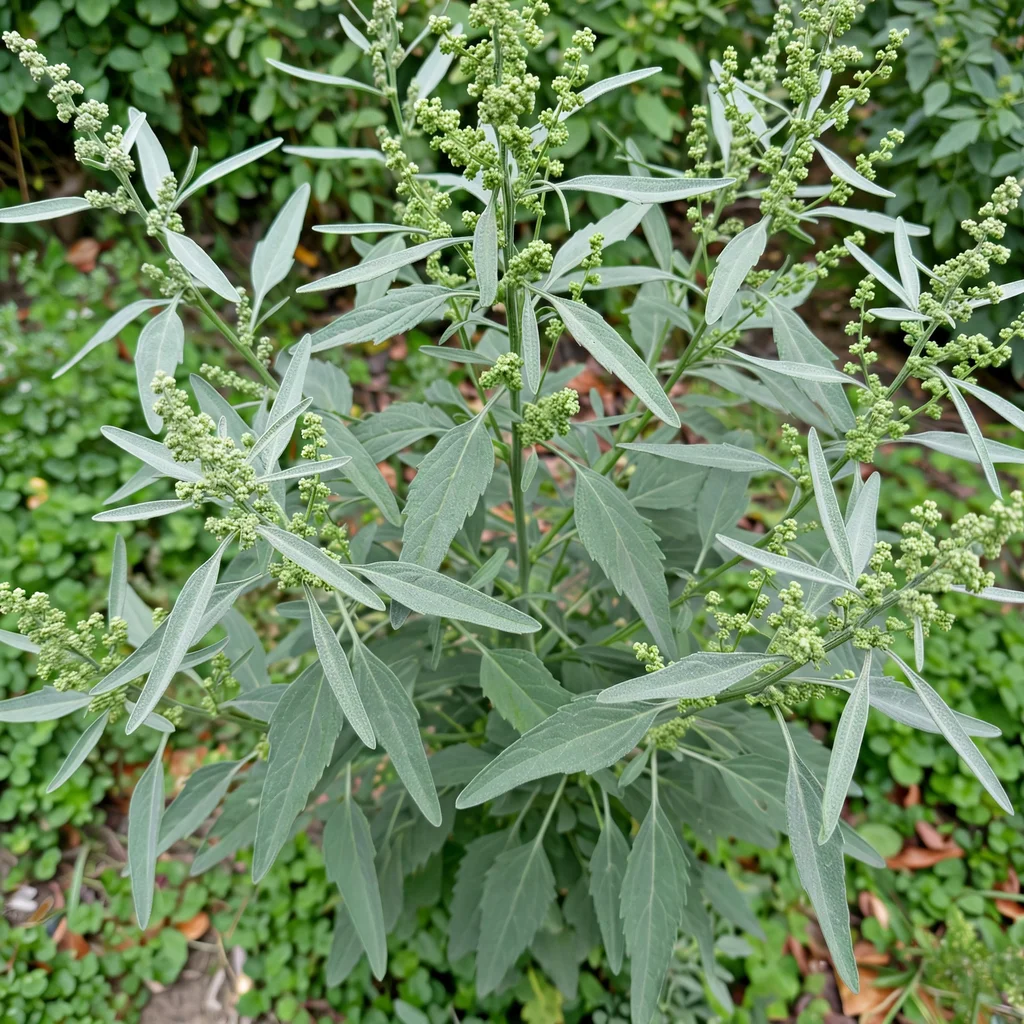
Lamb's Quarters
Chenopodium album
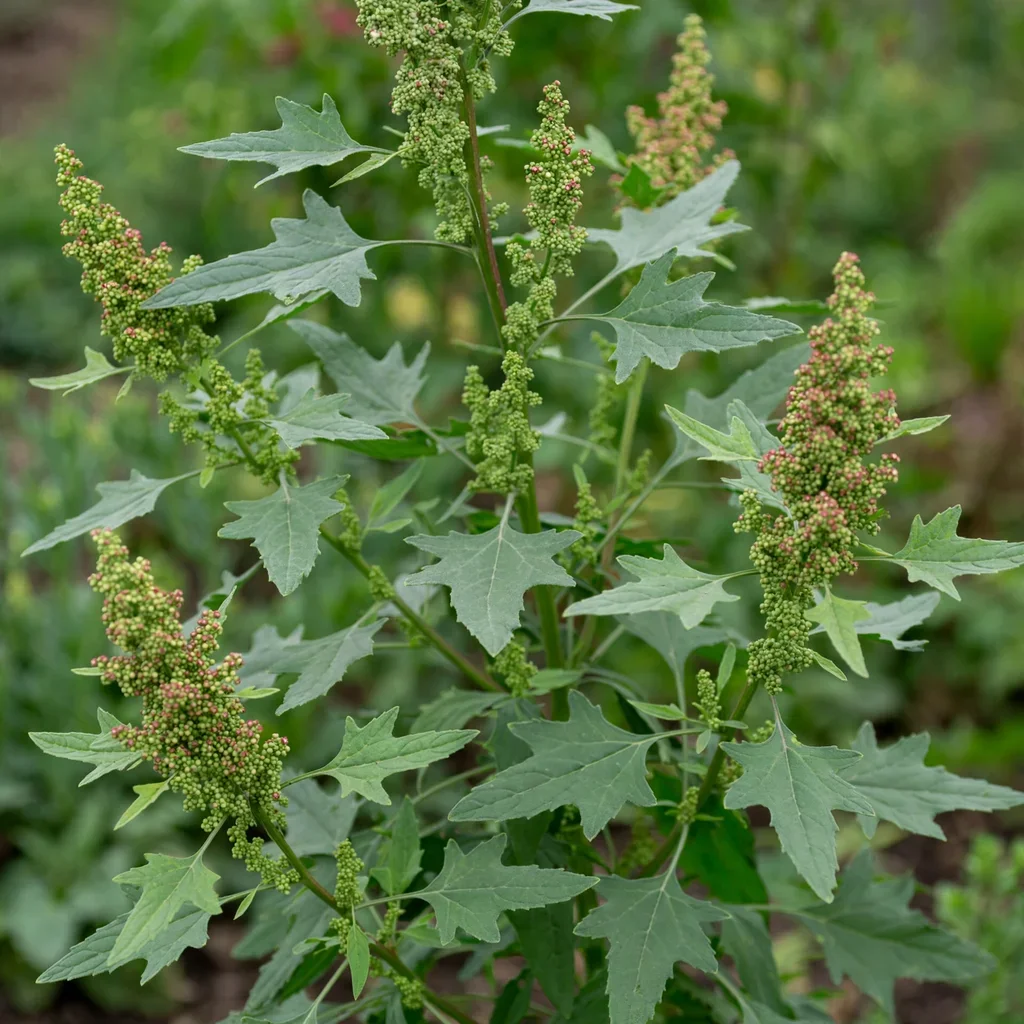
Quinoa Mix
Chenopodium quinoa 'Mix'
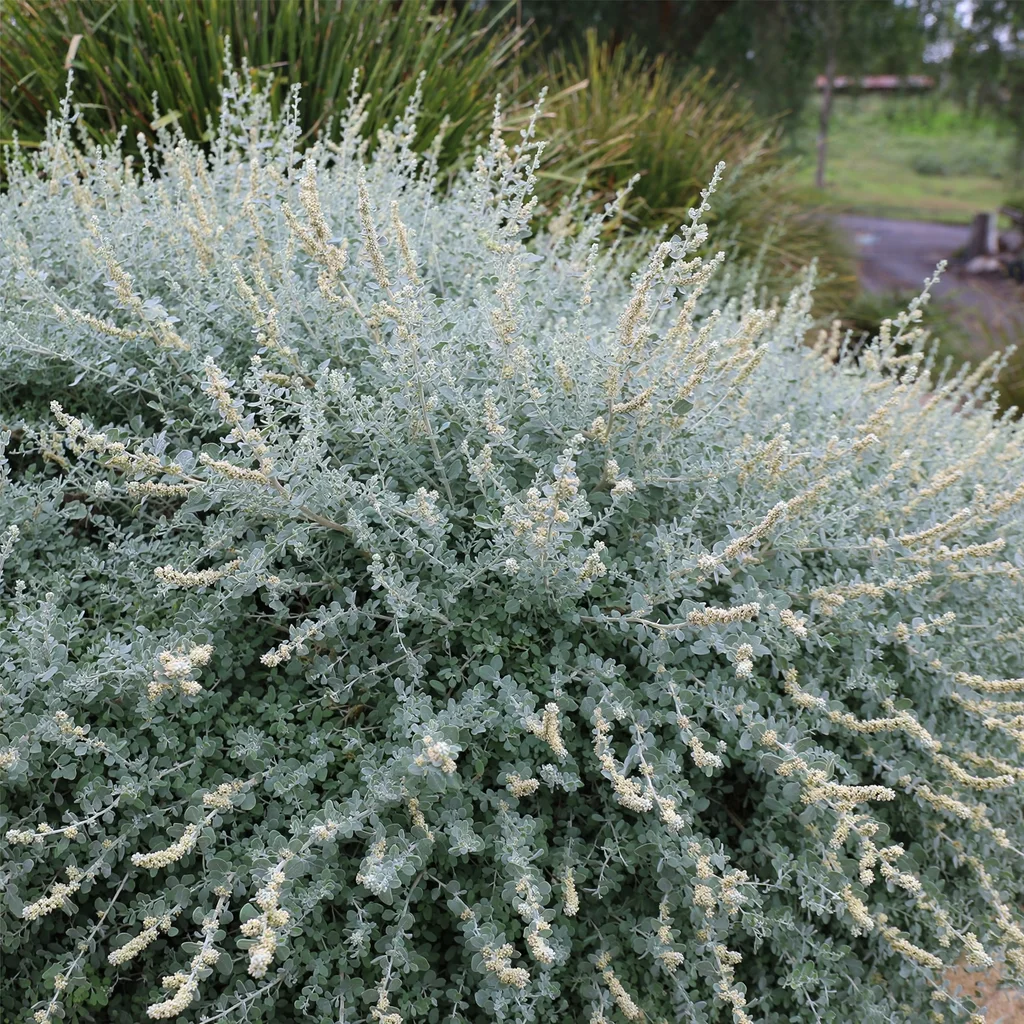
Spiny Saltbush
Chenopodium spinescens 'Aussie Flat Bush'
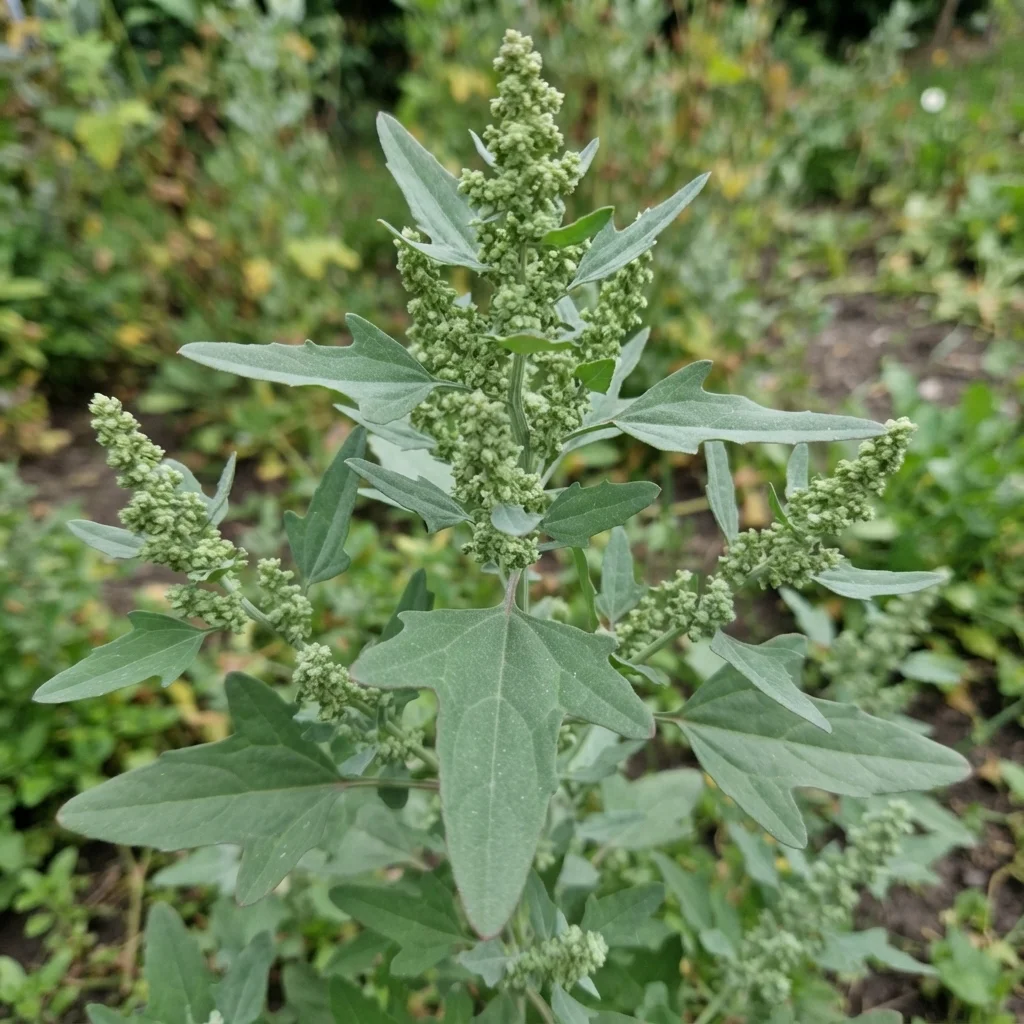
Fig-Leaved Goosefoot
Chenopodium ficifolium
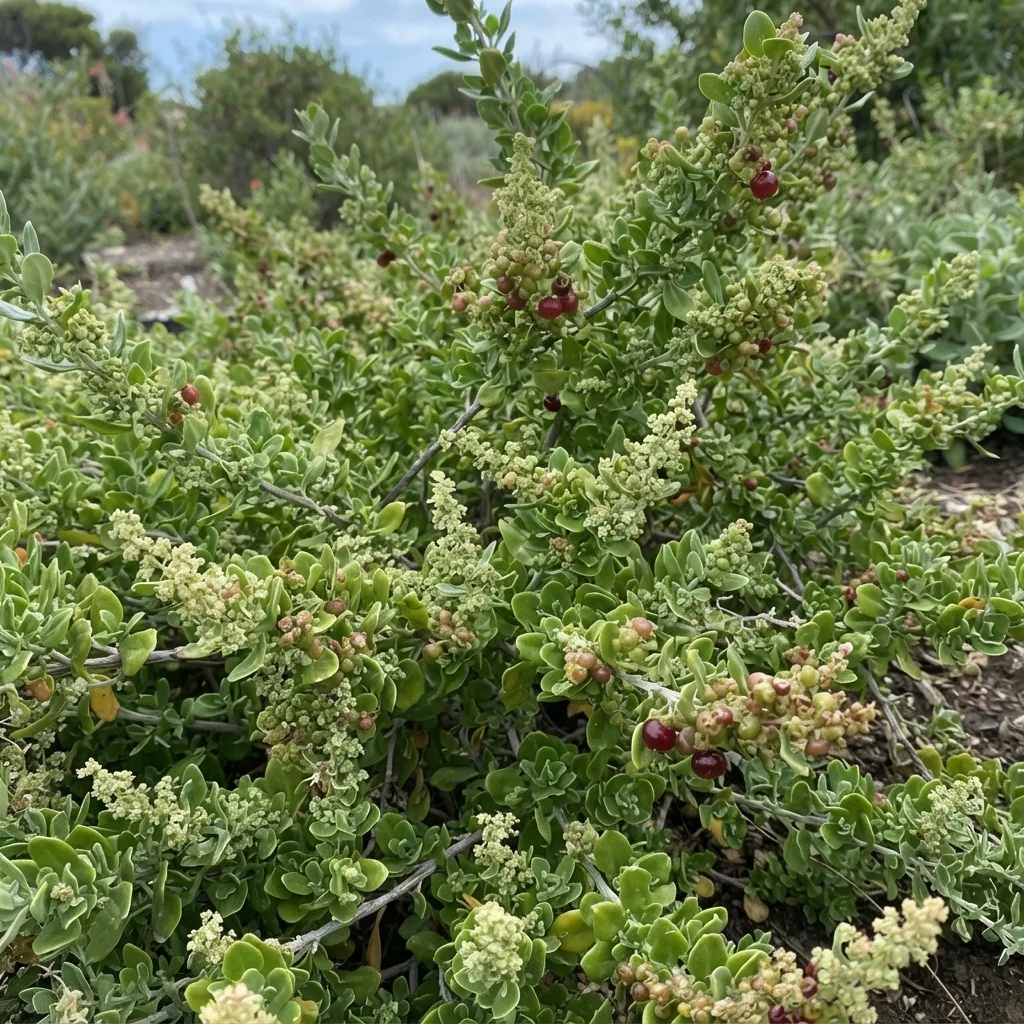
Seaberry saltbush
Chenopodium candolleanum
Keep exploring
Explore the genus
Hardy in your zone?
Grow Climbing Saltbush with confidence
See it in a design of your actual yard, get zone-matched care reminders, and track it season by season in your garden journal.