The Story
Plant Bio
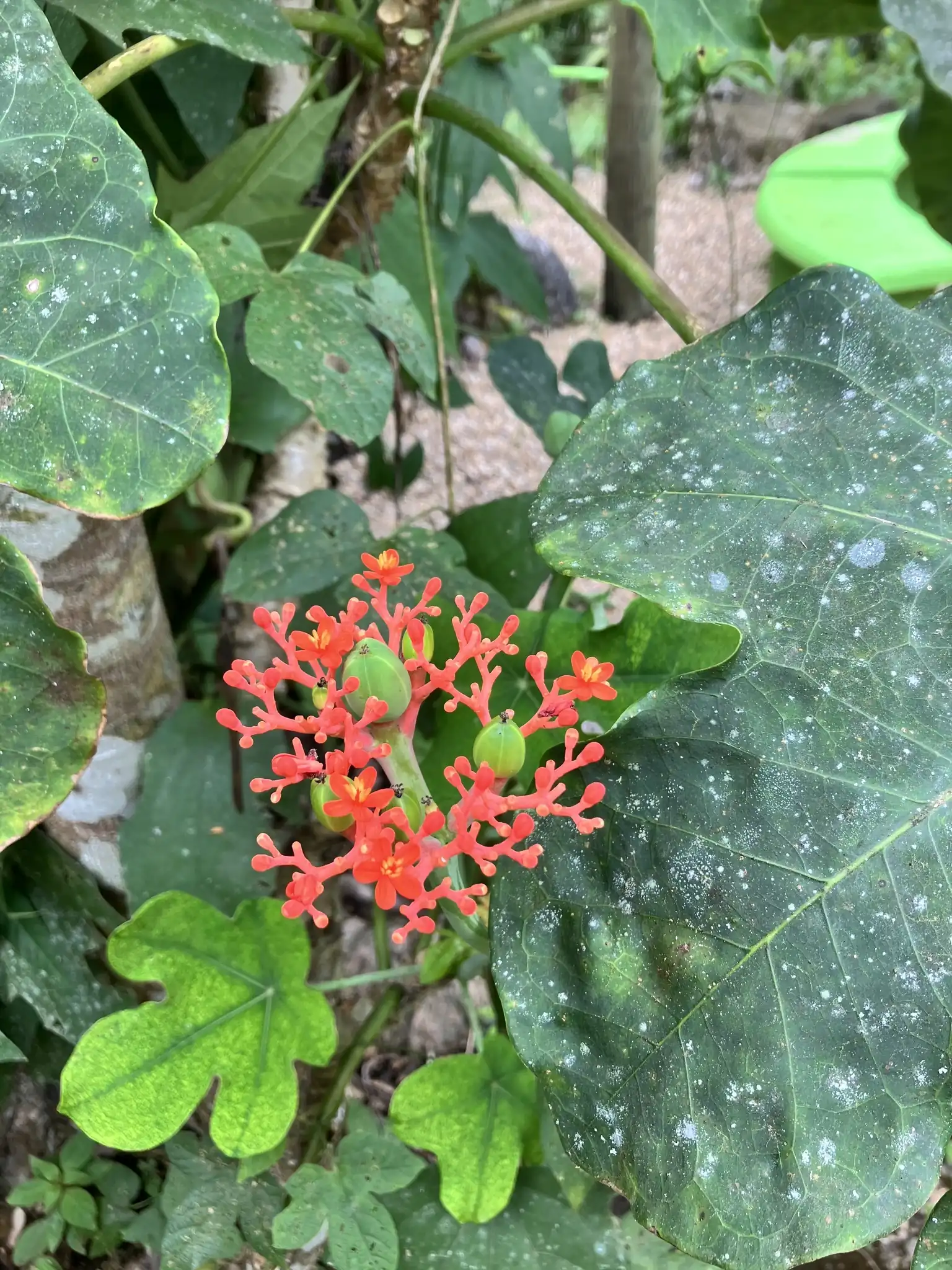
Jatropha podagrica is a caudiciform succulent shrub from the seasonally dry tropics of southern Mexico and Central America, deciduous in the dry season and frost-tender in cultivation. It stores water in a swollen bottle-shaped caudex and carries large lobed leaves and monoecious flowers in terminal cymes held above the foliage.
The trunk forms an erect, knobby, gray-skinned bottle that narrows toward the top, with large shield-shaped deeply lobed leaves clustered at the crown. Flower cymes of coral-red to orangish-red bloom intermittently through the warm months, followed by oval green capsules that mature brown and split explosively to eject seed.
Uses & Benefits:
Essentials
At a Glance
Plant Type
Cactus Succulent
Height
60"
Width
48"
Light
Full Sun, Partial Sun
Zones
10
Water
Low
Humidity
Average
Lifespan
Long-lived tender shrub
Native To
Southern Mexico to Panama
Toxicity
Toxic if ingested, skin irritant
Bloom period
Spring – Fall
In flower about 9 months of the year
Planting
How to Grow
- Grow in full sun to partial shade in a pot with drainage holes and a fast-draining cactus mix.
- Water deeply, then allow the mix to dry completely before watering again.
- Bring indoors before first frost and hold nearly dry through winter while leafless.
- Wear gloves when handling; wash off any milky sap immediately.
Pro Tip
Let the pot dry between waterings and keep it dry and frost-free after leaf drop; winter-wet soil rots the caudex.
Keep It Thriving
Care Guide
Do
- Give full sun to partial shade and sharp drainage
- Allow soil to dry between waterings
- Bag ripening capsules to catch seed before they burst
Don't
- Do not leave out in frost or keep winter-wet
- Do not water a leafless plant on a summer schedule
- Do not handle sap without gloves or ingest any part
Seasonal Care Calendar
| Task | Jan | Feb | Mar | Apr | May | Jun | Jul | Aug | Sep | Oct | Nov | Dec |
|---|---|---|---|---|---|---|---|---|---|---|---|---|
| Pest Check | ||||||||||||
| Plant | ||||||||||||
| Propagate | ||||||||||||
| Winter Prep |
Watch Out For
Pests & Diseases
Common Pests
Common Diseases
In the Garden
Landscape Uses & Companions
Landscape Uses
Companion Plants
Multiply
Propagation Methods
Good to Know
Common Questions
Buddha Belly Plant questions
What zones can Buddha Belly Plant grow in?
Buddha Belly Plant is hardy in USDA Zone 10: in that range it survives winter in the ground. Colder than Zone 10, grow it in a container you can move to shelter for the winter, or as an annual.
When does Buddha Belly Plant bloom?
Buddha Belly Plant typically blooms from spring to fall. Exact timing shifts a week or two with your zone — Sow's bloom calendar maps it to your garden.
Does Buddha Belly Plant need full sun?
Buddha Belly Plant does best in full sun to part shade. In hot climates, afternoon shade keeps blooms fresher longer.
Is Buddha Belly Plant drought tolerant?
Yes — once established (usually after the first full season), Buddha Belly Plant handles dry spells with minimal watering. Water deeply its first year to build the root system that makes that possible.
More Jatropha to compare
Keep exploring
Explore the genus
Hardy in your zone?
Grow Buddha Belly Plant with confidence
See it in a design of your actual yard, get zone-matched care reminders, and track it season by season in your garden journal.