The Story
Plant Bio
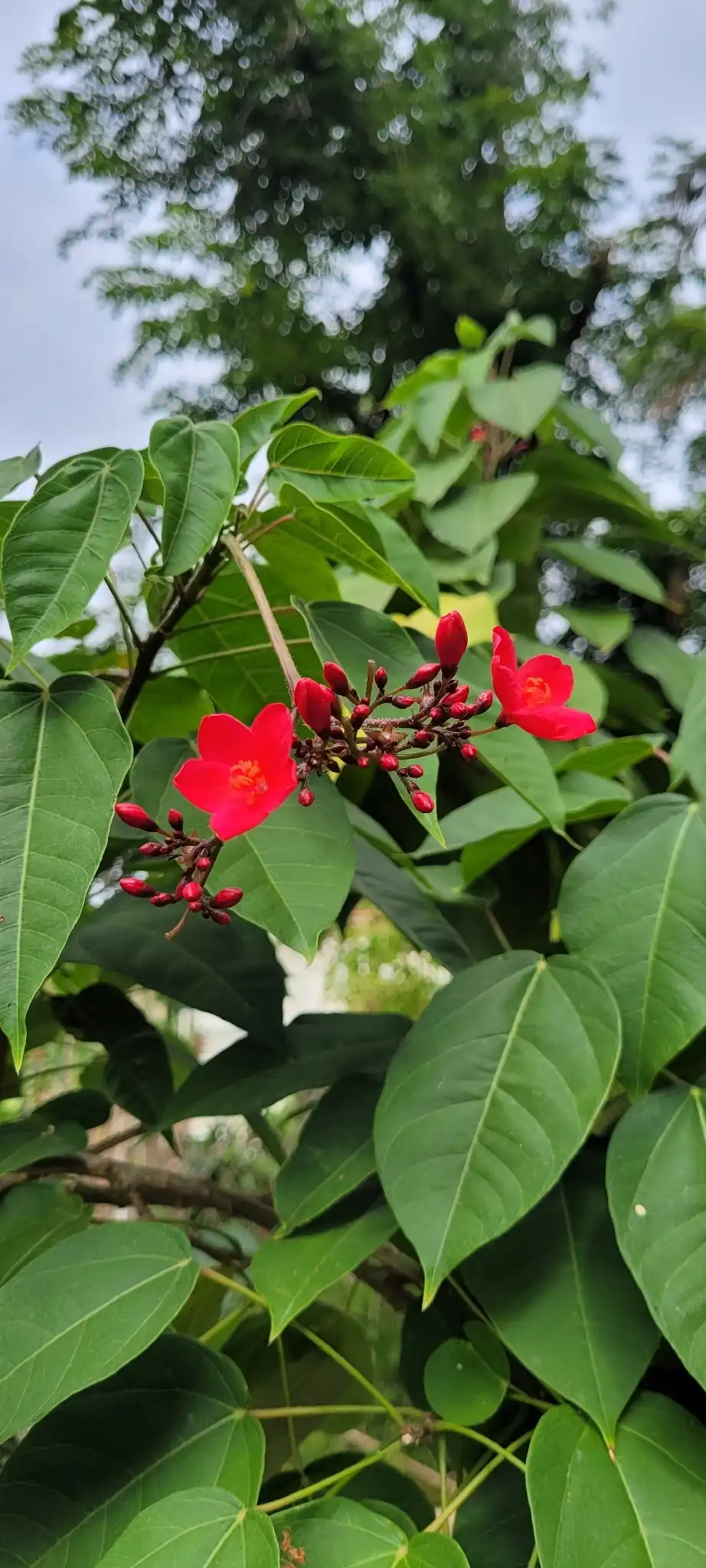
Jatropha integerrima is a dense evergreen shrub in the spurge family that reaches 8 to 15 feet tall and wide, maturing to a small tree with age. It carries dark green glossy leaves and terminal clusters of bright red five-petalled stars about an inch across at the branch ends.
Leaves are variable from elliptic to obovate and often bear a pair of small side lobes, with new foliage flushing bronze before hardening green. Plants bloom on current-year growth in red and also in pink or white forms, so new growth through the warm season keeps producing terminal cymes.
Uses & Benefits:
Essentials
At a Glance
Plant Type
Shrub
Height
180"
Width
180"
Light
Full Sun, Partial Sun
Zones
9, 10
Water
Low to moderate
Humidity
Tolerant of high humidity
Lifespan
Long-lived shrub
Native To
Cuba and West Indies
Toxicity
Toxic if ingested; skin irritant
Bloom period
Spring – Autumn
In flower about 9 months of the year
Planting
How to Grow
- Choose a frost-free spot in zones 9-11 in full sun to partial shade with well-drained soil.
- Dig a hole as deep as the container and twice as wide, set the plant level and backfill firmly.
- Water in well, then water sparingly; allow the top few inches to dry between waterings.
- Renew a 2 to 3 inch mulch layer, keeping it back from the stems.
- Move patio pots under cover before frost and wear gloves when pruning, as sap irritates skin.
Pro Tip
Plant in full sun in sharply drained soil and water sparingly once established, since soggy cold soil leads to root rot and hard pruning stalls bloom.
Keep It Thriving
Care Guide
Do
- Grow in full sun for heaviest bloom.
- Provide sharply drained soil.
- Tip-prune lightly to keep plants dense.
- Wear gloves when handling, as milky sap irritates skin and eyes.
Don't
- Do not overwater or leave roots in soggy soil.
- Do not cut hard back into thick old bare stems.
- Do not plant where children or pets chew plants, as all parts are poisonous.
- Do not expect hardiness through frost; protect or move pots inside.
Seasonal Care Calendar
| Task | Jan | Feb | Mar | Apr | May | Jun | Jul | Aug | Sep | Oct | Nov | Dec |
|---|---|---|---|---|---|---|---|---|---|---|---|---|
| Mulch | ||||||||||||
| Pest Check | ||||||||||||
| Propagate | ||||||||||||
| Prune | ||||||||||||
| Winter Prep |
Watch Out For
Pests & Diseases
Common Pests
Common Diseases
In the Garden
Landscape Uses & Companions
Landscape Uses
Multiply
Propagation Methods
Good to Know
Common Questions
Peregrina questions
What zones can Peregrina grow in?
Peregrina is hardy in USDA Zones 9–10: in that range it survives winter in the ground. Colder than Zone 9, grow it in a container you can move to shelter for the winter.
When does Peregrina bloom?
Peregrina typically blooms from spring to fall. Exact timing shifts a week or two with your zone — Sow's bloom calendar maps it to your garden.
Does Peregrina need full sun?
Peregrina does best in full sun to part shade. In hot climates, afternoon shade keeps blooms fresher longer.
Is Peregrina drought tolerant?
Yes — once established (usually after the first full season), Peregrina handles dry spells with minimal watering. Water deeply its first year to build the root system that makes that possible.
More Jatropha to compare
Keep exploring
Explore the genus
Hardy in your zone?
Grow Peregrina with confidence
See it in a design of your actual yard, get zone-matched care reminders, and track it season by season in your garden journal.