The Story
Plant Bio
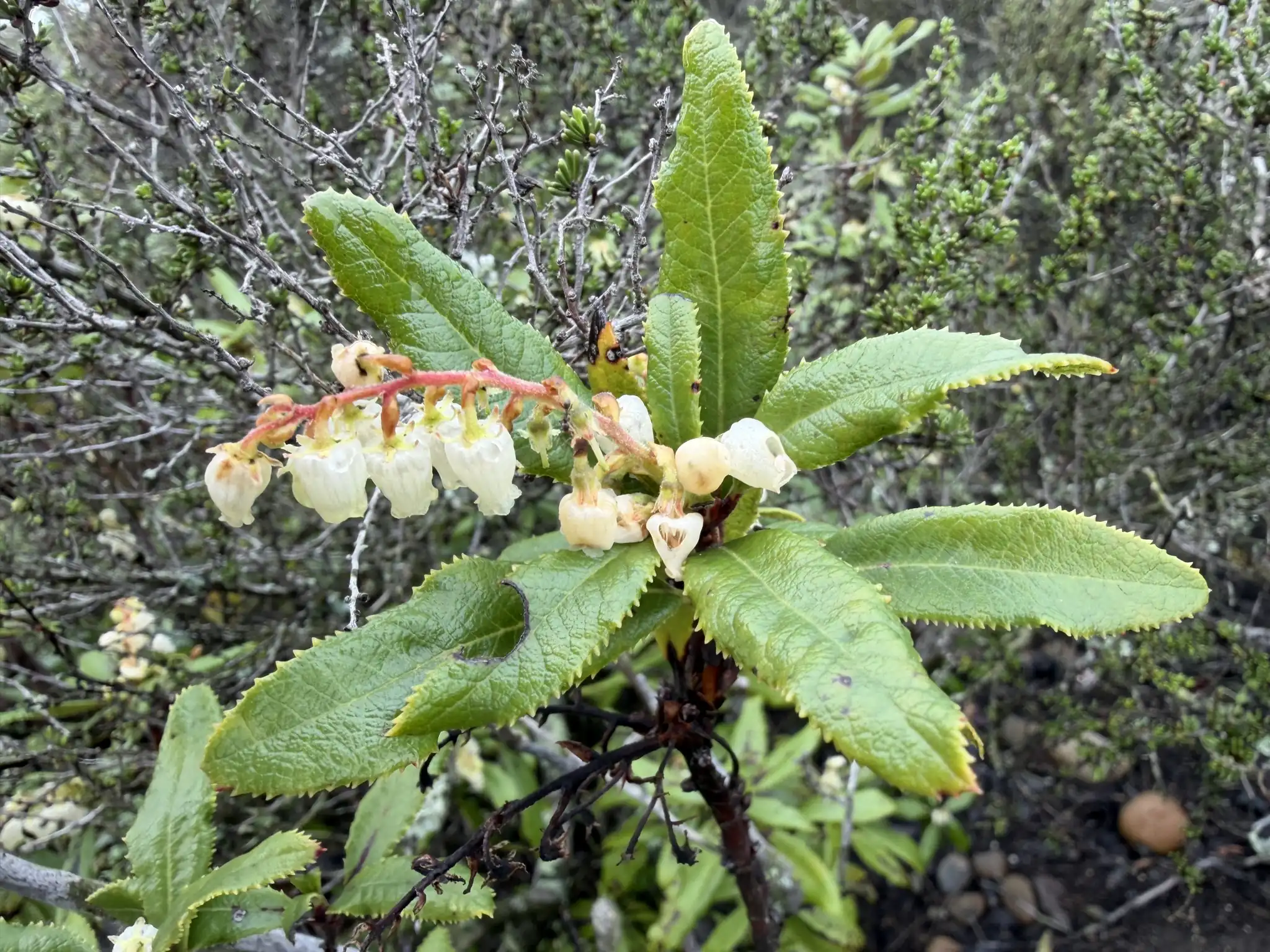
Comarostaphylis diversifolia, commonly known as summer holly, is an evergreen shrub or small tree native to Southern California and northwestern Baja California, reaching six to twenty feet in height with shredding gray-to-reddish bark and glossy green leaves. Terminal clusters of small, urn-shaped white flowers bloom in spring and summer, followed by bumpy bright red drupes.
While closely resembling related manzanitas, summer holly is distinguished by its serrate leaf margins and late spring to summer blooming window. It thrives in high-drainage, low-fertility soils and displays remarkable drought tolerance once established.
Uses & Benefits:
Essentials
At a Glance
Plant Type
Shrub
Height
236"
Width
142"
Light
Full Sun, Partial Sun
Zones
8, 9, 10
Water
Low
Humidity
Low / Coastal Mediterranean
Lifespan
Perennial
Native To
Southern California and Baja California
Toxicity
Non-toxic
Bloom period
Spring – Summer
In flower about 6 months of the year
Planting
How to Grow
- Select a sunny or lightly shaded planting location with fast-draining, unamended soil on a slope or elevated mound.
- Dig a hole equal in depth to the container root ball and twice as wide.
- Settle the plant into the hole with the root crown sitting slightly above the surrounding soil line.
- Water deeply upon planting, then provide occasional deep watering during winter dry spells for the first two seasons.
- Eliminate supplemental watering entirely in warm summer months once the root system is established.
Pro Tip
Withhold all summer irrigation after the plant establishes, as summer water combined with warm soil triggers fatal root rot.
Keep It Thriving
Care Guide
Do
- Plant on sloping ground or elevated beds to encourage fast drainage.
- Tip-prune lightly after flowering if necessary to maintain compact form.
- Keep mulch several inches away from the main trunk base.
Don't
- Do not apply high-nitrogen or phosphorus fertilizers.
- Do not irrigate during warm summer months after establishment.
- Do not prune heavily into old, leafless wood.
Seasonal Care Calendar
| Task | Jan | Feb | Mar | Apr | May | Jun | Jul | Aug | Sep | Oct | Nov | Dec |
|---|---|---|---|---|---|---|---|---|---|---|---|---|
| Mulch | ||||||||||||
| Pest Check | ||||||||||||
| Plant | ||||||||||||
| Prune |
Watch Out For
Pests & Diseases
Common Pests
Common Diseases
In the Garden
Landscape Uses & Companions
Landscape Uses
Companion Plants
Multiply
Propagation Methods
Good to Know
Common Questions
Summer Holly questions
What zones can Summer Holly grow in?
Summer Holly is hardy in USDA Zones 8–10: in that range it survives winter in the ground. Colder than Zone 8, grow it in a container you can move to shelter for the winter.
When does Summer Holly bloom?
Summer Holly typically blooms from spring to summer. Exact timing shifts a week or two with your zone — Sow's bloom calendar maps it to your garden.
Does Summer Holly need full sun?
Summer Holly does best in full sun to part shade. In hot climates, afternoon shade keeps blooms fresher longer.
Is Summer Holly drought tolerant?
Yes — once established (usually after the first full season), Summer Holly handles dry spells with minimal watering. Water deeply its first year to build the root system that makes that possible.
Keep exploring
Explore the genus
Hardy in your zone?
Grow Summer Holly with confidence
See it in a design of your actual yard, get zone-matched care reminders, and track it season by season in your garden journal.