The Story
Plant Bio
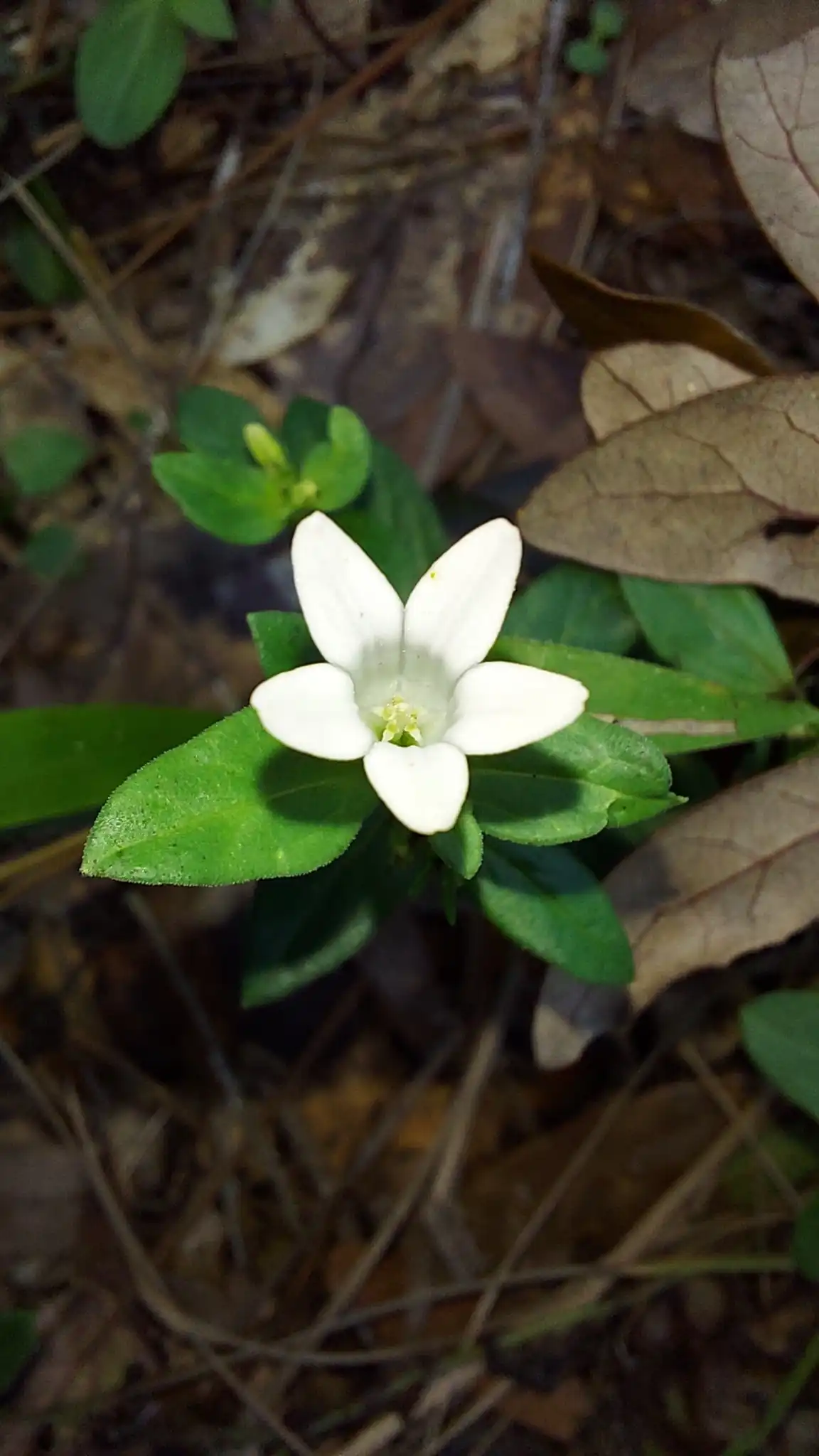
Spigelia loganioides is an erect perennial herb from wet Florida hammocks, rising on one to three sparingly branched stems from slender rhizomes to about a foot tall. The sessile opposite leaves are oval-lanceolate and rich shiny green, and the stems are slightly woody at the base.
It bears white funnelform flowers 10 to 17 mm long with five spreading triangular lobes, white inside and suffused pink to yellow outside with two pale lavender lines on each lobe. It is a Florida endemic known from about ten populations in five counties, and its larger corolla and inconsistent four-leaf pseudowhorl separate it from the nearly identical Spigelia texana.
Uses & Benefits:
Essentials
At a Glance
Plant Type
Perennial
Height
12"
Width
8"
Light
Partial Sun, Shade
Water
High
Humidity
High
Lifespan
Perennial
Native To
Peninsular Florida
Toxicity
Poisonous if ingested
Bloom period
Spring – Summer
In flower about 6 months of the year
Planting
How to Grow
- Site in moist shade that mimics a hydric hammock or floodplain forest, not open sun.
- Plant at the same depth it grew in the pot into moist limestone-based soil with leaf litter.
- Mulch lightly with leaves to hold moisture and keep roots cool.
- Water to keep soil consistently moist; do not let it dry out.
Pro Tip
Leave wild plants undisturbed and never wild-collect; there is no established garden protocol for this state-endangered species.
Keep It Thriving
Care Guide
Do
- Keep soil consistently moist with leaf-litter mulch.
- Grow from nursery-propagated stock only.
- Observe wild populations without picking or digging.
Don't
- Do not wild-collect or disturb endangered populations.
- Do not ingest any part; all parts are poisonous.
- Do not let plants dry out or move them once established.
Seasonal Care Calendar
| Task | Jan | Feb | Mar | Apr | May | Jun | Jul | Aug | Sep | Oct | Nov | Dec |
|---|---|---|---|---|---|---|---|---|---|---|---|---|
| Mulch | ||||||||||||
| Pest Check | ||||||||||||
| Plant | ||||||||||||
| Spring Cleanup |
Watch Out For
Pests & Diseases
Common Pests
Common Diseases
In the Garden
Landscape Uses & Companions
Landscape Uses
Companion Plants
Multiply
Propagation Methods
Good to Know
Common Questions
Florida Pinkroot questions
When does Florida Pinkroot bloom?
Florida Pinkroot typically blooms from spring to summer. Exact timing shifts a week or two with your zone — Sow's bloom calendar maps it to your garden.
Does Florida Pinkroot need full sun?
Florida Pinkroot does best in part shade.
More Spigelia to compare
Keep exploring
Explore the genus
Grow Florida Pinkroot with confidence
See it in a design of your actual yard, get zone-matched care reminders, and track it season by season in your garden journal.