The Story
Plant Bio
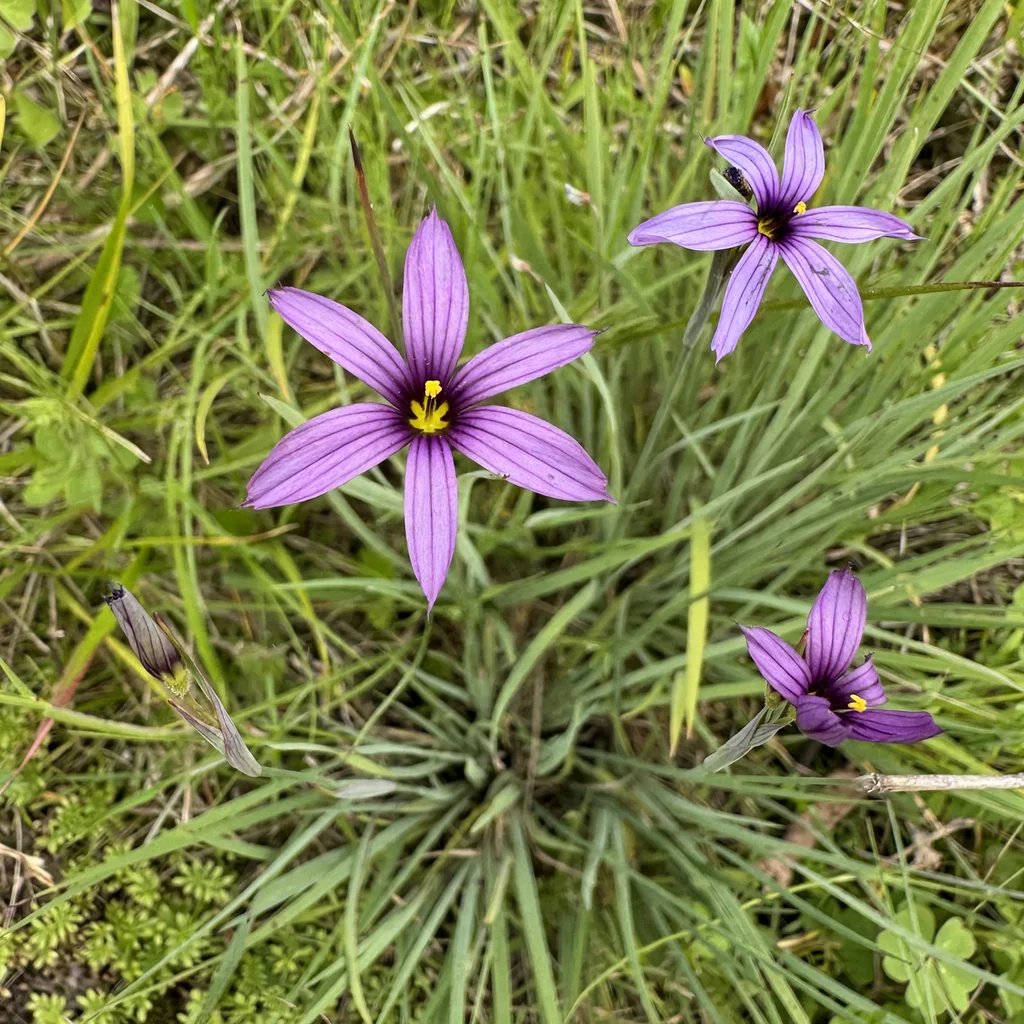
Sisyrinchium hitchcockii is a perennial rhizomatous herb native to grassy openings and woodlands of western Oregon and northern California. Simple stems reaching up to 20 inches tall bear dark olive foliage and solitary flowers with purple to dark reddish-purple tepals lacking yellow bases.
Unlike many blue-eyed grasses, this species produces deep reddish-purple blooms without yellow throat markings and spreads steadily via extensive underground rhizomes. Its leaf bases remain smooth rather than decomposing into persistent fibrous tufts.
Uses & Benefits:
Essentials
At a Glance
Plant Type
Perennial
Height
20"
Width
18"
Light
Full Sun, Partial Sun
Zones
7, 8, 9
Water
Moist in spring, moderately dry in summer
Humidity
Adaptable
Lifespan
Perennial
Native To
Western Oregon and Northern California
Toxicity
Non-toxic
Bloom period
Spring – Early summer
In flower about 4 months of the year
Planting
How to Grow
- Select a site in full sun or partial shade with soil that stays moist in spring and drains well.
- Plant container-grown starts level with the surrounding soil, firming the earth gently around the rhizomes.
- Water thoroughly during establishment and keep soil moist throughout the spring bloom season.
- Reduce irrigation frequency as summer progresses to align with its natural period of seasonal drying.
Pro Tip
Ensure the planting site remains damp through spring flowering, then allow the soil to dry out moderately during summer dormancy.
Keep It Thriving
Care Guide
Do
- Provide well-draining soil that tolerates wet winter conditions.
- Allow soil to dry out slightly during late summer dormancy.
Don't
- Do not shear foliage back into formal hedges.
- Do not overwater during stagnant summer conditions to prevent rhizome rot.
Seasonal Care Calendar
| Task | Jan | Feb | Mar | Apr | May | Jun | Jul | Aug | Sep | Oct | Nov | Dec |
|---|---|---|---|---|---|---|---|---|---|---|---|---|
| Divide | ||||||||||||
| Pest Check | ||||||||||||
| Plant | ||||||||||||
| Spring Cleanup | ||||||||||||
| Winter Prep |
Watch Out For
Pests & Diseases
Common Pests
Common Diseases
In the Garden
Landscape Uses & Companions
Landscape Uses
Companion Plants
Multiply
Propagation Methods
Good to Know
Common Questions
Hitchcock's Blue-Eyed Grass questions
What zones can Hitchcock's Blue-Eyed Grass grow in?
Hitchcock's Blue-Eyed Grass is hardy in USDA Zones 7–9: in that range it survives winter in the ground. Colder than Zone 7, grow it in a container you can move to shelter for the winter, or as an annual. Warmer than Zone 9, winter isn't the problem: it prefers colder winters, and summer heat can shorten its life.
Is Hitchcock's Blue-Eyed Grass deer resistant?
Not reliably. Deer may browse Hitchcock's Blue-Eyed Grass, especially tender spring growth — plan on repellents or fencing where pressure is high.
When does Hitchcock's Blue-Eyed Grass bloom?
Hitchcock's Blue-Eyed Grass typically blooms from early spring to early summer. Exact timing shifts a week or two with your zone — Sow's bloom calendar maps it to your garden.
Does Hitchcock's Blue-Eyed Grass need full sun?
Hitchcock's Blue-Eyed Grass does best in full sun to part shade. In hot climates, afternoon shade keeps blooms fresher longer.
Is Hitchcock's Blue-Eyed Grass drought tolerant?
Yes — once established (usually after the first full season), Hitchcock's Blue-Eyed Grass handles dry spells with minimal watering. Water deeply its first year to build the root system that makes that possible.
More Sisyrinchium to compare
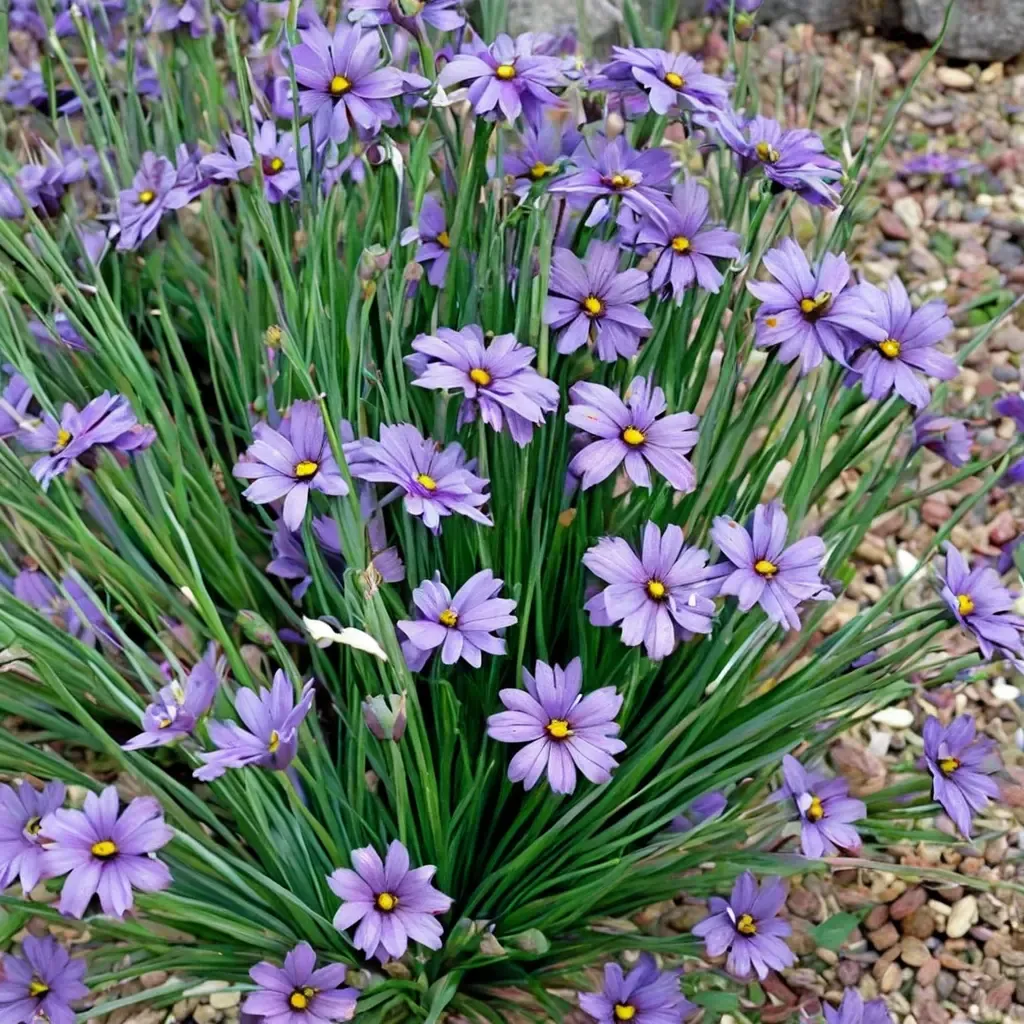
Lucerne Blue-eyed Grass
Sisyrinchium angustifolium 'Lucerne'
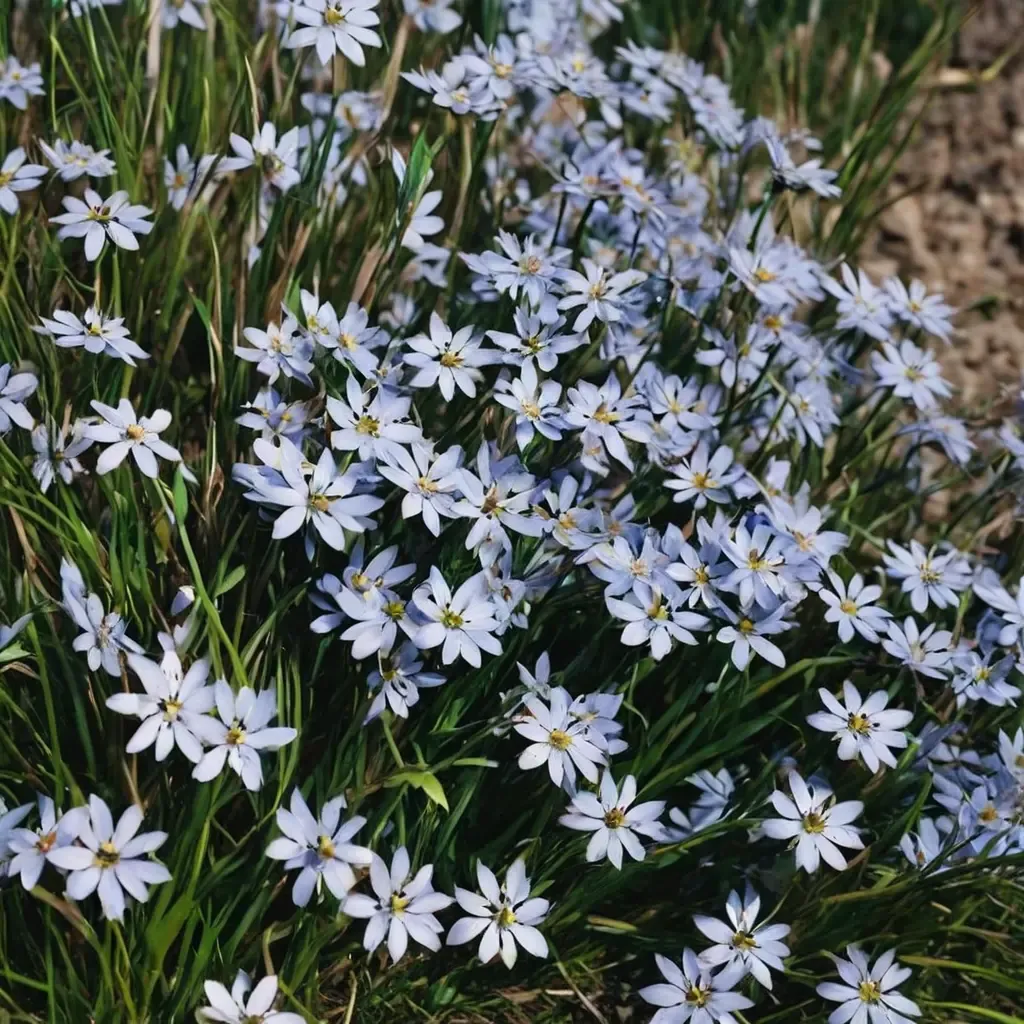
Suwannee Blue-eyed Grass
Sisyrinchium nashii 'Suwannee'
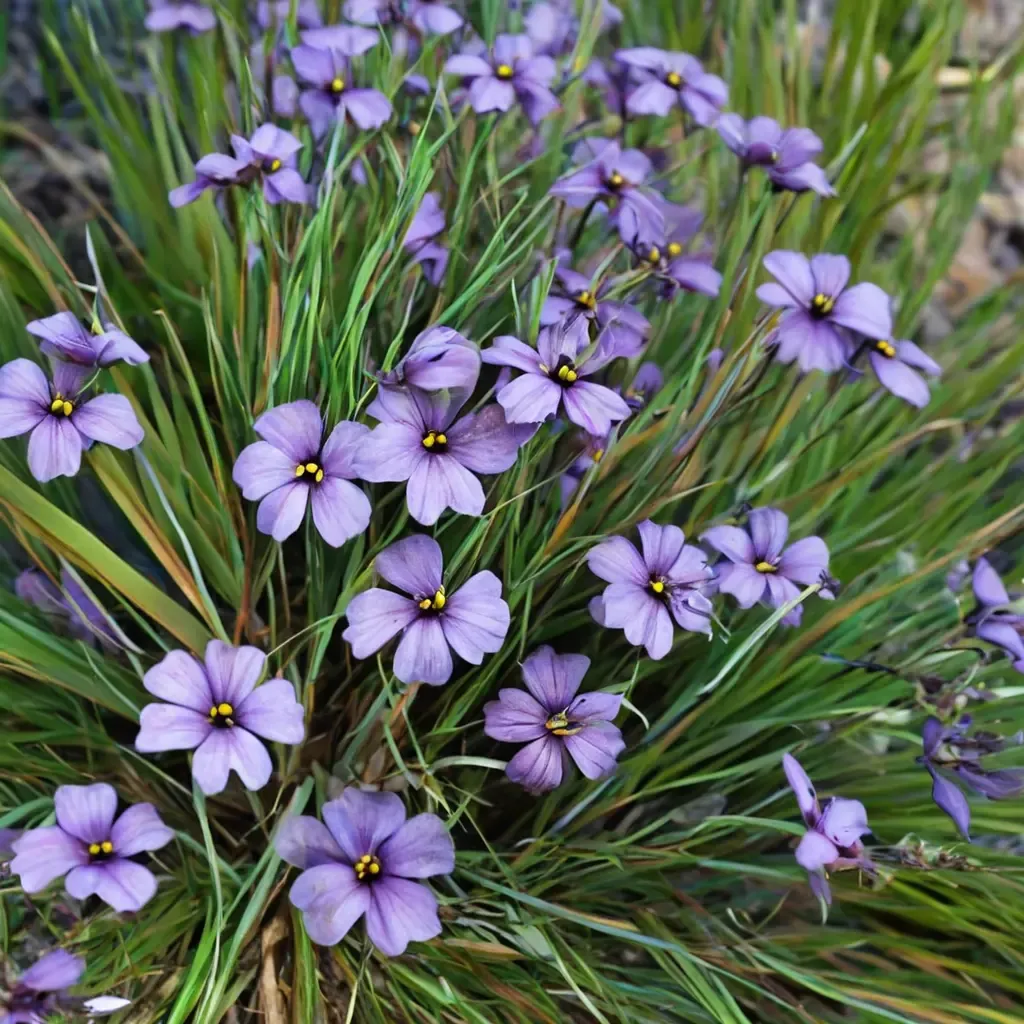
Western Blue-eyed Grass
Sisyrinchium bellum
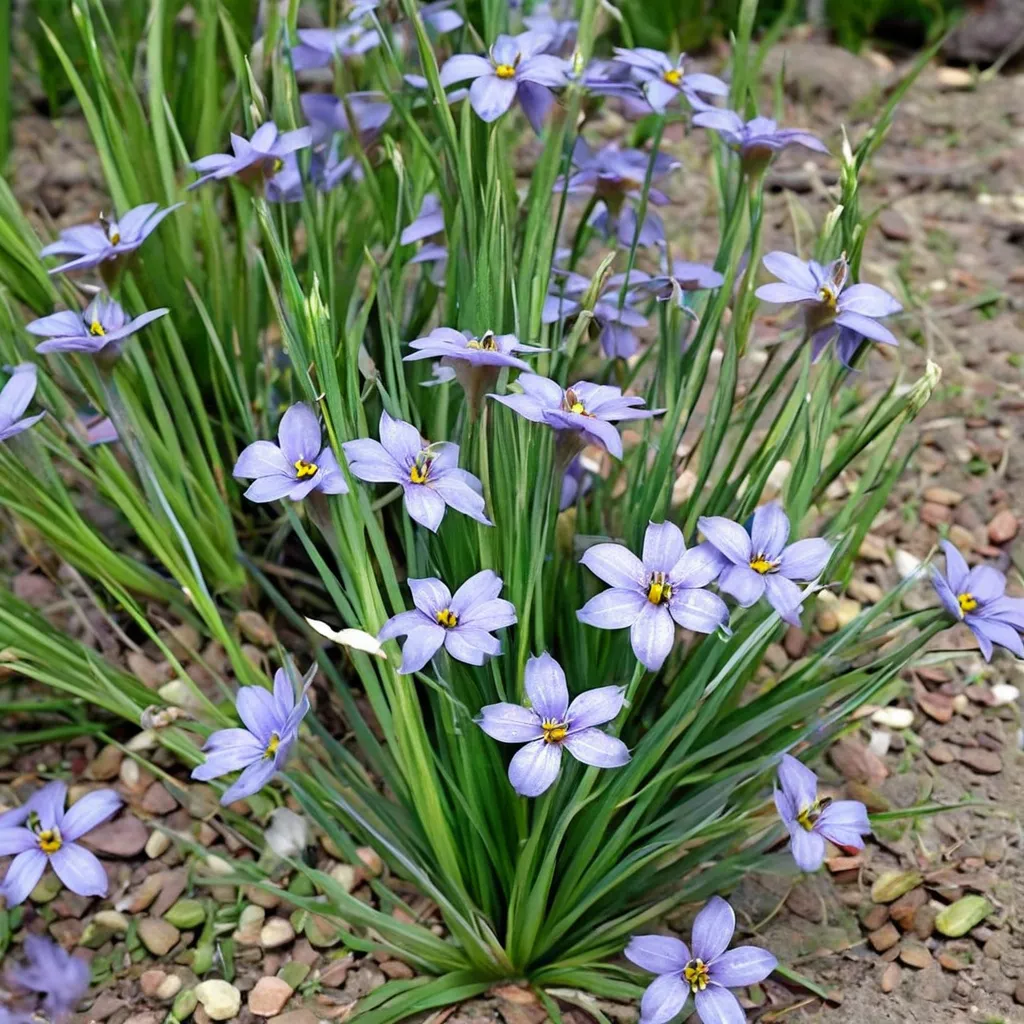
Narrow-leaved Blue-eyed Grass
Sisyrinchium angustifolium
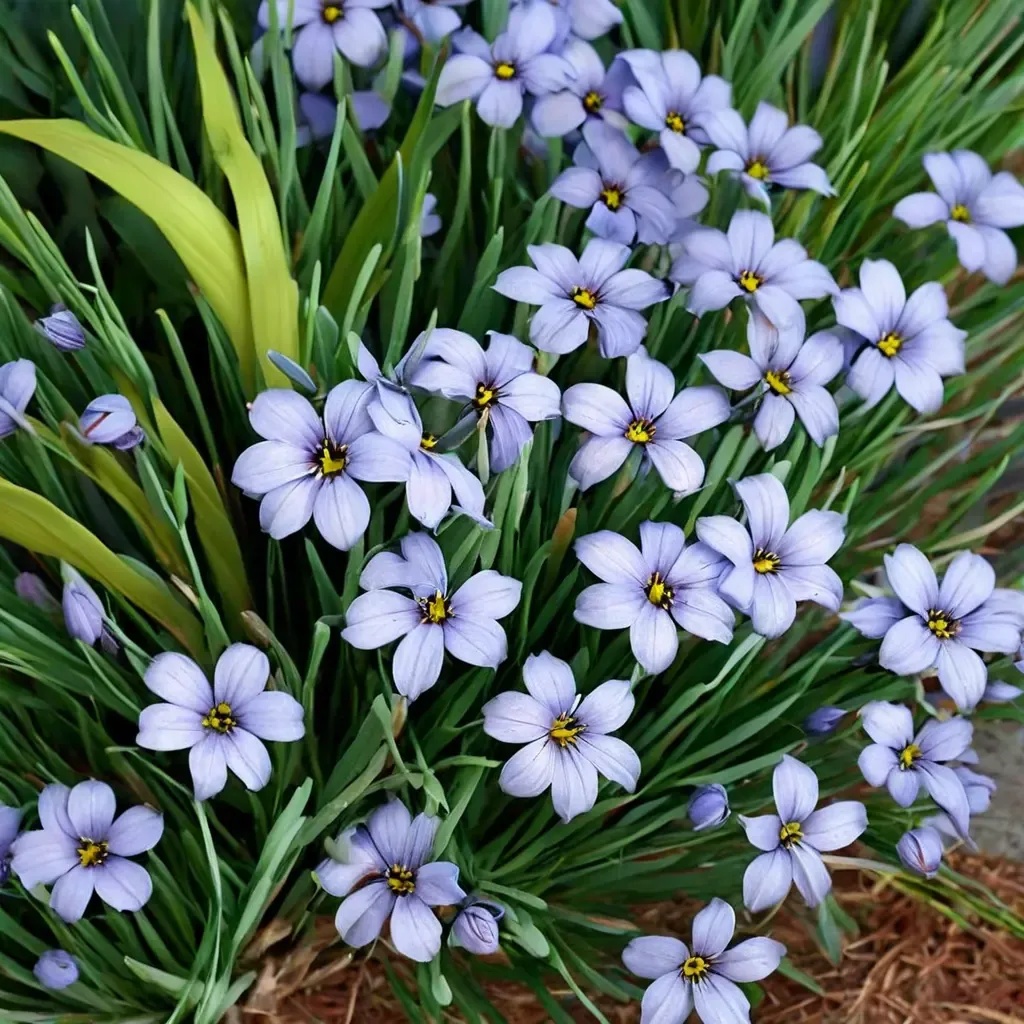
Devon Skies Blue-Eyed Grass
Sisyrinchium x hybrida 'Devon Skies'
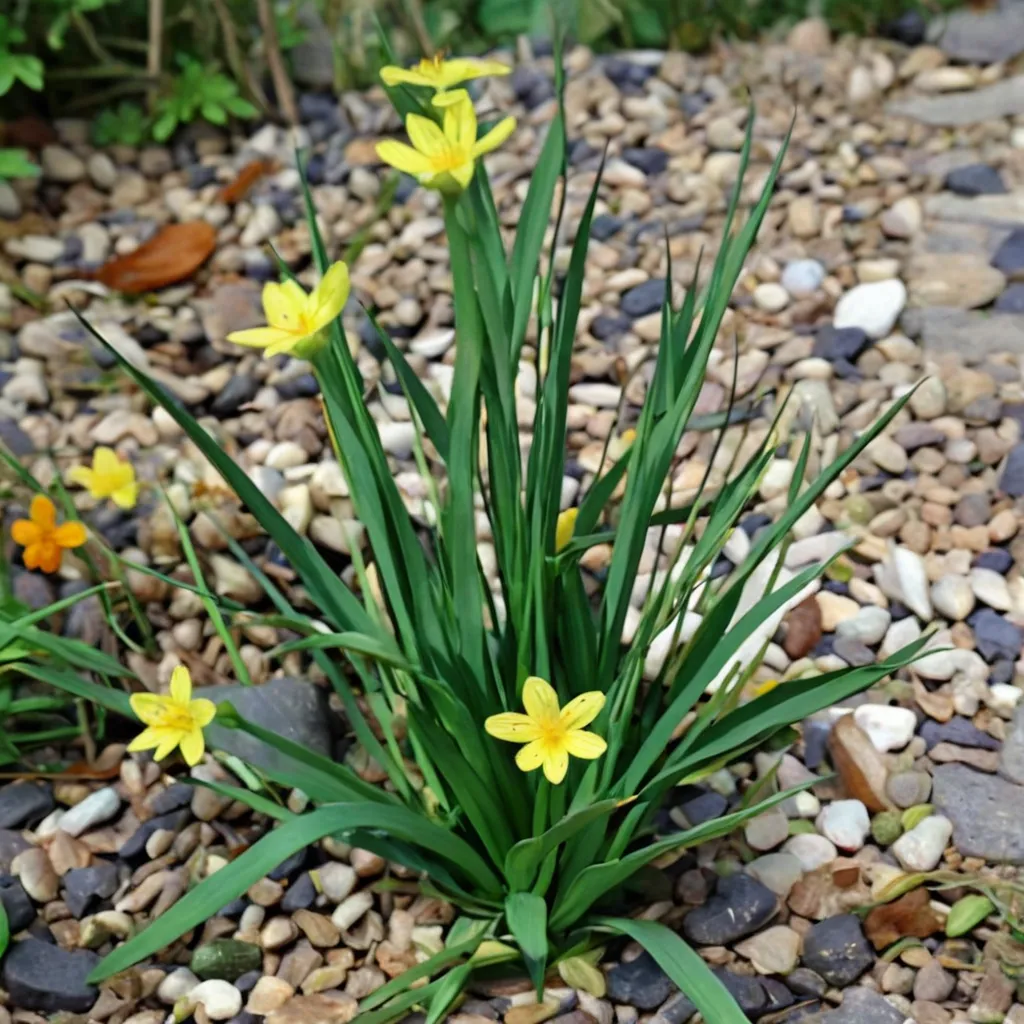
Blue-eyed Grass
Sisyrinchium brachypus
Keep exploring
Explore the genus
Hardy in your zone?
Grow Hitchcock's Blue-Eyed Grass with confidence
See it in a design of your actual yard, get zone-matched care reminders, and track it season by season in your garden journal.