The Story
Plant Bio
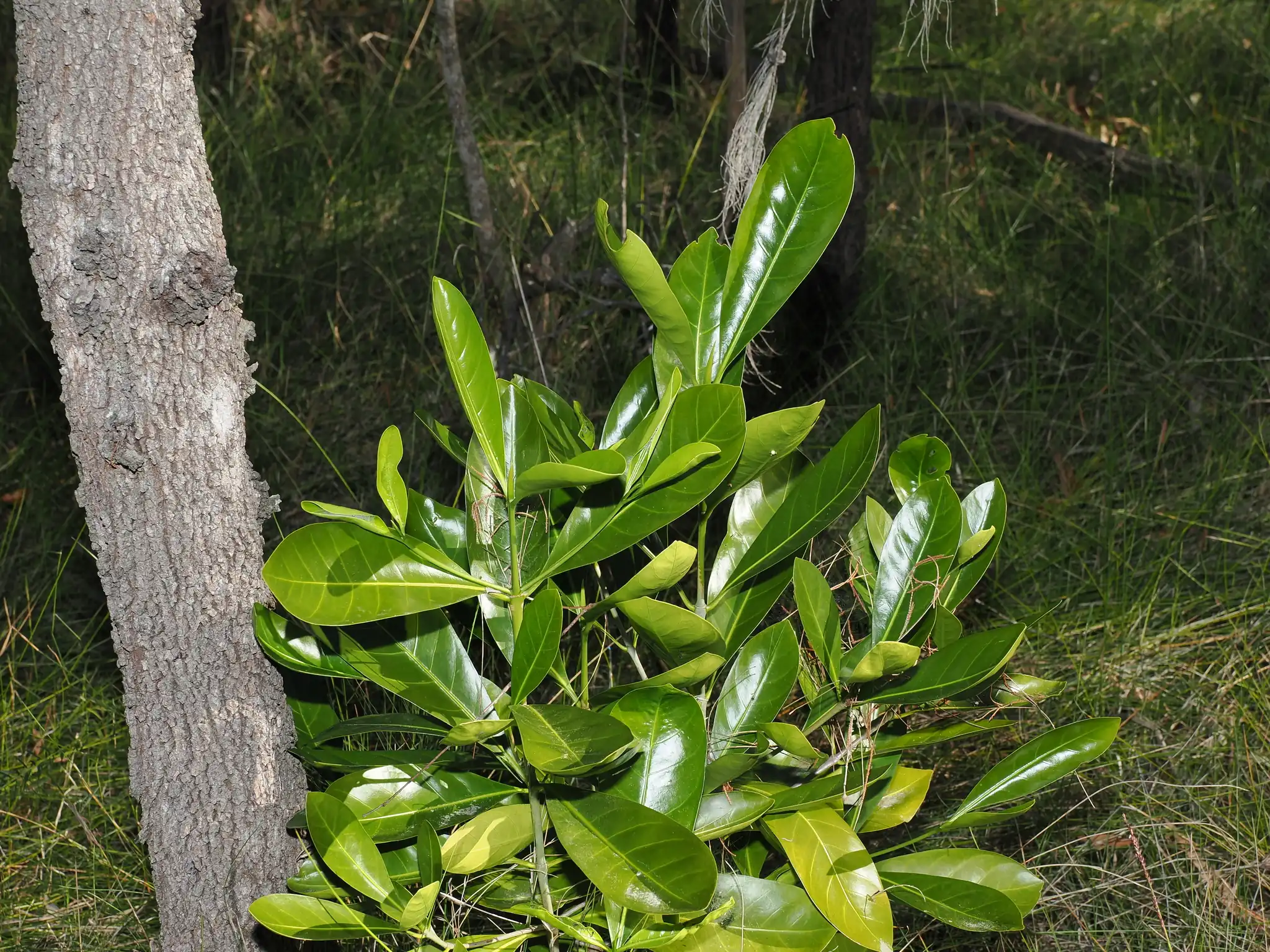
Atractocarpus fitzalanii is a small, evergreen rainforest tree from northeastern Australia, noted for its deep green, glossy leaves that reach up to eight inches long. Highly fragrant, star-shaped white flowers emerge in spring and summer, fading to soft yellow before yielding rounded edible fruit.
This species stands out for its neat, naturally rounded crown and dramatic foliage accented by prominent pale central midribs. The scented blooms open in tight clusters directly along the stems, emitting a rich perfume reminiscent of classic gardenias.
Uses & Benefits:
Essentials
At a Glance
Plant Type
Tree
Height
236"
Width
157"
Light
Partial Sun, Shade
Zones
10
Water
Moderate
Humidity
High
Lifespan
Perennial
Native To
Australia
Toxicity
Non-toxic
Bloom period
Spring – Summer
In flower about 6 months of the year
Planting
How to Grow
- Choose a sheltered location with rich, well-draining soil protected from harsh afternoon sun.
- Dig a planting hole twice as wide as the root ball and set the plant at its original soil depth.
- Backfill with organic compost mixed into native loam, firming gently around the roots.
- Water thoroughly and apply a deep layer of organic mulch around the base, keeping it clear of the trunk.
Pro Tip
Prune lightly only after flowering to shape the canopy; cutting back into old leafless wood restricts new branch development.
Keep It Thriving
Care Guide
Do
- Keep soil consistently moist, especially during active spring and summer growth.
- Provide a warm, frost-free shelter or bring container plants indoors before temperatures drop.
- Apply a balanced organic fertilizer lightly during the spring flushes.
Don't
- Do not allow soil to become waterlogged or plant in heavy, dense clay.
- Do not expose foliage to direct, scorching midday or late-afternoon sunlight.
- Do not shear hard into mature leafless stems.
Seasonal Care Calendar
| Task | Jan | Feb | Mar | Apr | May | Jun | Jul | Aug | Sep | Oct | Nov | Dec |
|---|---|---|---|---|---|---|---|---|---|---|---|---|
| Fertilize | ||||||||||||
| Pest Check | ||||||||||||
| Prune | ||||||||||||
| Winter Prep |
Watch Out For
Pests & Diseases
Common Pests
Common Diseases
In the Garden
Landscape Uses & Companions
Landscape Uses
Multiply
Propagation Methods
Good to Know
Common Questions
Native Gardenia questions
What zones can Native Gardenia grow in?
Native Gardenia is hardy in USDA Zone 10: in that range it survives winter in the ground. Colder than Zone 10, winters are too cold for it to survive outdoors.
Is Native Gardenia deer resistant?
Not reliably. Deer may browse Native Gardenia, especially tender spring growth — plan on repellents or fencing where pressure is high.
When does Native Gardenia bloom?
Native Gardenia typically blooms from spring to summer. Exact timing shifts a week or two with your zone — Sow's bloom calendar maps it to your garden.
Does Native Gardenia need full sun?
Native Gardenia does best in part shade.
Keep exploring
Explore the genus
Hardy in your zone?
Grow Native Gardenia with confidence
See it in a design of your actual yard, get zone-matched care reminders, and track it season by season in your garden journal.