The Story
Plant Bio
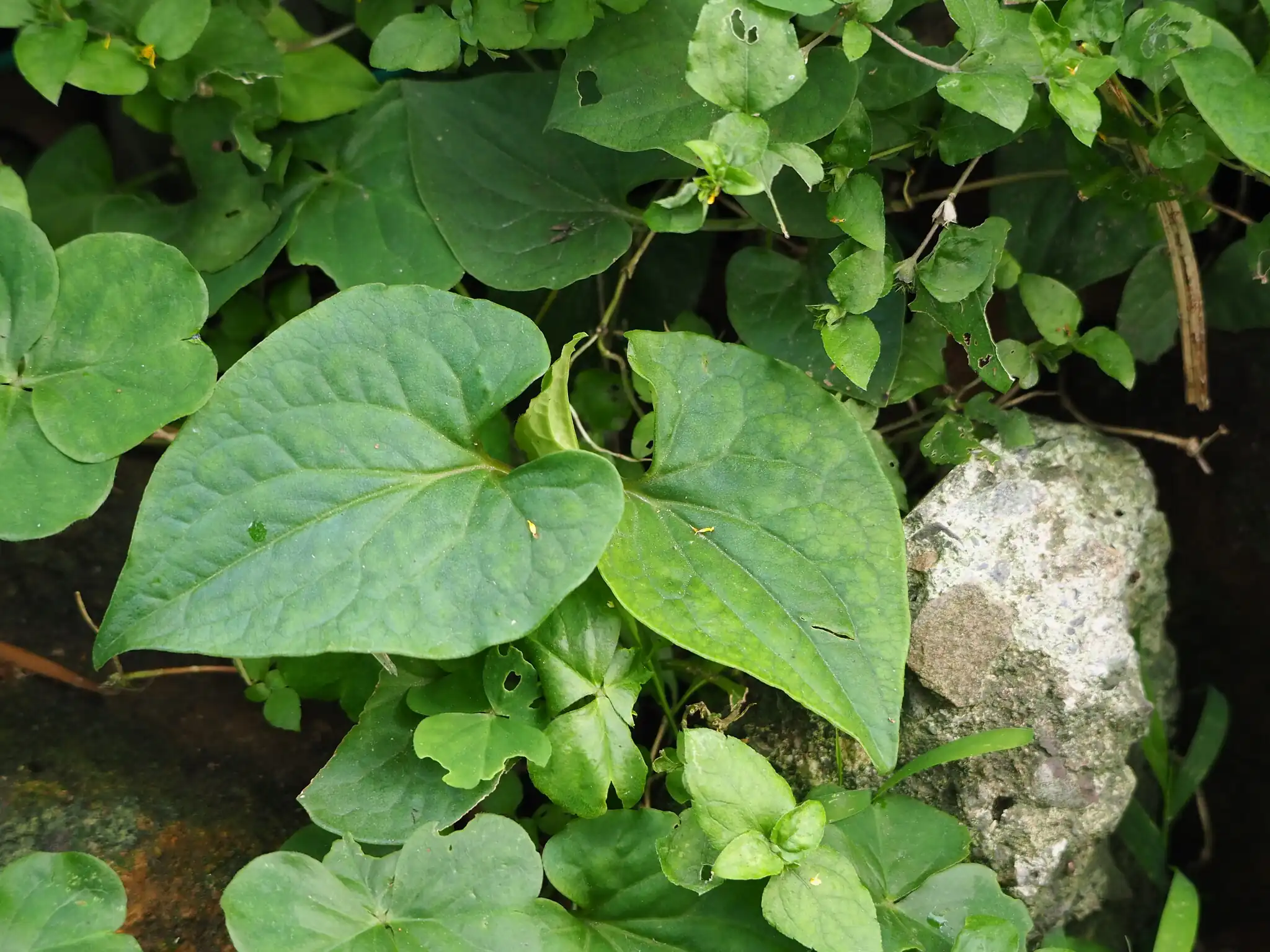
Houttuynia cordata is a rhizomatous herbaceous perennial from moist shady ground in Asia, from the Himalaya to Japan and Indo-China, growing six to twenty inches tall and spreading many feet by deep creeping stems that root at the nodes. The alternate heart-shaped leaves are thin and blue-green with purplish undersides, five to seven veins from the base, and a fishy odour when crushed, turning gold to burgundy in fall.
The flower is a dense conical spike of tiny lime-green florets ringed by four white petal-like bracts, carried on short stalks from spring into summer. It persists in full sun to deep shade and in soil wet to two inches of standing water, yet any half-centimeter fragment of rhizome or leaf regrows, so open planting is almost impossible to eradicate.
Uses & Benefits:
Essentials
At a Glance
Plant Type
Groundcover
Height
20"
Width
120"
Light
Full Sun, Partial Sun, Shade
Zones
4, 5, 6, 7, 8, 9, 10
Water
High - consistently moist to wet
Humidity
Prefers moist conditions
Lifespan
Herbaceous perennial
Native To
Himalaya to temperate East Asia and Indo-China
Toxicity
Non-toxic - may cause allergy in sensitive people
Bloom period
Spring – Summer
In flower about 6 months of the year
Planting
How to Grow
- Set a 1- to 2-gallon pot with drainage into the ground to its rim in rich loam in spring after frost.
- Plant the rhizome 2 inches deep, water deeply, and keep soil consistently moist to wet with no dry period.
- Cut back shoots at the pot edge through summer to prevent layering outward.
- Lift the sunk pot each spring to trim circling rhizomes and replant only inside containment.
Pro Tip
Grow only in a one to two gallon pot sunk to its rim or behind a solid root barrier, and sever any rhizomes escaping over the edge before they root.
Keep It Thriving
Care Guide
Do
- Keep soil consistently moist to wet at all times
- Grow only in a sunk pot or behind a solid root barrier
- Bag and trash all pulled fragments instead of composting
Don't
- Do not plant directly in open moist shade or near waterways
- Do not let the root zone dry out
- Do not till or chop through the patch, which multiplies fragments
Seasonal Care Calendar
| Task | Jan | Feb | Mar | Apr | May | Jun | Jul | Aug | Sep | Oct | Nov | Dec |
|---|---|---|---|---|---|---|---|---|---|---|---|---|
| Divide | ||||||||||||
| Mulch | ||||||||||||
| Pest Check | ||||||||||||
| Plant | ||||||||||||
| Prune |
Watch Out For
Pests & Diseases
Common Pests
In the Garden
Landscape Uses & Companions
Landscape Uses
Companion Plants
Multiply
Propagation Methods
Good to Know
Common Questions
Chameleon Plant questions
What zones can Chameleon Plant grow in?
Chameleon Plant is hardy in USDA Zones 4–10: in that range it survives winter in the ground.
When does Chameleon Plant bloom?
Chameleon Plant typically blooms from spring to summer. Exact timing shifts a week or two with your zone — Sow's bloom calendar maps it to your garden.
Does Chameleon Plant need full sun?
Chameleon Plant does best in full sun to part shade. In hot climates, afternoon shade keeps blooms fresher longer.
Keep exploring
Explore the genus
Grow Chameleon Plant with confidence
See it in a design of your actual yard, get zone-matched care reminders, and track it season by season in your garden journal.