The Story
Plant Bio
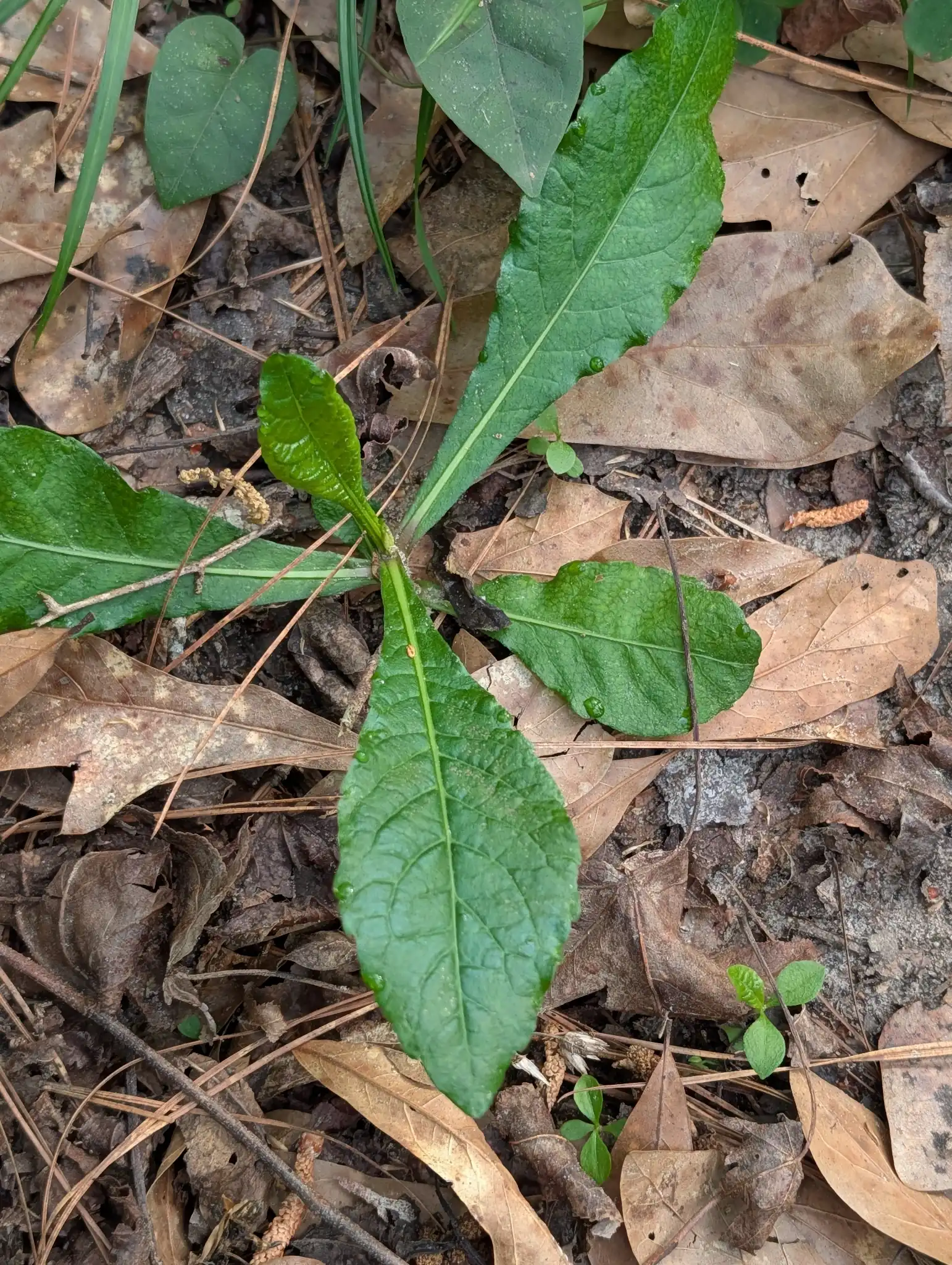
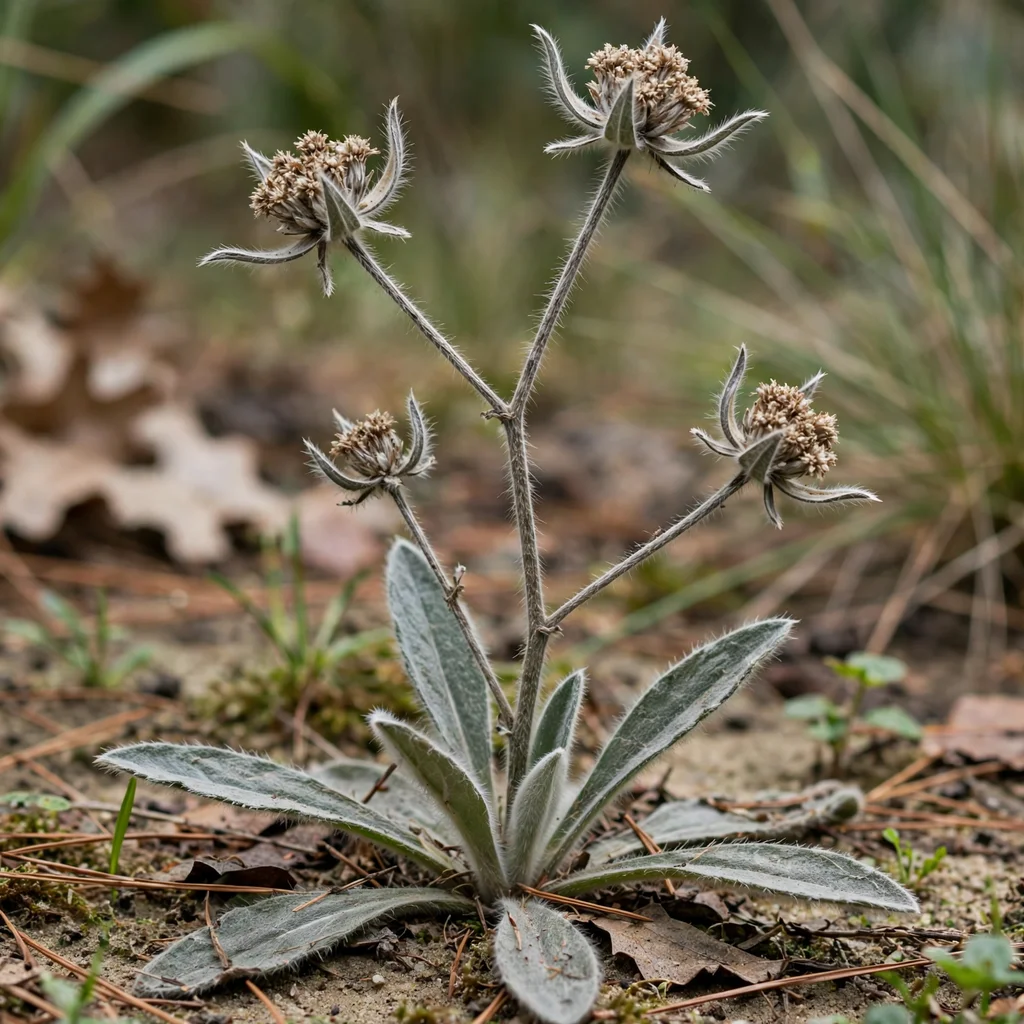
Elephantopus carolinianus is a herbaceous perennial reaching two to three feet tall and wide, with large basal leaves and leafy upright stems. The flowers have no ray petals; each small head holds two to five tubular disc florets with five-lobed lavender to pale purple corollas, massed in a leafy-bracted cluster.
Unlike a typical daisy it never looks daisy-like up close, the show coming from many small heads packed into a compound cluster that reads as one bloom from a distance. The leafy triangular-oval bracts under each cluster and the coarse basal rosette separate it from ironweeds, which it otherwise resembles in flower color.
Uses & Benefits:
Essentials
At a Glance
Plant Type
Perennial
Height
30"
Width
30"
Light
Full Sun, Partial Sun
Zones
4, 5, 6, 7, 8, 9
Water
Dry to medium
Humidity
Unknown
Lifespan
Perennial
Native To
Southeastern and south-central USA
Toxicity
Unknown
Bloom period
Late summer – Fall
In flower about 4 months of the year
Planting
How to Grow
- Set plants 2 feet apart in part shade with morning sun and afternoon shade.
- Plant in average dry to medium well-drained soil, working in compost only if the sand is very poor.
- Water to establish the first season, then water only during extended dry spells.
- Deadhead after bloom in fall to limit self-sowing unless naturalizing.
- Leave basal foliage over winter and clear damaged leaves in early spring.
Pro Tip
Deadhead as soon as the lavender clusters fade; seed left to dry on the plant sows freely and turns a tidy clump weedy.
Keep It Thriving
Care Guide
Do
- Mass plants to let the large basal leaves close as groundcover.
- Grow in woodland edge or meadow mixes where self-sown seedlings fit in.
Don't
- Do not plant in soggy ground that stays wet in winter.
- Do not let seed ripen and scatter if you want a contained clump.
Seasonal Care Calendar
| Task | Jan | Feb | Mar | Apr | May | Jun | Jul | Aug | Sep | Oct | Nov | Dec |
|---|---|---|---|---|---|---|---|---|---|---|---|---|
| Deadhead | ||||||||||||
| Mulch | ||||||||||||
| Plant | ||||||||||||
| Propagate | ||||||||||||
| Spring Cleanup |
Watch Out For
Pests & Diseases
Common Pests
Common Diseases
In the Garden
Landscape Uses & Companions
Landscape Uses
Multiply
Propagation Methods
Good to Know
Common Questions
Carolina Elephant's Foot questions
What zones can Carolina Elephant's Foot grow in?
Carolina Elephant's Foot is hardy in USDA Zones 4–9: in that range it survives winter in the ground. Warmer than Zone 9, winter isn't the problem: it prefers colder winters, and summer heat can shorten its life.
When does Carolina Elephant's Foot bloom?
Carolina Elephant's Foot typically blooms from late summer to late fall. Exact timing shifts a week or two with your zone — Sow's bloom calendar maps it to your garden.
Does Carolina Elephant's Foot need full sun?
Carolina Elephant's Foot does best in full sun to part shade. In hot climates, afternoon shade keeps blooms fresher longer.
Is Carolina Elephant's Foot drought tolerant?
Yes — once established (usually after the first full season), Carolina Elephant's Foot handles dry spells with minimal watering. Water deeply its first year to build the root system that makes that possible.
More Elephantopus to compare
Keep exploring
Explore the genus
Grow Carolina Elephant's Foot with confidence
See it in a design of your actual yard, get zone-matched care reminders, and track it season by season in your garden journal.