The Story
Plant Bio
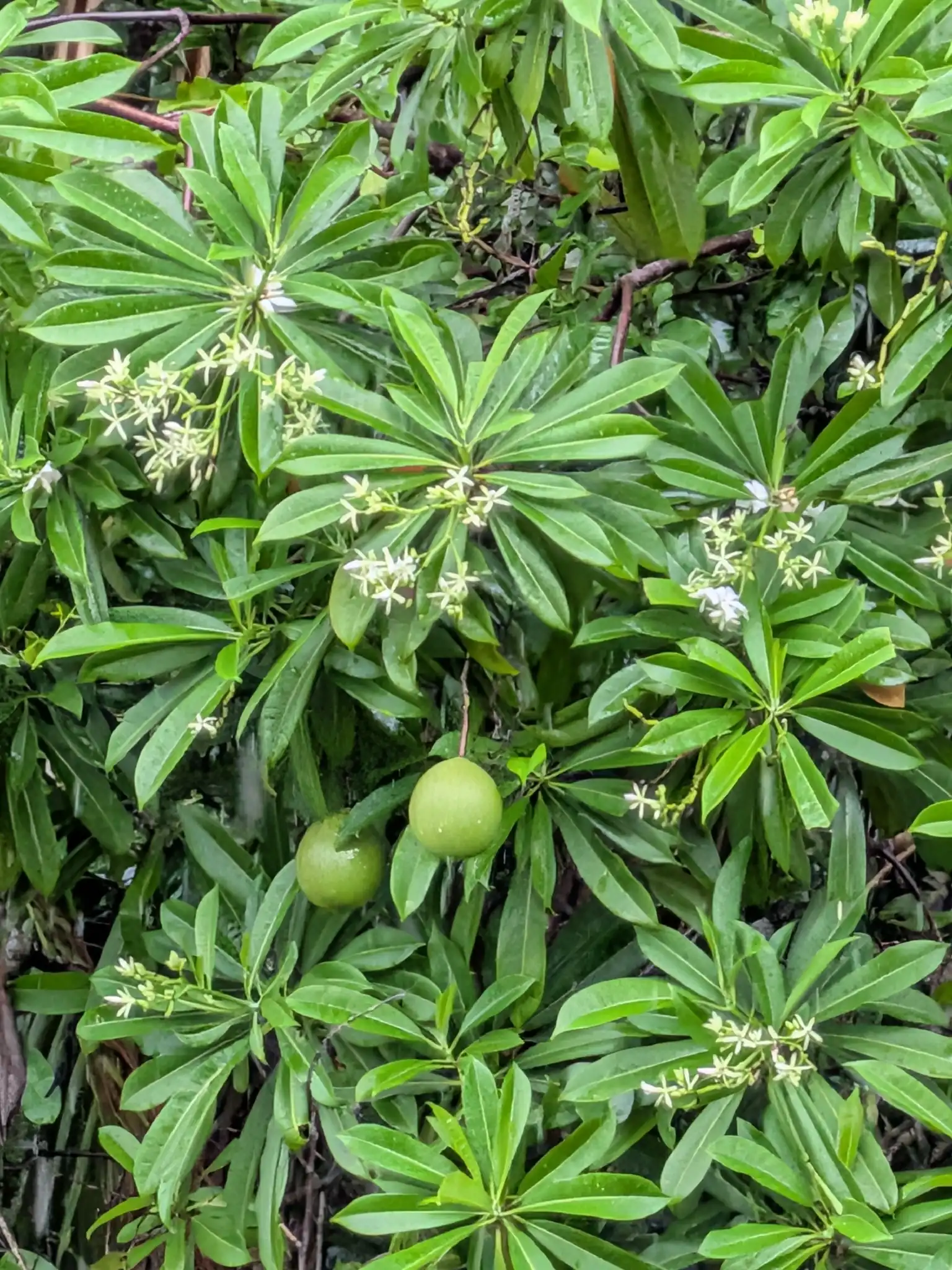
Cerbera odollam is an evergreen tropical tree growing 25 to 40 feet tall with a rounded crown and a knobbly or buttressed trunk exuding white latex. It features glossy green, obovate leaves arranged in whorls that turn bright orange before falling, along with fragrant five-petaled white flowers.
This species produces fibrous, mango-like fruits containing seeds saturated with highly lethal cardiac glycosides. Its high tolerance for coastal wind and salt spray allows it to thrive in saline shoreline habitats where standard shade trees fail.
Uses & Benefits:
Essentials
At a Glance
Plant Type
Tree
Height
472"
Width
354"
Light
Full Sun, Partial Sun
Zones
10
Water
Moderate to High
Humidity
High
Lifespan
Perennial
Native To
Tropical Asia, Oceania
Toxicity
Extremely toxic if ingested; latex causes skin and eye irritation
Bloom period
Spring – Summer
In flower about 6 months of the year
Planting
How to Grow
- Select a planting site in USDA Zones 10 through 11 receiving full sun to partial shade.
- Prepare sandy, loamy, or clay soil with adequate moisture retention, maintaining a neutral to slightly acidic pH.
- Plant containerized stock at the same depth as the nursery pot, firming soil around the root ball to eliminate air pockets.
- Water thoroughly at installation and maintain consistent soil moisture during the establishment period.
- Wear heavy rubber gloves and safety goggles whenever pruning or handling broken stems to avoid sap contact.
Pro Tip
Prune sparingly while wearing protective gloves and eyewear, and never cut back into old leafless wood because dormant buds will fail to break.
Keep It Thriving
Care Guide
Do
- Maintain high soil moisture or plant near coastal water features to mimic natural marshland conditions.
- Wear full protective gear when handling any part of the plant to guard against toxic latex.
- Provide full sun exposure to promote dense branching and continuous summer bloom cycles.
Don't
- Do not plant in inland sites with poor drainage, which causes lethal root decay.
- Do not cut heavily into mature, leafless wood during routine structural shaping.
- Do not allow fallen seeds or leaves to accumulate near livestock or pet access areas.
Seasonal Care Calendar
| Task | Jan | Feb | Mar | Apr | May | Jun | Jul | Aug | Sep | Oct | Nov | Dec |
|---|---|---|---|---|---|---|---|---|---|---|---|---|
| Fertilize | ||||||||||||
| Pest Check | ||||||||||||
| Prune | ||||||||||||
| Winter Prep |
Watch Out For
Pests & Diseases
Common Pests
Common Diseases
In the Garden
Landscape Uses & Companions
Landscape Uses
Companion Plants
Multiply
Propagation Methods
Good to Know
Common Questions
Suicide Tree questions
What zones can Suicide Tree grow in?
Suicide Tree is hardy in USDA Zone 10: in that range it survives winter in the ground. Colder than Zone 10, winters are too cold for it to survive outdoors.
When does Suicide Tree bloom?
Suicide Tree typically blooms from spring to summer. Exact timing shifts a week or two with your zone — Sow's bloom calendar maps it to your garden.
Does Suicide Tree need full sun?
Suicide Tree does best in full sun to part shade. In hot climates, afternoon shade keeps blooms fresher longer.
Is Suicide Tree drought tolerant?
Yes — once established (usually after the first full season), Suicide Tree handles dry spells with minimal watering. Water deeply its first year to build the root system that makes that possible.
More Cerbera to compare
Keep exploring
Explore the genus
Hardy in your zone?
Grow Suicide Tree with confidence
See it in a design of your actual yard, get zone-matched care reminders, and track it season by season in your garden journal.