The Story
Plant Bio
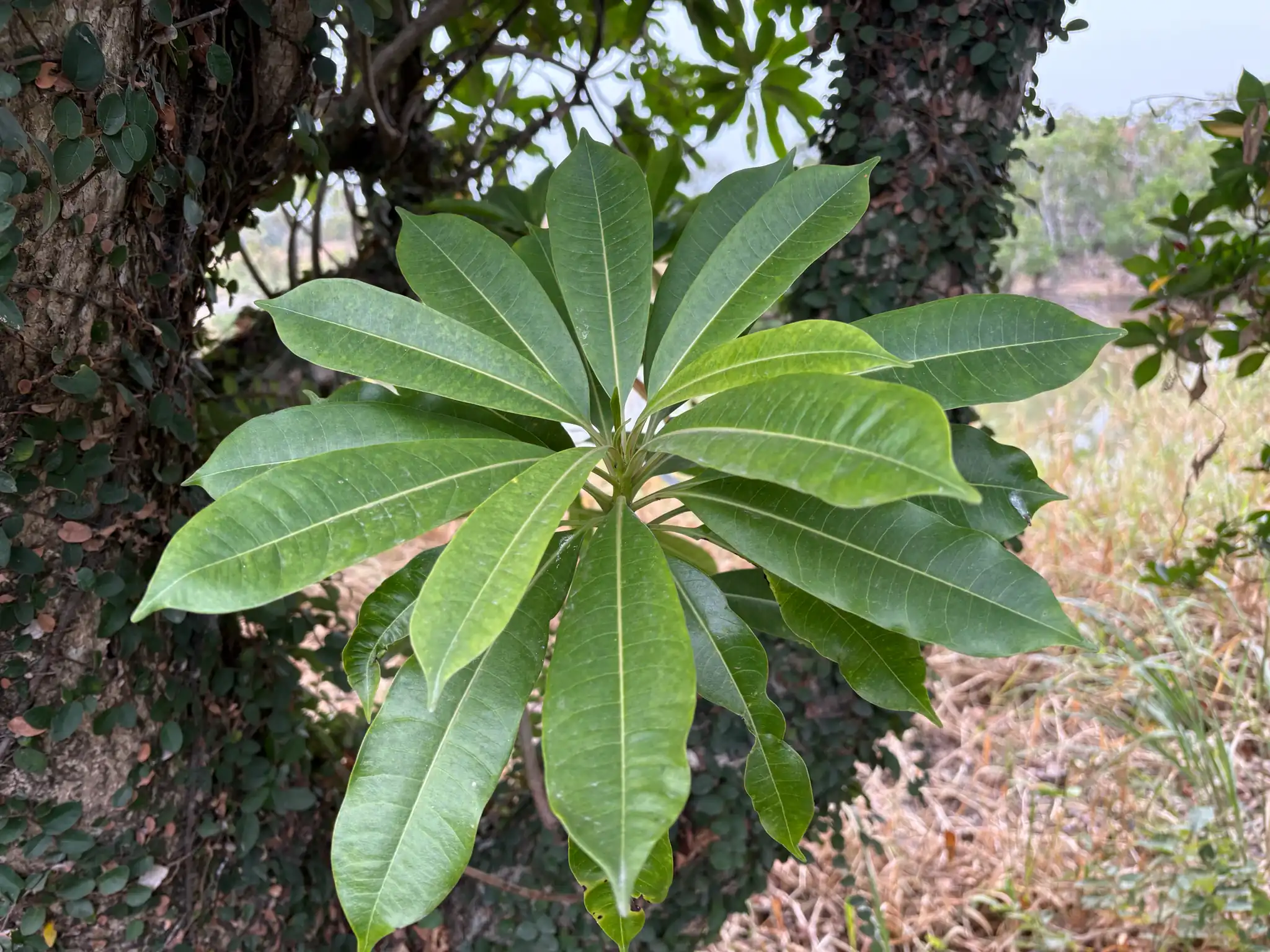
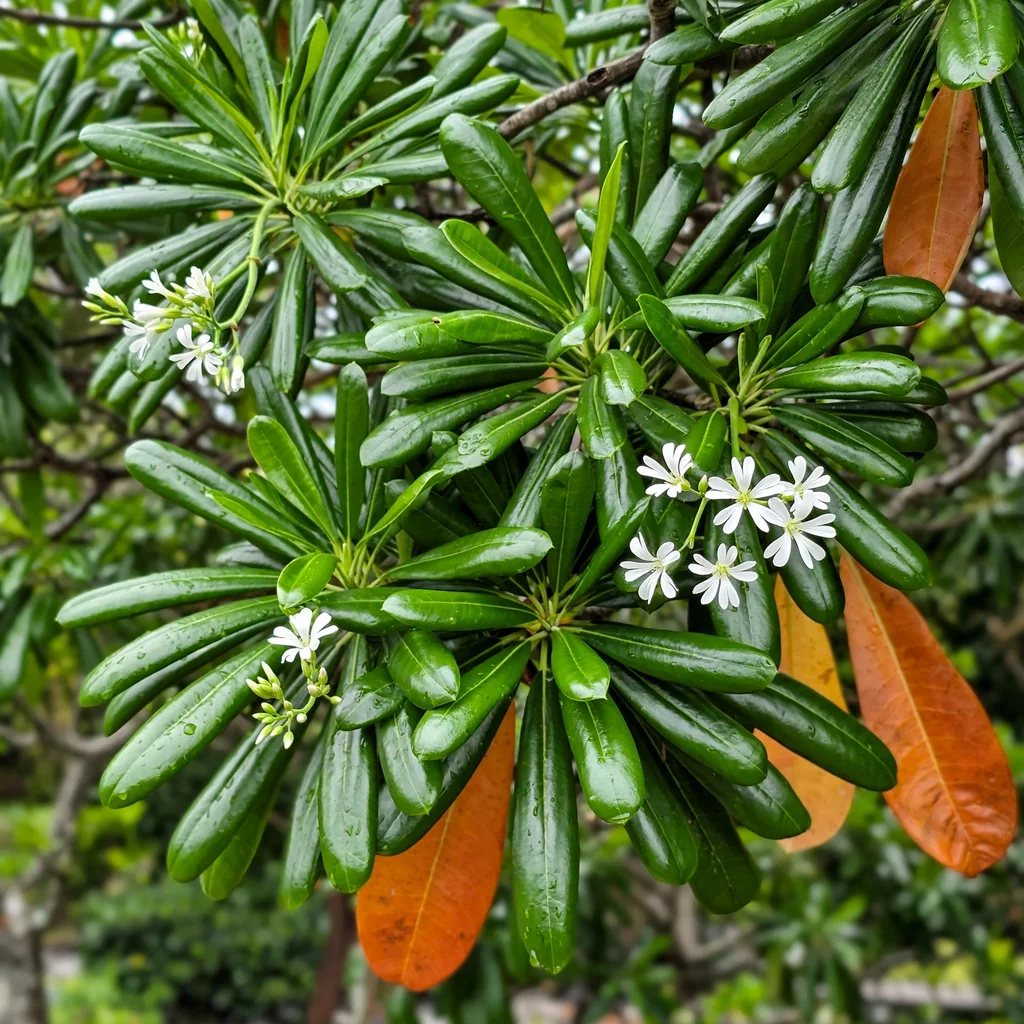
Cerbera manghas, commonly known as the sea mango, is a small, evergreen tropical tree featuring glossy, dark green foliage spiraled along fleshy branches. In late spring, it produces highly fragrant, five-lobed white flowers with reddish-pink centers that resemble plumeria blooms.
Sold in cultivation under the trade name Cerbera x manghas, this form features bright yellow and fresh green foliage with mauve young leaves on a compact growth habit. All parts of the plant contain deadly cardiac glycosides and produce a milky sap that causes severe skin irritation.
Uses & Benefits:
Essentials
At a Glance
Plant Type
Tree
Height
180"
Width
120"
Light
Full Sun, Partial Sun
Zones
9, 10
Water
Low to Moderate
Humidity
Moderate
Lifespan
Perennial
Native To
Tropical Asia, Australia, Pacific Islands
Toxicity
Highly Toxic
Bloom period
Late spring – Summer
In flower about 4 months of the year
Planting
How to Grow
- Select a planting site or large container with coarse, free-draining soil mix in full sun or bright shade.
- Water thoroughly after planting, then allow the top two inches of soil to dry out between subsequent irrigations.
- Apply a controlled-release balanced fertilizer twice during the active growing season in spring and summer.
- Protect plants from frost, moving potted specimens indoors before ambient temperatures fall below 40°F.
Pro Tip
Keep newly shipped or leaf-dropped plants dry until fresh growth resumes, as saturated soil without active leaf transpiration rapidly causes stem rot.
Keep It Thriving
Care Guide
Do
- Wear protective gloves when pruning to avoid contact with toxic milky sap.
- Allow topsoil to dry between waterings, especially in winter.
- Provide high light levels when growing in indoor container environments.
Don't
- Do not plant in areas accessible to curious pets, livestock, or young children.
- Do not overwater leafless or shipping-stressed plants before new leaves appear.
- Do not leave container plants outdoors when freeze warnings occur.
Seasonal Care Calendar
| Task | Jan | Feb | Mar | Apr | May | Jun | Jul | Aug | Sep | Oct | Nov | Dec |
|---|---|---|---|---|---|---|---|---|---|---|---|---|
| Fertilize | ||||||||||||
| Pest Check | ||||||||||||
| Plant | ||||||||||||
| Prune | ||||||||||||
| Winter Prep |
Watch Out For
Pests & Diseases
Common Pests
Common Diseases
In the Garden
Landscape Uses & Companions
Landscape Uses
Multiply
Propagation Methods
Good to Know
Common Questions
Sea Mango questions
What zones can Sea Mango grow in?
Sea Mango is hardy in USDA Zones 9–10: in that range it survives winter in the ground. Colder than Zone 9, winters are too cold for it to survive outdoors.
When does Sea Mango bloom?
Sea Mango typically blooms from late spring to late summer. Exact timing shifts a week or two with your zone — Sow's bloom calendar maps it to your garden.
Does Sea Mango need full sun?
Sea Mango does best in full sun to part shade. In hot climates, afternoon shade keeps blooms fresher longer.
Is Sea Mango drought tolerant?
Yes — once established (usually after the first full season), Sea Mango handles dry spells with minimal watering. Water deeply its first year to build the root system that makes that possible.
More Cerbera to compare
Keep exploring
Explore the genus
Hardy in your zone?
Grow Sea Mango with confidence
See it in a design of your actual yard, get zone-matched care reminders, and track it season by season in your garden journal.