The Story
Plant Bio
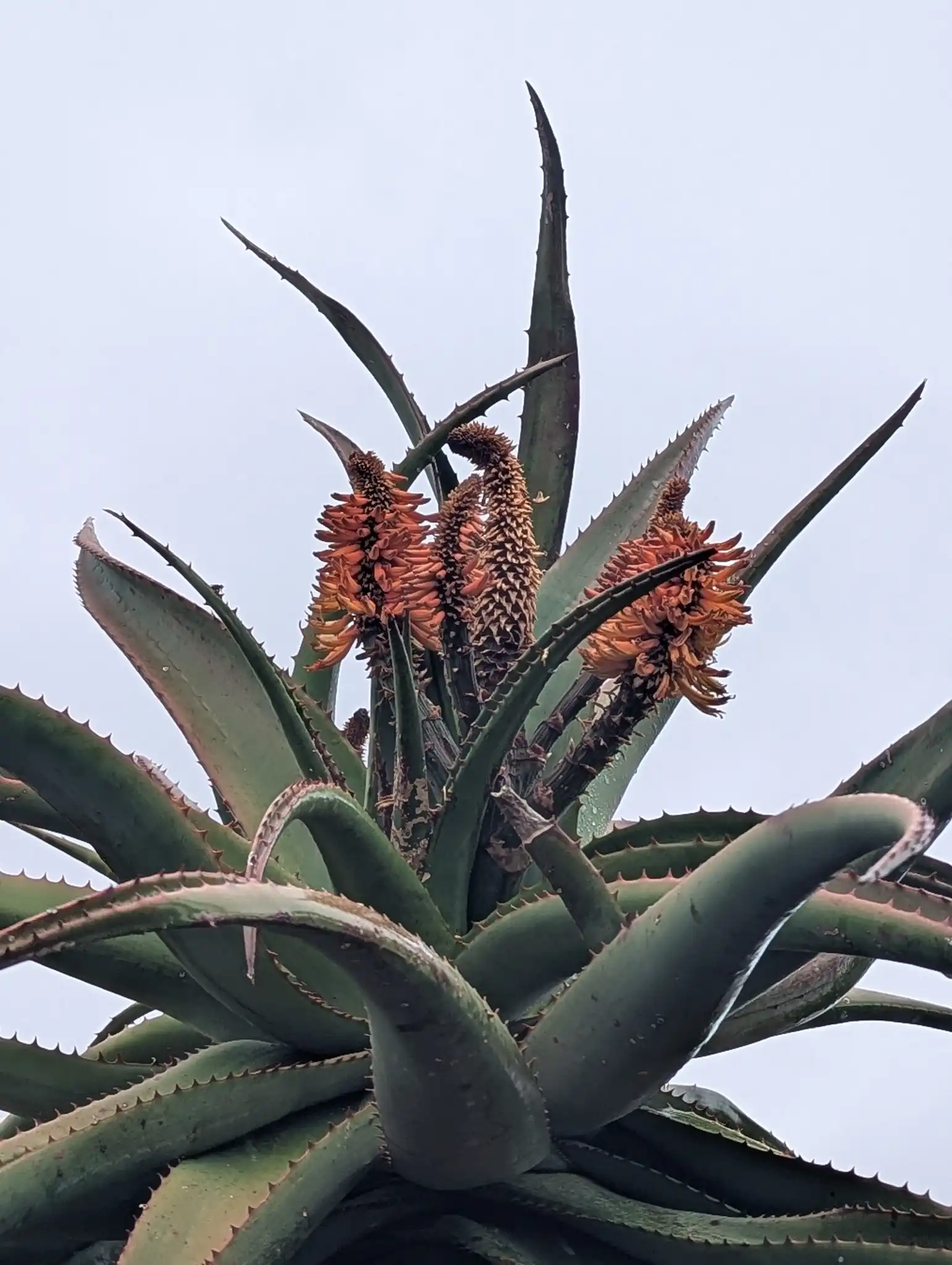
Aloe ferox, the Cape aloe, is a single-stemmed evergreen succulent that forms a stout trunk with age, crowned by a dense rosette of thick water-storing leaves. The leaves bear stout marginal teeth and scattered surface spines, and old dead leaves persist around the stem as a dry skirt that shields the trunk.
Plants reach 2 to 3 meters with leaves to 3 feet long that shift from dull glaucous green to reddish brown in sun and drought. In winter it sends up a branched panicle 2 to 4 feet above the rosette with up to ten densely packed racemes of tubular yellow-orange to red flowers with exserted dark-orange stamens.
Uses & Benefits:
Essentials
At a Glance
Plant Type
Cactus Succulent
Height
108"
Width
60"
Light
Full Sun, Partial Sun
Zones
9, 10
Water
Low
Humidity
Low
Lifespan
Long-lived perennial
Native To
South Africa and Lesotho
Toxicity
Toxic if ingested, spiny
Bloom period
Winter
In flower about 3 months of the year
Planting
How to Grow
- Plant in full sun in sharply drained sandy or cactus mix after all frost danger has passed.
- Water deeply to settle in, then allow the soil to dry completely between waterings and keep almost dry in winter.
- Feed sparingly or not at all; this is a slow grower and excess fertilizer makes soft growth.
- Give it room for a 2 to 3 meter specimen and protect containers from hard frost.
Pro Tip
Soak the mix fully, then let it dry completely before watering again, and never cut back into the bare trunk — the persistent skirt of dead leaves is normal and protects the stem.
Keep It Thriving
Care Guide
Do
- Grow in full sun with sharp drainage and airflow
- Water infrequently in summer and keep drier in winter
- Leave the dry leaf skirt in place to protect the stem
Don't
- Do not overwater or leave the pot standing in water
- Do not cut into the old leafless trunk
- Do not expose to winter freezing or prolonged temperatures above 115F
Seasonal Care Calendar
| Task | Jan | Feb | Mar | Apr | May | Jun | Jul | Aug | Sep | Oct | Nov | Dec |
|---|---|---|---|---|---|---|---|---|---|---|---|---|
| Fertilize | ||||||||||||
| Pest Check | ||||||||||||
| Plant | ||||||||||||
| Prune | ||||||||||||
| Winter Prep |
Watch Out For
Pests & Diseases
Common Pests
Common Diseases
In the Garden
Landscape Uses & Companions
Landscape Uses
Multiply
Propagation Methods
Good to Know
Common Questions
Cape Aloe questions
What zones can Cape Aloe grow in?
Cape Aloe is hardy in USDA Zones 9–10: in that range it survives winter in the ground. Colder than Zone 9, grow it in a container you can move to shelter for the winter, or as an annual.
When does Cape Aloe bloom?
Cape Aloe typically blooms in winter. Exact timing shifts a week or two with your zone — Sow's bloom calendar maps it to your garden.
Does Cape Aloe need full sun?
Cape Aloe does best in full sun to part shade. In hot climates, afternoon shade keeps blooms fresher longer.
Is Cape Aloe drought tolerant?
Yes — once established (usually after the first full season), Cape Aloe handles dry spells with minimal watering. Water deeply its first year to build the root system that makes that possible.
More Aloe to compare
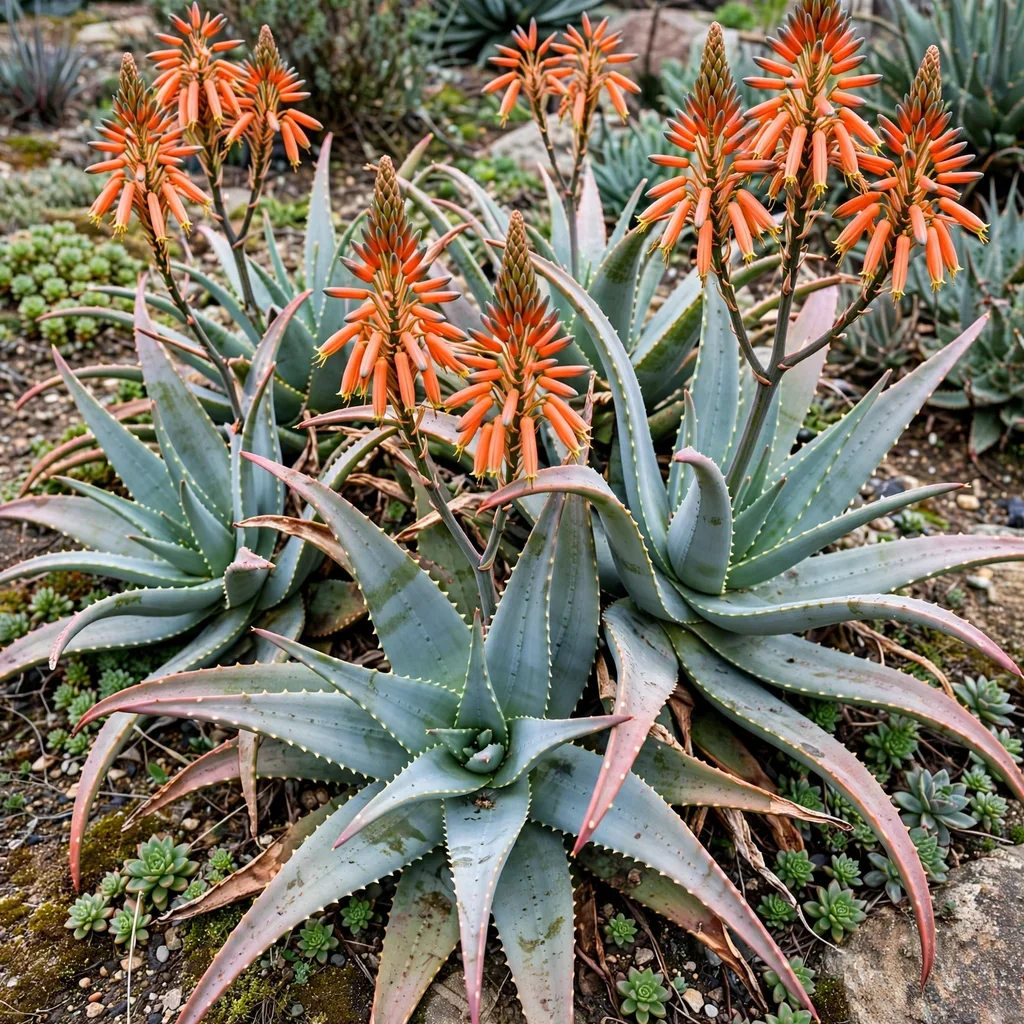
Compton's Aloe
Aloe comptonii
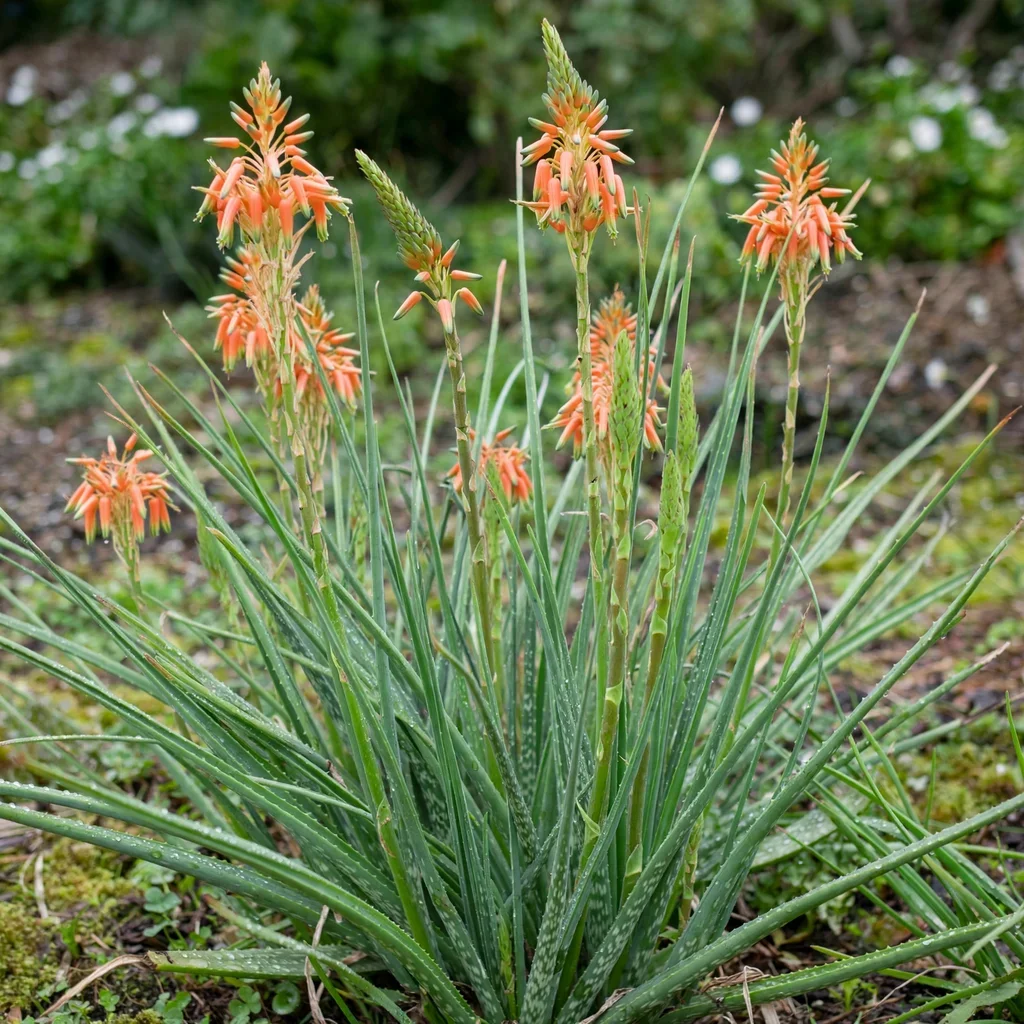
Cooper's Aloe
Aloe cooperi
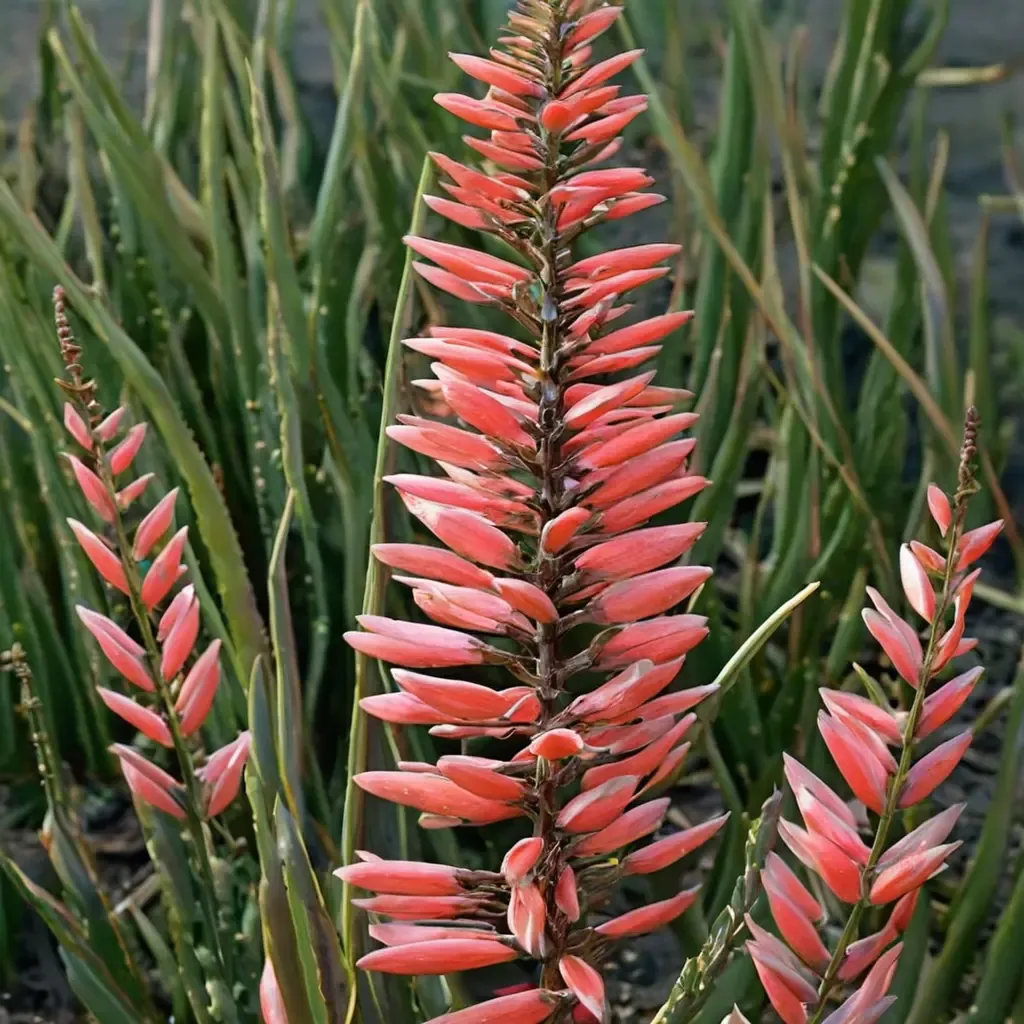
Safari Rose Aloe
Aloe vera 'Safari Rose'
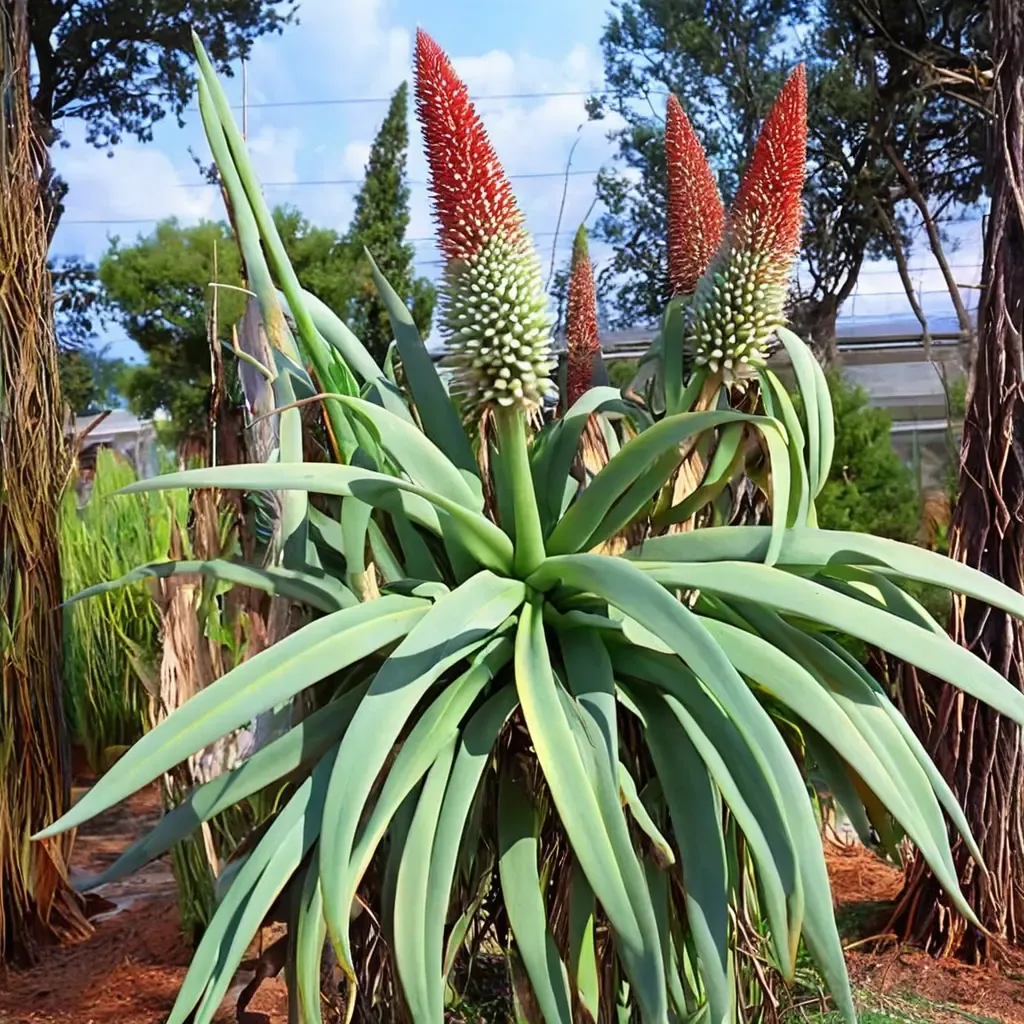
Tilt-Head Aloe
Aloe speciosa 'Tilt-Head Aloe'
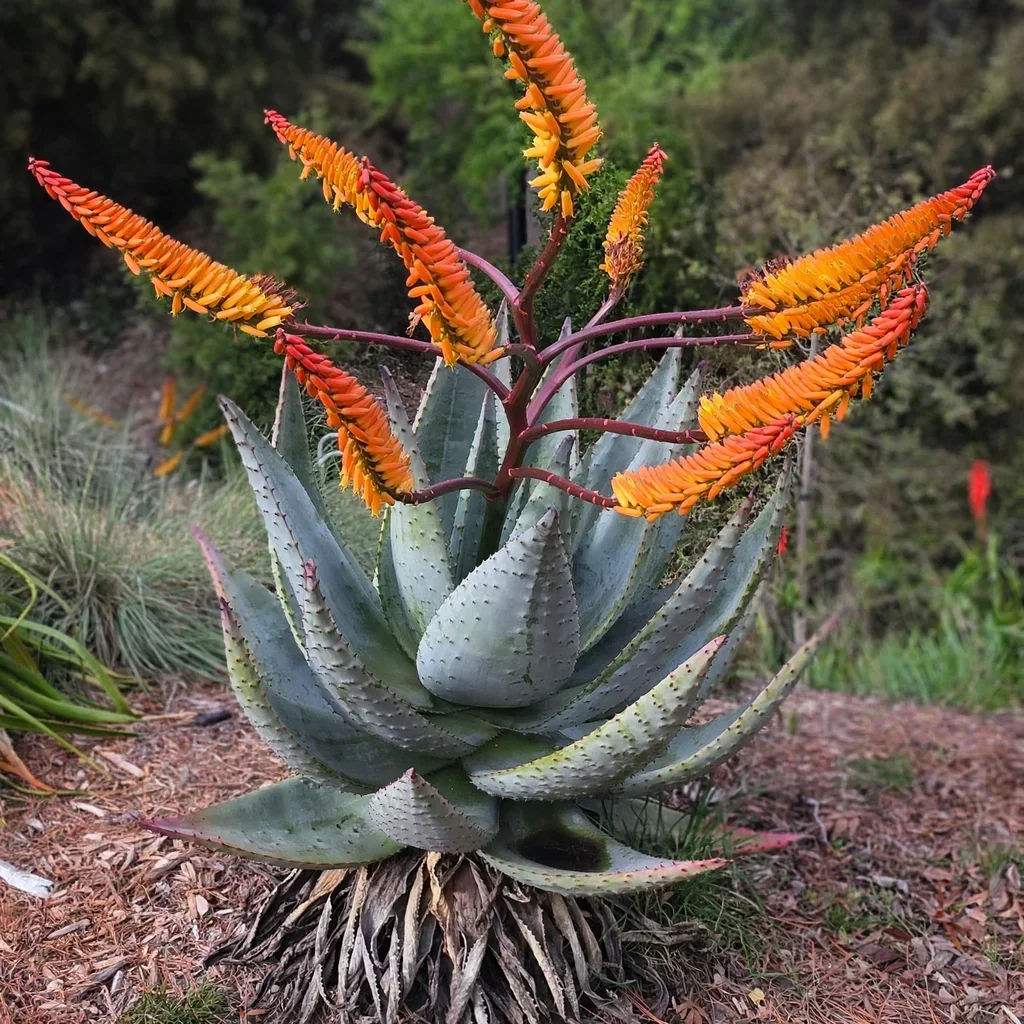
Mountain Aloe
Aloe marlothii 'Flat Flowered Aloe'
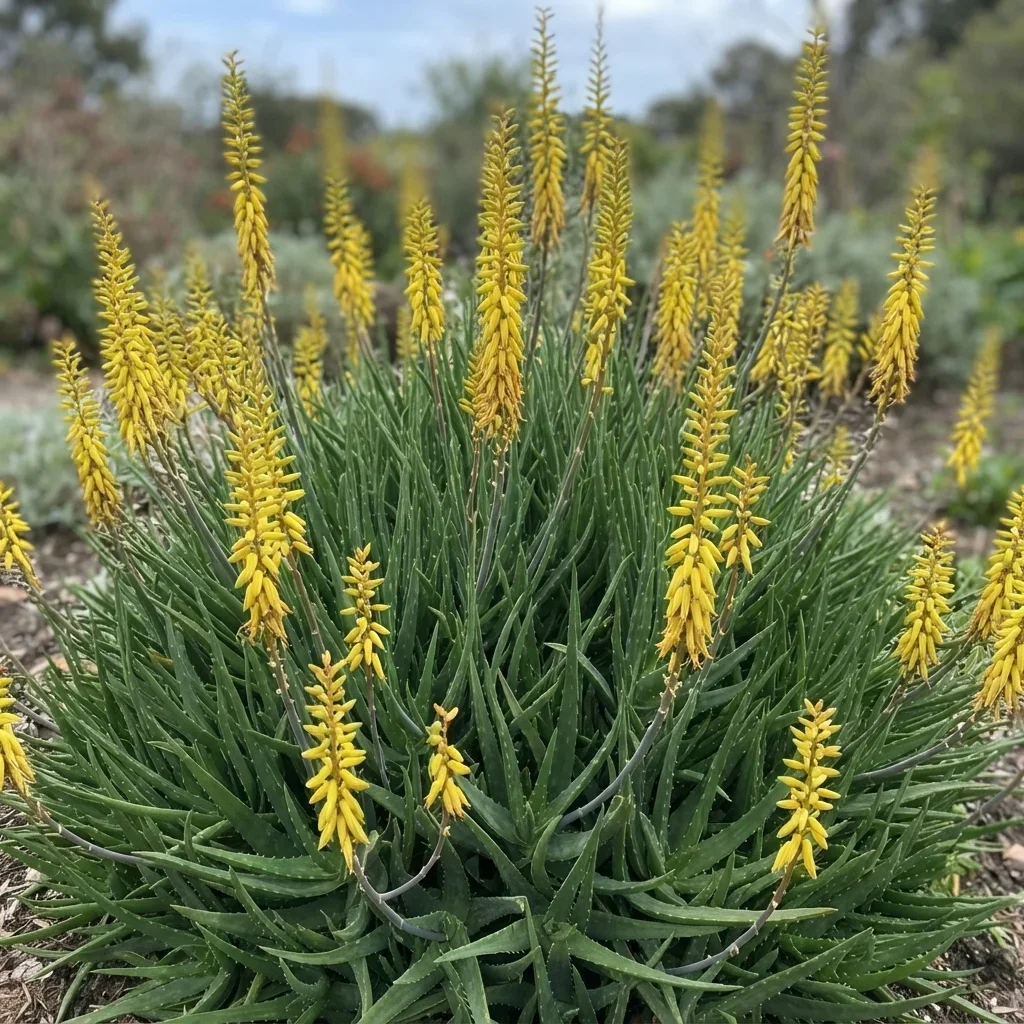
Fence Aloe
Aloe tenuior 'Fence Aloe'
Keep exploring
Explore the genus
Hardy in your zone?
Grow Cape Aloe with confidence
See it in a design of your actual yard, get zone-matched care reminders, and track it season by season in your garden journal.