The Story
Plant Bio
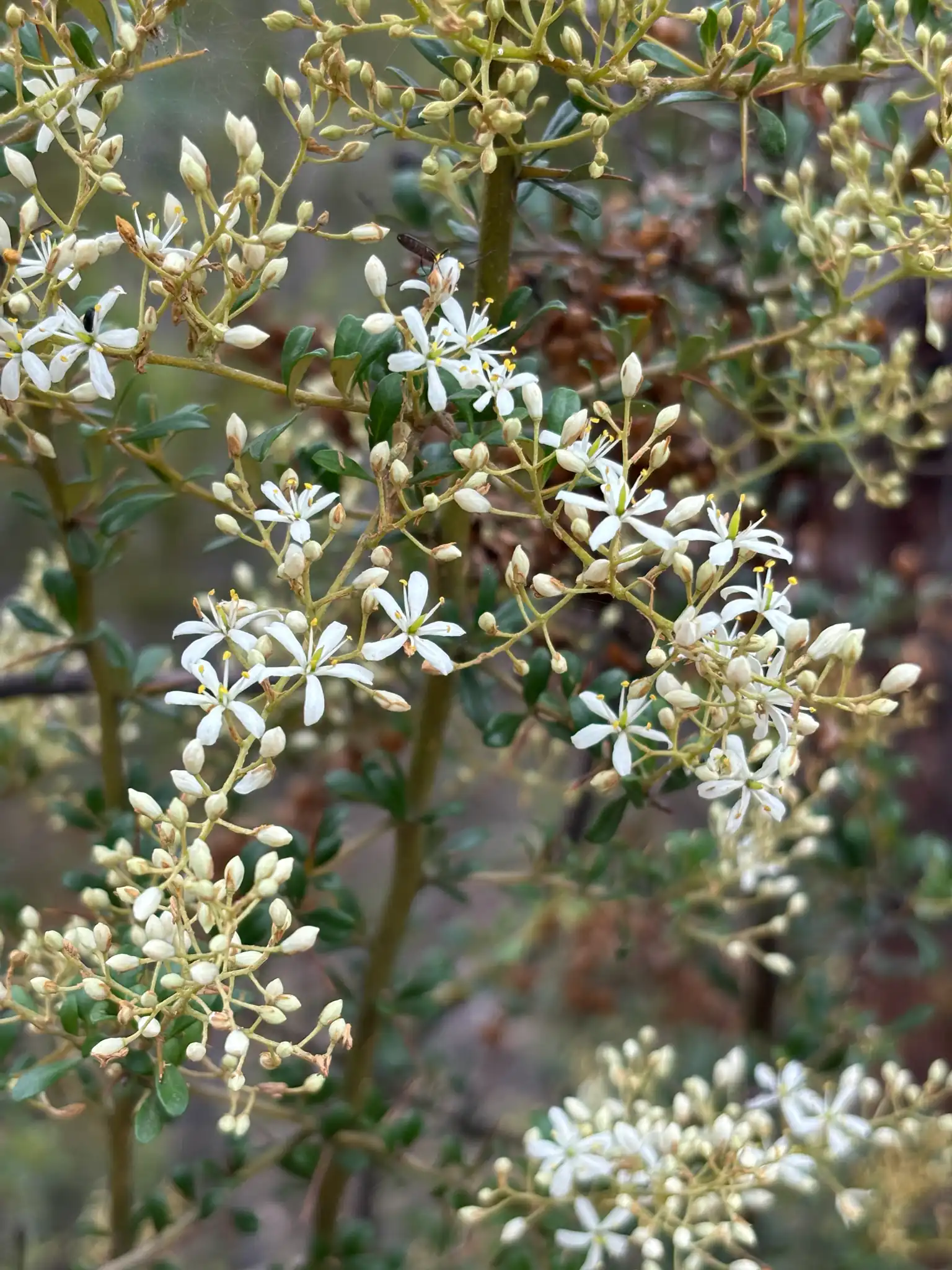
Bursaria spinosa, known as sweet bursaria, is an evergreen Australian shrub or small tree reaching ten to sixteen feet in garden settings, formed of rigid interlaced branches armed with sharp thorns. In summer, terminal leafy panicles carry masses of small, sweetly scented white flowers followed by purse-shaped brown seed capsules.
The species features obovate dark green leaves with shiny upper surfaces and produces a deep rhizomatous root system that re-sprouts readily after physical disturbance. Prickly branches provide dense protective shelter for small wildlife while nectar-rich blooms support broad populations of beneficial insect pollinators.
Uses & Benefits:
Essentials
At a Glance
Plant Type
Shrub
Height
197"
Width
118"
Light
Full Sun, Partial Sun
Zones
8, 9, 10
Water
Low once established
Humidity
Moderate
Lifespan
Perennial
Native To
Australia
Toxicity
Toxic if ingested / Skin irritant
Bloom period
Late spring – Summer
In flower about 4 months of the year
Planting
How to Grow
- Select a planting site in full sun or light partial shade with sharply draining soil.
- Dig a hole twice as wide as the root ball and set the crown level with the surrounding soil grade.
- Water thoroughly at planting and supply light moisture until the root system establishes.
- Tip-prune green growth annually after summer flowering to encourage dense branching.
Pro Tip
Tip-prune lightly right after flowering to maintain a dense, compact framework; cutting into old leafless wood prevents the stems from regenerating.
Keep It Thriving
Care Guide
Do
- Plant in well-drained soil locations.
- Prune lightly and regularly after summer flowering.
- Wear heavy gloves when handling spiny stems.
Don't
- Do not overwater or plant in poorly drained waterlogged soils.
- Do not cut back harshly into old, leafless bare wood.
- Do not apply heavy doses of high-phosphorus fertilizers.
Seasonal Care Calendar
| Task | Jan | Feb | Mar | Apr | May | Jun | Jul | Aug | Sep | Oct | Nov | Dec |
|---|---|---|---|---|---|---|---|---|---|---|---|---|
| Fertilize | ||||||||||||
| Mulch | ||||||||||||
| Pest Check | ||||||||||||
| Prune |
Watch Out For
Pests & Diseases
Common Pests
Common Diseases
In the Garden
Landscape Uses & Companions
Landscape Uses
Multiply
Propagation Methods
Good to Know
Common Questions
Sweet Bursaria questions
What zones can Sweet Bursaria grow in?
Sweet Bursaria is hardy in USDA Zones 8–10: in that range it survives winter in the ground. Colder than Zone 8, grow it in a container you can move to shelter for the winter.
Is Sweet Bursaria deer resistant?
Not reliably. Deer may browse Sweet Bursaria, especially tender spring growth — plan on repellents or fencing where pressure is high.
When does Sweet Bursaria bloom?
Sweet Bursaria typically blooms from late spring to late summer. Exact timing shifts a week or two with your zone — Sow's bloom calendar maps it to your garden.
Does Sweet Bursaria need full sun?
Sweet Bursaria does best in full sun to part shade. In hot climates, afternoon shade keeps blooms fresher longer.
Is Sweet Bursaria drought tolerant?
Yes — once established (usually after the first full season), Sweet Bursaria handles dry spells with minimal watering. Water deeply its first year to build the root system that makes that possible.
Keep exploring
Explore the genus
Hardy in your zone?
Grow Sweet Bursaria with confidence
See it in a design of your actual yard, get zone-matched care reminders, and track it season by season in your garden journal.