The Story
Plant Bio
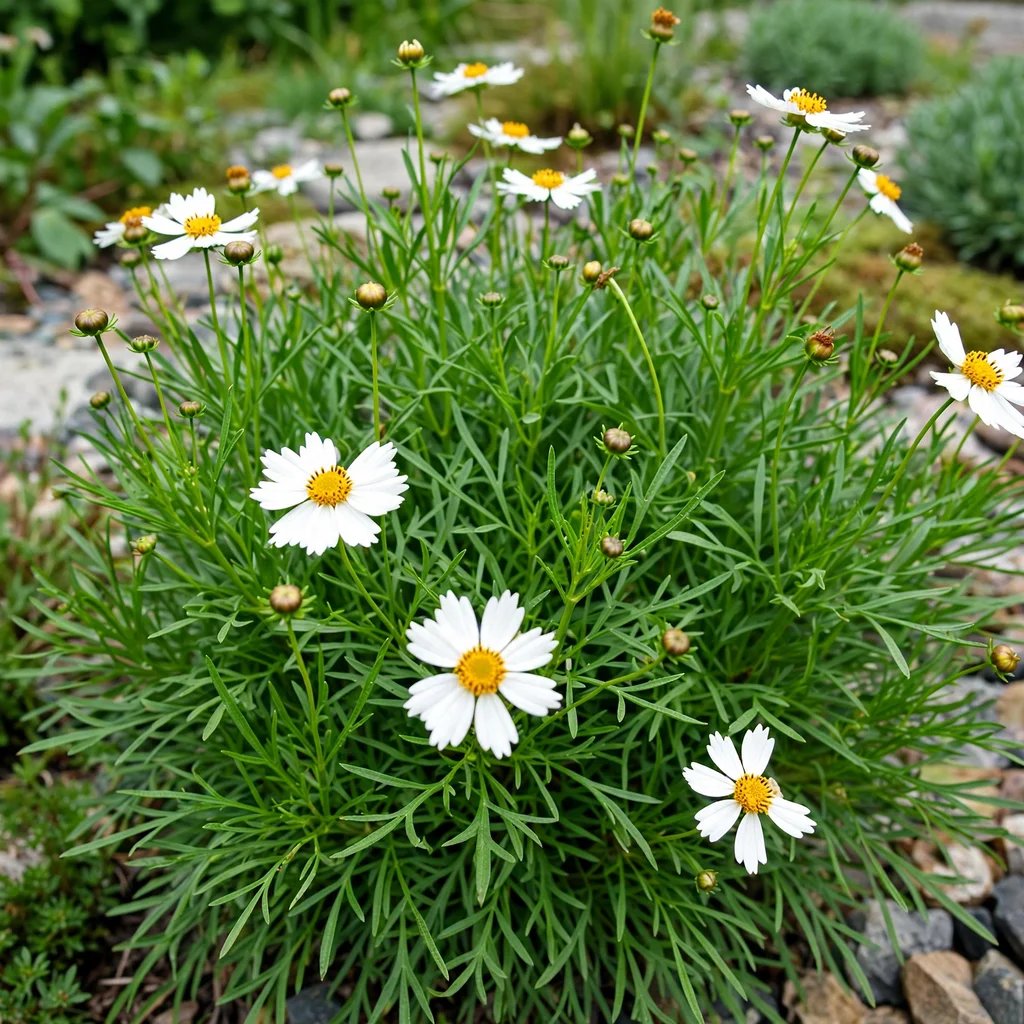
Coreopsis is a North American genus of herbaceous perennials grown for solitary daisy heads borne at the stem ends over ferny foliage. Plants form open, upright-spreading mounds and flower through summer into early fall in lean, well-drained soil.
'Alba' is sold as a white-flowered selection reaching 8 inches tall by 12 inches wide, with bright green fine-textured leaves. Its white rays around a yellow eye separate it from the yellow-flowered species that dominate the genus, and its compact mounding habit fits the front of a border or rock pocket.
Uses & Benefits:
Essentials
At a Glance
Plant Type
Perennial
Height
8"
Width
12"
Light
Full Sun
Zones
4, 5, 6, 7, 8, 9
Water
Low
Humidity
Average
Lifespan
Perennial
Native To
North America (selection; wild range uncertain)
Toxicity
Non-toxic
Bloom period
Summer – Fall
In flower about 6 months of the year
Planting
How to Grow
- Plant in full sun in dry to medium, well-drained sandy or rocky soil.
- Set the crown level with the soil surface and water in once.
- Space 10 to 12 inches apart to allow airflow between mounds.
- Withhold extra fertilizer and let soil dry between waterings once established.
Pro Tip
Plant lean and dry in full sun and deadhead to the next bud; rich soil with excess water produces sprawling stems and mildew.
Keep It Thriving
Care Guide
Do
- Give full sun and sharp drainage.
- Deadhead regularly through flowering to prolong bloom.
- Cut back after flowering finishes.
Don't
- Do not plant in wet, heavy soil where crowns rot.
- Do not overfertilize or overwater, which causes sprawl.
- Do not use overhead watering in humid weather.
Seasonal Care Calendar
| Task | Jan | Feb | Mar | Apr | May | Jun | Jul | Aug | Sep | Oct | Nov | Dec |
|---|---|---|---|---|---|---|---|---|---|---|---|---|
| Deadhead | ||||||||||||
| Divide | ||||||||||||
| Pest Check | ||||||||||||
| Plant | ||||||||||||
| Prune |
Watch Out For
Pests & Diseases
Common Pests
Common Diseases
In the Garden
Landscape Uses & Companions
Landscape Uses
Multiply
Propagation Methods
Good to Know
Common Questions
White Alpine Tickseed questions
What zones can White Alpine Tickseed grow in?
White Alpine Tickseed is hardy in USDA Zones 4–9: in that range it survives winter in the ground. Warmer than Zone 9, winter isn't the problem: it prefers colder winters, and summer heat can shorten its life.
Is White Alpine Tickseed deer resistant?
Yes — White Alpine Tickseed is rated deer-resistant. Deer typically pass it over, though extreme hunger can override any plant's defenses.
When does White Alpine Tickseed bloom?
White Alpine Tickseed typically blooms from summer to fall. Exact timing shifts a week or two with your zone — Sow's bloom calendar maps it to your garden.
Does White Alpine Tickseed need full sun?
White Alpine Tickseed does best in full sun (6+ hours).
Is White Alpine Tickseed drought tolerant?
Yes — once established (usually after the first full season), White Alpine Tickseed handles dry spells with minimal watering. Water deeply its first year to build the root system that makes that possible.
More Coreopsis to compare
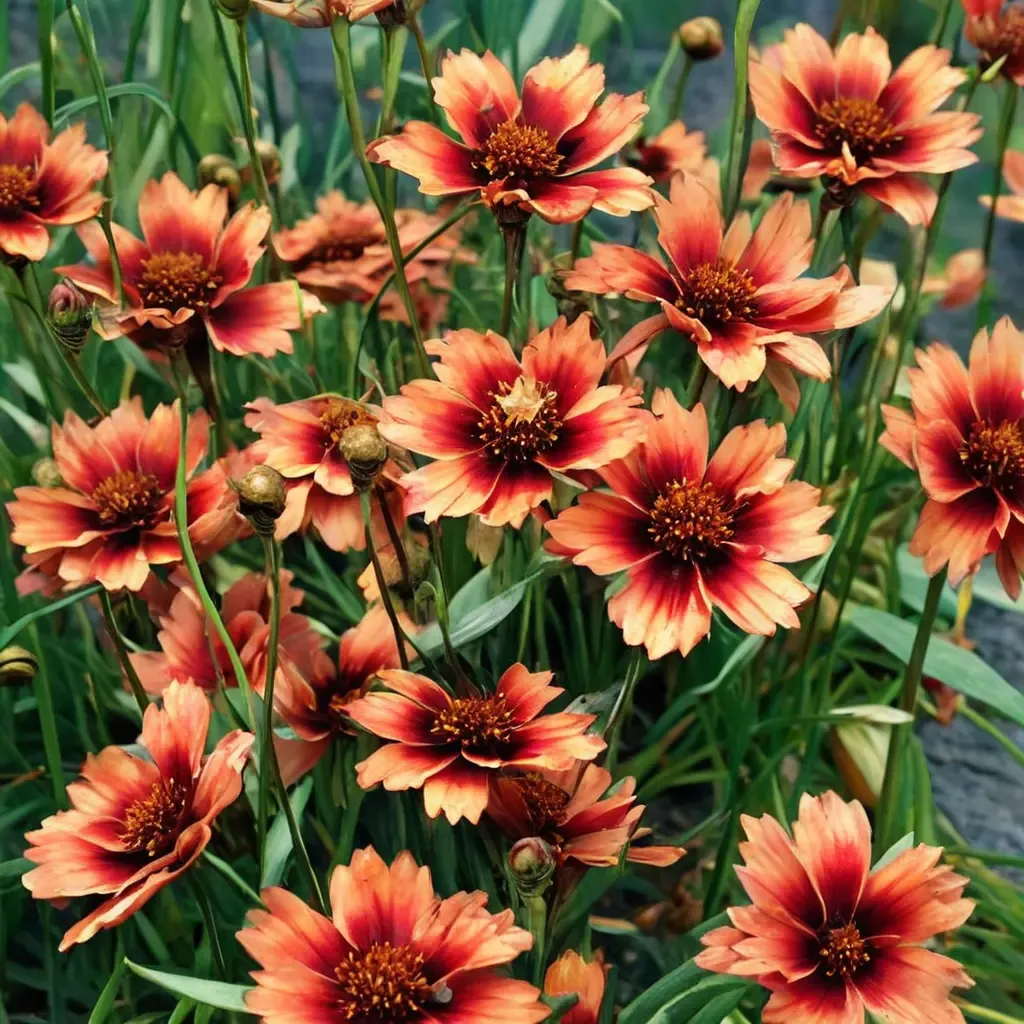
Desert Coral Plains Coreopsis
Coreopsis tinctoria 'Desert Coral'
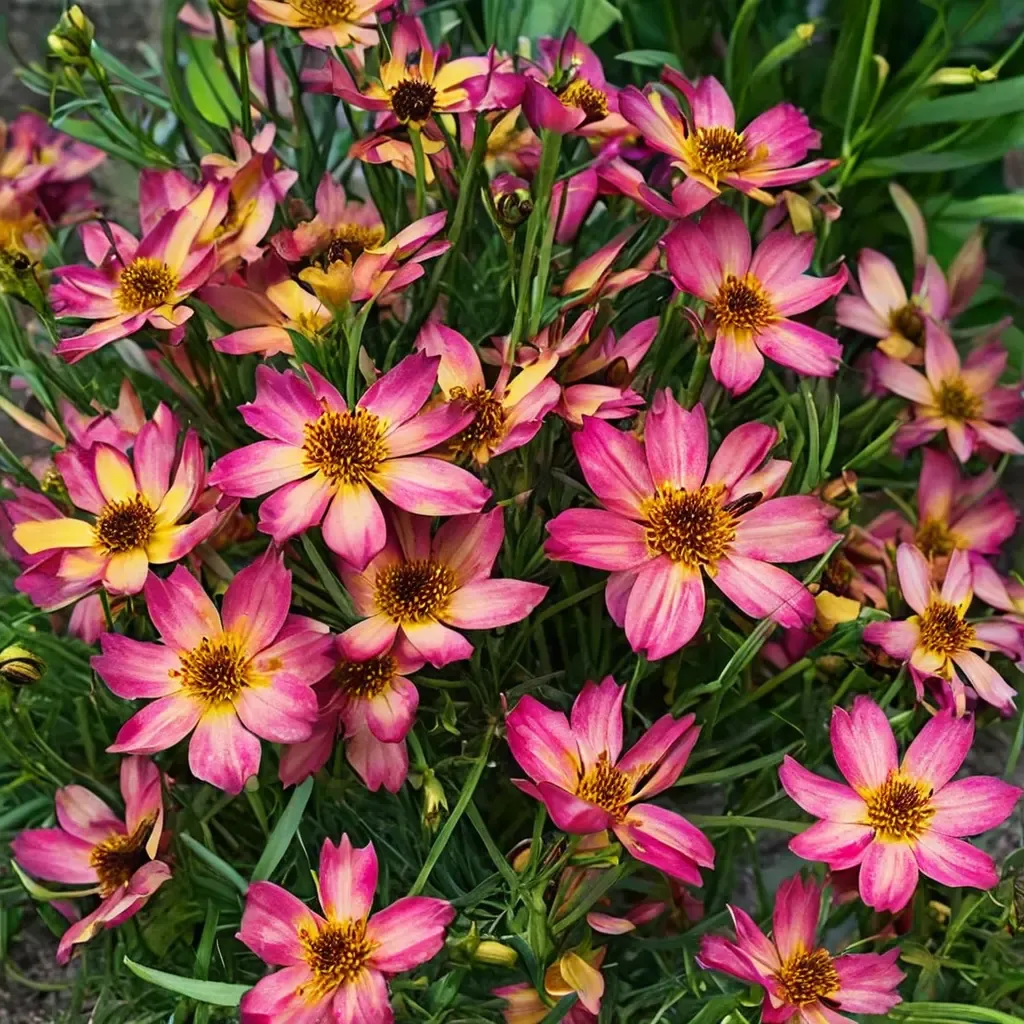
Tickseed 'Sweet Tart'
Coreopsis tinctoria 'Sweet Tart'
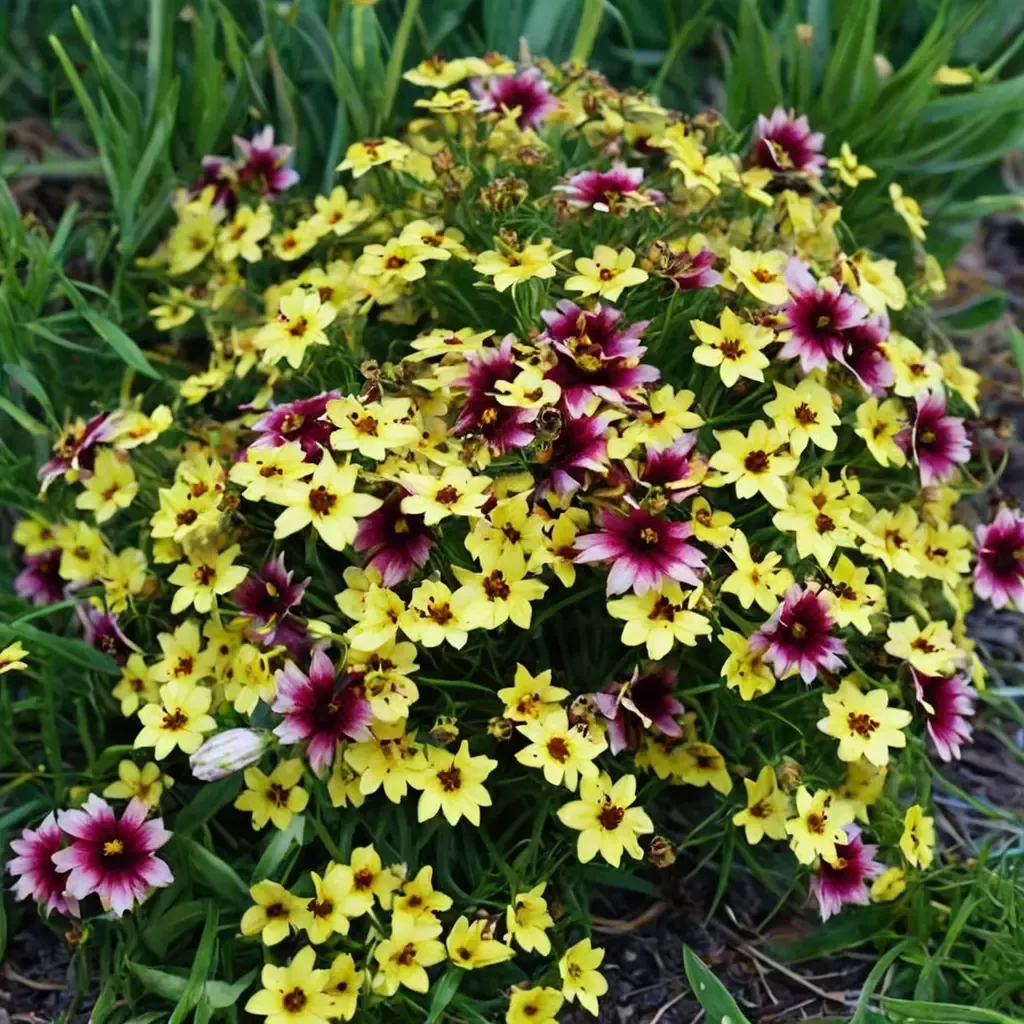
Sassy Saffron Tickseed
Coreopsis grandiflora 'Sassy Saffron'
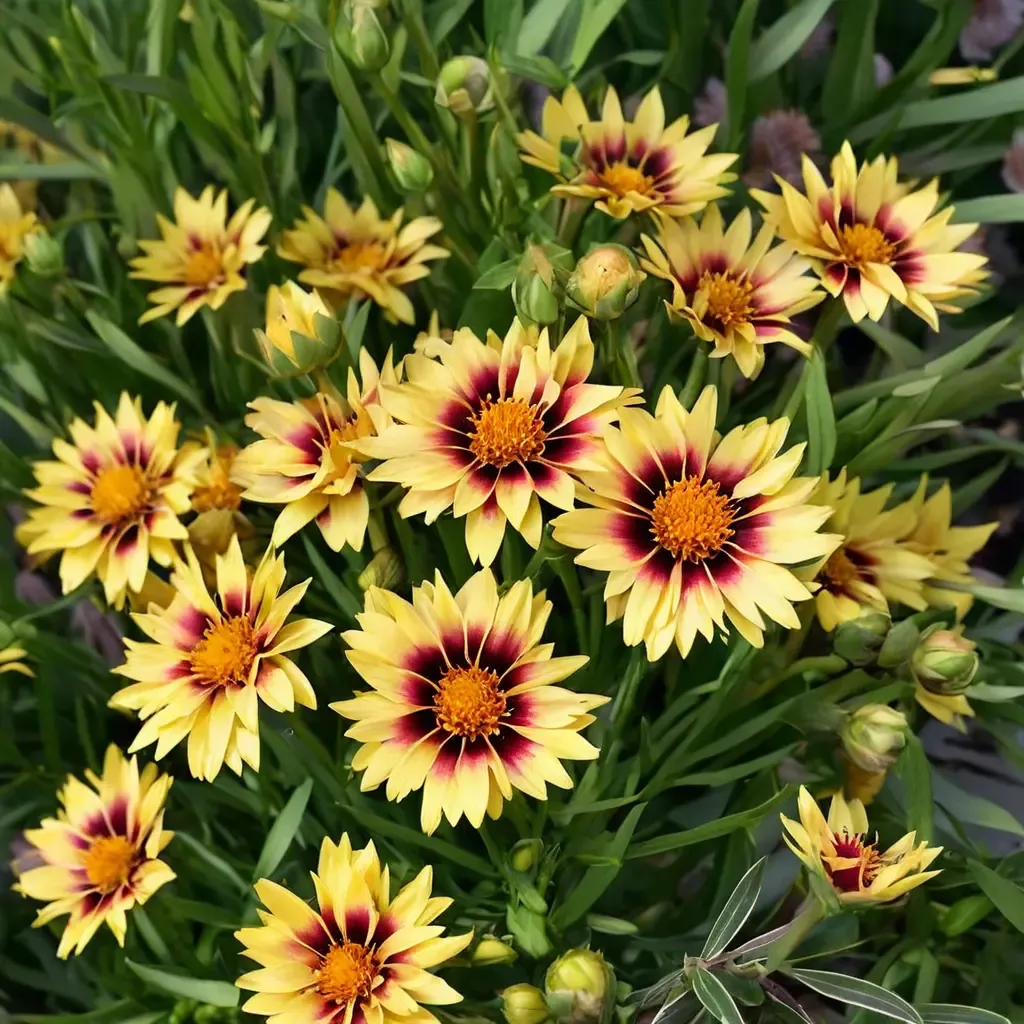
Enchanted Eve Li'l Bang Tickseed
Coreopsis grandiflora 'Enchanted Eve Li'l Bang'
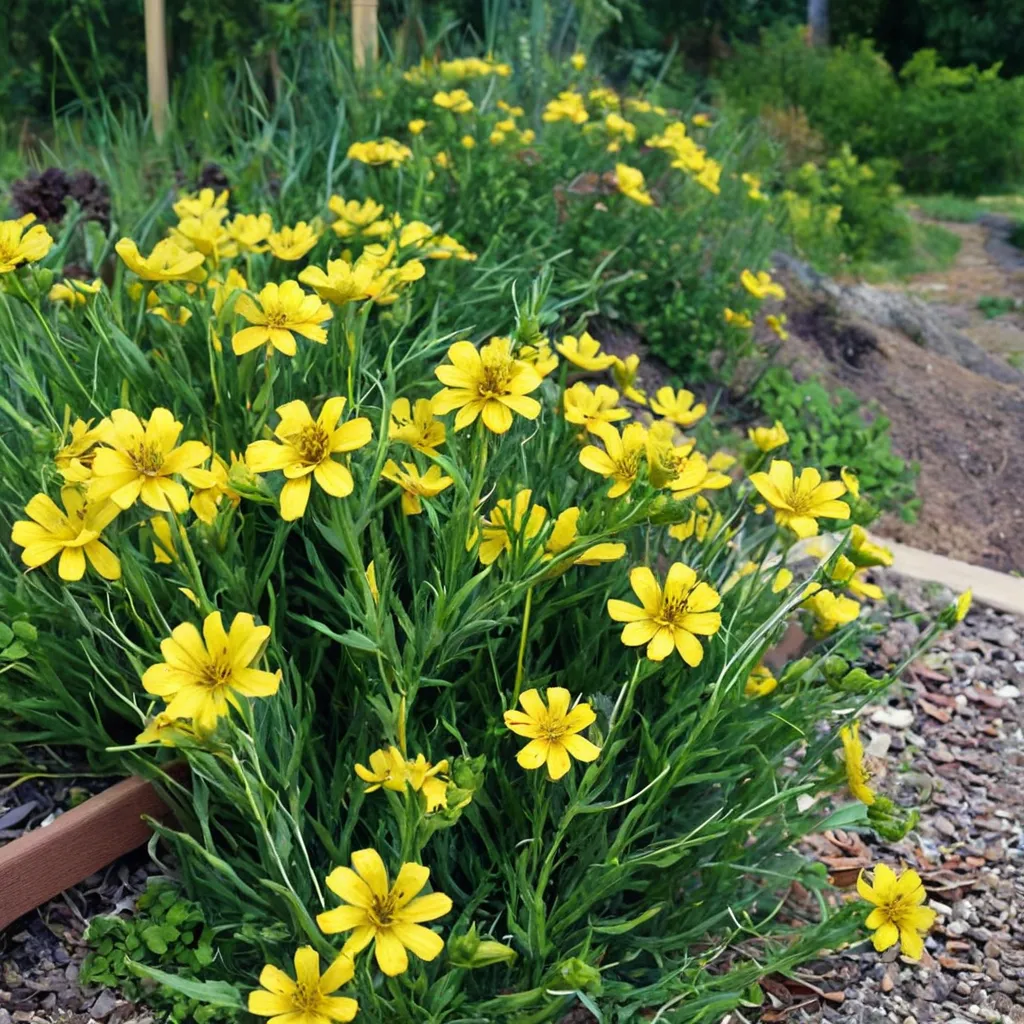
Prairie Coreopsis
Coreopsis palmata
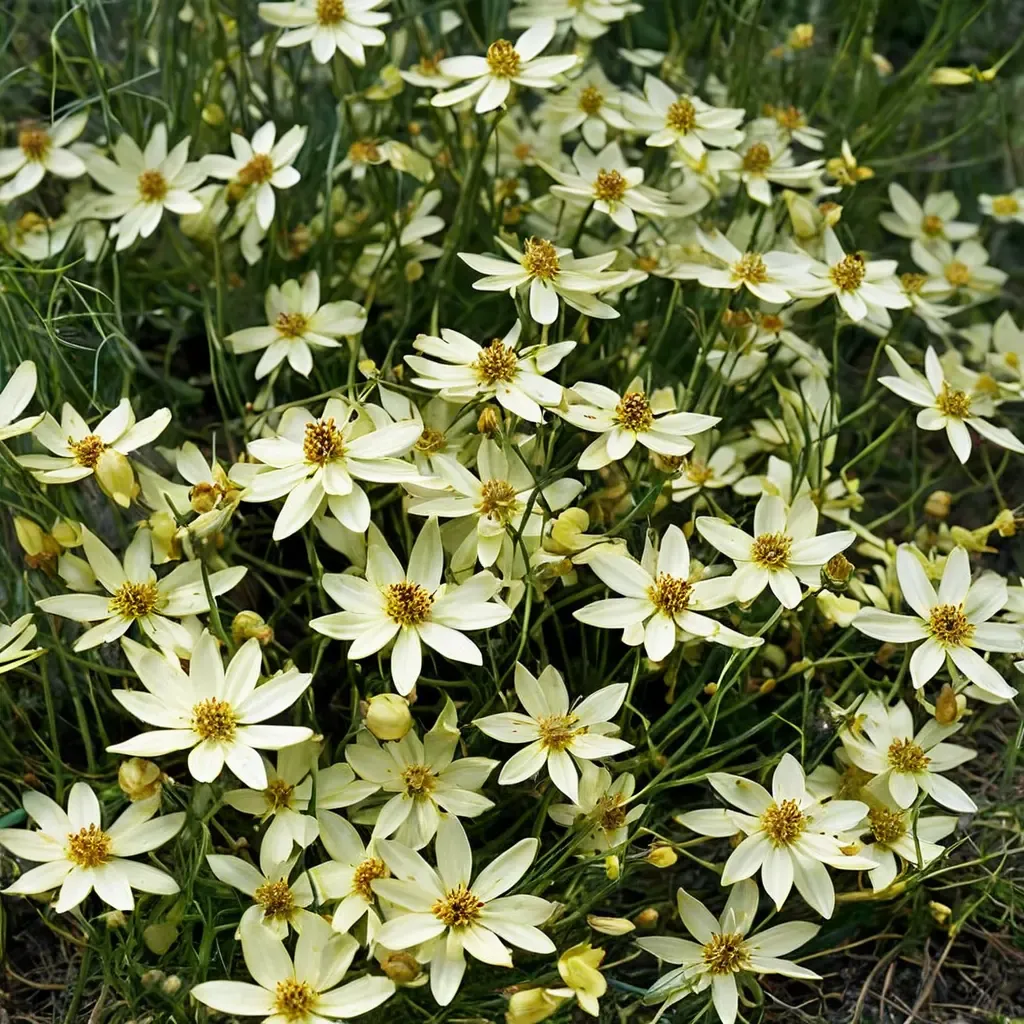
Moonbeam Tickseed
Coreopsis verticillata 'Moonbeam'
Keep exploring
Grow White Alpine Tickseed with confidence
See it in a design of your actual yard, get zone-matched care reminders, and track it season by season in your garden journal.