The Story
Plant Bio
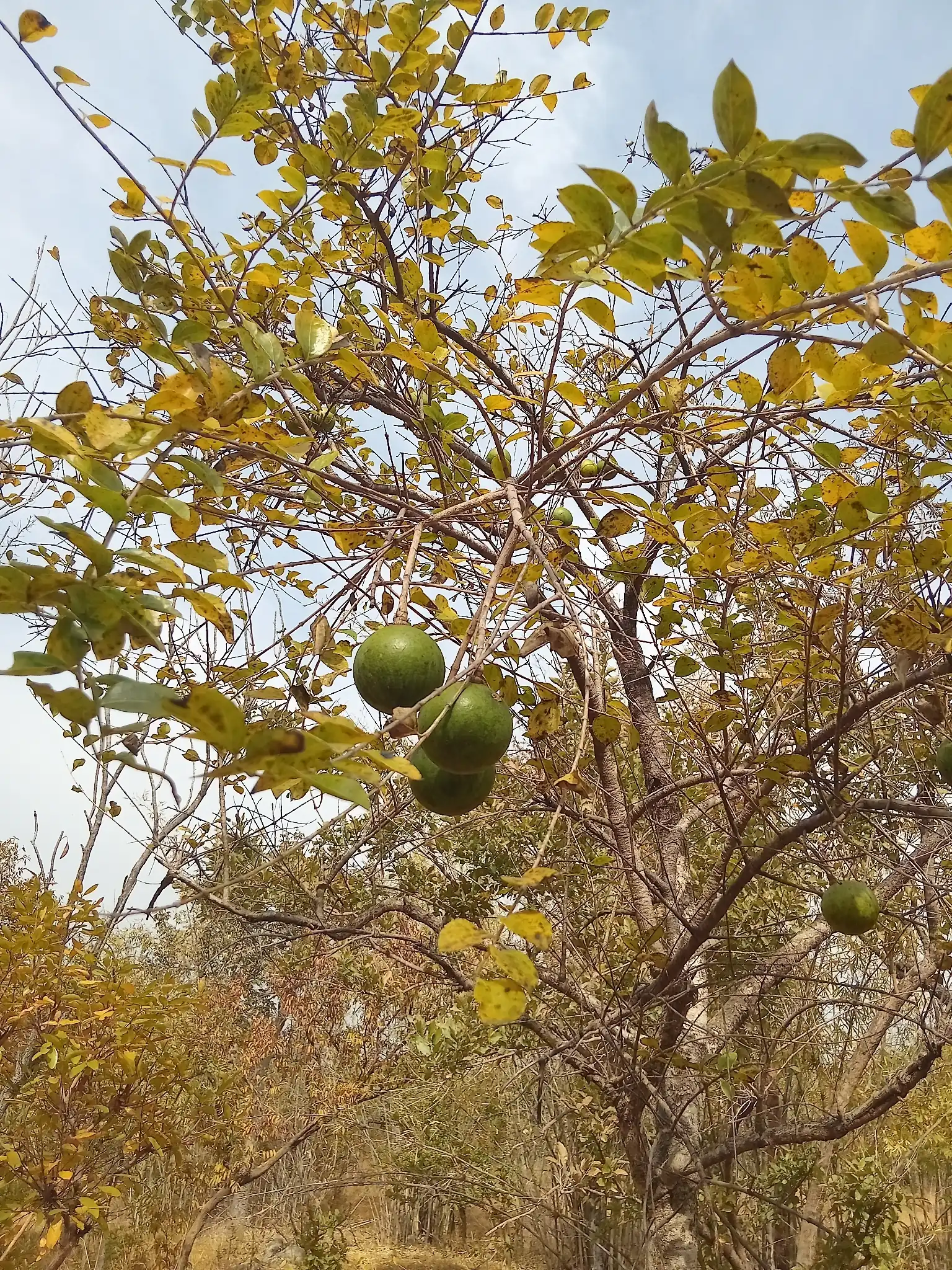
Strychnos spinosa is a spiny deciduous shrub to small tree reaching 10 to 16 feet in gardens, with a light spreading crown and paired stout thorns on the branchlets. Leaves are opposite, leathery and elliptic to 3 inches long, glossy deep green above and paler beneath with yellow fall tint.
Small creamy-white fragrant flowers cluster in compact terminal heads to 1.5 inches across through spring into summer. They are followed by hard-shelled round fruit with sweet-sour pulp around highly toxic seeds, bark and leaves that demand careful siting away from children and pets.
Uses & Benefits:
Essentials
At a Glance
Plant Type
Shrub
Height
180"
Width
120"
Light
Full Sun, Partial Sun
Zones
9, 10
Water
Moderate
Humidity
Moderate
Lifespan
Long-lived
Native To
Sub-Saharan Africa
Toxicity
Highly toxic seeds, bark, leaves; ripe pulp edible only if seeds discarded
Bloom period
Spring – Summer
In flower about 6 months of the year
Planting
How to Grow
- Plant in spring after last frost in full sun with 6 or more hours of direct sun.
- Dig into deep well-drained sandy to sandy-loam soil with added organic matter, pH 6.0 to 7.5.
- Water deeply at planting and through the first season, then reduce to moderate watering in prolonged dry spells.
- Protect young plants from frost with cover and a thick mulch ring kept clear of the stem.
- Prune only to remove dead, diseased or crossing wood and suckers after harvest.
Pro Tip
Give it full heat, deep sand and sharp drainage, then water deeply but infrequently once established; cold wet soil in winter checks growth faster than drought.
Keep It Thriving
Care Guide
Do
- Plant in full sun with sharp drainage
- Water deeply during establishment then sparingly
- Wear thick gloves when pruning spiny wood
Don't
- Do not eat seeds, unripe fruit, bark or leaves - all contain toxic alkaloids
- Do not plant where hard frost pools or soil stays wet in winter
- Do not prune hard into old wood each year
Seasonal Care Calendar
| Task | Jan | Feb | Mar | Apr | May | Jun | Jul | Aug | Sep | Oct | Nov | Dec |
|---|---|---|---|---|---|---|---|---|---|---|---|---|
| Mulch | ||||||||||||
| Pest Check | ||||||||||||
| Plant | ||||||||||||
| Prune | ||||||||||||
| Winter Prep |
Watch Out For
Pests & Diseases
Common Pests
Common Diseases
In the Garden
Landscape Uses & Companions
Landscape Uses
Multiply
Propagation Methods
Good to Know
Common Questions
Natal Orange questions
What zones can Natal Orange grow in?
Natal Orange is hardy in USDA Zones 9–10: in that range it survives winter in the ground. Colder than Zone 9, grow it in a container you can move to shelter for the winter.
When does Natal Orange bloom?
Natal Orange typically blooms from spring to summer. Exact timing shifts a week or two with your zone — Sow's bloom calendar maps it to your garden.
Does Natal Orange need full sun?
Natal Orange does best in full sun to part shade. In hot climates, afternoon shade keeps blooms fresher longer.
Is Natal Orange drought tolerant?
Yes — once established (usually after the first full season), Natal Orange handles dry spells with minimal watering. Water deeply its first year to build the root system that makes that possible.
Keep exploring
Explore the genus
Hardy in your zone?
Grow Natal Orange with confidence
See it in a design of your actual yard, get zone-matched care reminders, and track it season by season in your garden journal.