The Story
Plant Bio
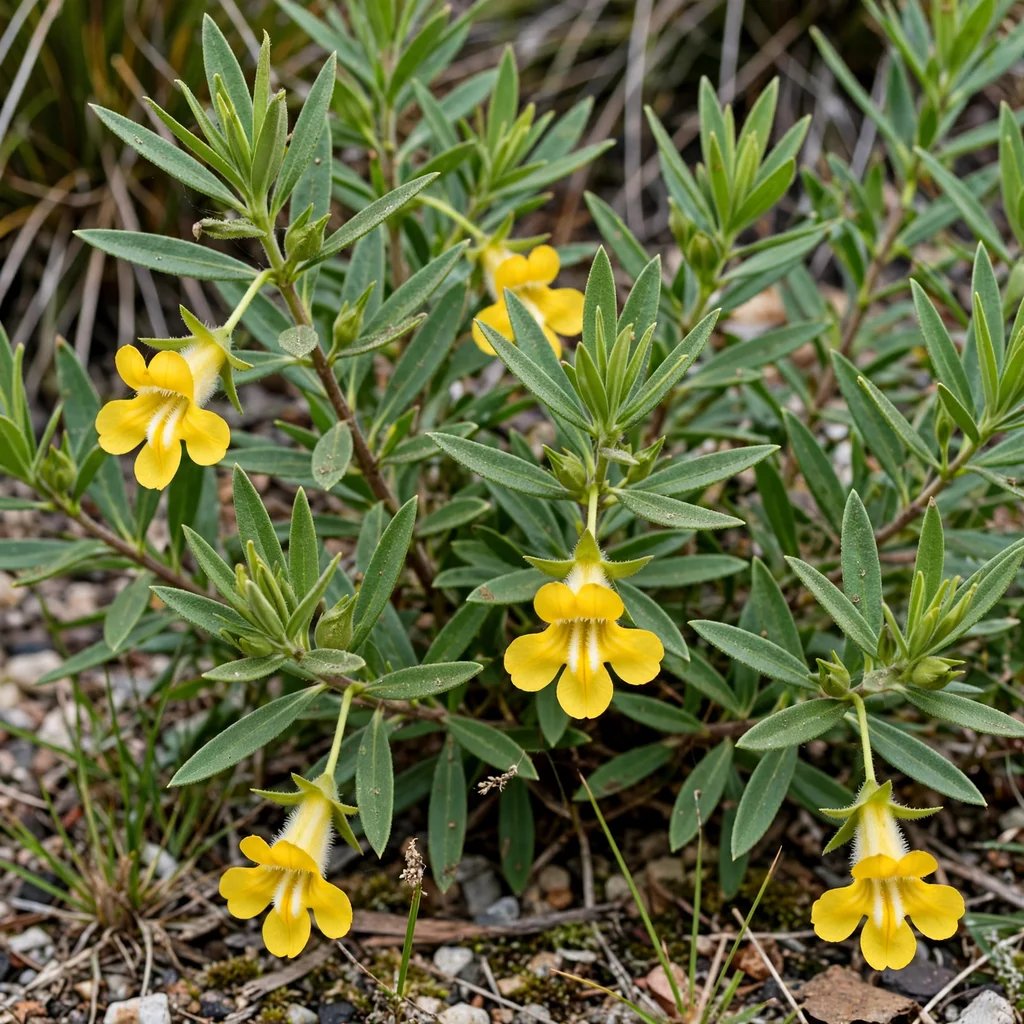
Eremophila prostrata is a prostrate evergreen groundcover from arid central Australia, forming a low mat with occasional short erect branches and narrow elliptic to lance-shaped green leaves 20-50 mm long. Flowers are borne singly in the leaf axils on slender stalks, each with a distinct calyx and a tubular corolla with a three-lobed lower lip and a dense band of white hairs inside the upper lip.
Garden stock sold in North America forms a mat about 1 foot tall and up to 10 feet wide and bears butter-yellow tubular flowers through spring and summer that are visited by hummingbirds. Wild plants in the Northern Territory are purple-flowered and reach about the same height with a tighter 3-foot spread, so check the label at purchase and expect the yellow-flowered selection in cultivation.
Uses & Benefits:
Essentials
At a Glance
Plant Type
Groundcover
Height
12"
Width
120"
Light
Full Sun
Zones
8, 9, 10
Water
Low
Humidity
Low
Lifespan
Perennial
Native To
Northern Territory, Australia
Toxicity
Unknown
Bloom period
Spring – Summer
In flower about 6 months of the year
Planting
How to Grow
- Plant in full sun in sharply drained sandy or loamy soil with the crown level with the grade.
- Water deeply at planting and regularly through the first season to establish roots.
- Give no fertilizer and keep irrigation to extreme drought only once established.
- Maintain a thin gravel mulch to keep the crown dry and keep mulch off the stems.
- Lightly trim after the main flowering to keep the mat dense.
Pro Tip
Water deeply through the first season to establish, then withhold water and let the soil dry between soakings; saturated soil kills roots faster than drought.
Keep It Thriving
Care Guide
Do
- Plant in full sun with sharp drainage
- Water deeply the first season then only in extreme drought
- Allow room for a 10-foot spread
Don't
- Do not overwater or plant in heavy clay that stays wet
- Do not apply fertilizer
- Do not cut back into old leafless wood
Seasonal Care Calendar
| Task | Jan | Feb | Mar | Apr | May | Jun | Jul | Aug | Sep | Oct | Nov | Dec |
|---|---|---|---|---|---|---|---|---|---|---|---|---|
| Mulch | ||||||||||||
| Pest Check | ||||||||||||
| Plant | ||||||||||||
| Prune | ||||||||||||
| Winter Prep |
Watch Out For
Pests & Diseases
Common Pests
Common Diseases
In the Garden
Landscape Uses & Companions
Landscape Uses
Multiply
Propagation Methods
Good to Know
Common Questions
Rainbow Valley Fuchsia Bush questions
What zones can Rainbow Valley Fuchsia Bush grow in?
Rainbow Valley Fuchsia Bush is hardy in USDA Zones 8–10: in that range it survives winter in the ground. Colder than Zone 8, grow it in a container you can move to shelter for the winter, or as an annual.
When does Rainbow Valley Fuchsia Bush bloom?
Rainbow Valley Fuchsia Bush typically blooms from spring to summer. Exact timing shifts a week or two with your zone — Sow's bloom calendar maps it to your garden.
Does Rainbow Valley Fuchsia Bush need full sun?
Rainbow Valley Fuchsia Bush does best in full sun (6+ hours).
Is Rainbow Valley Fuchsia Bush drought tolerant?
Yes — once established (usually after the first full season), Rainbow Valley Fuchsia Bush handles dry spells with minimal watering. Water deeply its first year to build the root system that makes that possible.
More Eremophila to compare
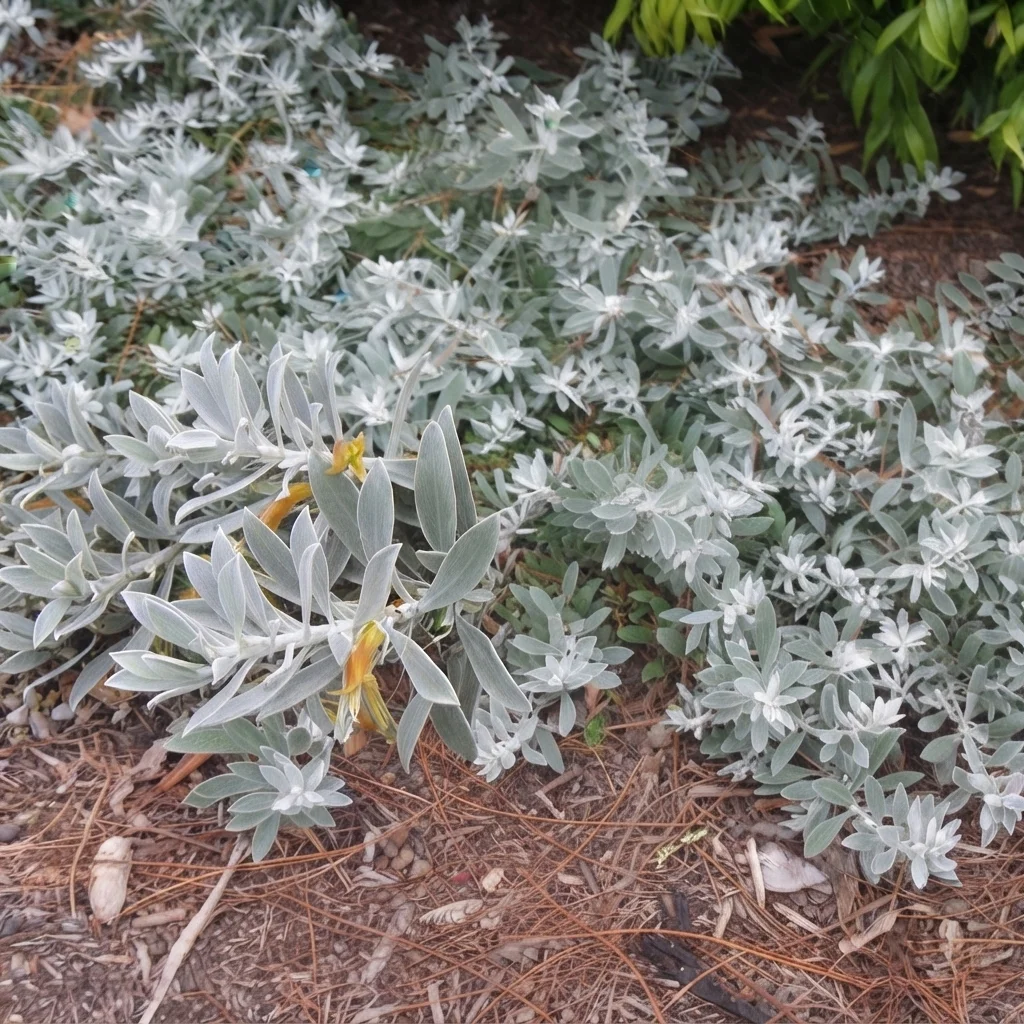
Kalbarri Carpet Emu Bush
Eremophila glabra 'Kalbarri Carpet'
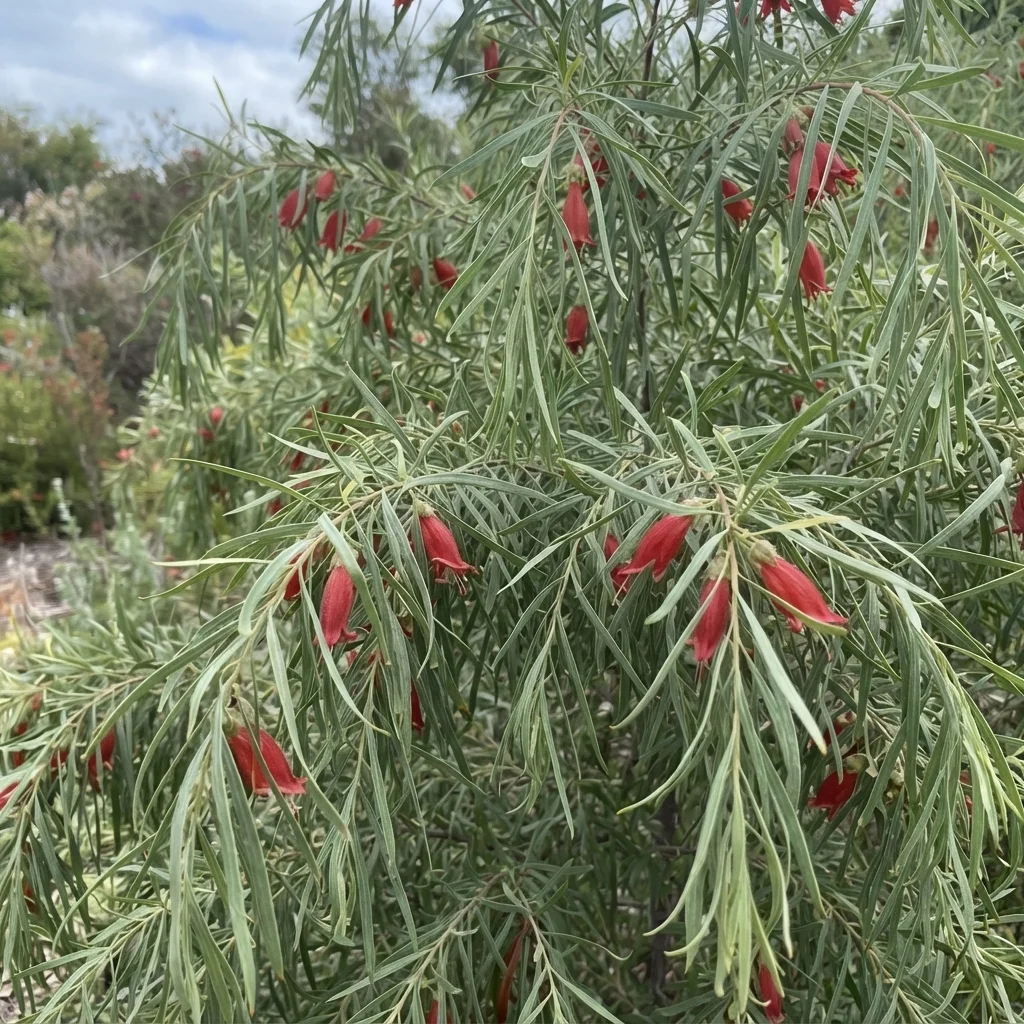
Emu Bush
Eremophila longifolia
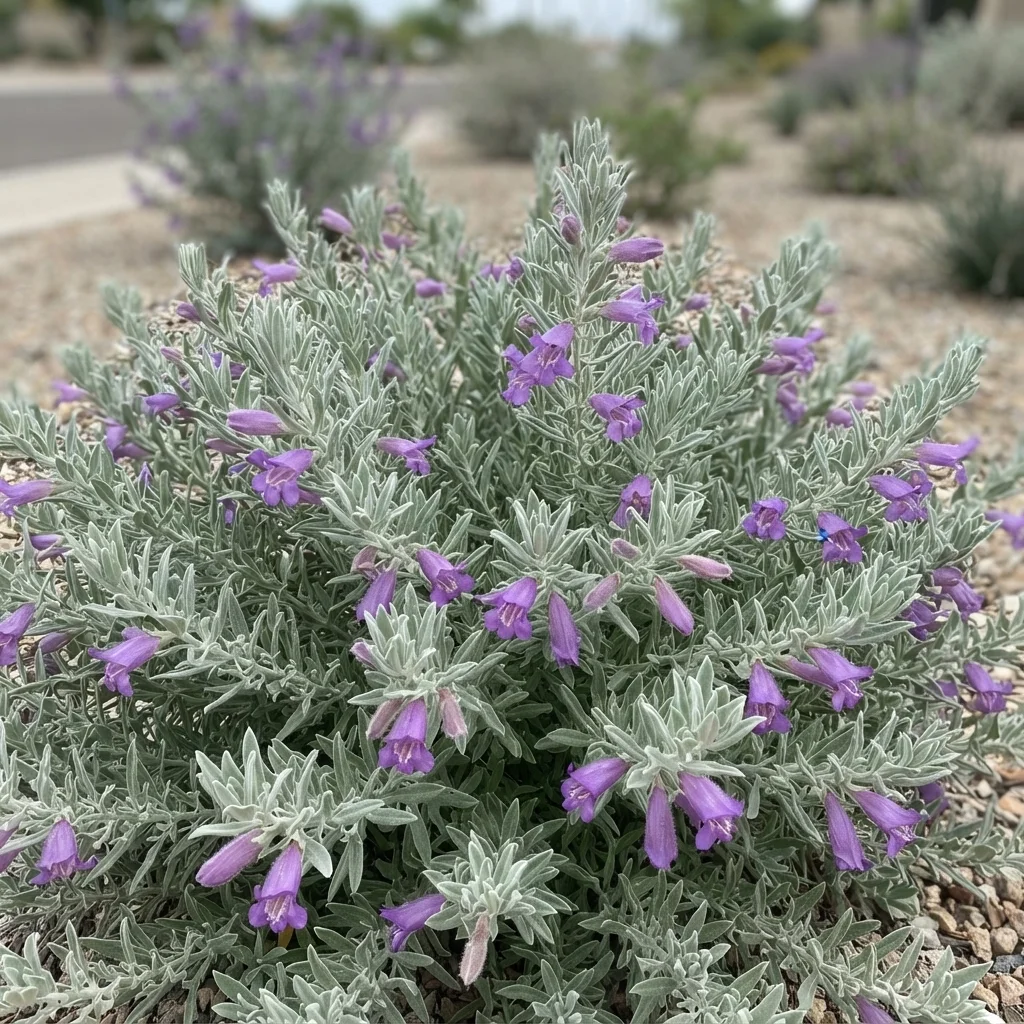
Blue Bells Emu Bush
Eremophila hygrophana 'Blue Bells'
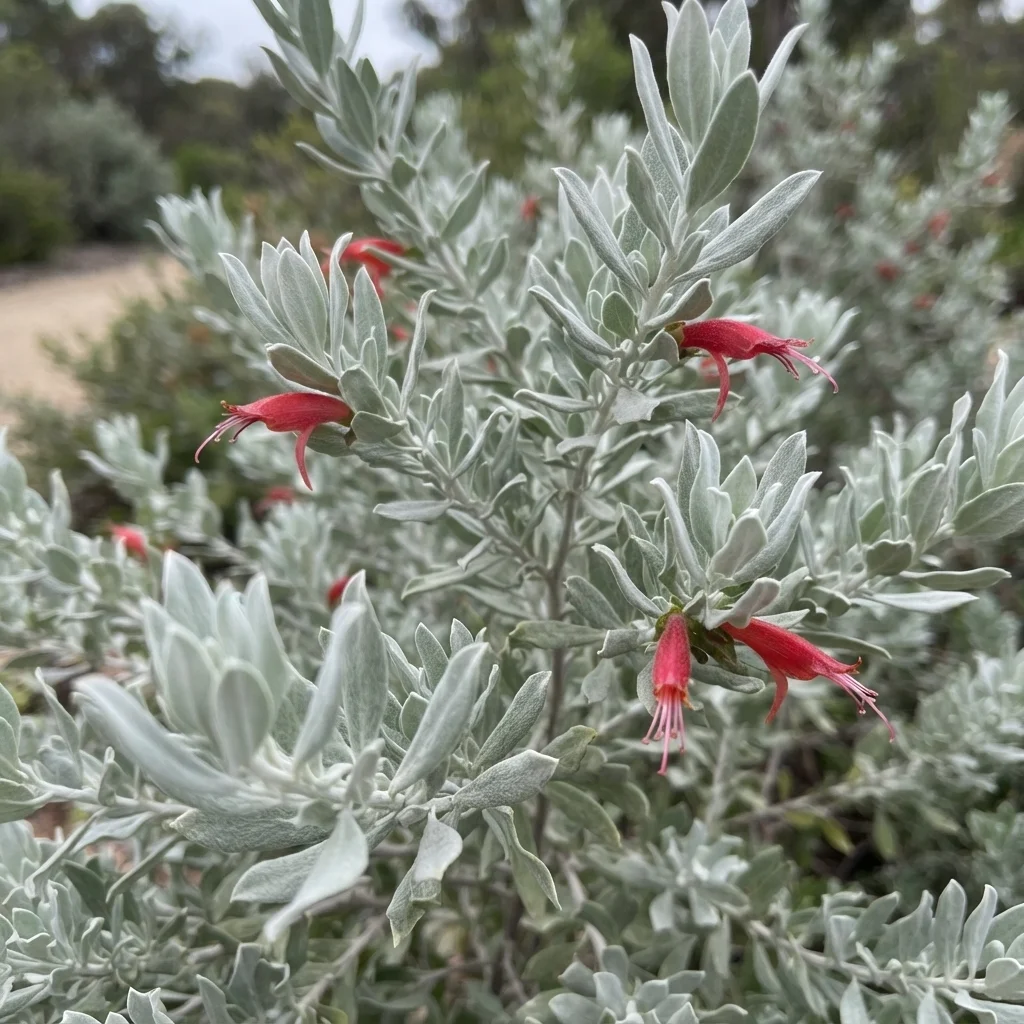
Common Emu Bush
Eremophila glabra
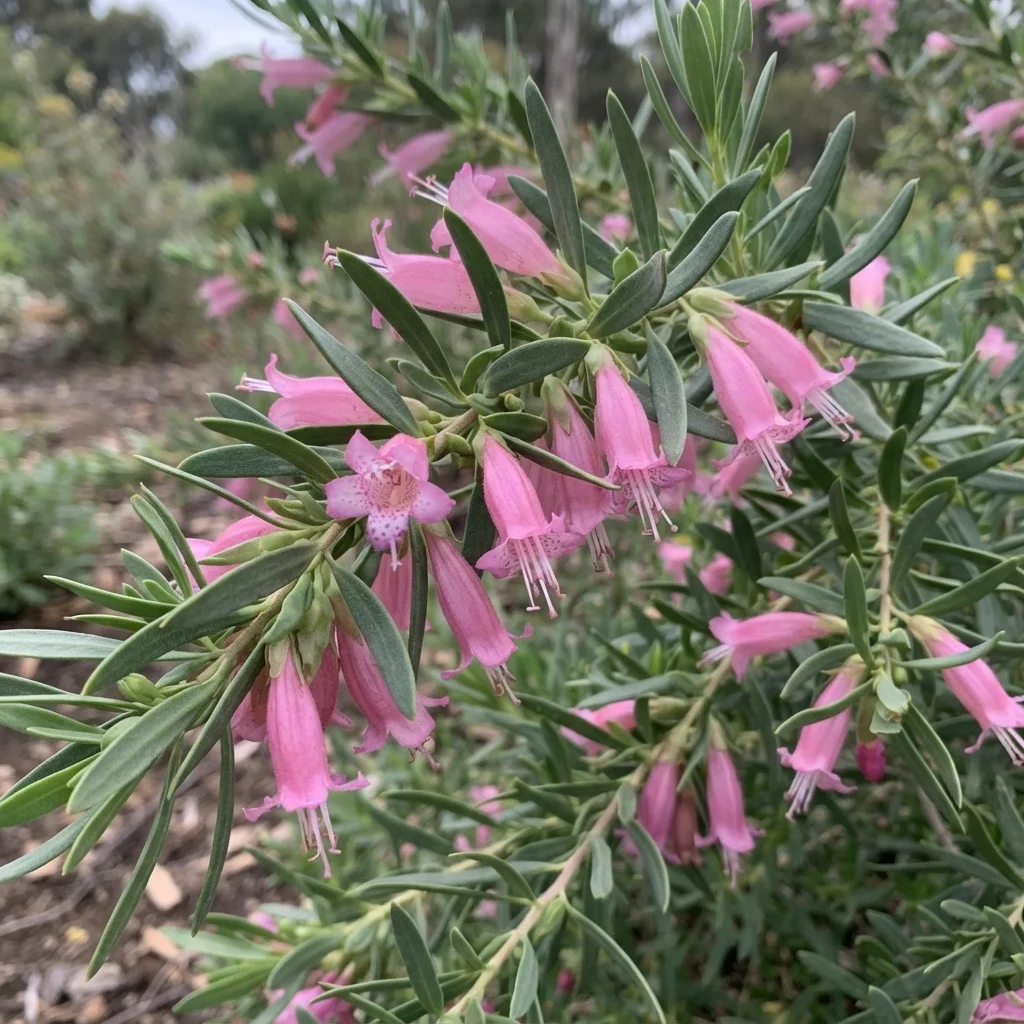
Pink Emu Bush
Eremophila laanii
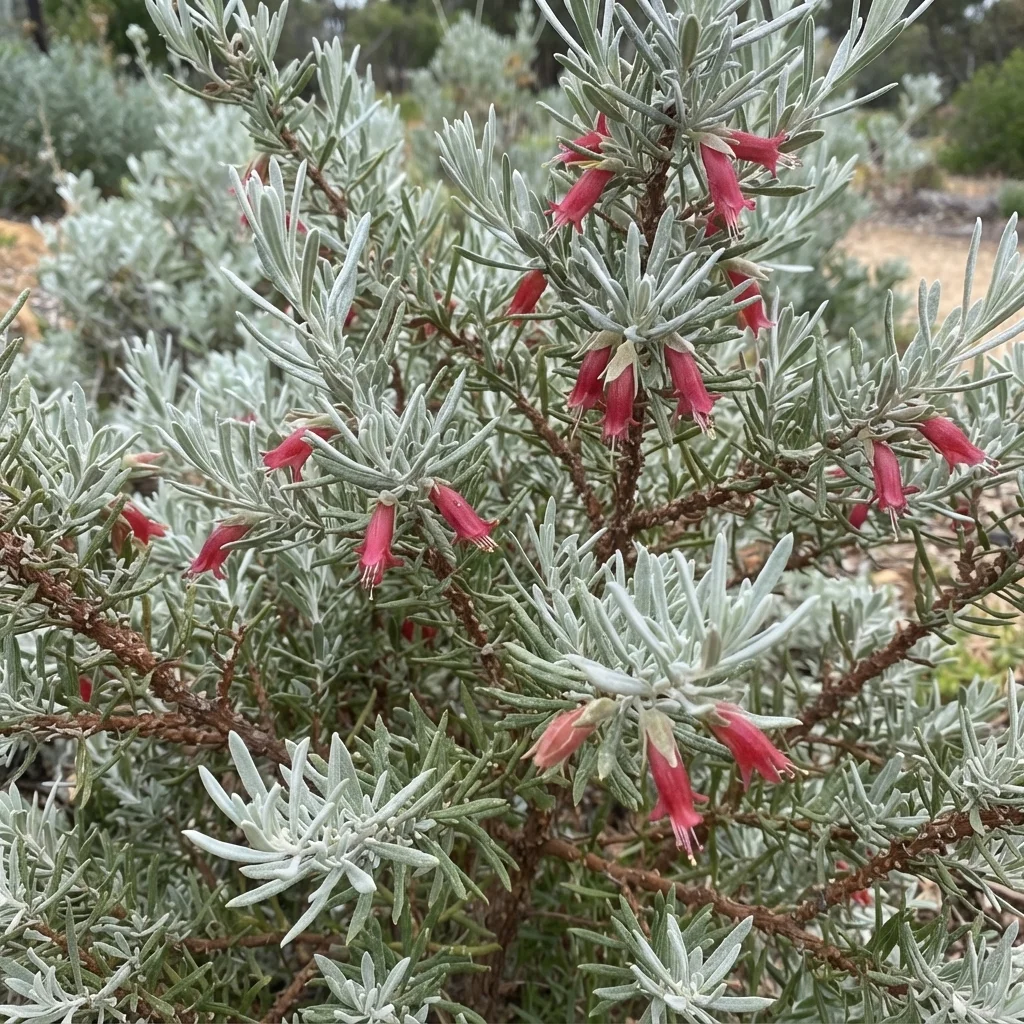
Crimson Turkey Bush
Eremophila latrobei
Keep exploring
Explore the genus
Hardy in your zone?
Grow Rainbow Valley Fuchsia Bush with confidence
See it in a design of your actual yard, get zone-matched care reminders, and track it season by season in your garden journal.