The Story
Plant Bio
Parsonsia heterophylla is a woody, twining evergreen vine native to New Zealand that ascends supporting vegetation up to thirty feet high using wrapping stems. The plant exhibits striking heteroblasty, starting with narrow, highly variable juvenile foliage before developing broader, glossy dark green adult leaves.
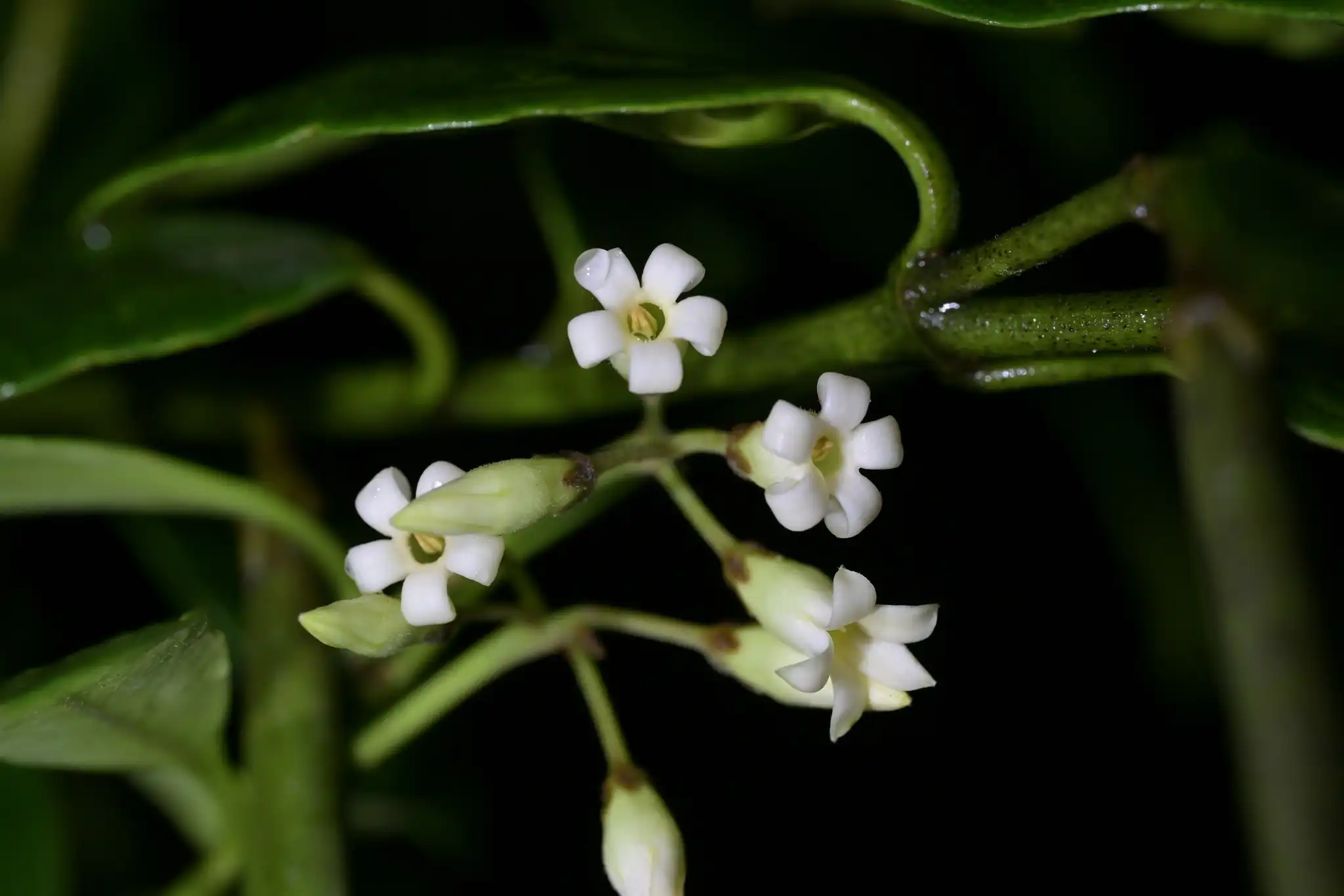
Fragrant, white to pale yellow tubular flowers bloom in dense clusters from summer into fall, attracting bees and beneficial insects. Unlike most climbing vines, its foliage changes form so dramatically as it matures that juvenile and adult plants are frequently mistaken for different species.
Uses & Benefits:
Essentials
At a Glance
Plant Type
Vine
Height
394"
Width
36"
Light
Full Sun, Partial Sun
Zones
9, 10
Water
Moderate
Humidity
Moderate to High
Lifespan
Perennial
Native To
New Zealand
Toxicity
Toxic if ingested; milky sap may irritate skin
Bloom period
Summer – Autumn
In flower about 6 months of the year
Planting
How to Grow
- Select a planting site in full sun or partial shade with well-draining soil.
- Set up a sturdy trellis or support structure prior to planting to avoid root disturbance later.
- Plant at the same soil depth as the container and water thoroughly to settle roots.
- Mulch around the base to protect roots, keeping mulch clear of the main climbing stems.
Pro Tip
Never prune into old bare wood, as mature stems lack active latent buds and fail to regenerate growth; trim only light green stems after flowering.
Keep It Thriving
Care Guide
Do
- Provide a trellis or wire frame for twining stems to ascend naturally.
- Ensure soil drains freely to prevent root decay.
- Protect young stems from browsing deer and rabbits.
Don't
- Do not prune harshly into old, leafless woody stems.
- Do not allow soil to remain waterlogged or poorly drained.
- Do not handle broken stems without gloves if sensitive to milky plant sap.
Seasonal Care Calendar
| Task | Jan | Feb | Mar | Apr | May | Jun | Jul | Aug | Sep | Oct | Nov | Dec |
|---|---|---|---|---|---|---|---|---|---|---|---|---|
| Fertilize | ||||||||||||
| Pest Check | ||||||||||||
| Prune | ||||||||||||
| Winter Prep |
Watch Out For
Pests & Diseases
Common Pests
Common Diseases
In the Garden
Landscape Uses & Companions
Landscape Uses
Multiply
Propagation Methods
Good to Know
Common Questions
New Zealand Jasmine questions
What zones can New Zealand Jasmine grow in?
New Zealand Jasmine is hardy in USDA Zones 9–10: in that range it survives winter in the ground. Colder than Zone 9, grow it in a container you can move to shelter for the winter, or as an annual.
Is New Zealand Jasmine deer resistant?
Not reliably. Deer may browse New Zealand Jasmine, especially tender spring growth — plan on repellents or fencing where pressure is high.
When does New Zealand Jasmine bloom?
New Zealand Jasmine typically blooms from summer to fall. Exact timing shifts a week or two with your zone — Sow's bloom calendar maps it to your garden.
Does New Zealand Jasmine need full sun?
New Zealand Jasmine does best in full sun to part shade. In hot climates, afternoon shade keeps blooms fresher longer.
Is New Zealand Jasmine drought tolerant?
Yes — once established (usually after the first full season), New Zealand Jasmine handles dry spells with minimal watering. Water deeply its first year to build the root system that makes that possible.
Keep exploring
Explore the genus
Hardy in your zone?
Grow New Zealand Jasmine with confidence
See it in a design of your actual yard, get zone-matched care reminders, and track it season by season in your garden journal.