The Story
Plant Bio
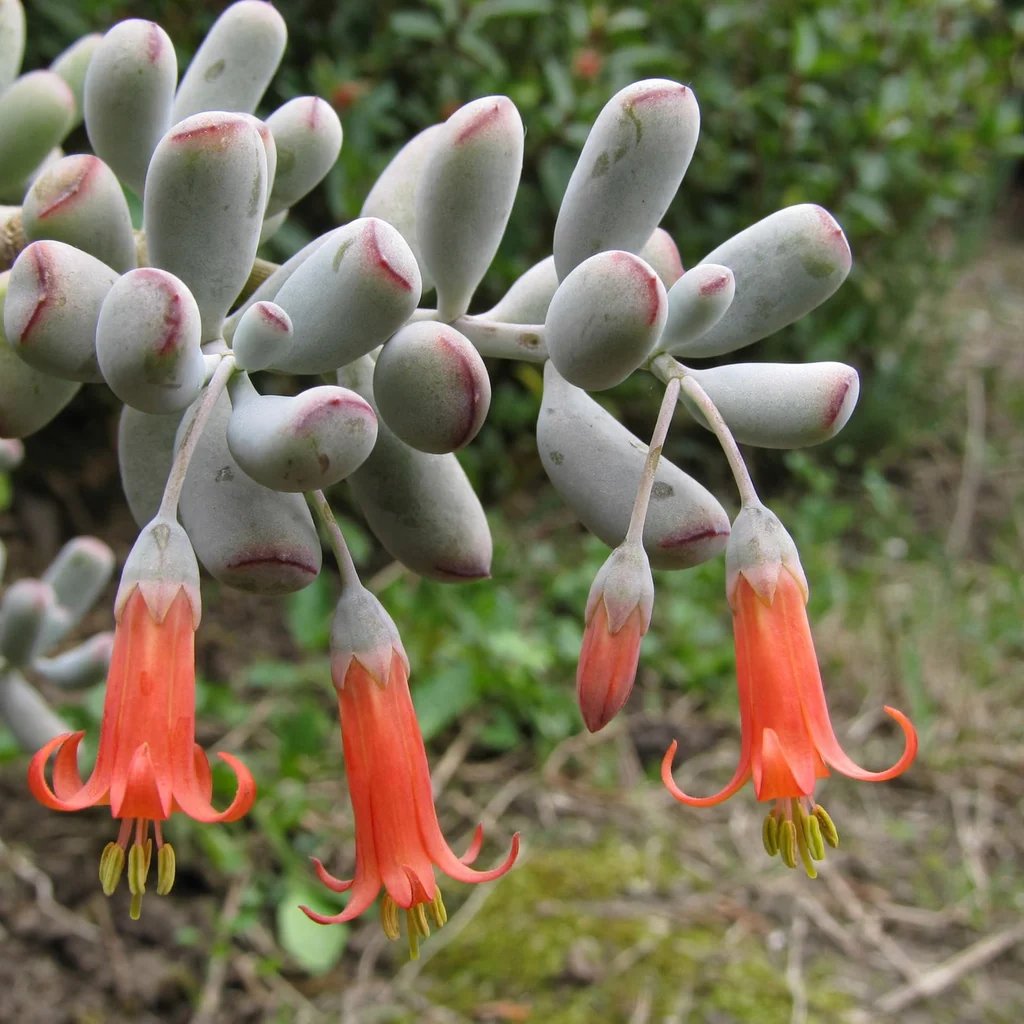
Cotyledon pendens is a much-branched succulent shrublet from sheer shale cliffs in South Africa's Eastern Cape, forming a dense curtain of soft pendent stems to two feet long. The leaves are opposite, highly succulent and elliptic-ovoid, powdery gray-green with a waxy bloom that reddens at the margin in strong sun.
Unlike its shrubby relatives it never stands upright; the flaccid two-millimeter stems hang from the crown on fibrous roots, so the plant only reads correctly grown hanging or over a wall to cascade. The summer flowers hang beneath the curtain on branched 2- to 3-inch stalks, each a 1 3/4-inch orange-red bell tube with spreading lobes and yellow-green stamens.
Uses & Benefits:
Essentials
At a Glance
Plant Type
Cactus Succulent
Height
24"
Width
24"
Light
Full Sun, Partial Sun
Zones
9, 10
Water
Low
Humidity
Low
Lifespan
Perennial
Native To
South Africa (Eastern Cape)
Toxicity
Toxic if ingested
Bloom period
Summer – Late summer
In flower about 3 months of the year
Planting
How to Grow
- Plant in spring after frost in a hanging basket or clay pot with drainage holes using sandy-gritty cactus mix.
- Set the crown at soil level in full sun to bright partial shade, acclimating indoor plants toward stronger light.
- Water deeply only when the mix is fully dry, then drain completely and keep water off the leaves.
- Feed lightly with balanced succulent fertilizer once a month during active summer growth only.
- Bring pots indoors before first frost and overwinter frost-free at 60 to 75 degrees with almost dry soil.
Pro Tip
Keep it in a hanging basket in gritty cactus mix and never mist the leaves — wet foliage strips the powdery bloom and starts rot.
Keep It Thriving
Care Guide
Do
- Give maximum light with sharp drainage and airflow
- Allow the mix to dry fully between waterings
- Grow hanging so stems can pend freely
Don't
- Do not overwater or leave the pot sitting in water
- Do not mist the leaves or rub off the powdery bloom
- Do not expose to hard frost or plant in heavy garden soil
Seasonal Care Calendar
| Task | Jan | Feb | Mar | Apr | May | Jun | Jul | Aug | Sep | Oct | Nov | Dec |
|---|---|---|---|---|---|---|---|---|---|---|---|---|
| Fertilize | ||||||||||||
| Pest Check | ||||||||||||
| Plant | ||||||||||||
| Propagate | ||||||||||||
| Prune |
Watch Out For
Pests & Diseases
Common Pests
Common Diseases
In the Garden
Landscape Uses & Companions
Landscape Uses
Multiply
Propagation Methods
Good to Know
Common Questions
Cliff Cotyledon questions
What zones can Cliff Cotyledon grow in?
Cliff Cotyledon is hardy in USDA Zones 9–10: in that range it survives winter in the ground. Colder than Zone 9, grow it in a container you can move to shelter for the winter, or as an annual.
Is Cliff Cotyledon deer resistant?
Yes — Cliff Cotyledon is rated deer-resistant. Deer typically pass it over, though extreme hunger can override any plant's defenses.
When does Cliff Cotyledon bloom?
Cliff Cotyledon typically blooms in summer. Exact timing shifts a week or two with your zone — Sow's bloom calendar maps it to your garden.
Does Cliff Cotyledon need full sun?
Cliff Cotyledon does best in full sun to part shade. In hot climates, afternoon shade keeps blooms fresher longer.
Is Cliff Cotyledon drought tolerant?
Yes — once established (usually after the first full season), Cliff Cotyledon handles dry spells with minimal watering. Water deeply its first year to build the root system that makes that possible.
More Cotyledon to compare
Keep exploring
Explore the genus
Hardy in your zone?
Grow Cliff Cotyledon with confidence
See it in a design of your actual yard, get zone-matched care reminders, and track it season by season in your garden journal.