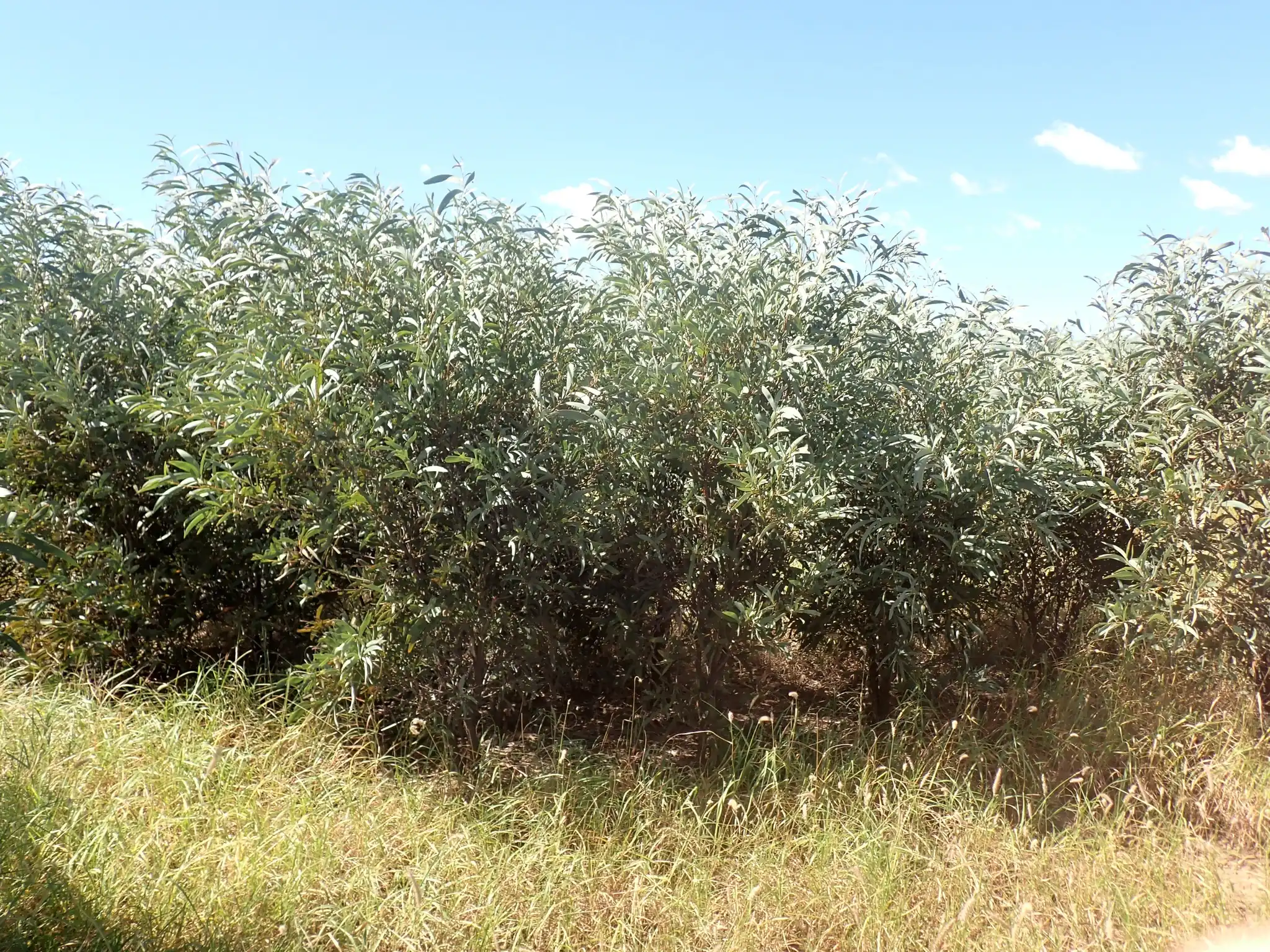
The Story
Plant Bio
Acacia harpophylla is an upright evergreen tree reaching thirty to fifty feet in height, developing a dense, rounded crown above a dark, furrowed trunk. Its foliage consists of silvery-grey to grey-green falcate phyllodes featuring distinct parallel veins, accompanied from spring through summer by spherical heads of bright yellow flowers.
Unlike many Australian endemics, this species adapts specifically to heavy clay and cracking clay soils rather than sandy substrates. The curved, sickle-shaped phyllodes retain their silvery tone year-round and resist severe drought once established.
Uses & Benefits:
Essentials
At a Glance
Plant Type
Tree
Height
472"
Width
295"
Light
Full Sun
Zones
9, 10
Water
Low
Humidity
Low to Moderate
Lifespan
Perennial
Native To
Australia
Toxicity
Non-toxic
Bloom period
Spring – Summer
In flower about 6 months of the year
Planting
How to Grow
- Select a planting site in full sun with heavy clay or clay-loam soil and good surface drainage.
- Dig a planting hole twice as wide as the root ball but equal in depth to avoid setting the crown lower than ground level.
- Backfill with native soil, firming gently to eliminate air pockets without overly compacting the clay.
- Soak deeply upon planting, then irrigate only when the top few inches of soil dry completely during the first two seasons.
Pro Tip
Plant in heavy clay or structured clay-loam soils and establish deep taproots with infrequent, thorough watering; cutting back into old leafless wood kills the stem.
Keep It Thriving
Care Guide
Do
- Plant in heavy, structured clay or clay-loam substrates.
- Provide full, unshaded sunlight throughout the day.
- Water deeply and infrequently to encourage taproot formation.
Don't
- Do not add rich organic composts, peat, or sand to the planting hole.
- Do not apply high-phosphorus chemical fertilizers.
- Do not prune hard into mature, leafless wood.
Seasonal Care Calendar
| Task | Jan | Feb | Mar | Apr | May | Jun | Jul | Aug | Sep | Oct | Nov | Dec |
|---|---|---|---|---|---|---|---|---|---|---|---|---|
| Mulch | ||||||||||||
| Pest Check | ||||||||||||
| Propagate | ||||||||||||
| Prune |
Watch Out For
Pests & Diseases
Common Pests
Common Diseases
In the Garden
Landscape Uses & Companions
Landscape Uses
Companion Plants
Multiply
Propagation Methods
Good to Know
Common Questions
Brigalow questions
What zones can Brigalow grow in?
Brigalow is hardy in USDA Zones 9–10: in that range it survives winter in the ground. Colder than Zone 9, winters are too cold for it to survive outdoors.
When does Brigalow bloom?
Brigalow typically blooms from spring to summer. Exact timing shifts a week or two with your zone — Sow's bloom calendar maps it to your garden.
Does Brigalow need full sun?
Brigalow does best in full sun (6+ hours).
Is Brigalow drought tolerant?
Yes — once established (usually after the first full season), Brigalow handles dry spells with minimal watering. Water deeply its first year to build the root system that makes that possible.
More Acacia to compare
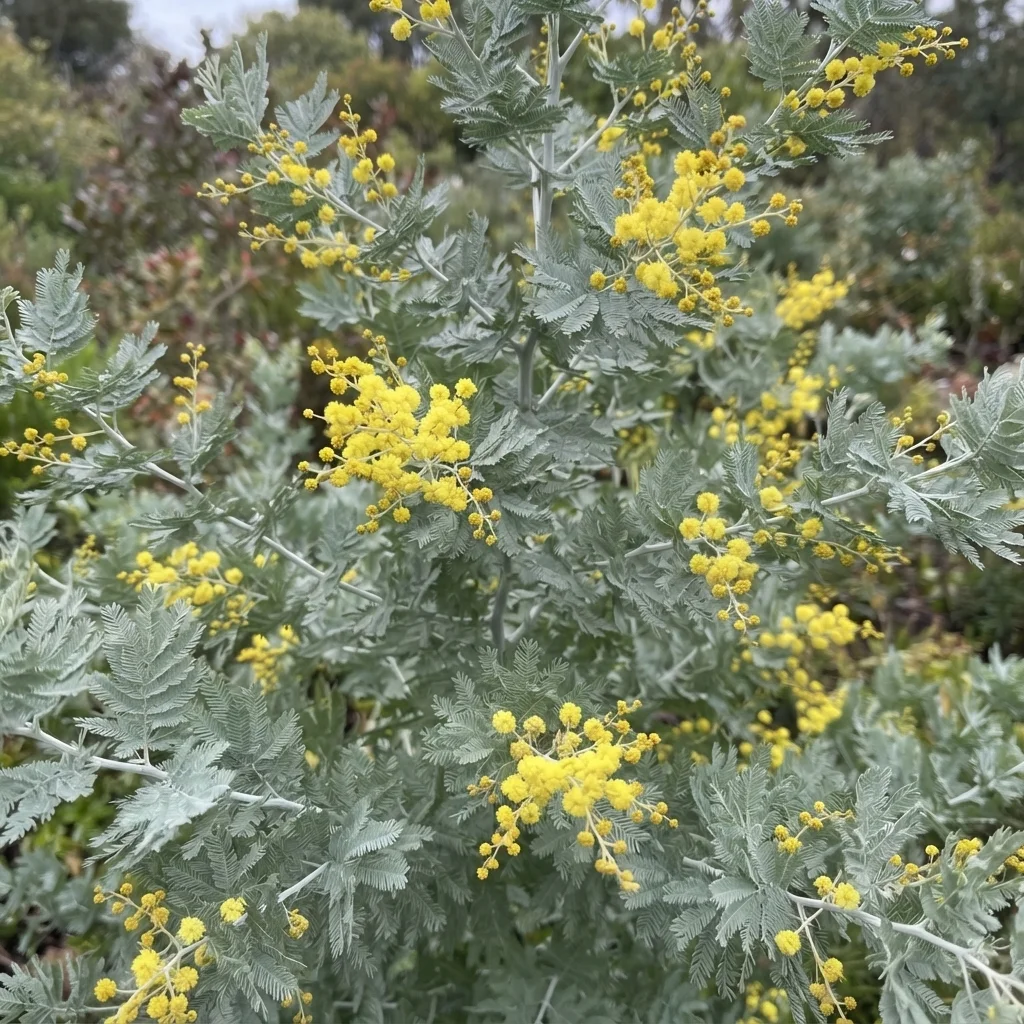
Silver wattle
Acacia dealbata
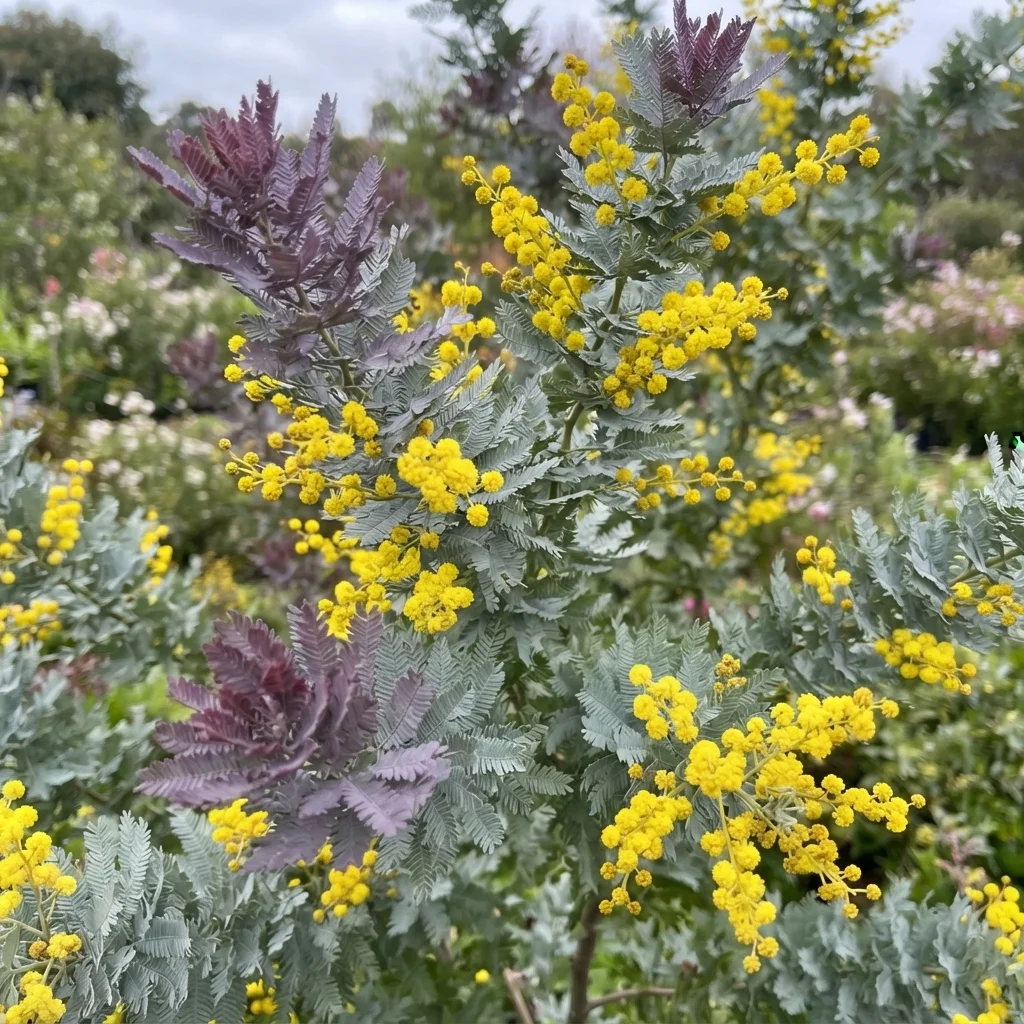
Cootamundra Wattle 'Purpurea'
Acacia baileyana 'Purpurea'
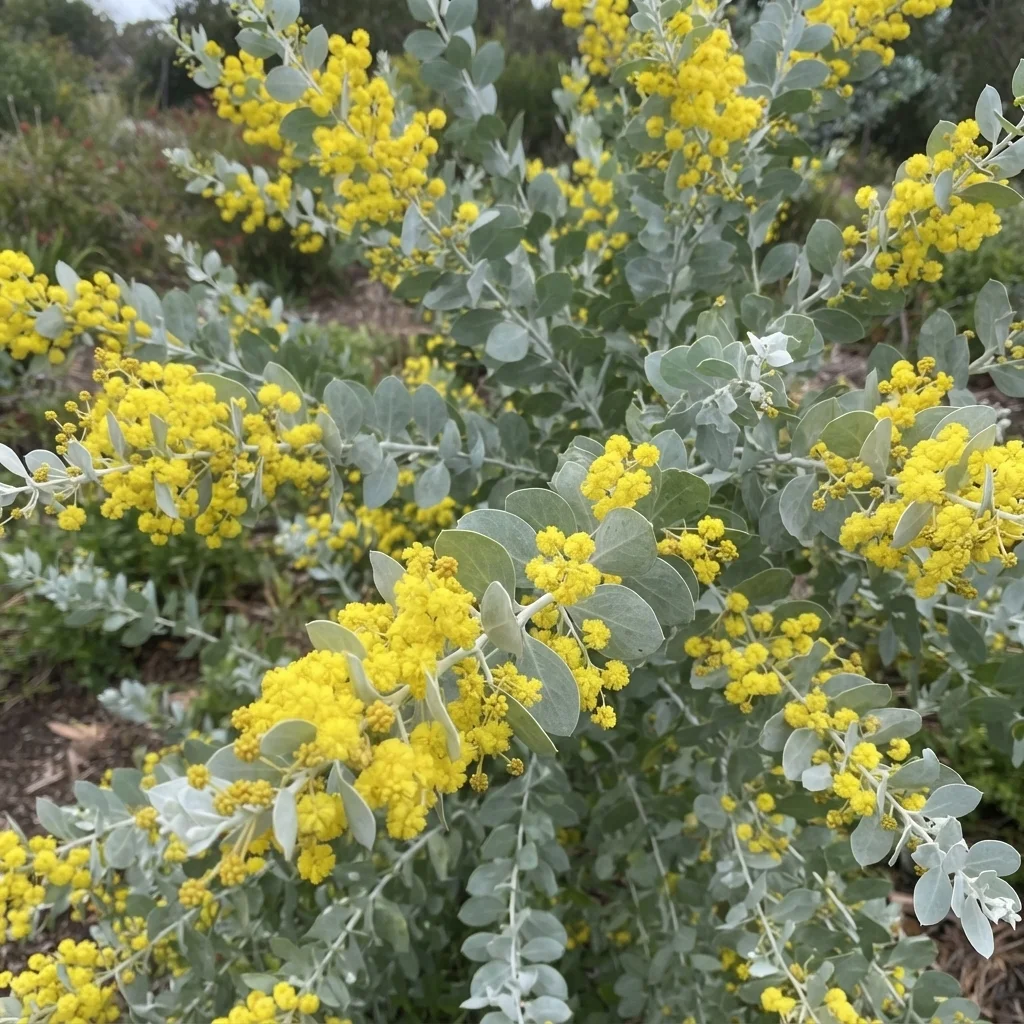
Pearl Acacia
Acacia podalyriifolia
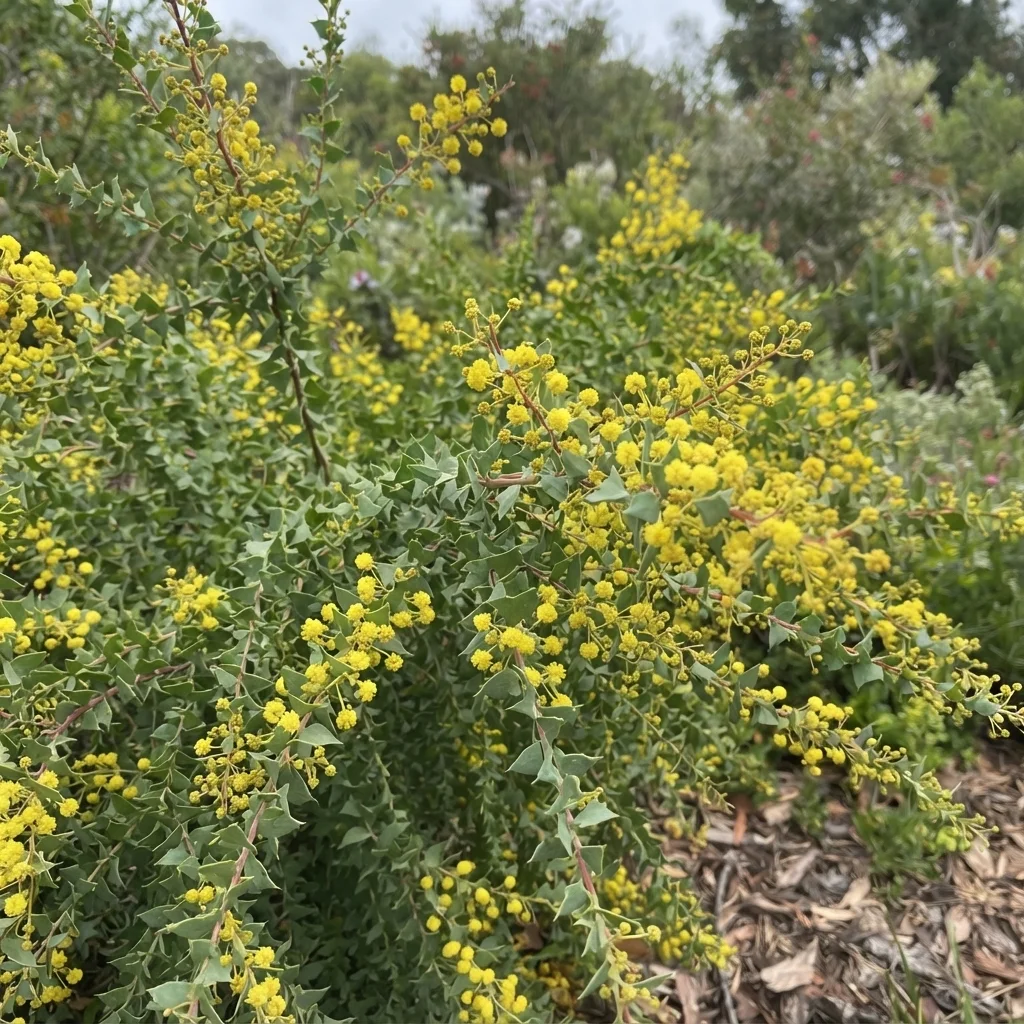
Ovens Wattle
Acacia pravissima
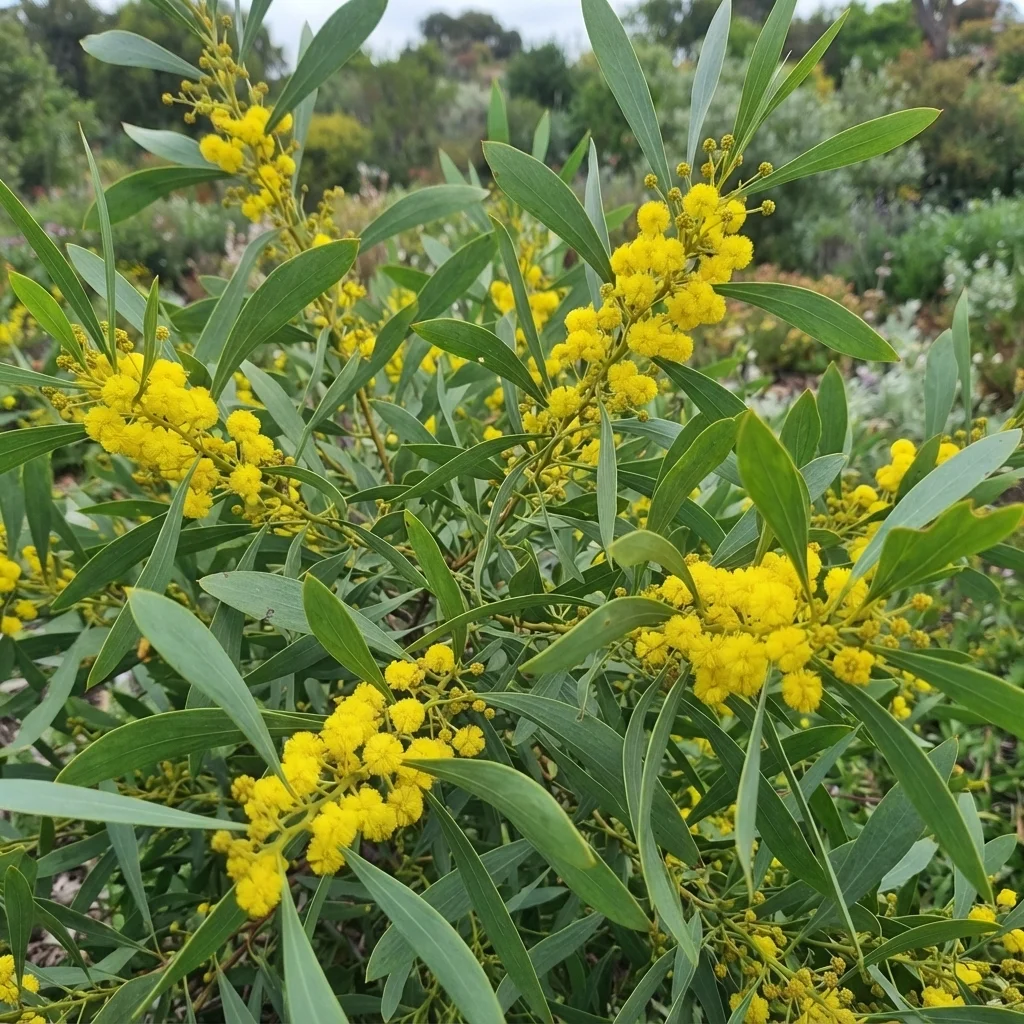
Golden Wreath Wattle
Acacia saligna
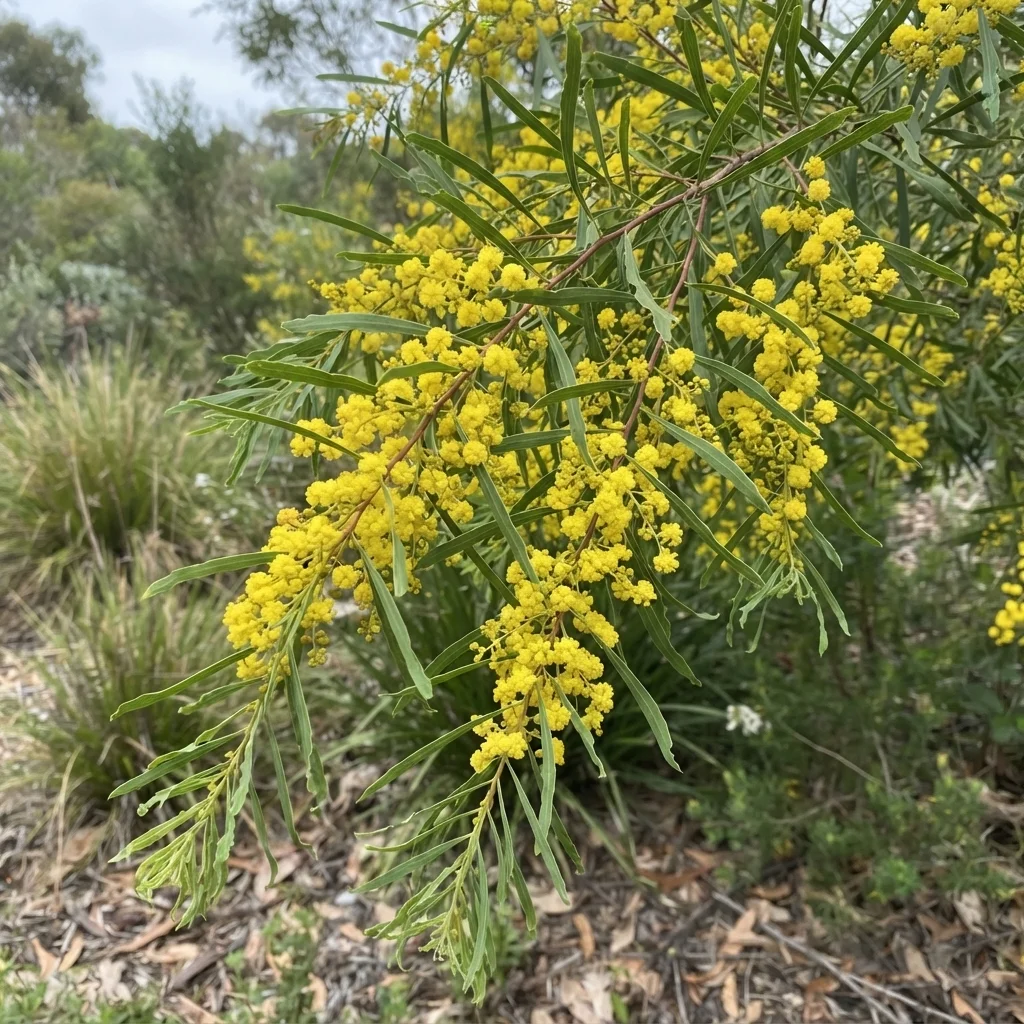
Fringed Wattle
Acacia fimbriata
Keep exploring
Explore the genus
Hardy in your zone?
Grow Brigalow with confidence
See it in a design of your actual yard, get zone-matched care reminders, and track it season by season in your garden journal.