The Story
Plant Bio
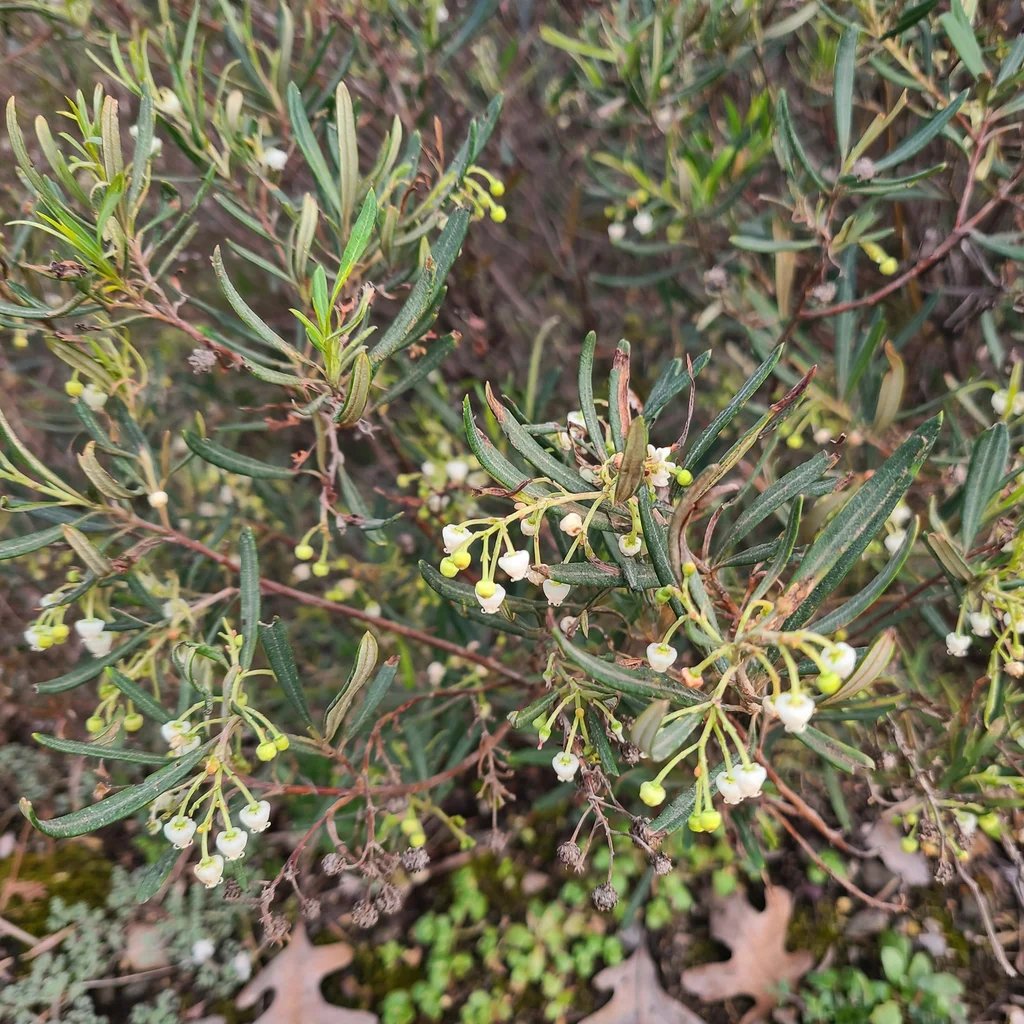
Ornithostaphylos oppositifolia is a large evergreen shrub in the heath family, forming a rounded crown to about fifteen feet tall with shredding red bark and narrow willow-like leaves held mostly in threes. The leaves are deep green above and pale beneath, and the winter stems carry drooping clusters of small white bell flowers on slender stalks much longer than the blooms.
It is the sole species in its genus, separated from manzanita by its opposite to whorled foliage and loose racemes of lantern-shaped flowers with recurved lobes. In winter to spring the blossoms feed hummingbirds and yield small fleshy drupes that birds take through summer.
Uses & Benefits:
Essentials
At a Glance
Plant Type
Shrub
Height
180"
Width
120"
Light
Full Sun, Partial Sun
Zones
9, 10
Water
Low
Humidity
Low
Lifespan
Long-lived
Native To
San Diego County to Baja California
Toxicity
Unknown
Bloom period
Winter – Spring
In flower about 6 months of the year
Planting
How to Grow
- Choose a full-sun spot with rocky to sandy, fast-draining soil and room for a 10-foot crown.
- Dig a hole no deeper than the rootball and set the plant slightly high, keeping the crown clear.
- Backfill with native soil only and water deeply once to settle.
- Mulch lightly with gravel or leaf litter away from the stem, then water sparingly through the first winter.
Pro Tip
Plant high in fast-draining soil and withhold summer water once established; overwatering and cutting into leafless wood are what kill it.
Keep It Thriving
Care Guide
Do
- Plant in fall to let winter rain establish roots
- Provide sharp drainage and full sun
- Give occasional deep summer water only once established
Don't
- Do not overwater or plant in soggy soil
- Do not cut back into old bare wood
- Do not collect plants or seed from the wild
Seasonal Care Calendar
| Task | Jan | Feb | Mar | Apr | May | Jun | Jul | Aug | Sep | Oct | Nov | Dec |
|---|---|---|---|---|---|---|---|---|---|---|---|---|
| Mulch | ||||||||||||
| Pest Check | ||||||||||||
| Plant | ||||||||||||
| Prune |
Watch Out For
Pests & Diseases
Common Pests
Common Diseases
In the Garden
Landscape Uses & Companions
Landscape Uses
Multiply
Propagation Methods
Good to Know
Common Questions
Baja Birdbush questions
What zones can Baja Birdbush grow in?
Baja Birdbush is hardy in USDA Zones 9–10: in that range it survives winter in the ground. Colder than Zone 9, grow it in a container you can move to shelter for the winter.
When does Baja Birdbush bloom?
Baja Birdbush typically blooms from winter to spring. Exact timing shifts a week or two with your zone — Sow's bloom calendar maps it to your garden.
Does Baja Birdbush need full sun?
Baja Birdbush does best in full sun to part shade. In hot climates, afternoon shade keeps blooms fresher longer.
Is Baja Birdbush drought tolerant?
Yes — once established (usually after the first full season), Baja Birdbush handles dry spells with minimal watering. Water deeply its first year to build the root system that makes that possible.
Keep exploring
Explore the genus
Hardy in your zone?
Grow Baja Birdbush with confidence
See it in a design of your actual yard, get zone-matched care reminders, and track it season by season in your garden journal.