The Story
Plant Bio
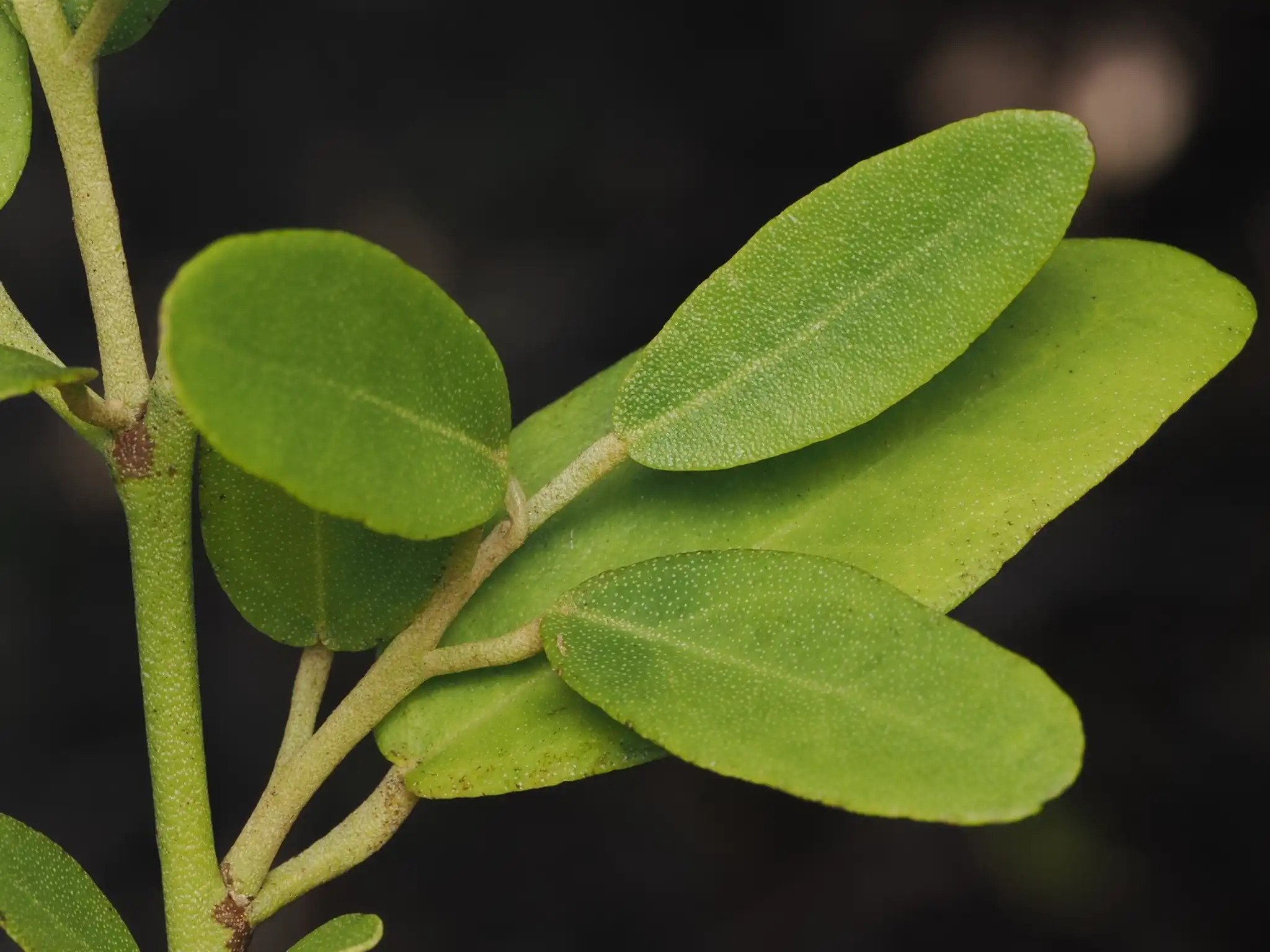
Lagunaria patersonia is an evergreen tree with a dense, slenderly pyramidal growth habit reaching twenty to sixty feet in height. Its leathery, olive-green leaves feature scaly, grey-green undersides and alternate along rigid, upright branches.
Hibiscus-like, five-petaled flowers open in pink to rose-lilac during spring and summer before fading to pale mauve or white around a golden staminal column. Mature seed capsules break open to reveal microscopic, glass-like bristles that irritate skin and eyes upon contact.
Uses & Benefits:
Essentials
At a Glance
Plant Type
Tree
Height
480"
Width
180"
Light
Full Sun, Partial Sun
Zones
9, 10
Water
Low to Medium
Humidity
High
Lifespan
Perennial
Native To
Norfolk Island and Lord Howe Island
Toxicity
Microscopic pod bristles cause skin and eye irritation
Bloom period
Spring – Summer
In flower about 6 months of the year
Planting
How to Grow
- Select a full sun or partial sun planting site with well-drained soil and protection from hard freezes.
- Dig a hole twice as wide as the root ball and flush with the surrounding soil level.
- Water deeply immediately after planting to settle the soil around the root zone.
- Maintain moderate moisture during the first growing season until the deep taproot establishes.
Pro Tip
Prune lightly immediately after summer flowering to manage height, avoiding cuts back into bare, old wood where dormant buds fail to break.
Keep It Thriving
Care Guide
Do
- Wear gloves and eye protection when handling mature seed pods to prevent hair irritation.
- Plant in well-draining sandy or loamy soil with full sun exposure.
- Prune lightly right after spring-to-summer flowering finishes.
Don't
- Do not prune heavily into old, leafless bare wood where regrowth fails to break.
- Do not allow soil around roots to remain waterlogged for extended periods.
- Do not handle dry seed capsules without protective gear.
Seasonal Care Calendar
| Task | Jan | Feb | Mar | Apr | May | Jun | Jul | Aug | Sep | Oct | Nov | Dec |
|---|---|---|---|---|---|---|---|---|---|---|---|---|
| Fertilize | ||||||||||||
| Pest Check | ||||||||||||
| Propagate | ||||||||||||
| Prune |
Watch Out For
Pests & Diseases
Common Pests
Common Diseases
In the Garden
Landscape Uses & Companions
Landscape Uses
Multiply
Propagation Methods
Good to Know
Common Questions
Norfolk Island Hibiscus questions
What zones can Norfolk Island Hibiscus grow in?
Norfolk Island Hibiscus is hardy in USDA Zones 9–10: in that range it survives winter in the ground. Colder than Zone 9, winters are too cold for it to survive outdoors.
Is Norfolk Island Hibiscus deer resistant?
Yes — Norfolk Island Hibiscus is rated deer-resistant. Deer typically pass it over, though extreme hunger can override any plant's defenses.
When does Norfolk Island Hibiscus bloom?
Norfolk Island Hibiscus typically blooms from spring to summer. Exact timing shifts a week or two with your zone — Sow's bloom calendar maps it to your garden.
Does Norfolk Island Hibiscus need full sun?
Norfolk Island Hibiscus does best in full sun to part shade. In hot climates, afternoon shade keeps blooms fresher longer.
Is Norfolk Island Hibiscus drought tolerant?
Yes — once established (usually after the first full season), Norfolk Island Hibiscus handles dry spells with minimal watering. Water deeply its first year to build the root system that makes that possible.
Keep exploring
Explore the genus
Hardy in your zone?
Grow Norfolk Island Hibiscus with confidence
See it in a design of your actual yard, get zone-matched care reminders, and track it season by season in your garden journal.