The Story
Plant Bio
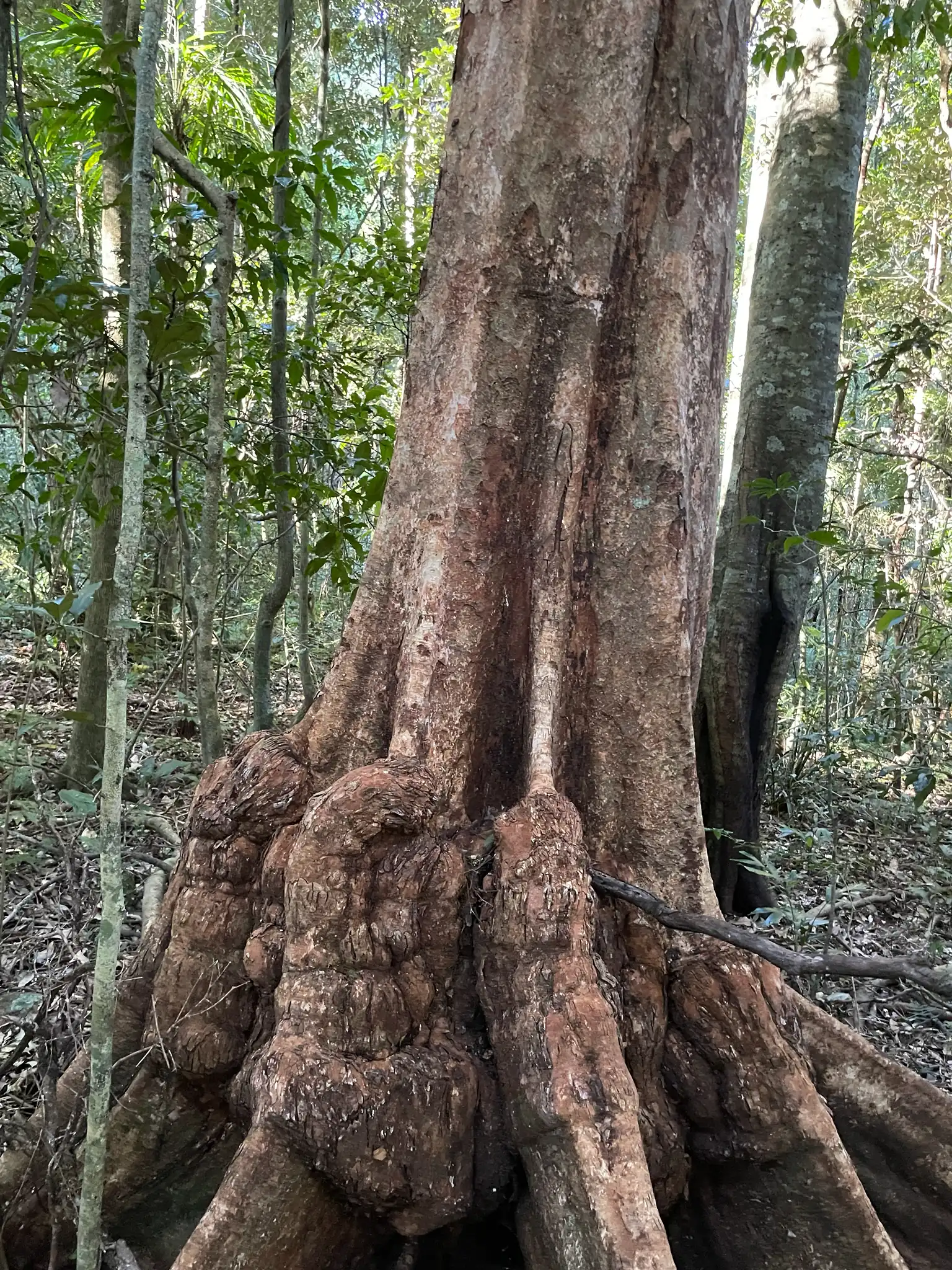
Syzygium francisii is an evergreen rainforest tree featuring prominent basal buttresses, scaly reddish-brown bark, and a dense, dark canopy of elliptic leaves with wavy margins. Small white flowers appear in clusters during late spring, followed by pale blue to purplish berries.
Flushes of bright pinkish-red foliage emerge at shoot tips to create a striking contrast against mature dark green leaves throughout the growing season. Though capable of reaching tall timber heights in native rainforest habitats, cultivated trees remain substantially smaller in garden settings.
Uses & Benefits:
Essentials
At a Glance
Plant Type
Tree
Height
1180"
Width
394"
Light
Full Sun, Partial Sun
Zones
10
Water
Moderate
Humidity
High
Lifespan
Perennial
Native To
Australia
Toxicity
Non-toxic
Bloom period
Late spring – Early summer
In flower about 2 months of the year
Planting
How to Grow
- Choose a planting site in full sun to part shade with fertile, well-draining soil.
- Dig a planting hole twice as wide as the root ball and equal in depth.
- Set the tree into the hole, backfill with amended soil, and tamp lightly to remove air pockets.
- Water deeply at installation and apply a layer of organic mulch around the root zone.
Pro Tip
Prune lightly after flowering to shape the canopy or maintain hedges; avoid harsh cuts back into old, leafless wood as recovery is slow and patchy.
Keep It Thriving
Care Guide
Do
- Keep soil consistently moist during the first two growing seasons.
- Apply an organic mulch layer around the drip line to conserve soil moisture.
- Tip-prune young stems regularly to encourage a dense branching structure.
Don't
- Do not make severe pruning cuts back into bare, old wood.
- Do not allow soil to waterlog or sit saturated in poorly draining heavy clay.
- Do not plant outdoors in regions subject to hard winter freezes.
Seasonal Care Calendar
| Task | Jan | Feb | Mar | Apr | May | Jun | Jul | Aug | Sep | Oct | Nov | Dec |
|---|---|---|---|---|---|---|---|---|---|---|---|---|
| Fertilize | ||||||||||||
| Mulch | ||||||||||||
| Pest Check | ||||||||||||
| Prune |
Watch Out For
Pests & Diseases
Common Pests
Common Diseases
In the Garden
Landscape Uses & Companions
Landscape Uses
Multiply
Propagation Methods
Good to Know
Common Questions
Giant Water Gum questions
What zones can Giant Water Gum grow in?
Giant Water Gum is hardy in USDA Zone 10: in that range it survives winter in the ground. Colder than Zone 10, winters are too cold for it to survive outdoors.
Is Giant Water Gum deer resistant?
Not reliably. Deer may browse Giant Water Gum, especially tender spring growth — plan on repellents or fencing where pressure is high.
When does Giant Water Gum bloom?
Giant Water Gum typically blooms from late spring to early summer. Exact timing shifts a week or two with your zone — Sow's bloom calendar maps it to your garden.
Does Giant Water Gum need full sun?
Giant Water Gum does best in full sun to part shade. In hot climates, afternoon shade keeps blooms fresher longer.
Is Giant Water Gum drought tolerant?
Yes — once established (usually after the first full season), Giant Water Gum handles dry spells with minimal watering. Water deeply its first year to build the root system that makes that possible.
More Syzygium to compare
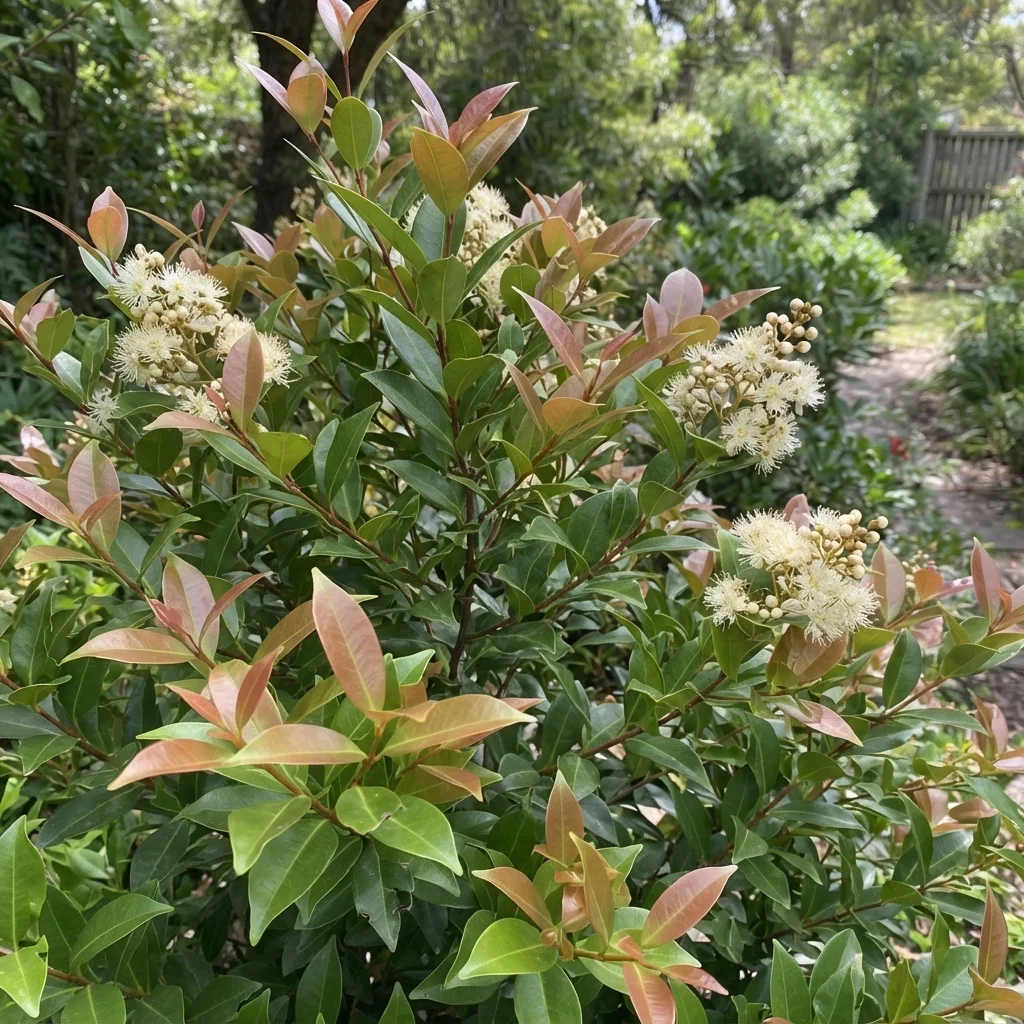
Backyard Bliss Lilly Pilly
Syzygium paniculatum 'Backyard Bliss'
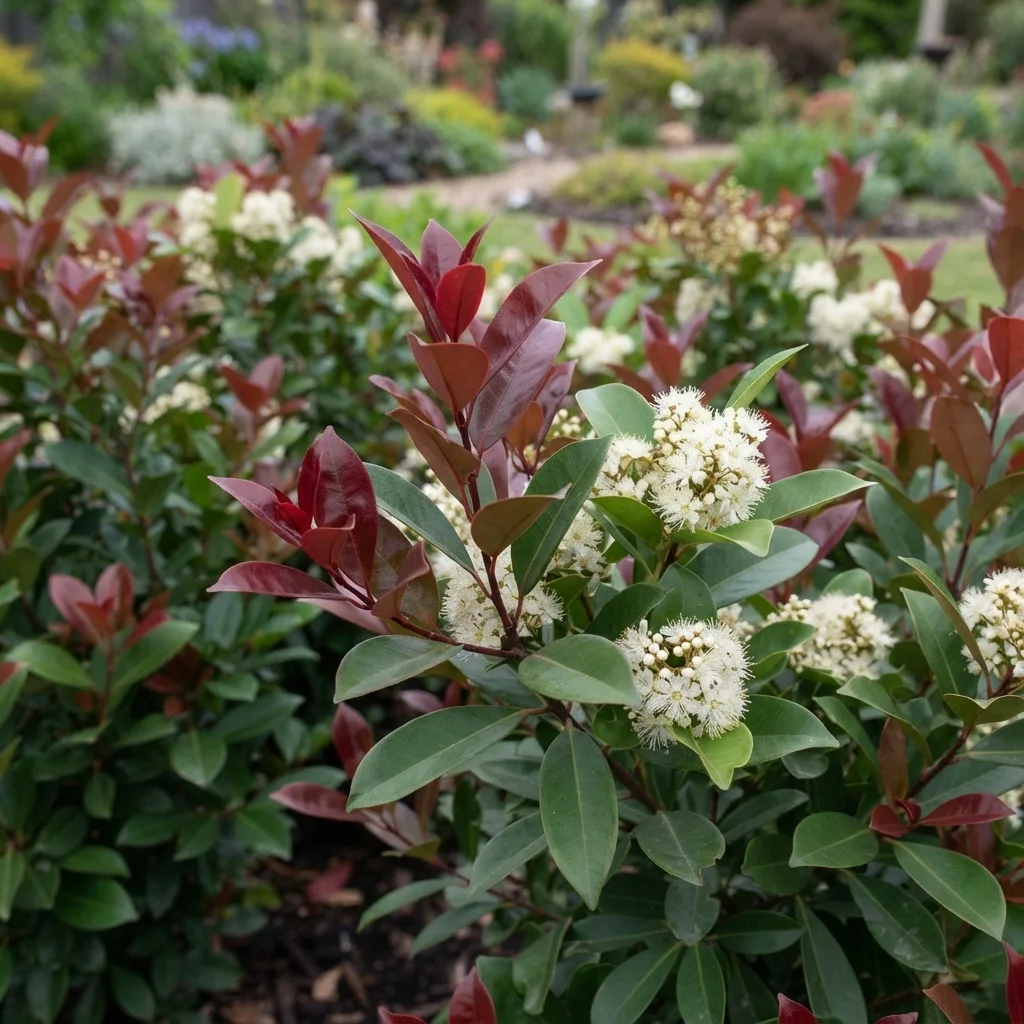
Big Red Lilly Pilly
Syzygium australe 'Big Red'
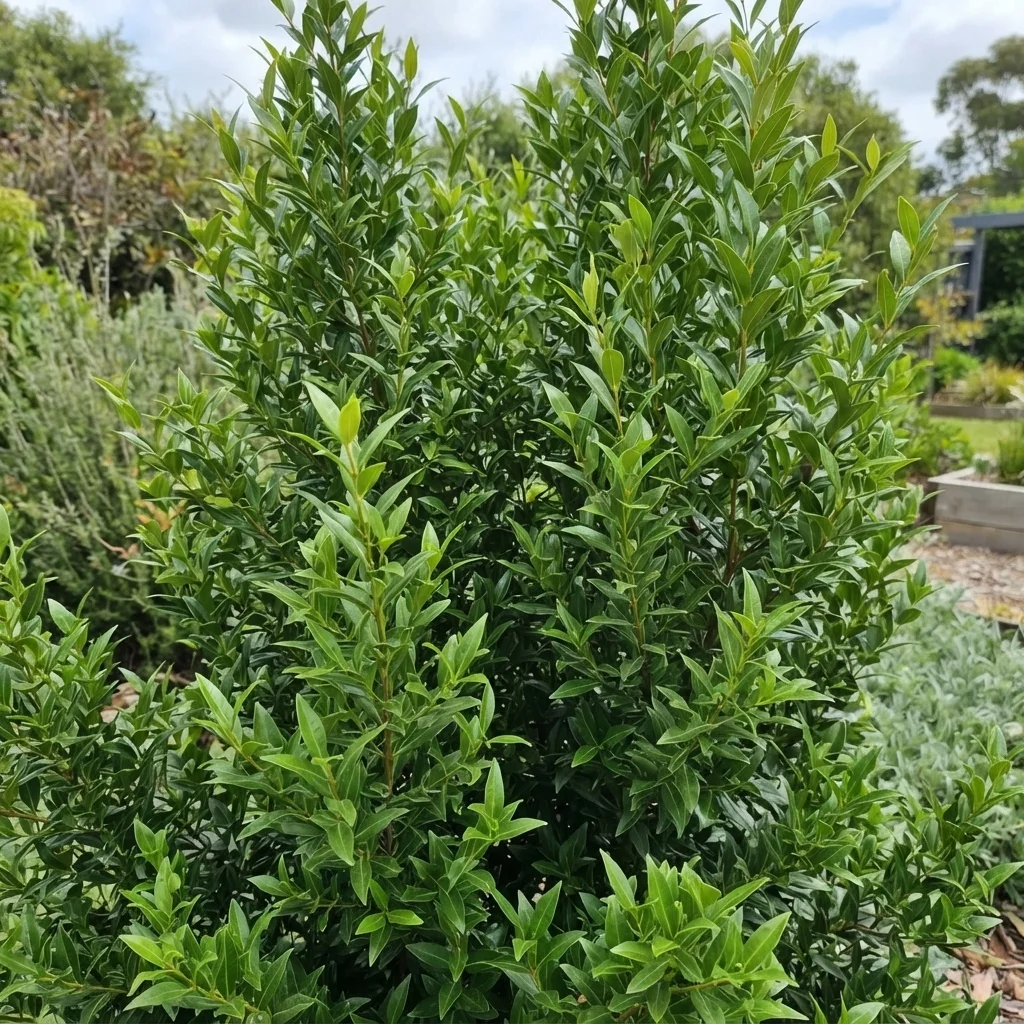
Straight and Narrow Lilly Pilly
Syzygium australe 'Straight and Narrow'
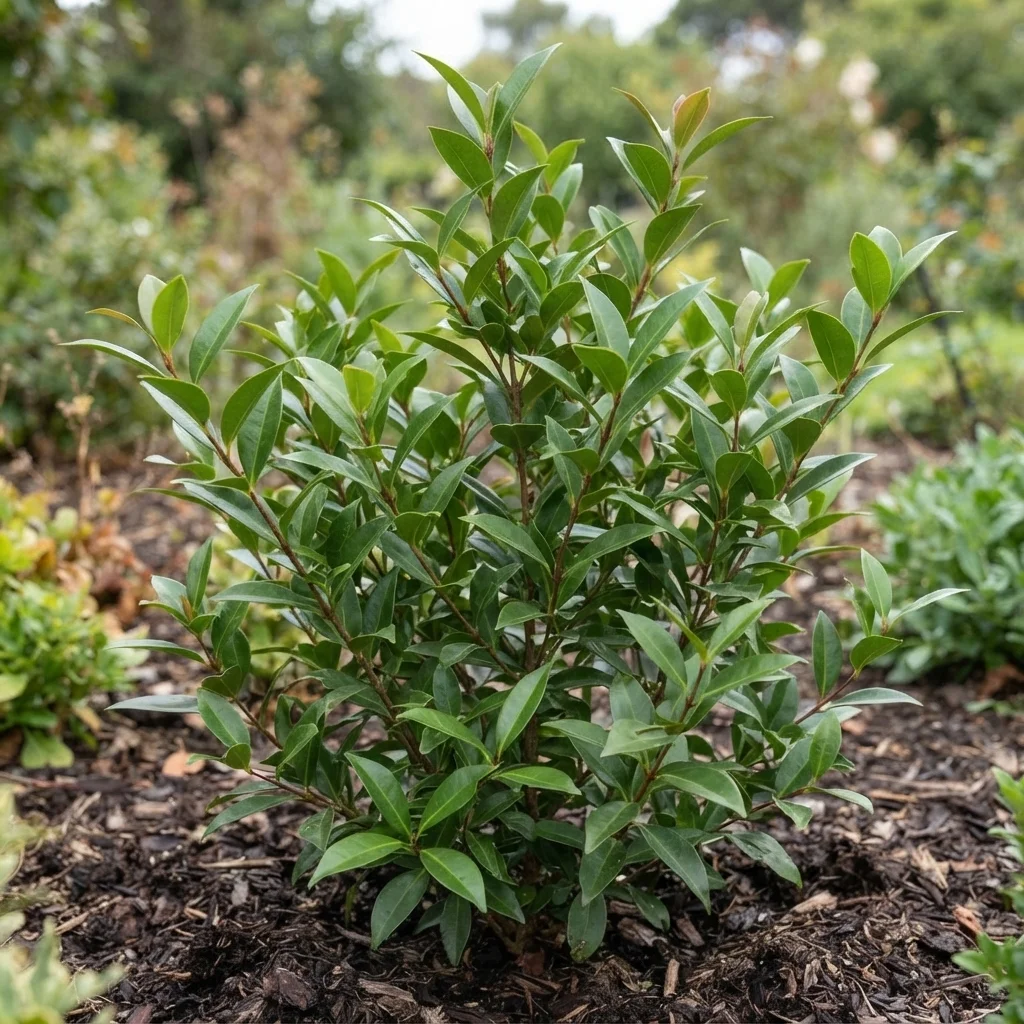
Baby Boomer Brush Cherry
Syzygium australe 'Baby Boomer'
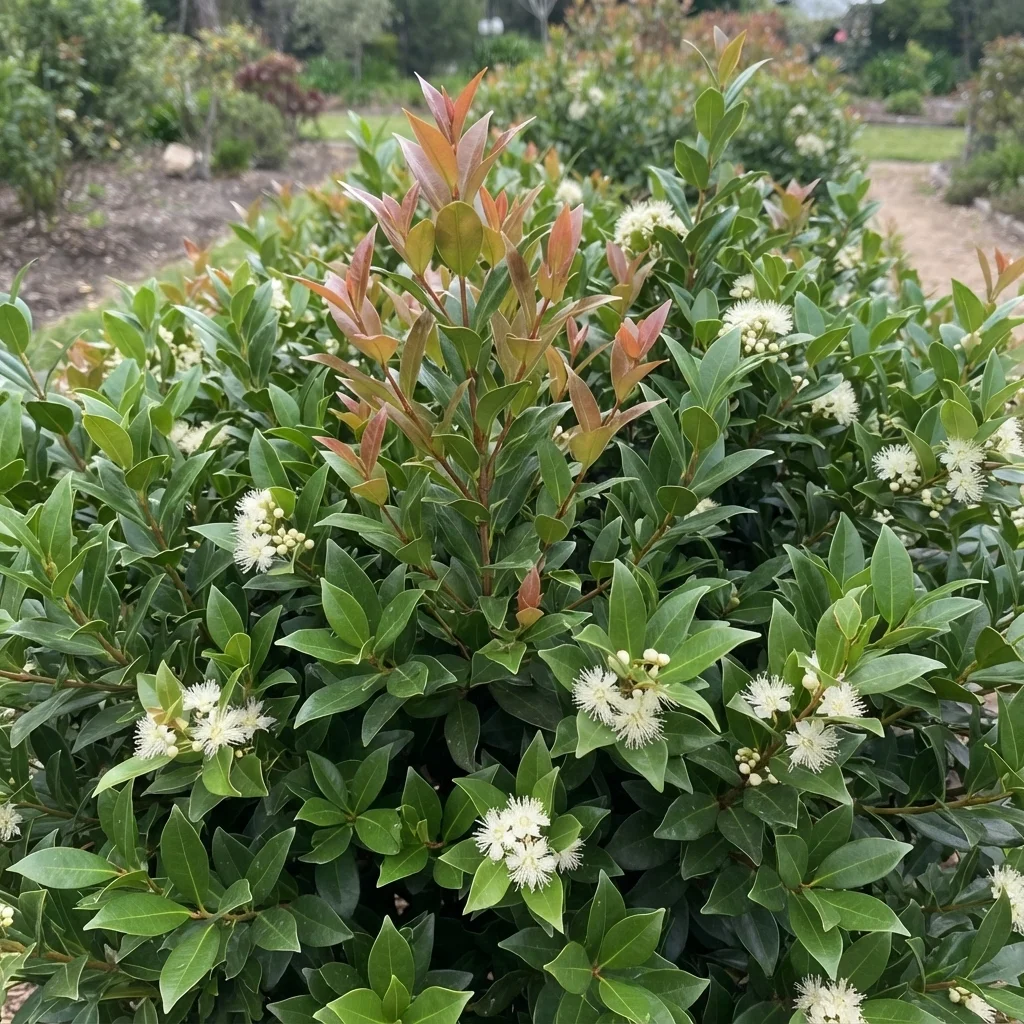
Select Lilly Pilly
Syzygium australe 'Select'
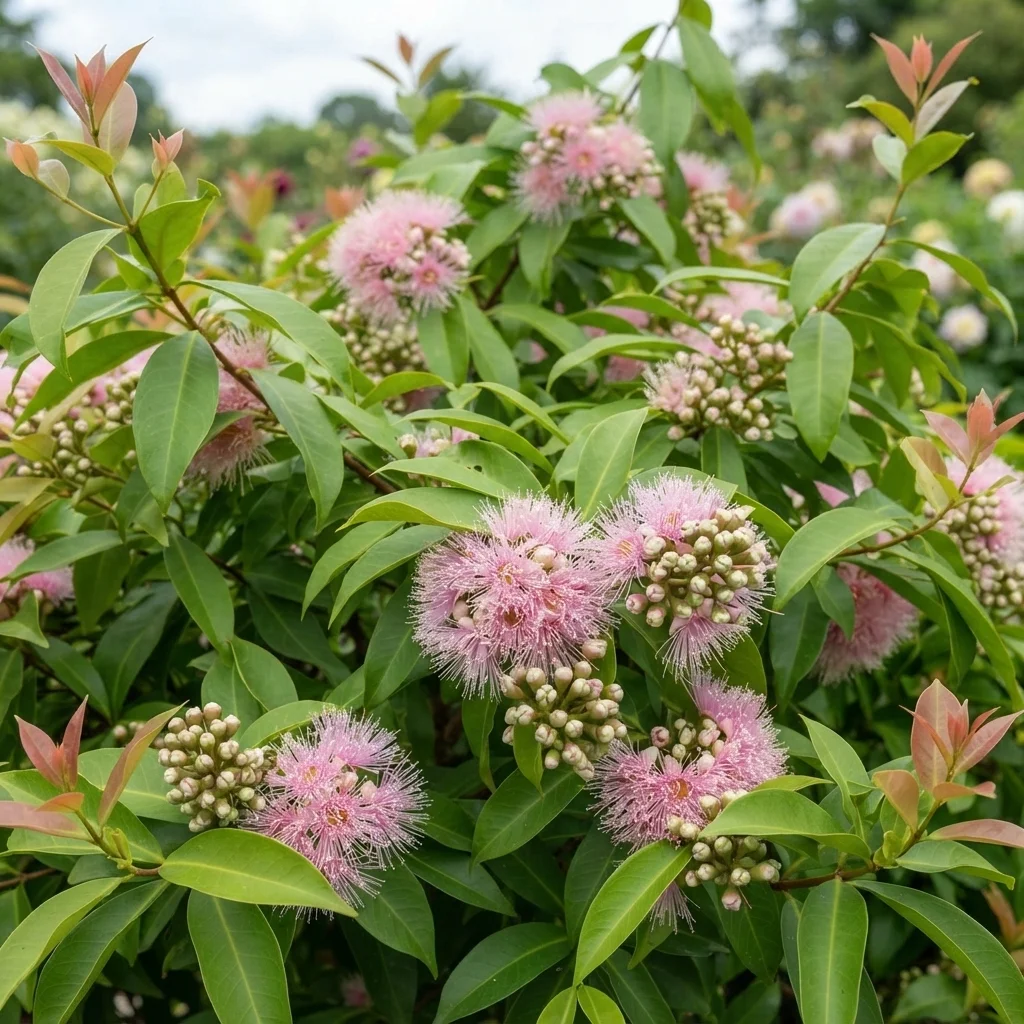
Cascade Lilly Pilly
Syzygium x hybrida 'Cascade'
Keep exploring
Explore the genus
Hardy in your zone?
Grow Giant Water Gum with confidence
See it in a design of your actual yard, get zone-matched care reminders, and track it season by season in your garden journal.