The Story
Plant Bio
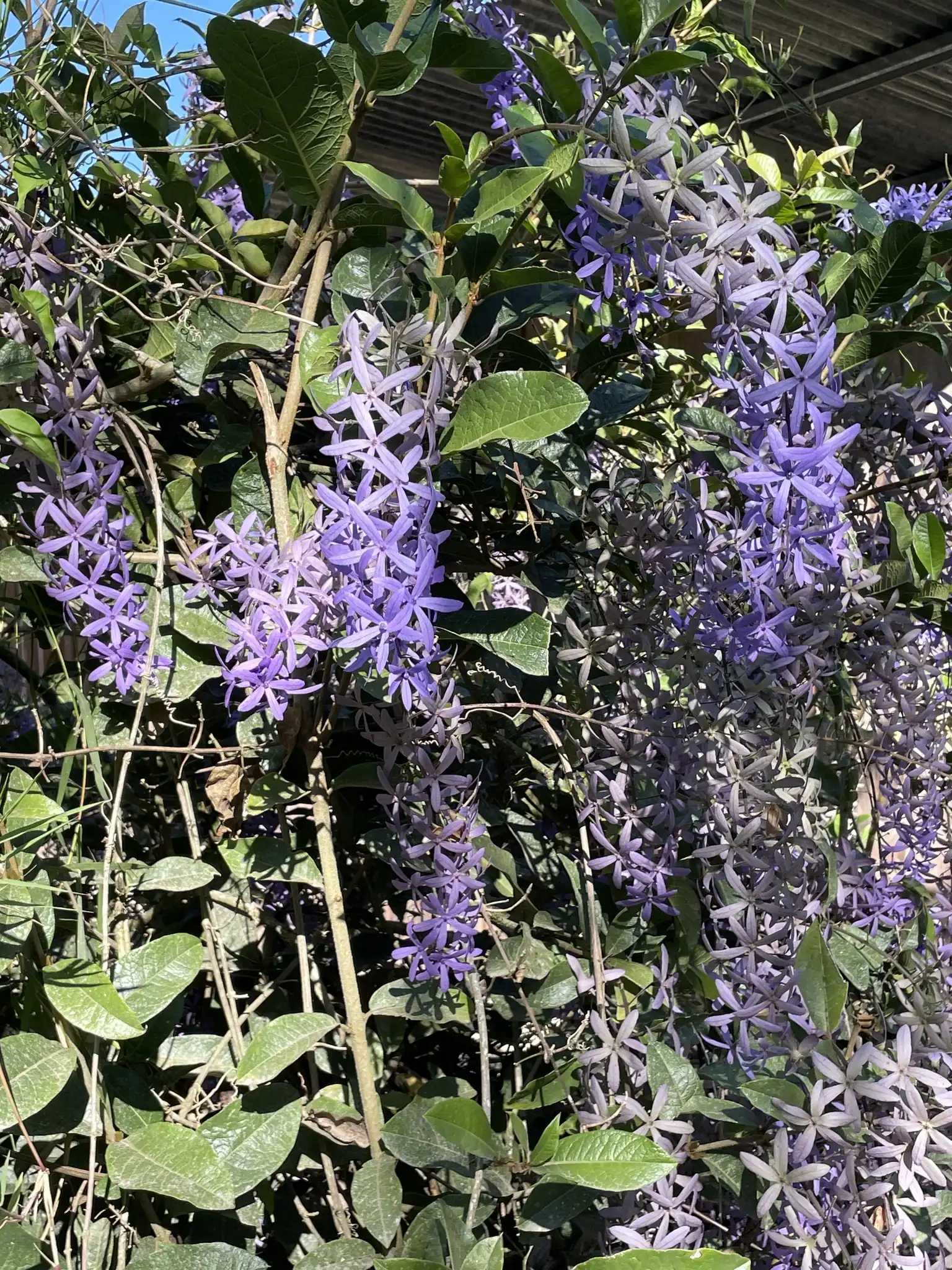
Petrea volubilis is a fast-growing twining woody vine from tropical America that holds as a rounded shrub or small standard when pruned, reaching 6 to 12 feet in gardens and 25 to 40 feet when left unpruned. It carries oblong dark green leaves 4 to 9 inches long that feel like sandpaper on the upper surface and star-shaped violet-blue flowers in erect to drooping racemes about 12 inches long.
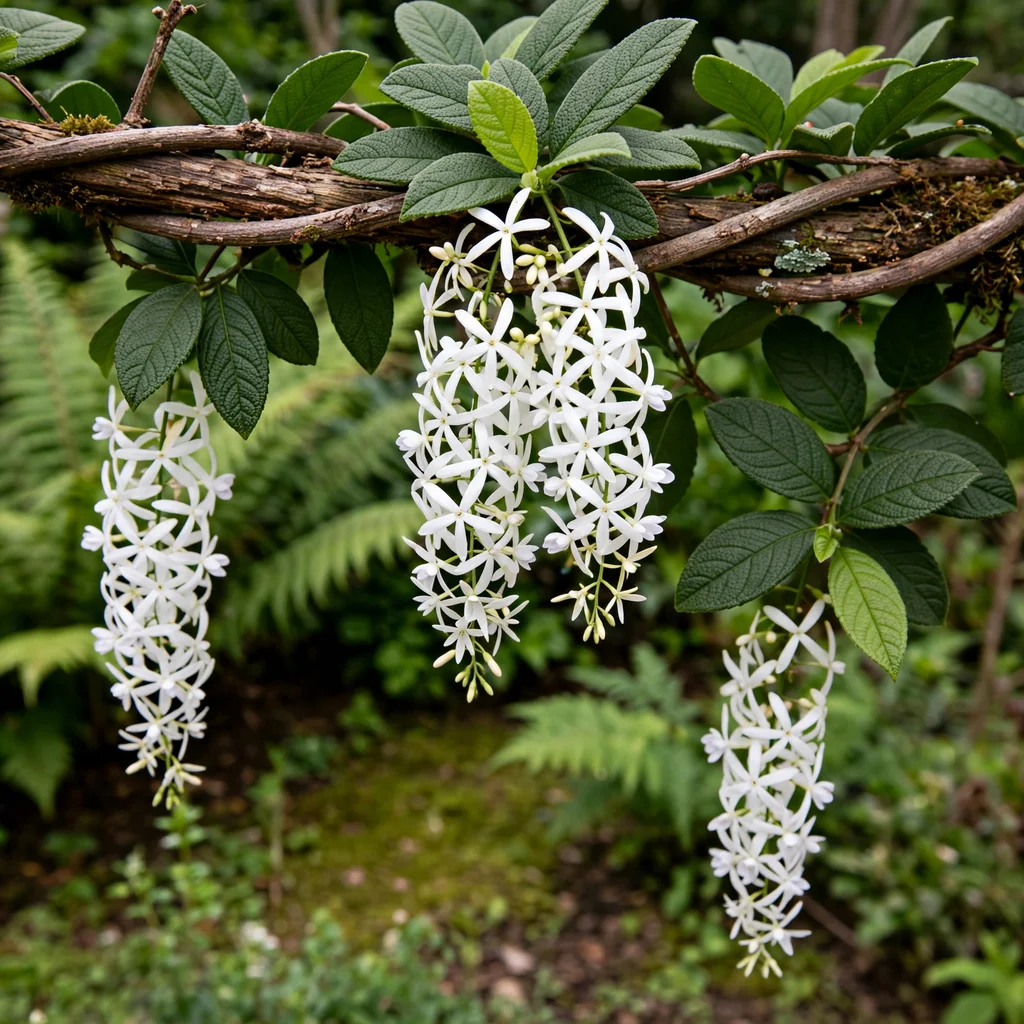
The color comes from five narrow lavender calyx lobes that persist after the darker violet corolla drops, so each 15- to 30-flowered raceme holds color long after true flowering ends. A white-flowered form sold as 'Albiflora' repeats the same structure in white and blooms in flushes from late spring into fall in warm climates.
Uses & Benefits:
Essentials
At a Glance
Plant Type
Vine
Height
144"
Width
72"
Light
Full Sun, Partial Sun
Zones
9, 10
Water
Moderate
Humidity
High
Lifespan
Long-lived vine
Native To
Mexico to South America
Toxicity
Non-toxic
Bloom period
Late spring – Fall
In flower about 7 months of the year
Planting
How to Grow
- Plant after last frost in full sun in moist, fertile, well-drained sandy loam.
- Set a sturdy pergola, trellis, or post at planting; tie twining stems until they grip.
- Water deeply through the first summer, then water regularly; established plants tolerate short dry spells but bloom best with steady moisture.
- Mulch 2 to 3 inches to hold moisture, keeping mulch off the stems.
- Prune after each flower flush to hold size at 6 to 12 feet and prevent tangled 30-foot growth.
Pro Tip
Prune right after flowering and keep it in full sun and heat; hard pruning in cold or growing in shade leaves bare vines with no bloom.
Keep It Thriving
Care Guide
Do
- Grow in full sun with heat for reliable bloom.
- Train to strong support and tie new shoots.
- Water regularly in heat and mulch to hold moisture.
Don't
- Do not cut hard in cold weather; it removes bloom wood.
- Do not grow in shade or cold wet soil.
- Do not let unpruned vines overtop trees or gutters.
Seasonal Care Calendar
| Task | Jan | Feb | Mar | Apr | May | Jun | Jul | Aug | Sep | Oct | Nov | Dec |
|---|---|---|---|---|---|---|---|---|---|---|---|---|
| Mulch | ||||||||||||
| Pest Check | ||||||||||||
| Plant | ||||||||||||
| Prune | ||||||||||||
| Winter Prep |
Watch Out For
Pests & Diseases
Common Pests
Common Diseases
In the Garden
Landscape Uses & Companions
Landscape Uses
Multiply
Propagation Methods
Good to Know
Common Questions
Queen's Wreath questions
What zones can Queen's Wreath grow in?
Queen's Wreath is hardy in USDA Zones 9–10: in that range it survives winter in the ground. Colder than Zone 9, grow it in a container you can move to shelter for the winter, or as an annual.
When does Queen's Wreath bloom?
Queen's Wreath typically blooms from late spring to late fall. Exact timing shifts a week or two with your zone — Sow's bloom calendar maps it to your garden.
Does Queen's Wreath need full sun?
Queen's Wreath does best in full sun to part shade. In hot climates, afternoon shade keeps blooms fresher longer.
Is Queen's Wreath drought tolerant?
Yes — once established (usually after the first full season), Queen's Wreath handles dry spells with minimal watering. Water deeply its first year to build the root system that makes that possible.
More Petrea to compare
Keep exploring
Explore the genus
Hardy in your zone?
Grow Queen's Wreath with confidence
See it in a design of your actual yard, get zone-matched care reminders, and track it season by season in your garden journal.