The Story
Plant Bio
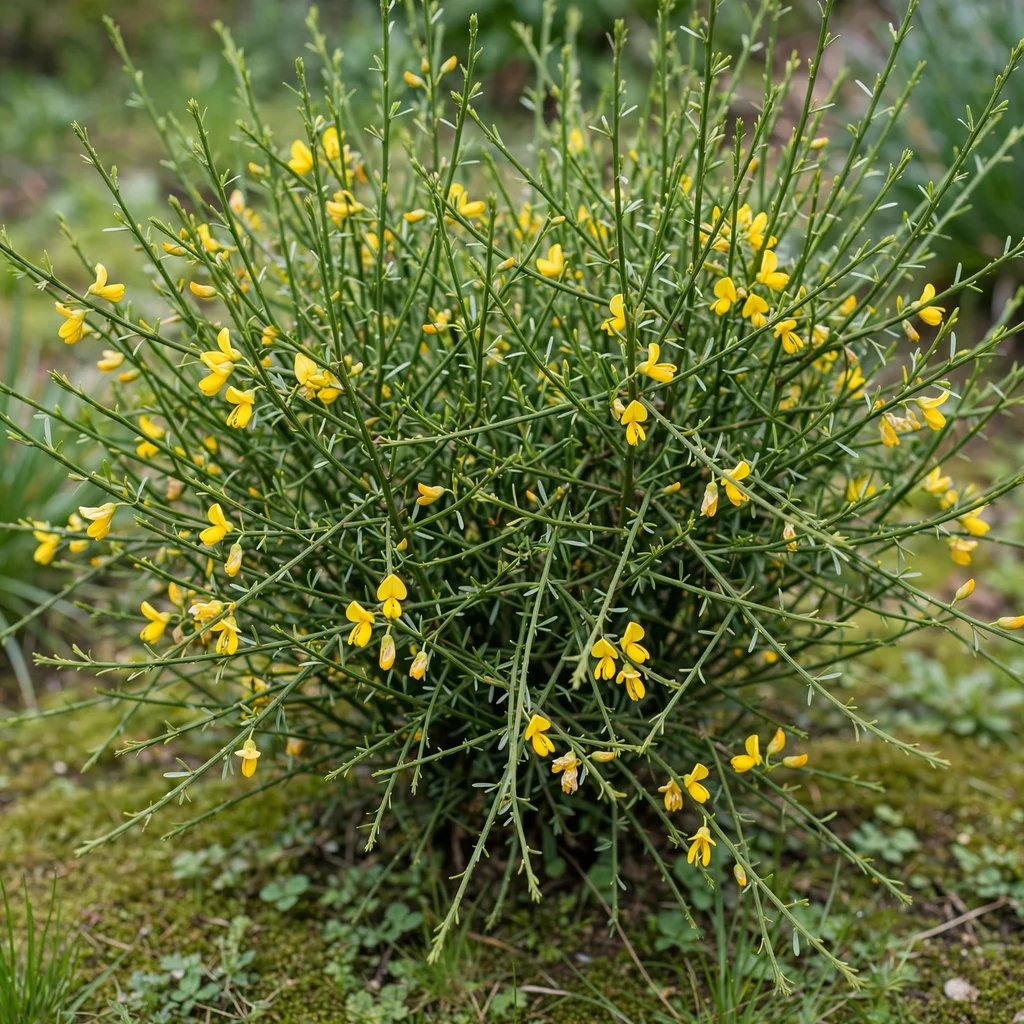
Cytisus purgans, the Pyrenean broom sold as Spanish Gold Broom, is a densely branched evergreen sub-shrub forming a twiggy mound three to four feet tall and four to six feet wide, with small green leaves that drop quickly leaving green stems to do most of the photosynthesis. The display comes from abundant yellow pea-like flowers borne thickly along the stems in spring to early summer.
Nursery plants sold as Cytisus purgans are the Spanish mountain broom now accepted as Cytisus oromediterraneus, one of four species split out of the old misapplied purgans name. Unlike Scotch broom and Spanish broom, it has no federal or state noxious listing and stays as a compact rounded mound rather than a tall thicket.
Uses & Benefits:
Essentials
At a Glance
Plant Type
Shrub
Height
42"
Width
60"
Light
Full Sun, Partial Sun
Zones
4, 5, 6, 7, 8, 9
Water
Low to moderate
Humidity
Unknown
Lifespan
Woody shrub
Native To
France, Portugal, Spain
Toxicity
Toxic if ingested
Bloom period
Spring – Early summer
In flower about 4 months of the year
Planting
How to Grow
- Plant in full sun for best flowering, with tolerance for part sun to part shade.
- Plant in acidic to alkaline, average to gritty or rocky soil that drains sharply.
- Water regularly to establish, then reduce; established plants tolerate dry, infertile soil.
- Fertilize lightly before new growth in spring and avoid rich, wet sites that promote root rot.
Pro Tip
Clip flowered shoot tips right after bloom to keep the mound dense; leave winter die-back until after the hardest cold, then clean it out before spring growth starts.
Keep It Thriving
Care Guide
Do
- Prune lightly after flowering to keep a formal mound
- Remove winter die-back in late winter after extreme cold
- Grow in sharply drained soil
Don't
- Do not plant in soggy soil where root rot develops
- Do not shear late in the season into unflowered growth
- Do not over-fertilize or overwater once established
Seasonal Care Calendar
| Task | Jan | Feb | Mar | Apr | May | Jun | Jul | Aug | Sep | Oct | Nov | Dec |
|---|---|---|---|---|---|---|---|---|---|---|---|---|
| Fertilize | ||||||||||||
| Pest Check | ||||||||||||
| Prune | ||||||||||||
| Spring Cleanup |
Watch Out For
Pests & Diseases
Common Pests
Common Diseases
In the Garden
Landscape Uses & Companions
Landscape Uses
Multiply
Propagation Methods
Good to Know
Common Questions
Spanish Gold Broom questions
What zones can Spanish Gold Broom grow in?
Spanish Gold Broom is hardy in USDA Zones 4–9: in that range it survives winter in the ground. Warmer than Zone 9, winter isn't the problem: it prefers colder winters, and summer heat can shorten its life.
When does Spanish Gold Broom bloom?
Spanish Gold Broom typically blooms from early spring to early summer. Exact timing shifts a week or two with your zone — Sow's bloom calendar maps it to your garden.
Does Spanish Gold Broom need full sun?
Spanish Gold Broom does best in full sun to part shade. In hot climates, afternoon shade keeps blooms fresher longer.
Is Spanish Gold Broom drought tolerant?
Yes — once established (usually after the first full season), Spanish Gold Broom handles dry spells with minimal watering. Water deeply its first year to build the root system that makes that possible.
More Cytisus to compare
Keep exploring
Explore the genus
Grow Spanish Gold Broom with confidence
See it in a design of your actual yard, get zone-matched care reminders, and track it season by season in your garden journal.