The Story
Plant Bio
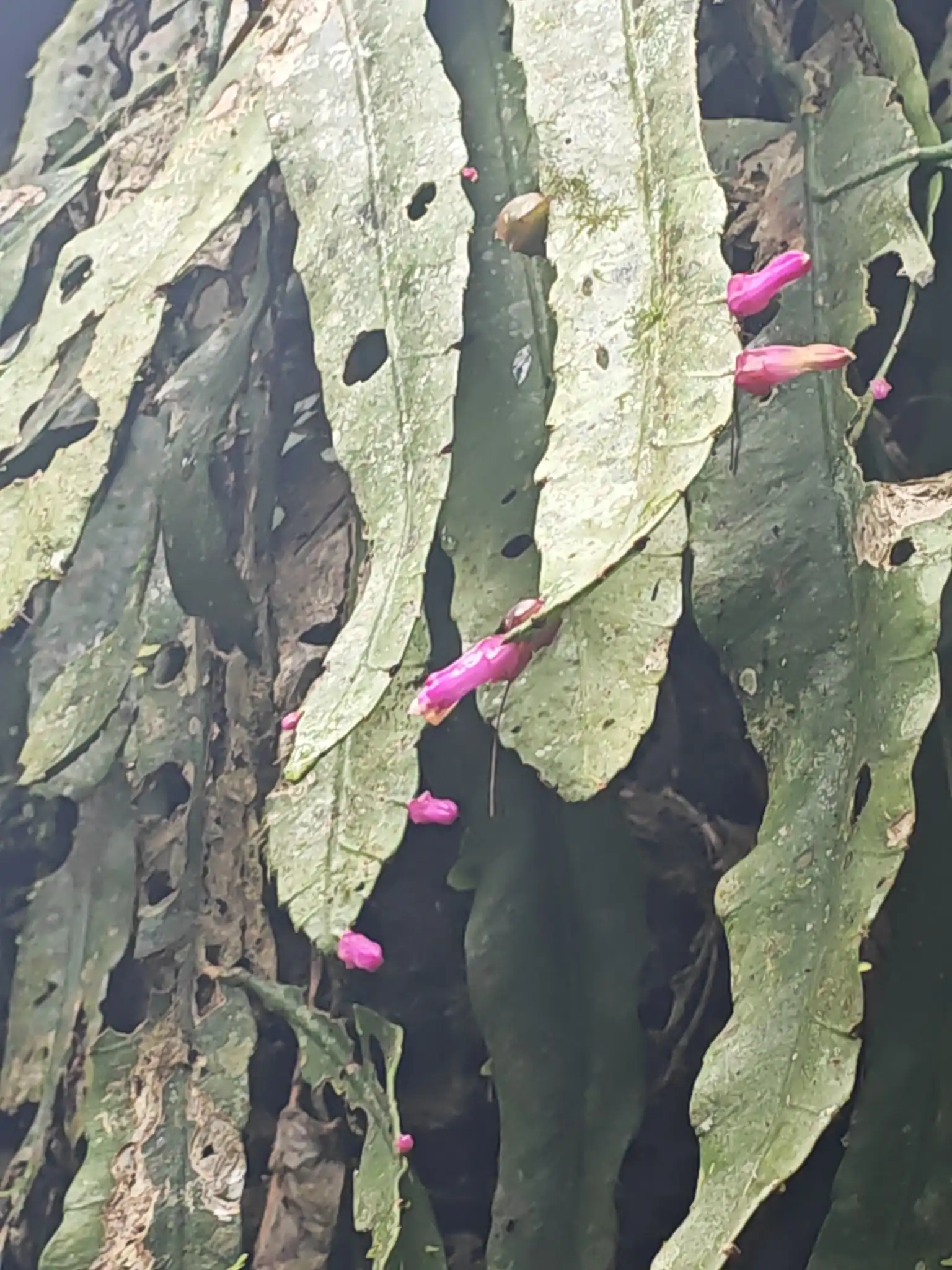
Pseudorhipsalis amazonica is a spineless epiphytic cactus from wet forest in Central and South America, growing on trees between 65 and 3,900 feet rather than in desert soil. It forms pendent flattened leaf-like stems to 24 inches long that branch from the base into a small trailing shrub 24 to 60 inches tall.
Tubular buds form along the edges of the flattened stems and open into starry magenta to purple-blue flowers with exserted white stamens in late spring. Pollinated flowers develop into pink-purple berries, and the plant requires shade, humidity and an airy bark mix rather than full sun and dry sand.
Uses & Benefits:
Essentials
At a Glance
Plant Type
Cactus Succulent
Height
60"
Width
24"
Light
Partial Sun, Shade
Zones
9, 10
Water
Moderate
Humidity
High
Lifespan
Long-lived perennial
Native To
Central and South America
Toxicity
No hazards known
Bloom period
Late spring – Early summer
In flower about 2 months of the year
Planting
How to Grow
- Set plants in a very porous bark and cactus mix rich in organic matter that drains fast; keep stem bases just above the surface.
- Give bright indirect or filtered light with only early morning sun and protection from midday sun.
- Water regularly in active growth to keep the mix evenly moist, letting the top dry before watering again; cut back in winter but do not dry out fully.
- Hold heat and humidity through summer; move pots indoors before first frost to a bright cool spot.
- Repot only when rootbound into a similarly airy mix.
Pro Tip
Grow it like an orchid, not a desert cactus: bright filtered light, bark-rich mix, even moisture that never stays soggy, and humidity.
Keep It Thriving
Care Guide
Do
- Provide bright shade and high humidity.
- Let the top of the mix dry between waterings.
- Remove spent flowers and dead stems promptly.
Don't
- Do not place in full midday sun.
- Do not leave pots soggy or let the mix dry desert-hard.
- Do not cut back into old leafless stem bases.
Seasonal Care Calendar
| Task | Jan | Feb | Mar | Apr | May | Jun | Jul | Aug | Sep | Oct | Nov | Dec |
|---|---|---|---|---|---|---|---|---|---|---|---|---|
| Fertilize | ||||||||||||
| Pest Check | ||||||||||||
| Plant | ||||||||||||
| Prune | ||||||||||||
| Winter Prep |
Watch Out For
Pests & Diseases
Common Pests
Common Diseases
In the Garden
Landscape Uses & Companions
Landscape Uses
Multiply
Propagation Methods
Good to Know
Common Questions
Purple Rhipsalis questions
What zones can Purple Rhipsalis grow in?
Purple Rhipsalis is hardy in USDA Zones 9–10: in that range it survives winter in the ground. Colder than Zone 9, grow it in a container you can move to shelter for the winter, or as an annual.
When does Purple Rhipsalis bloom?
Purple Rhipsalis typically blooms from late spring to early summer. Exact timing shifts a week or two with your zone — Sow's bloom calendar maps it to your garden.
Does Purple Rhipsalis need full sun?
Purple Rhipsalis does best in part shade.
Keep exploring
Explore the genus
Hardy in your zone?
Grow Purple Rhipsalis with confidence
See it in a design of your actual yard, get zone-matched care reminders, and track it season by season in your garden journal.