The Story
Plant Bio
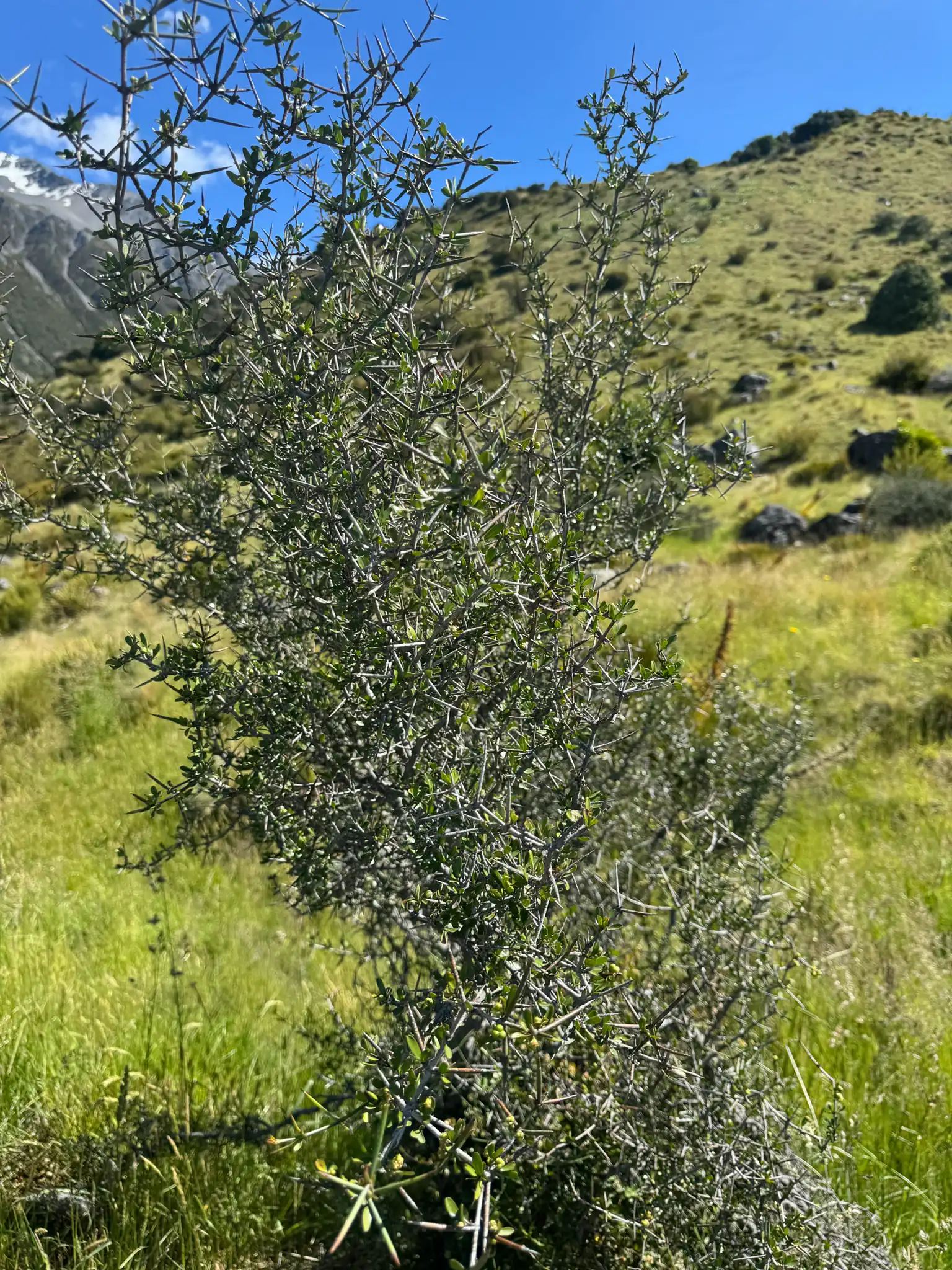
Discaria toumatou, commonly known as matagouri, is a rigid, heavily branched shrub or small tree native to New Zealand featuring photosynthetic green stems armed with long, formidable spines. Small, sparse leaves drop quickly after emerging, followed from spring to summer by small, fragrant, pale white flower clusters.
Modified branchlets form sharp, rigid thorns capable of puncturing heavy clothing, making it an effective security barrier or structural hedge. Its photosynthetic green stems allow the plant to retain energy production even after shed foliage leaves it entirely bare.
Uses & Benefits:
Essentials
At a Glance
Plant Type
Shrub
Height
197"
Width
157"
Light
Full Sun
Zones
8, 9, 10
Water
Low
Humidity
Low to Moderate
Lifespan
Perennial
Native To
New Zealand
Toxicity
Non-toxic (Physical hazard)
Bloom period
Spring – Summer
In flower about 6 months of the year
Planting
How to Grow
- Select a planting site in full sun with sharp-draining, gravelly, or sandy soil.
- Dig a hole slightly wider than the container and equal in depth to the root ball.
- Place the root ball into the hole, ensuring the crown remains level with the surrounding soil.
- Backfill with native soil mixed with grit, press lightly to remove air pockets, and water sparingly.
Pro Tip
Never prune heavily into old, leafless wood, as bare stems lack dormant buds and fail to resprout.
Keep It Thriving
Care Guide
Do
- Plant in lean, highly permeable soils like sand, gravel, or alluvial loam.
- Provide full overhead sunlight to support steady stem growth and flowering.
- Wear heavy protective gloves whenever handling or working near mature branches.
Don't
- Do not overwater or plant in poorly drained clay soils subject to standing water.
- Do not shear or prune deeply into old, leafless woody stems.
- Do not apply heavy doses of high-nitrogen fertilizer.
Seasonal Care Calendar
| Task | Jan | Feb | Mar | Apr | May | Jun | Jul | Aug | Sep | Oct | Nov | Dec |
|---|---|---|---|---|---|---|---|---|---|---|---|---|
| Pest Check | ||||||||||||
| Plant | ||||||||||||
| Propagate | ||||||||||||
| Prune |
Watch Out For
Pests & Diseases
Common Pests
Common Diseases
In the Garden
Landscape Uses & Companions
Landscape Uses
Multiply
Propagation Methods
Good to Know
Common Questions
Matagouri questions
What zones can Matagouri grow in?
Matagouri is hardy in USDA Zones 8–10: in that range it survives winter in the ground. Colder than Zone 8, grow it in a container you can move to shelter for the winter.
Is Matagouri deer resistant?
Yes — Matagouri is rated deer-resistant. Deer typically pass it over, though extreme hunger can override any plant's defenses.
When does Matagouri bloom?
Matagouri typically blooms from spring to summer. Exact timing shifts a week or two with your zone — Sow's bloom calendar maps it to your garden.
Does Matagouri need full sun?
Matagouri does best in full sun (6+ hours).
Is Matagouri drought tolerant?
Yes — once established (usually after the first full season), Matagouri handles dry spells with minimal watering. Water deeply its first year to build the root system that makes that possible.
Keep exploring
Explore the genus
Hardy in your zone?
Grow Matagouri with confidence
See it in a design of your actual yard, get zone-matched care reminders, and track it season by season in your garden journal.