Also known as Parrot-pea · 8 saves
Dillwynia
Dillwynia, the genus most gardeners know as parrot-pea. We track 3 varieties; the ones most used by real gardeners.
The 3 most-saved Dillwynia varieties
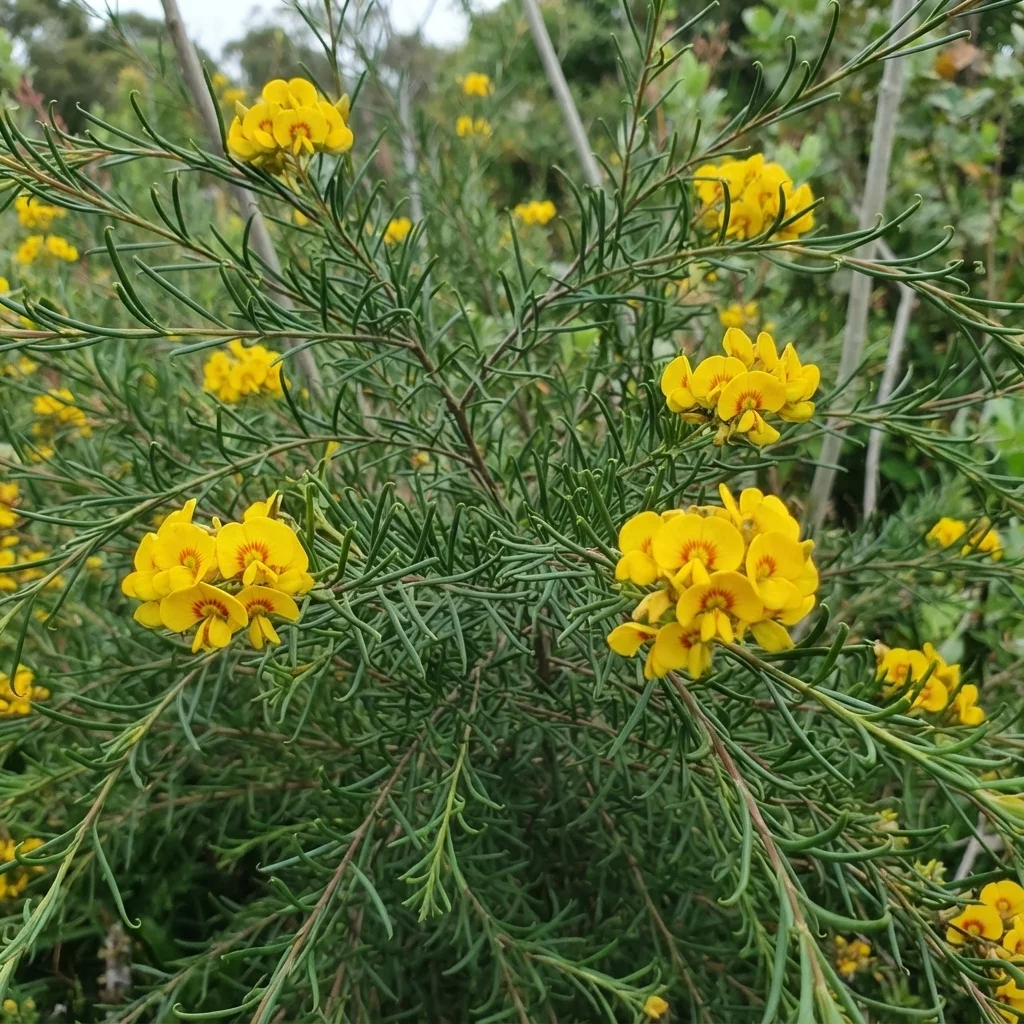
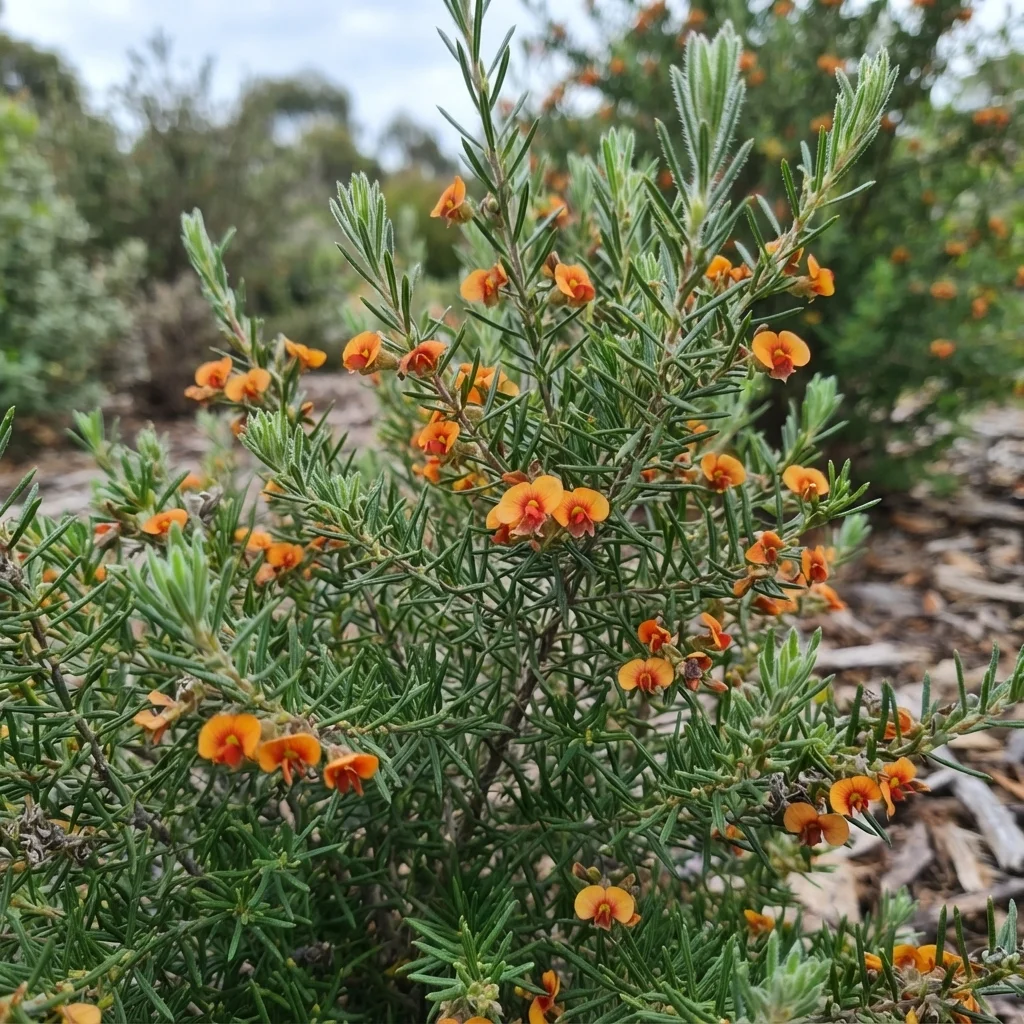
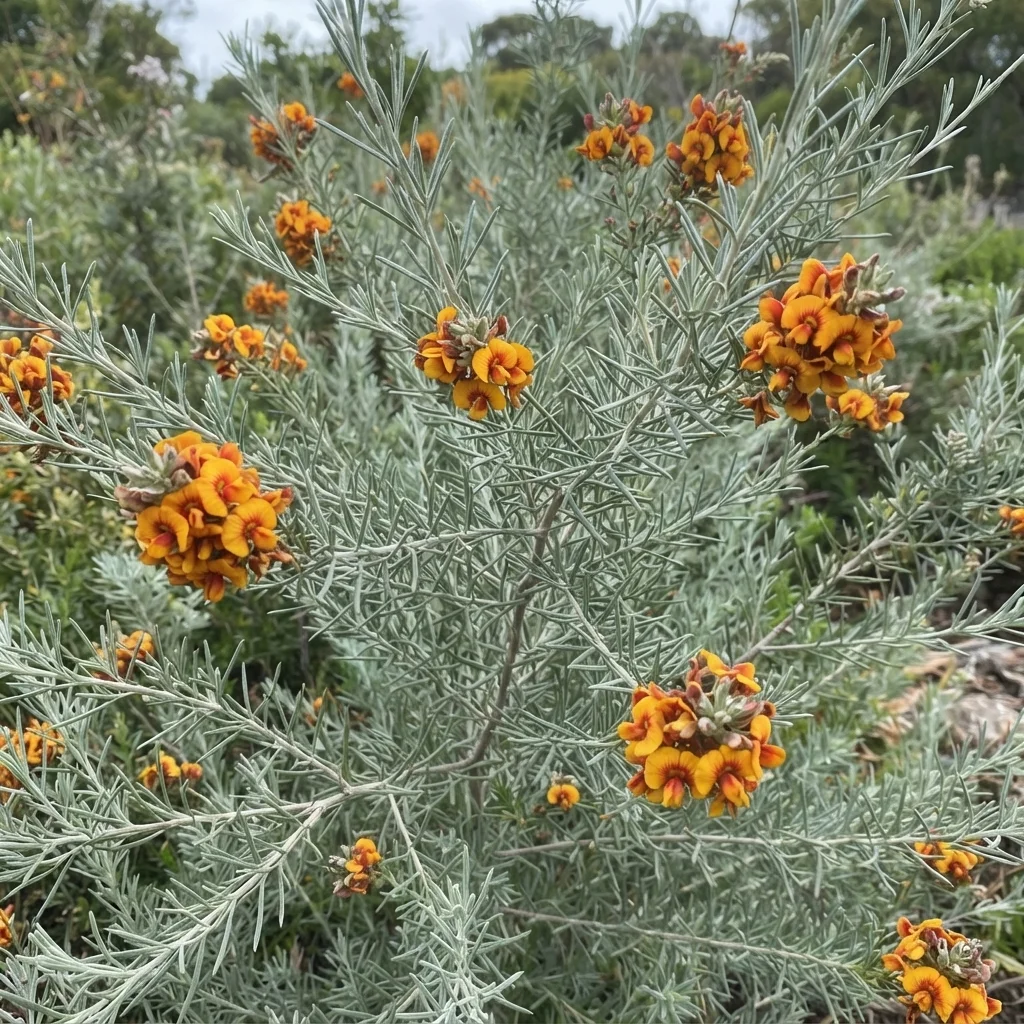
3 species of Dillwynia
Each one is a parent of the varieties above.
Track your Dillwynia in Sow
Save the Dillwynia you grow and get care reminders timed to your zone.
How to grow Dillwynia
Whats common across all Dillwynia varieties in our catalog — drawn from the care records of the 3 most-grown of them.
The Dillwynia year
- PruneMay and June100% of varieties
Tip-prune lightly after the spring flowering flush to encourage denser growth.
- FertilizeMarch and April100% of varieties
Apply a low-phosphorus native fertilizer sparingly at the start of the growing season.
- Check for PestsJune–August100% of varieties
Inspect the fine foliage for spider mites and aphids during warm, dry weather.
- PropagateAugust67% of varieties
Take semi-hardwood cuttings from current season's growth.


Do
- Ensure the soil drains rapidly to prevent root rot.
- Tip-prune lightly after flowering to maintain a compact, bushy habit.
- Use low-phosphorus native fertilizers if supplemental feeding is necessary.
- Prune lightly right after the spring flowering finishes to encourage dense growth.
- Provide sharp, excellent drainage to prevent root rot.
Avoid
- Do not plant in heavy clay or low-lying areas where water pools.
- Do not prune hard into old, woody, leafless stems.
- Do not overwater once the plant is established.
- Do not prune hard into old, leafless woody stems, as the plant will fail to regenerate.
What goes wrong with Dillwynia
| Problem | What you'll see | What to do |
|---|---|---|
| Aphids | Clusters of small green or black insects on tender new growth, causing distorted leaves and sticky honeydew. | Knock them off with a sharp spray of water or apply insecticidal soap during the cooler parts of the day. |
| Spider mites | Fine webbing on the undersides of the foliage accompanied by pale, speckled leaves. | Increase air circulation and spray the foliage with water or horticultural oil to disrupt their life cycle. |
| Root rot | Sudden wilting, yellowing of foliage, and branch dieback, often starting at the base of the plant. | There is no cure once established; prevent by planting in highly porous soil and avoiding overwatering. |
| Powdery mildew | A white, powdery coating on the leaves and stems, typically occurring in humid, stagnant air. | Space plants to improve air circulation and prune surrounding vegetation to increase sunlight penetration. |
Making more Dillwynia
Seed
- Pour hot (not boiling) water over the seeds and let them soak for 12 to 24 hours until they swell.
- Sow the swollen seeds in a well-draining seed-raising mix, covering them lightly.
- Keep the medium moist but not wet, placing the tray in a warm, bright location.
- Pot up individual seedlings once they develop their first set of true leaves.
Semi-hardwood cuttings
- Take 3- to 4-inch cuttings of semi-hardwood growth in late summer.
- Remove the leaves from the lower half of the cutting and dip the base in rooting hormone.
- Insert the cuttings into a porous mix of perlite and peat.
- Place in a humid, warm environment with bottom heat until roots establish.
Dillwynia questions
How many types of Dillwynia are there?
The Sow catalog tracks 3 distinct Dillwynia varieties. The most popular — ranked by 8 real gardeners — are shown first above.
What zones does Dillwynia grow in?
Across its varieties, Dillwynia covers USDA Zones 8–10. Individual varieties differ — each plant page lists its exact range, and Sow filters the catalog to your zone automatically.
When does Dillwynia bloom?
Most Dillwynia varieties bloom from late winter to early summer.
Which Dillwynia should I choose?
Start from the most-saved varieties above — popularity across thousands of gardens is a strong signal of reliability — then filter by your zone and sun. In the Sow app you can preview any of them in a photo of your actual yard before you buy.