The Story
Plant Bio
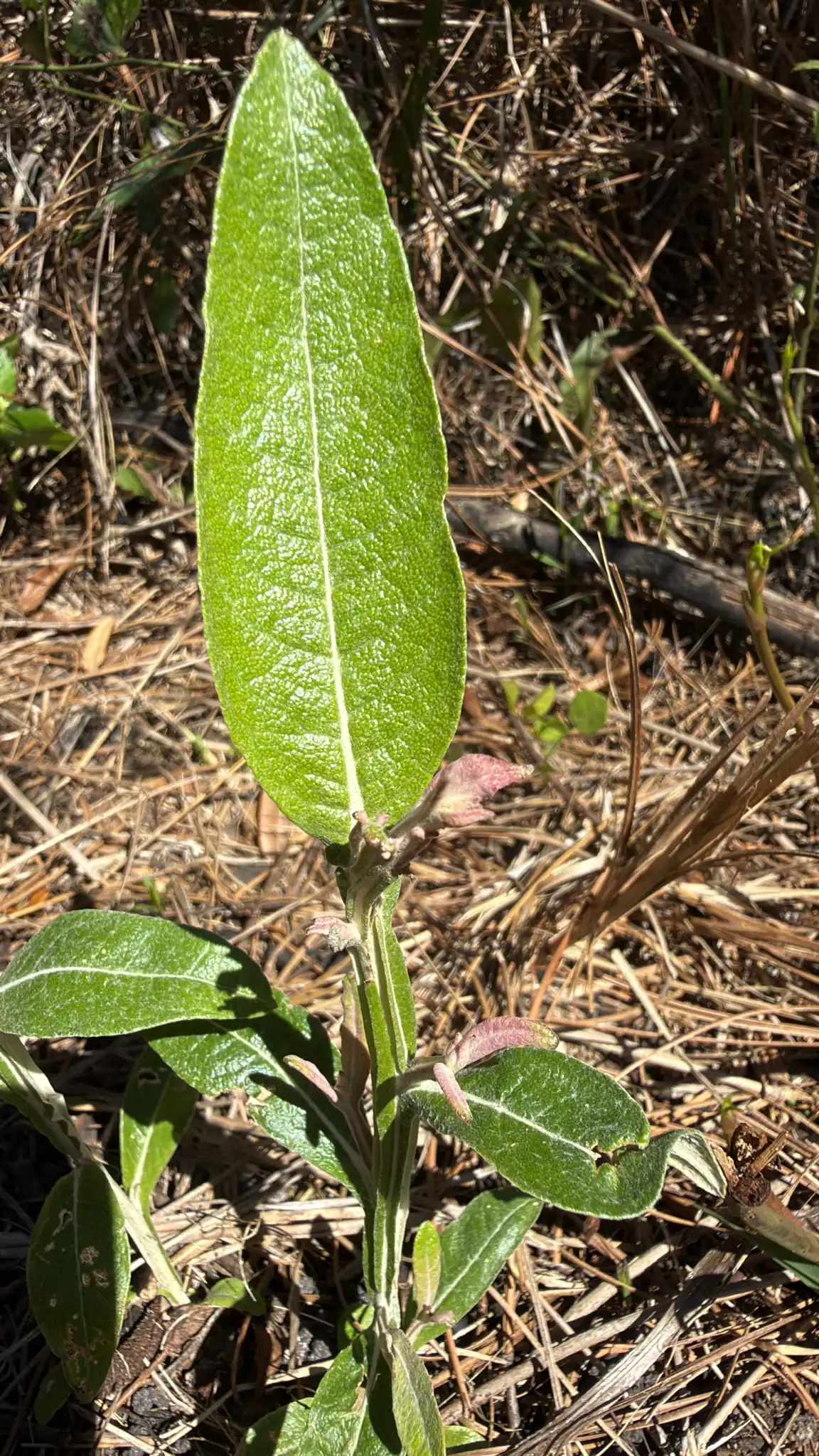
Pterocaulon pycnostachyum, the dense-spike blackroot, is a perennial herb of the southeastern coastal plain reaching 8 to 32 inches, with winged stems decurrent from the leaf bases and tuberous roots. Leaves are alternate lanceolate to obovate 3 to 11 centimeters, green above and white-woolly beneath, and the tiny white flowers pack into a dense terminal spike that hides the axis.
It stays short at 2 to 8 decimeters with a continuous narrow ovoid head 3 to 8 centimeters long, which separates it from the taller wand blackroot that reaches 5 to 15 decimeters with interrupted heads. True plants show dentate leaves with silvery hairs beneath, winged stems, and pinkish-white buds opening white from spring into early fall.
Uses & Benefits:
Essentials
At a Glance
Plant Type
Perennial
Height
32"
Width
12"
Light
Full Sun, Partial Sun
Water
Low to medium
Humidity
Average
Lifespan
Perennial
Native To
Southeastern USA
Toxicity
Toxic to humans
Bloom period
Spring – Early fall
In flower about 7 months of the year
Planting
How to Grow
- Plant in spring into deep sandy soil with pH 5.5 to 6.5 in a site with at least 6 hours of sun.
- Space plants 12 inches apart to allow air movement around the woolly foliage.
- Water in at planting, then water only during prolonged drought; established clumps tolerate heat and low fertility.
- Leave spent spikes to set seed for butterflies, then cut stems back in late fall.
Pro Tip
Set plants into deep sandy acid soil in full sun with sharp drainage and leave them unfertilized and unwatered once rooted; wet enriched ground rots the corms and loosens the spike.
Keep It Thriving
Care Guide
Do
- Plant in full sun to part shade in sandy well-drained acid soil.
- Water sparingly once established; this is a low to medium water plant.
- Leave some seed heads for butterfly forage and self-sowing in natural plantings.
Don't
- Do not plant in heavy clay or rich irrigated beds that stay wet.
- Do not ingest roots or foliage; roots contain liver-toxic coumarins.
- Do not confuse with taller Pterocaulon virgatum when buying or weeding.
Seasonal Care Calendar
| Task | Jan | Feb | Mar | Apr | May | Jun | Jul | Aug | Sep | Oct | Nov | Dec |
|---|---|---|---|---|---|---|---|---|---|---|---|---|
| Deadhead | ||||||||||||
| Mulch | ||||||||||||
| Pest Check | ||||||||||||
| Plant |
Watch Out For
Pests & Diseases
Common Pests
Common Diseases
In the Garden
Landscape Uses & Companions
Landscape Uses
Companion Plants
Multiply
Propagation Methods
Good to Know
Common Questions
Blackroot questions
When does Blackroot bloom?
Blackroot typically blooms from early spring to early fall. Exact timing shifts a week or two with your zone — Sow's bloom calendar maps it to your garden.
Does Blackroot need full sun?
Blackroot does best in full sun to part shade. In hot climates, afternoon shade keeps blooms fresher longer.
Is Blackroot drought tolerant?
Yes — once established (usually after the first full season), Blackroot handles dry spells with minimal watering. Water deeply its first year to build the root system that makes that possible.
Keep exploring
Explore the genus
Grow Blackroot with confidence
See it in a design of your actual yard, get zone-matched care reminders, and track it season by season in your garden journal.