
The Story
Plant Bio
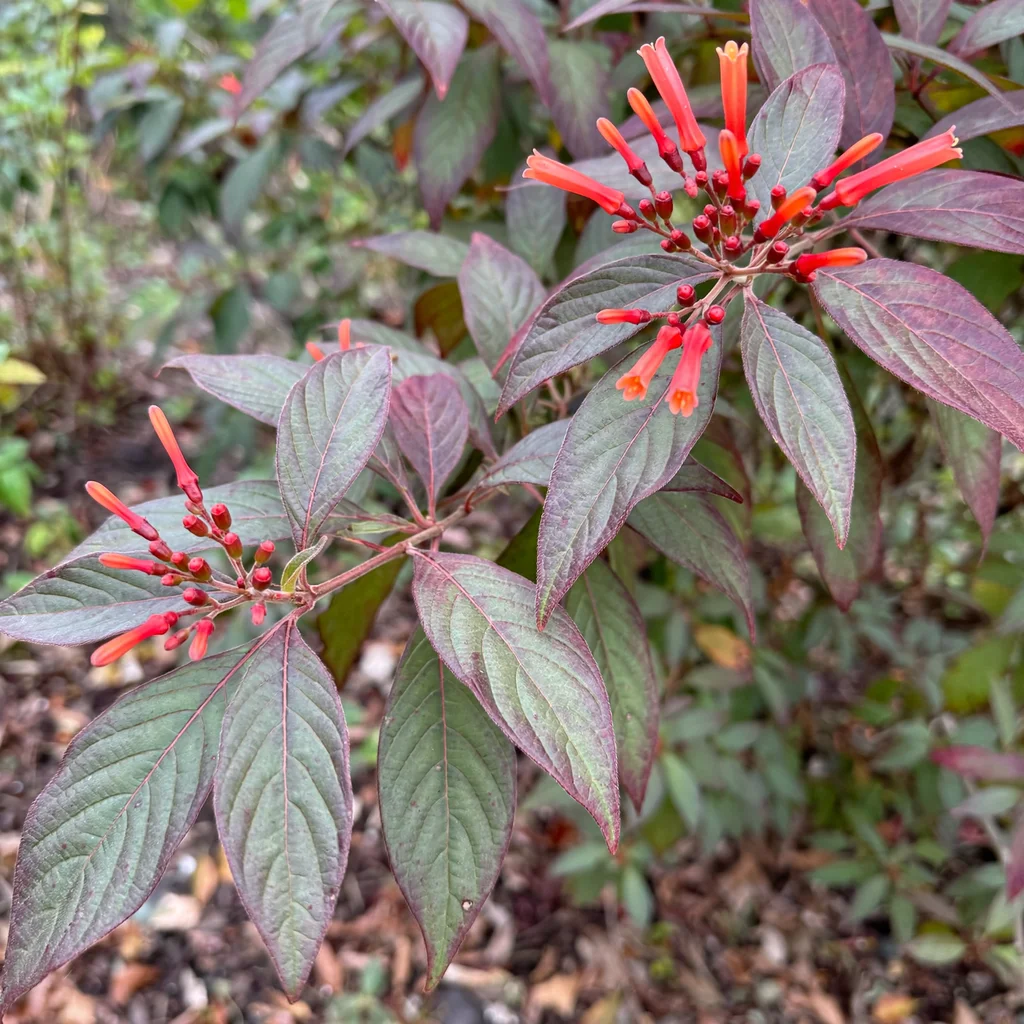
Hamelia cuprea is a large evergreen tropical shrub to small tree from the Caribbean, reaching 10 to 20 feet unpruned with upright, freely branching stems. Leaves sit in whorls of three and are glossy light green and ovate-elliptic, with coppery new growth, while dense terminal clusters of tubular yellow to coppery-orange bells open from spring through fall.
It is separated from the native Hamelia patens by broad yellow-orange bells and coppery-flushed foliage, against narrow scarlet flowers in the native species. The Bahama Firebush name is a misnomer for a Cuba, Haiti, Jamaica and Cayman plant, and Florida nursery stock often includes hybrids with intermediate narrow flowers that compete with wild patens.
Uses & Benefits:
Essentials
At a Glance
Plant Type
Shrub
Height
180"
Width
96"
Light
Full Sun, Partial Sun
Zones
8, 9, 10
Water
Medium
Humidity
High
Lifespan
Long-lived shrub
Native To
Cuba, Haiti, Jamaica, Cayman Islands
Toxicity
Unknown
Bloom period
Spring – Fall
In flower about 9 months of the year
Planting
How to Grow
- Plant after last frost in full sun in well-drained soil; flowering is heaviest in full sun.
- Water regularly during establishment, then let the top soil dry slightly between waterings; never leave the crown waterlogged.
- Tip-prune in early spring before new growth to encourage outward branching and more flowering clusters.
- Feed lightly with a bloom-booster fertilizer only if growth is pale or flowering is poor.
- Mulch and move containers under cover when frost threatens; protect young plants below 30F.
Pro Tip
Tip-prune stems in early spring to force outward branching; shearing into a tight hedge removes the terminal buds that produce the next flowers.
Keep It Thriving
Care Guide
Do
- Give full sun and sharp drainage.
- Prune to shape naturally to keep an open branching habit.
- Inspect spring new growth for aphids and mites.
- Use the native Hamelia patens instead where local habitat matters.
Don't
- Do not shear as a formal hedge; it cuts off flower clusters.
- Do not overwater or plant in soggy soil where root rot develops.
- Do not over-prune late in the season and remove flower buds.
- Do not plant exotic stock next to wild native firebush where it can hybridize.
Seasonal Care Calendar
| Task | Jan | Feb | Mar | Apr | May | Jun | Jul | Aug | Sep | Oct | Nov | Dec |
|---|---|---|---|---|---|---|---|---|---|---|---|---|
| Fertilize | ||||||||||||
| Pest Check | ||||||||||||
| Plant | ||||||||||||
| Prune | ||||||||||||
| Winter Prep |
Watch Out For
Pests & Diseases
Common Pests
Common Diseases
In the Garden
Landscape Uses & Companions
Landscape Uses
Companion Plants
Multiply
Propagation Methods
Good to Know
Common Questions
Bahama Firebush questions
What zones can Bahama Firebush grow in?
Bahama Firebush is hardy in USDA Zones 8–10: in that range it survives winter in the ground. Colder than Zone 8, grow it in a container you can move to shelter for the winter.
Is Bahama Firebush deer resistant?
Yes — Bahama Firebush is rated deer-resistant. Deer typically pass it over, though extreme hunger can override any plant's defenses.
When does Bahama Firebush bloom?
Bahama Firebush typically blooms from spring to fall. Exact timing shifts a week or two with your zone — Sow's bloom calendar maps it to your garden.
Does Bahama Firebush need full sun?
Bahama Firebush does best in full sun to part shade. In hot climates, afternoon shade keeps blooms fresher longer.
More Hamelia to compare
Keep exploring
Explore the genus
Hardy in your zone?
Grow Bahama Firebush with confidence
See it in a design of your actual yard, get zone-matched care reminders, and track it season by season in your garden journal.